

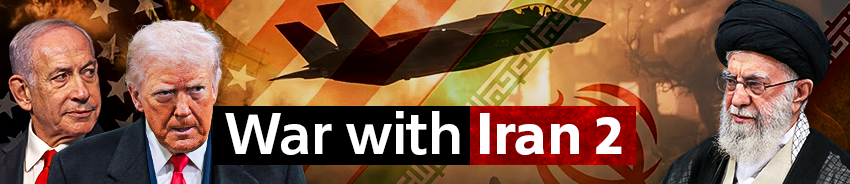

A senior Israeli Air Force official said Thursday he hopes Israel will be able to return to a state of near-normal life within days — even before the war ends — while the IDF continues operating in the background deep inside Iran and inflicting damage on the ayatollah regime.
The official told ynet that, to create that kind of breathing room, Israel needs air superiority and the suppression of Iran’s surface-to-surface missile array. “I’m not fooling myself that we’ll be able to completely purge it, but we can get to a better place, and that’s the aspiration,” he said.
Israeli Air Force attacks on Iran
(Photo: IDF spokesperson's unit)


Discussing the achievements of Operation Rising Lion — also referred to as the “12-day war” — in June last year, the official said that ultimately “you can’t cram a root canal treatment into 12 days — you can only do something temporary.” He said the Air Force began, already in the early stages of that campaign, to formulate a plan for the next round of fighting, knowing it would come — and those preparations are now paying off.
“The fact that the aircraft are now doing four times more than they did in Operation Rising Lion required preparation,” he said. “There are pilots who flew to Iran three times a day — it’s insane, and for that you need physiological preparation and to build an envelope that allows staying power.”
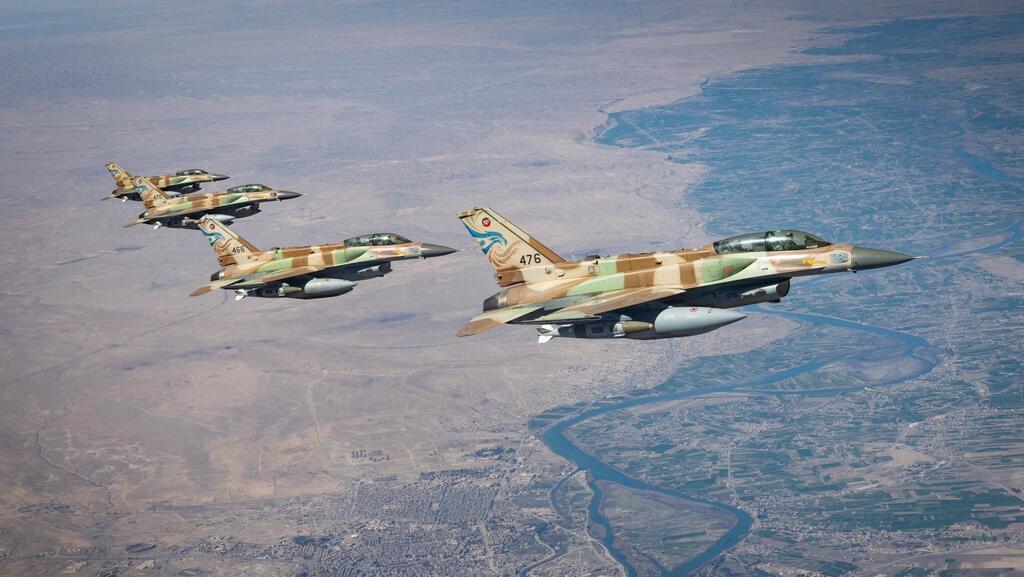
The unrelenting strikes in Iran stem from concern that Israel will not finish hitting all targets before President Donald Trump decides to end the war. Another goal is to suppress missile fire at the home front as quickly as possible. That, the official said, requires continued attacks on Iran’s air defenses — and then strikes on launchers.
According to the official, while before Operation Rising Lion the Americans — unlike Israel — did not view Iran’s surface-to-surface missiles as an almost existential threat, that has since changed, and its impact is evident in the current campaign. Addressing the missile array, he said, requires a “root canal treatment” rather than a temporary fix, and that means generating cumulative damage severe enough that Iran’s massive industry cannot provide an alternative. Achieving such broad damage on such a vast scale requires long, sustained activity.
“You can’t not be impressed by what they built there,” the official said, referring to Iran’s surface-to-surface missile system. “What Hamas built pales in comparison. They have things you can’t hit from the air.”
At the same time, he noted that operating such missiles requires a complex logistics system, including cranes, infrastructure and maintenance operations — and that the IDF can make it harder for Iran to use those systems. He noted that The Wall Street Journal reported Thursday that Israel and the United States are striking underground missile cities built by Iran, and that satellite imagery indicates that in some cases entrances appear blocked, leaving equipment trapped underground and unable to be used for firing.
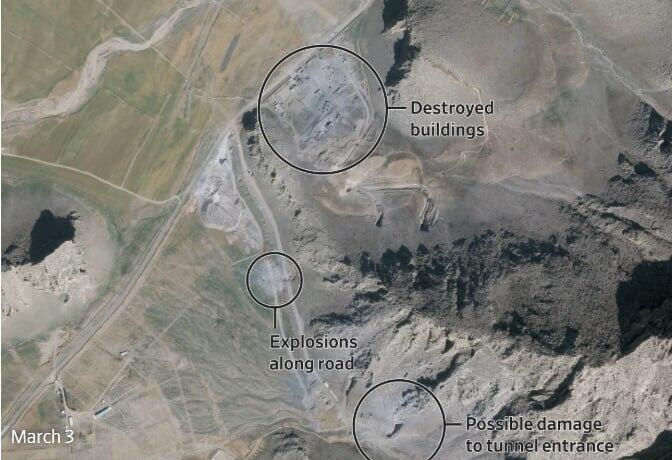
Satellite photo of underground missile base in Kermanshah: destroyed buildings, signs of explosions, and possibly damage to site entrance
(Photo: PLANET/Wall street Journal)
Either way, the official also offered a sober assessment of Iran’s capabilities: “To the Iranians’ credit, they came to fight like crazy, and they’re guys who learn fast. You constantly have to improve and outsmart them.”
He described cooperation with the United States as “the best asset you can have with you in war.” “It’s better than anything. It’s massive backing and legitimacy, while we bring the ‘fine motor skills,’ like taking out senior figures,” he said.
Although the end of the war is still not in sight, questions are already emerging about what its exit point could be. One possible point would be reaching a level where the damage inflicted on Iran has been maximized, while the United States works out some kind of agreement with Tehran — one that would look nothing like the deal previously on the table. Under such an agreement, Iran would accept all U.S. conditions.
Another possibility is that Israel and the United States decide they have done enough and have exhausted the fighting, and now let developments inside Iran unfold on their own — while encouraging internal trends through other means not involving military force. That would come after Iran no longer has the ability to produce missiles and nuclear weapons.
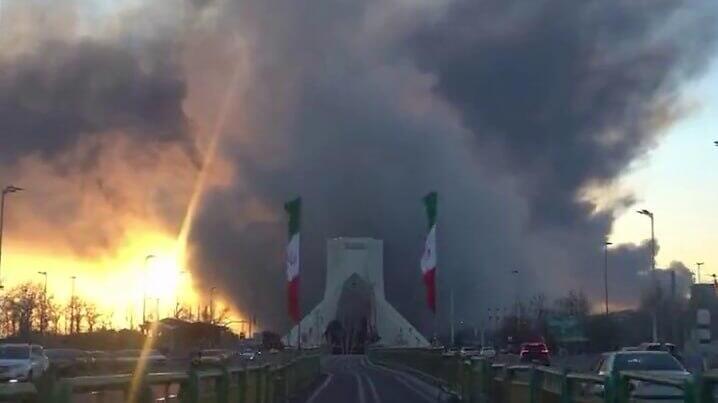
Smoke rises from Azadi Square in Tehran after an air strike
Trump would then halt the war and announce that he is waiting for an Iranian call, while the regime begins dealing with waves of protest. In any case, it is difficult to envision a single moment after which it will be possible to say, “the war is over” — and the collapse of the regime is expected to continue long after the fighting ends.
If the Iranian regime ultimately falls, the senior Air Force official said he sees major potential. “If that can happen, it could change our entire security situation. Security challenges will always exist, but it would completely change the story,” he said.
He added that significant benefit could also emerge from what appears to be shared interests with Gulf states such as Kuwait and Saudi Arabia, given Iran’s attacks on them. Against the backdrop of recent statements from some Gulf countries indicating they might respond militarily against Iran, he said: “I only speak with the Americans and with no one else, but I look at what’s happening in the arena and see enormous potential to change everything. Obviously we’ll need to remain strong.”