

As of this writing, Christopher Nolan’s The Odyssey, based on Homer’s ancient epic of the same name, continues to dominate the global box office. The film has earned more than $640 million in just 10 days, putting it on track to potentially surpass Oppenheimer, Nolan’s previous Oscar-winning film, which grossed more than $978 million during its theatrical run.
You can also expect it to feature prominently during the next awards season, including at the Academy Awards.
'The Odyssey' trailer
(Video: Tulip Entertainment )


Naturally, the internet remains consumed with the film. After some of the early debate over its supposedly progressive character, much of it voiced before release by right-wing commentators including Elon Musk, attention has shifted to the changes Nolan made while adapting the nearly 3,000-year-old source material. Many of those analyses, however, lack an intimate familiarity with Homer’s enormously influential epic.
How extensively did Nolan reshape the poem for a modern audience, and who was its original hero, the resourceful Greek commander Odysseus?
For Dr. Teddy Fassberg of Tel Aviv University’s Department of Classical Studies, Greece and Rome, the most significant difference is the presence and influence of the gods in Homer’s Odyssey, compared with their relative absence from Nolan’s film.
“In the epic genre to which The Odyssey belongs, it is a convention that the gods are deeply involved,” he said. “We can approach that convention in several ways. We can see it as an expression of the ancient Greeks’ belief that this was how the gods operated in the world. We can also see it simply as a literary device Homer uses to move the plot forward.
“I think a more successful approach is to see these epics, including The Odyssey, as works dealing precisely with the question of the gods’ place in the world, and humanity’s place in relation to the gods. I think we see that in a very interesting way in The Odyssey.”
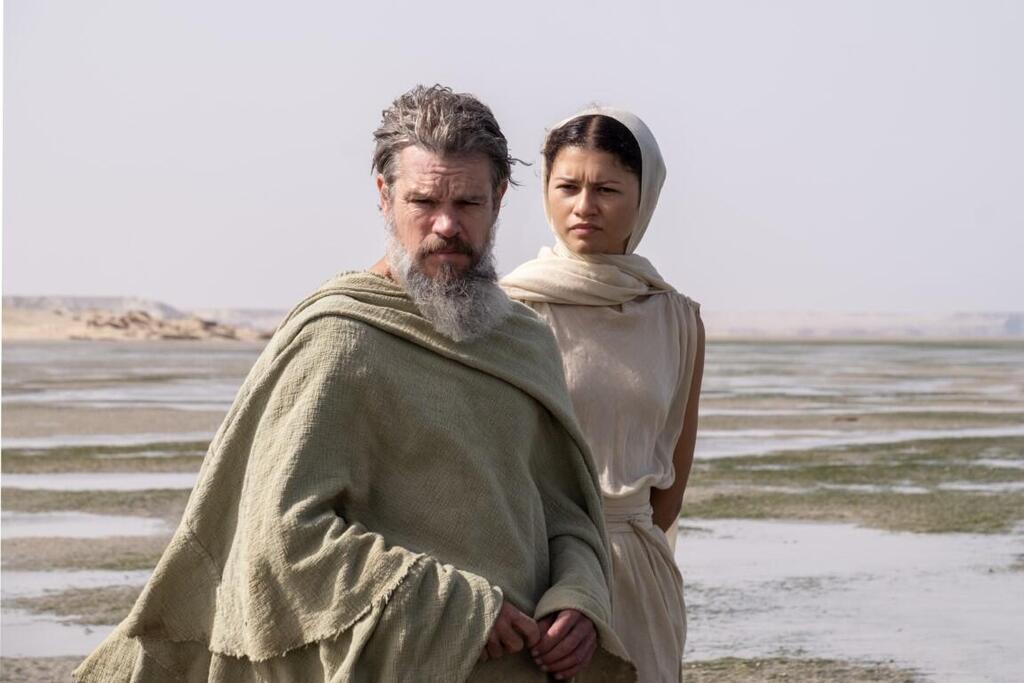
Fassberg said the poem is itself acutely aware of that question. “At the beginning of the first book of The Odyssey, in the first dialogue, we find Zeus at an assembly of the gods saying: ‘Oh, how mortals blame the gods. From us, they say, come their troubles, but it is they who, through their own recklessness, suffer beyond what is ordained.’
“We see that The Odyssey itself raises the question of the gods’ place in human life in a way that may also be highly relevant to the question today: Why does Nolan remove them from his film?”
According to Fassberg, Nolan understood that conventions suited to Homer’s audience in approximately the eighth century BCE would not necessarily resonate with modern moviegoers. “Today, gods are not as interesting as literary characters as they were to the Greeks,” he said.
And, of course, that is not the only change. Nolan also gives Odysseus traits that differ markedly from Homer’s portrayal. In the film, he is haunted by trauma and guilt. How is he presented in The Odyssey itself?
“I would start with the poem’s very first line. Homer sings: ‘Muse, tell me of the man of many turns.’ In Greek, the word is polytropos, and it can be understood in several ways.
“It may refer to the many turns Odysseus takes on his journey home, his wanderings. But a ‘turn’ can also suggest a departure from the straight path, reflecting the fact that Odysseus is highly cunning and relies on many tricks to make his way home.
“We can also understand it as a reference to Odysseus’ many faces. In that sense, Homer gives later artists a kind of license to focus on different sides of Odysseus from those emphasized in the original.”
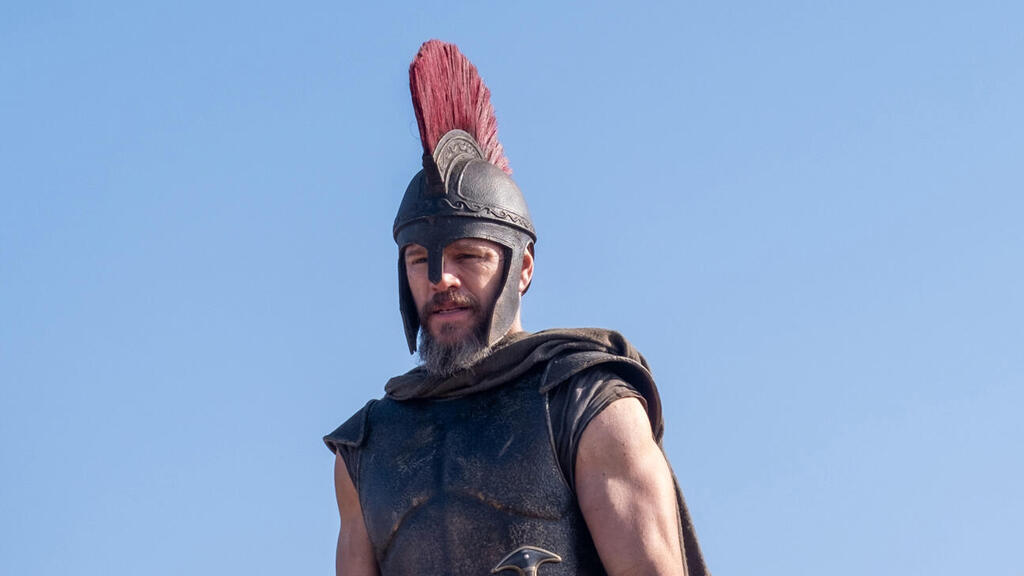
From The Odyssey
(Photo: Courtesy of Tulip Entertainment)
What stands out most strongly in Homer’s hero, Fassberg said, is extraordinary self-confidence, which can sometimes become destructive and lead him into danger. “He is also a character who very much enjoys life,” he said. “From that perspective, guilt and trauma may not fit so well. But The Odyssey is such a long, rich and complex work that we can also find places for those elements within it.”
One such moment appears in Book Eight, when Odysseus reaches the island of the Phaeacians and the king holds a feast in his honor. During the celebration, a poet sings about the recent history of the Trojan War.
“Homer tells us that the audience, which was not present during the war, greatly enjoys the song, but Odysseus begins to cry,” Fassberg said. “I cannot say whether he cries because the memory is traumatic, but we can see that it is certainly emotionally charged for him.”
Fassberg also sees seeds in Homer’s text for Nolan’s emphasis on the burden of guilt Odysseus carries after the destruction of Troy, made possible by his famous stratagem.
At the beginning of the poem, Homer invokes the Muse to tell of the many-sided man who wandered for years after destroying holy Troy, saw the cities of many people, learned their ways and suffered greatly at sea while struggling to save himself and bring his men home.
Yet Odysseus fails to save them. His companions perish, the poem says, because of their own recklessness. “That creates a very interesting tension, because the function of Greek epic poetry is to praise the hero,” Fassberg said. “And Odysseus is, of course, the hero of The Odyssey.
“But what we find here is that the narrator is aware that Odysseus looks like a very bad hero. Why does he look like a bad hero? Because he leaves Troy with all his men and returns home alone. All his men are dead. What kind of leader is that?”
From the beginning, Fassberg said, the narrator anticipates the accusation but shifts responsibility away from Odysseus and onto his men. “So even if Odysseus himself does not feel guilt, we can see that the question is present and cannot be escaped,” he said.
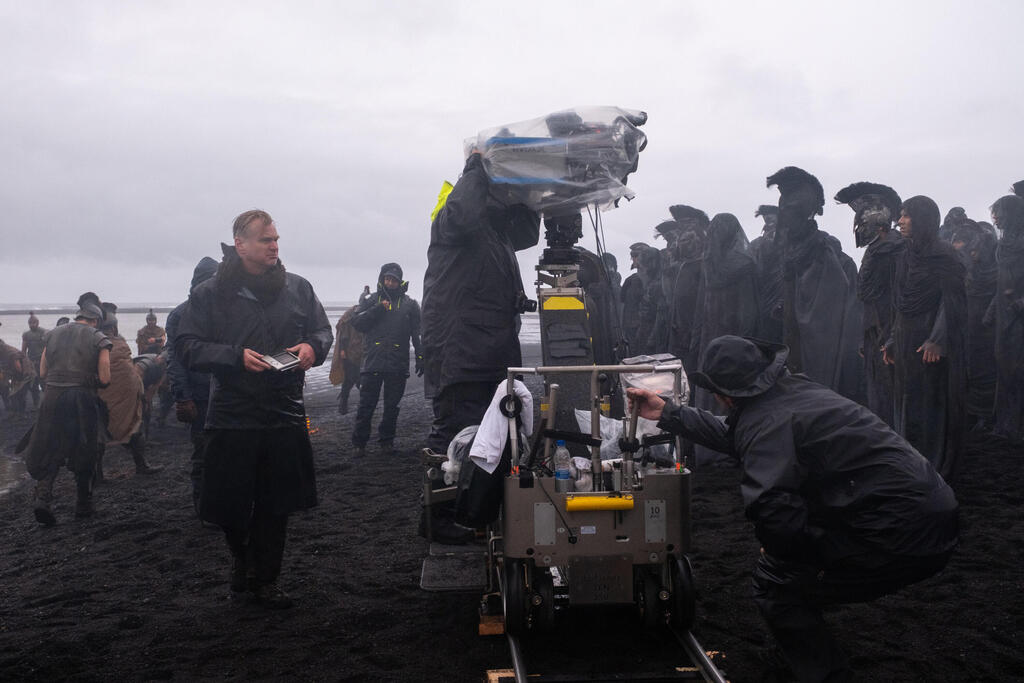
Christopher Nolan on the set of The Odyssey
(Photo: Courtesy of Tulip Entertainment)
The ending of The Odyssey differs from the film’s conclusion. How does Homer’s epic actually end, and why is that ending so important to understanding the work?
“The question of where the work ends is itself extremely complex and has been debated for more than 2,000 years. The Odyssey ends with Odysseus returning home, getting into bed with his wife, Penelope, and the two telling each other what happened during the 20 years they were apart. It is a very beautiful, fitting and appropriate ending.
“But in a version of the text that comes from Alexandria, Egypt, in the third century BCE, the story does not actually end there. Odysseus tells his wife: ‘My ordeals are not over yet. The story is not over.’ The following day, he goes out and effectively massacres members of the community who failed to prevent the plundering of his home while he was away.
“That raises the question: Is The Odyssey a moving love story about Odysseus’ reunion with his wife, or is it actually an extremely brutal tale of revenge?”
Is Nolan’s film therefore a new work offering a fundamentally different interpretation?
“This is not the first adaptation of The Odyssey. We know of many famous and important adaptations of both the epic and the character of Odysseus. We find Odysseus in Dante’s Inferno, where he is very different from Homer’s Odysseus. The Odyssey also served as the basis for James Joyce’s Ulysses.
“I am not sure that faithfulness to the original is an interesting question, and perhaps it never is. But it is certainly not an interesting question in the case of Odysseus, precisely because of what we discussed earlier: In the first line of The Odyssey, Odysseus is introduced as the many-sided hero.
“The moment Homer presents him that way, he invites these adaptations, allowing later artists to approach him from different perspectives.”