


Sir Christopher Nolan occupies a unique position in contemporary commercial cinema. He commands enormous budgets while enjoying complete artistic freedom. Most of his films operate within popular genres — detective stories, science fiction and war movies — yet they are also challenging, ambitious works in which he repeatedly examines the connections among several central themes: trauma, time, memory and the possibility of returning home.
His previous film, ‘Oppenheimer’ (2023), won rapturous critical acclaim and major awards, including seven Oscars, among them best picture and best director. In an era dominated by adaptations and remakes of intellectual properties aimed at children and young adults, Nolan made a film that seemed to defy Hollywood convention: a physicist’s biography filled with dense dialogue about nuclear physics and moral dilemmas, built around a complex narrative structure and shot partly in black and white. Despite that seemingly impossible formula, ‘Oppenheimer’ earned nearly $1 billion and proved that Nolan is not subject to the limitations imposed on mortal filmmakers. From such a peak, perhaps the only way forward was to undertake an even more ambitious project: ‘The Odyssey,’ an adaptation of Homer’s eighth-century B.C. epic, one of the foundations of Western culture.
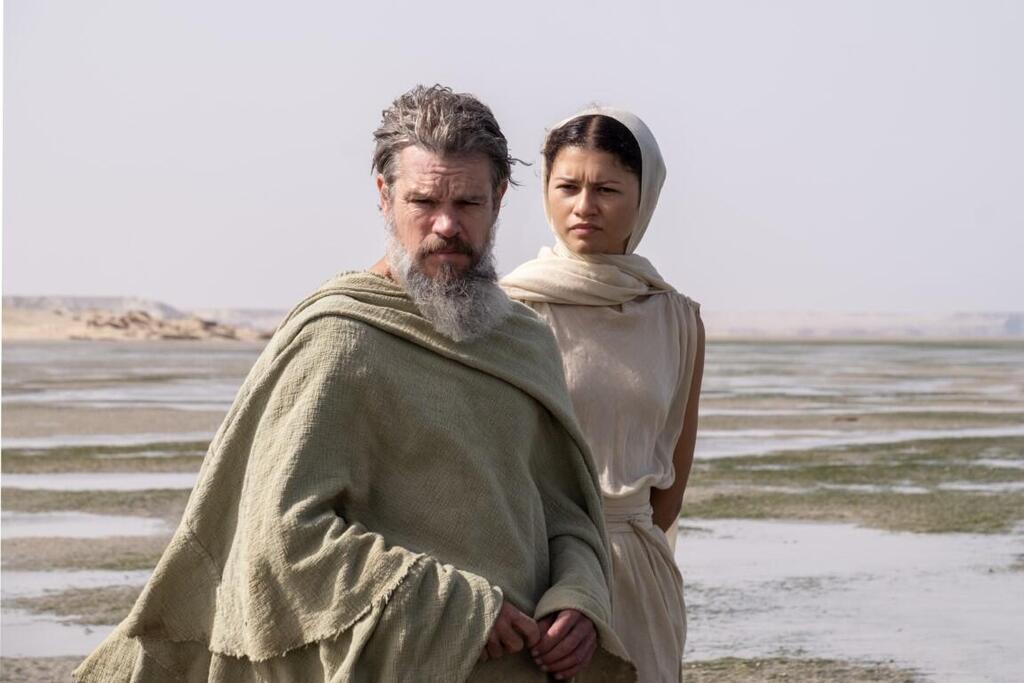
As is well known, ‘The Odyssey’ follows Odysseus (Matt Damon), king of the island of Ithaca. He is a complex hero who combines intelligence, leadership, courage and curiosity with recklessness, arrogance and vindictiveness. Twenty years earlier, he left Ithaca to join the Greeks in their war against Troy. After 10 years, Odysseus’ cunning brings the war to an end through the stratagem of the Trojan Horse. He and his men then set sail for home, but the journey proves perilous, and another 10 years pass before it is completed. Elements of that voyage have inspired countless works written over nearly 3,000 years, from Dante’s ‘Inferno’ and James Joyce’s ‘Ulysses’ to the Coen brothers’ ‘O Brother, Where Art Thou?’
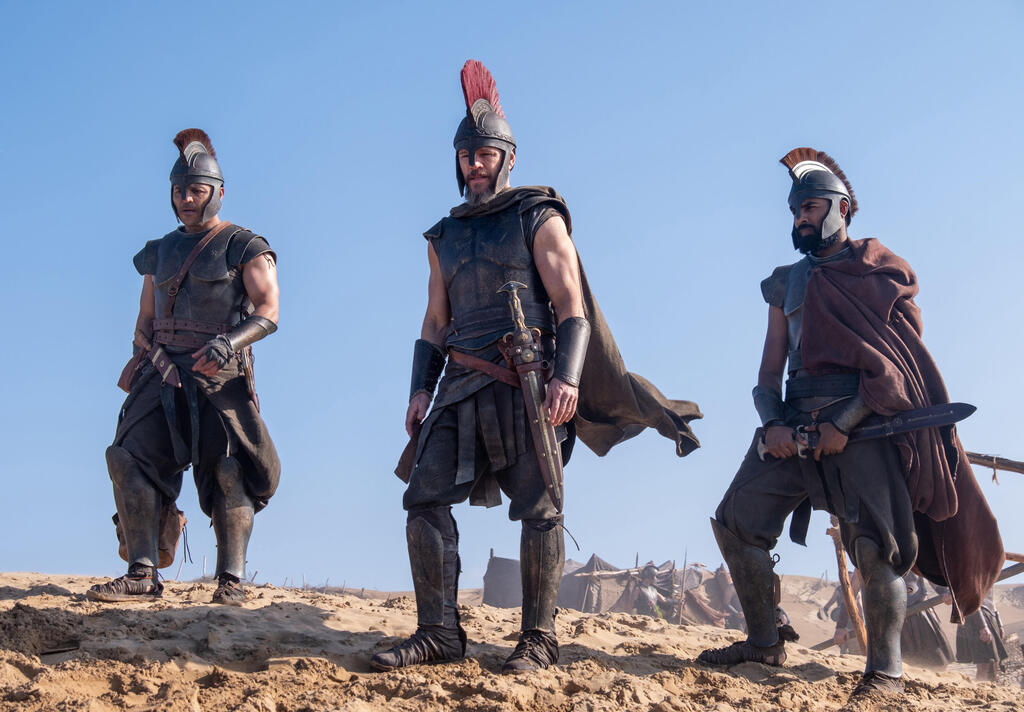
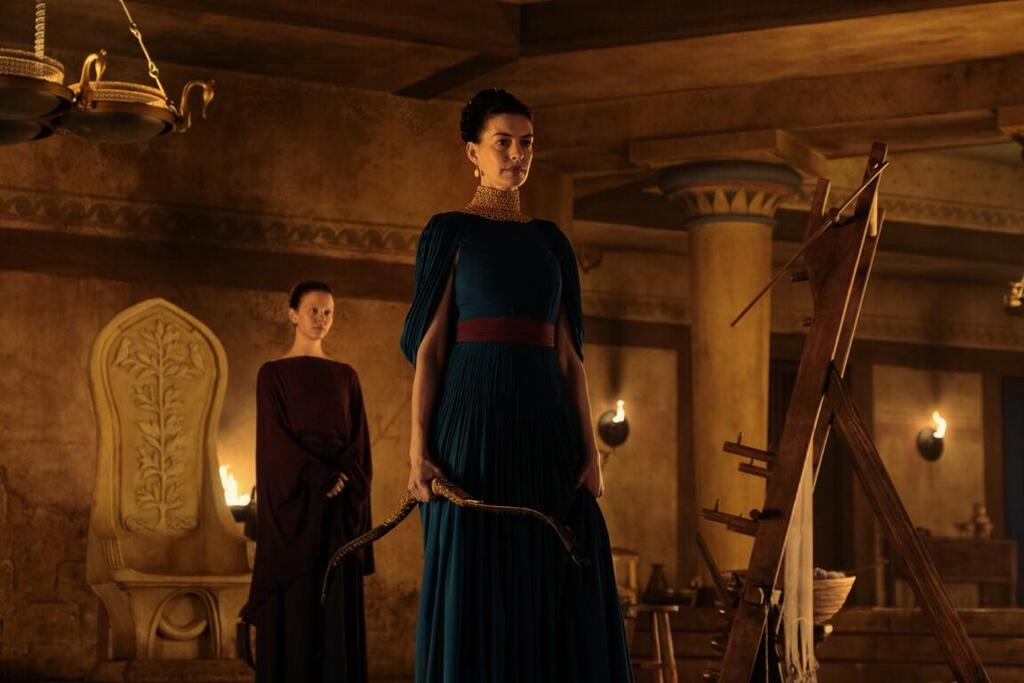
The film’s second narrative thread follows Telemachus (Tom Holland), Odysseus’ son. Because his father is presumed dead, young suitors crowd Odysseus’ home in Ithaca, pressuring Penelope (Anne Hathaway), his faithful wife, to choose one of them. As the unruly suitors become increasingly aggressive, Telemachus sets out to discover what happened to his father.
Some previous adaptations of ‘The Odyssey’ omitted this second storyline in favor of the more dramatic episodes in Odysseus’ return journey — the monsters, the gods’ acts of vengeance and the various supernatural forms of female temptation. Nolan’s version retains both plotlines, creating a somewhat unusual pincer movement compared with most of his earlier films, which focused on the hero’s journey while largely ignoring those waiting for him at home. ‘Interstellar’ (2014) is something of an exception.
‘The Odyssey’ was originally written with a complex temporal structure: 24 books, an opening in medias res, two narrative strands that converge in the final third and an elaborate system of flashbacks. Nolan, a director known for constructing narratives with exceptionally intricate timelines, is the last person who would simplify the story for commercial reasons. The temporal structure he chooses is even more complex, intended, as in many of his films, to reflect the presence of a traumatic event that is gradually revealed.
From ‘The Odyssey’
(Photo: Courtesy of Tulip Entertainment)
When the first trailer for ‘The Odyssey’ was released, it came under attack from several directions. Academic criticism focused on departures from the original text. Nolan’s screenplay incorporates elements from Homer’s ‘Iliad,’ Aeschylus’ tragedy ‘Agamemnon’ and the Roman poet Virgil’s ‘Aeneid.’ Nolan also dispenses with the characteristics of Homeric language — its epic Greek dialect, fixed phrases and epithets, extended similes and, of course, its metrical rhythm. Instead, the dialogue is written in contemporary English, which is inevitably anachronistic and necessarily flattens and condenses the source material.
The lines are delivered by American actors who do not use the elevated British accent commonly associated with adaptations of ancient or canonical works. There have also been quasi-academic complaints about inaccuracies in the depiction of the Hellenic world, including clothing, ship design and other details. Scholars of classical culture are no doubt already preparing articles cataloging Nolan’s many deviations from the values and conventions of the Homeric text.
The second kind of criticism came from the frustrated and racist corners of Reddit and similar forums. Led by the Pied Piper known as Elon Musk, critics launched an attack on the film’s “liberal” and colorblind casting choices. Their targets included rapper Travis Scott in a supporting role as an oral poet, transgender actor Elliot Page as the Greek warrior Sinon and, above all, Black actress Lupita Nyong’o as Helen of Troy, whose beauty led to her abduction and the outbreak of the Trojan War. Could the woman said to have “the face that launched a thousand ships” possibly be Black? People who may never have heard of Homer, let alone read ‘The Odyssey,’ became activists in a campaign intended to damage the film’s publicity drive. For Nolan, skin color is a nonissue. ‘The Odyssey’ is a timeless, cross-cultural story. Anyone bothered by the sight of Nyong’o is welcome to remain in the metaphorical basement of their mother’s house, staring at GIFs.
From ‘The Odyssey’
(Photo: Courtesy of Tulip Entertainment)
The key to understanding the film is to recognize that it is “Christopher Nolan’s Odyssey.” Of course, the film could not actually have been given that title. Had it been, Nolan would have faced justified criticism for the audacity of attaching his own name to a timeless work. But that is effectively what the film does. Over the course of his career, Nolan has adapted a Norwegian film, ‘Insomnia’ (2002), Batman characters and storylines, and the life of Robert Oppenheimer. In every case, he reshaped the source material according to the intellectual concerns that preoccupy him.
‘The Odyssey’ is present throughout Nolan’s body of work. It can be seen as the ur-text of his cinema — a shadow text from which the fundamental elements of his drama and recurring themes emerge. Consider the danger of forgetting among the lotus-eaters. It recalls Leonard Shelby’s anterograde amnesia in ‘Memento’ (2000), or the limbo stage in the dream within a dream in ‘Inception’ (2010). The shadow figure of the dead woman, another recurring motif in Nolan’s films, can be examined alongside the central female figures in ‘The Odyssey’: the sorceress Circe (Samantha Morton), portrayed not simply as evil but as a complex figure confronting male aggression; the nymph Calypso (Charlize Theron), who holds Odysseus for seven years and to whom Nolan, unlike Homer, assigns the use of the lotus flowers; and, of course, Penelope, the faithful wife who tries to deceive her suitors.
Above all stands the idea of the journey home — the Homeric nostos — as the great dramatic question in Nolan’s voyage films. The return appears impossible, whether from the far reaches of the universe or from the depths of the mind. The hero is transformed by the journey and must confront his responsibility toward the children he abandoned. Films such as ‘Inception,’ ‘Interstellar,’ ‘Dunkirk’ (2017) and ‘Tenet’ (2020) all demonstrate this preoccupation.
From ‘The Odyssey’
(Photo: Courtesy of Tulip Entertainment)
In Nolan’s work, the hero’s difficulty in returning home stems from an earlier traumatic event, often one connected to the death of a woman. The structure of trauma belongs to a psychological framework very different from that of the Homeric hero. In Nolan’s film, trauma plays a significant role. A full discussion of how and why would exceed the limits of this review and could spoil the discovery for those who choose to see the film. It is enough to note that Nolan places far greater emphasis on the Trojan Horse episode than the literary source does. The brutal wartime event in which Odysseus’ cunning secures victory also carries a complex psychological cost, one that grows heavier with each subsequent adventure. Nolan’s Odysseus is a post-traumatic warrior who struggles to return home because of the burden of guilt, a burden also carried by the protagonist of ‘Oppenheimer.’
Nolan is not particularly interested in the relationship between mortals and gods in Hellenic culture, or in the gods’ reckoning with human transgression. His ‘Odyssey’ is therefore “realistic” — at least as realistic as a story can be when it includes monsters, gods lingering in the background and encounters with dead soldiers.
I do have some reservations about the casting, though not because of any actor’s skin color. Damon does good work, but I am not entirely convinced he was the perfect choice. Holland is somewhat more problematic. On the other hand, there are several brief but impressive performances, including Morton’s turn as Circe. Nolan’s stature allows him to cast virtually anyone in any role, and he fills the film with a great many actors.
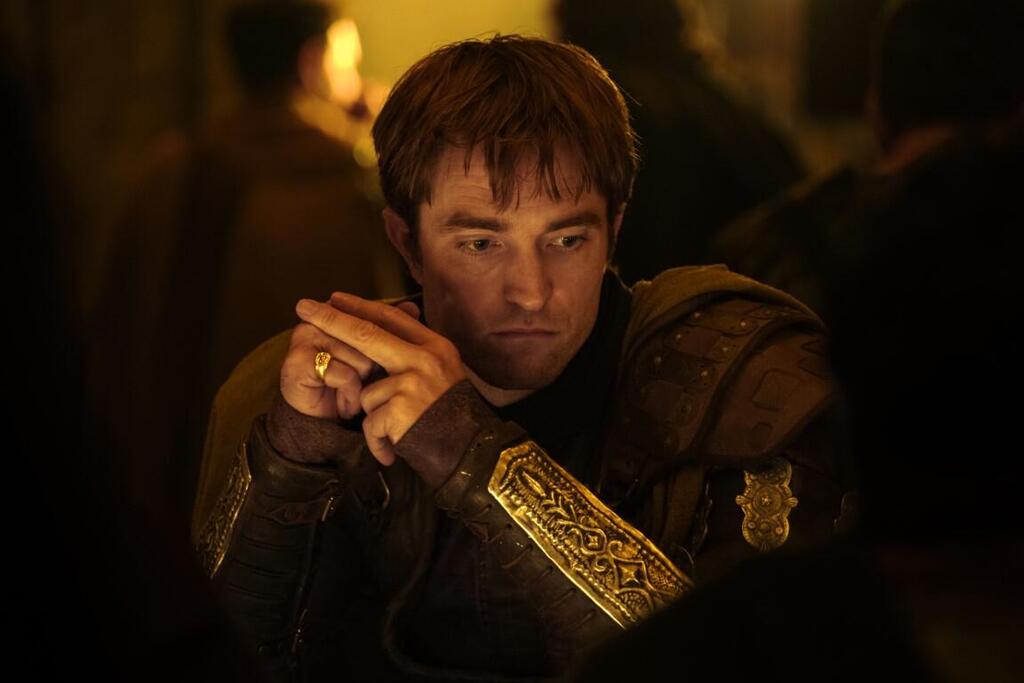
From ‘The Odyssey’
(Photo: Courtesy of Tulip Entertainment)
It would be absurd to judge “Nolan’s ‘Odyssey’” on the assumption that every departure from Homer is illegitimate. The film should be assessed as a paradoxical work, both epic and deeply personal, in which Nolan directly engages with the “shadow text” of his career and adapts it as a continuation of his longstanding thematic concerns. From that perspective, the deviations from the source are the most interesting elements, and they are what allow the film to be appreciated as a meaningful and daring work.
Technically and visually, the film is nothing short of miraculous. It was shot in challenging locations across several continents and made use of IMAX cameras developed specifically for the production to achieve rare visual qualities and unprecedented freedom of movement. Cinematographer Hoyte van Hoytema marks his fifth consecutive collaboration with Nolan. Even if ‘The Odyssey’ is not screened in Israel on 70mm film, digital IMAX should be considered the minimum acceptable format.
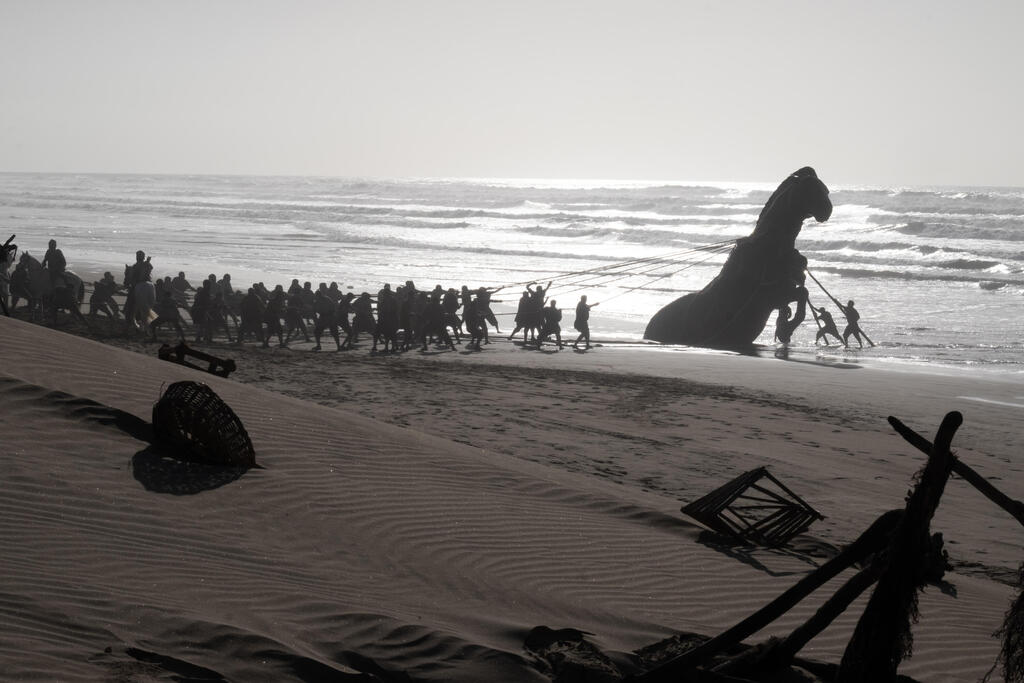
Ludwig Göransson’s thunderous score, his third consecutive collaboration with Nolan, combines bronze gongs with electronic instruments. The use of practical effects and physical sets is extraordinary in scale, and the Trojan Horse is among the most impressive props in cinema history. At a time when movies are suffocating under digital effects and may soon be overwhelmed by artificial intelligence, Nolan remains a purist with the standing and resources to preserve that purity. In every technical respect imaginable, ‘The Odyssey’ brings together major creative forces at the top of their fields. It is difficult to think of any aspect of the film that will not receive, at the very least, an Oscar nomination next year.