

“Lizzie Borden took an axe / And gave her mother forty whacks / When she saw what she had done / She gave her father forty-one.”
Give some credit to Lizzie Borden, one of the most famous murderers in popular culture despite never having been convicted of murder. Think the age of social media invented trial by public opinion? Think again. Ryan Murphy’s new Netflix series, Monster: The Lizzie Borden Story, returns to a case that showed more than 130 years ago how a courtroom verdict could lose its battle with the public imagination.
Monster: The Lizzie Borden Story trailer


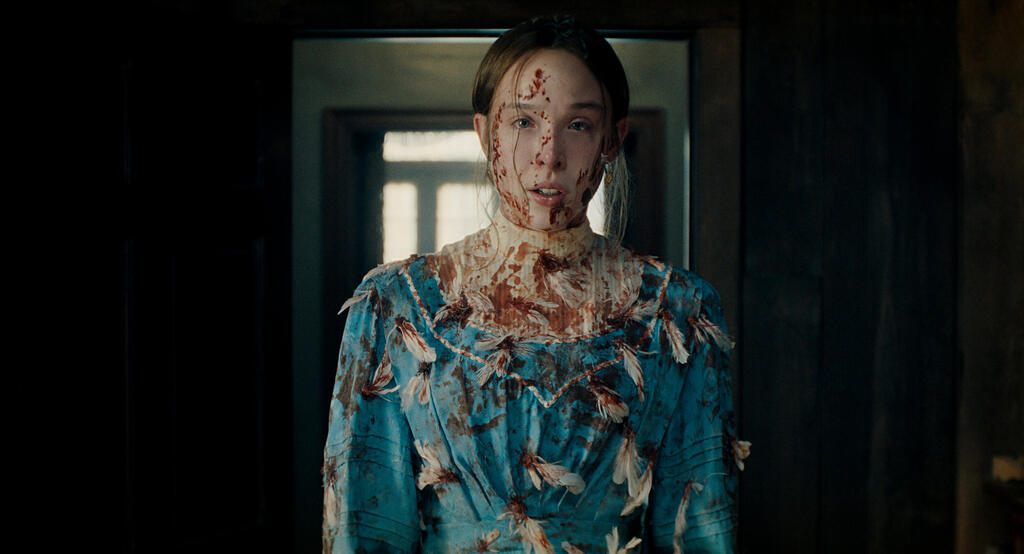
Borden became a legend almost against her will: the respectable young Massachusetts woman accused of hacking her father and stepmother to death with an axe inside the family home.
Hollywood, Broadway, true-crime television and horror fiction have returned to the story for decades, repeatedly giving audiences what they seem to want: a cold, sociopathic killer in a Victorian corset.
One small detail tends to get lost along the way: Lizzie Borden was acquitted. Not because another killer was found. Not because she had an airtight alibi. Prosecutors simply could not prove that she had done it, in an era when DNA testing at a crime scene belonged to science fiction.
There were possible motives, contradictions in her statements, a dress she burned because it supposedly had a stain on it and a strange attempt to buy poison the day before her father and stepmother were killed about 90 minutes apart. But investigators never found the one decisive piece of evidence that could close the case.
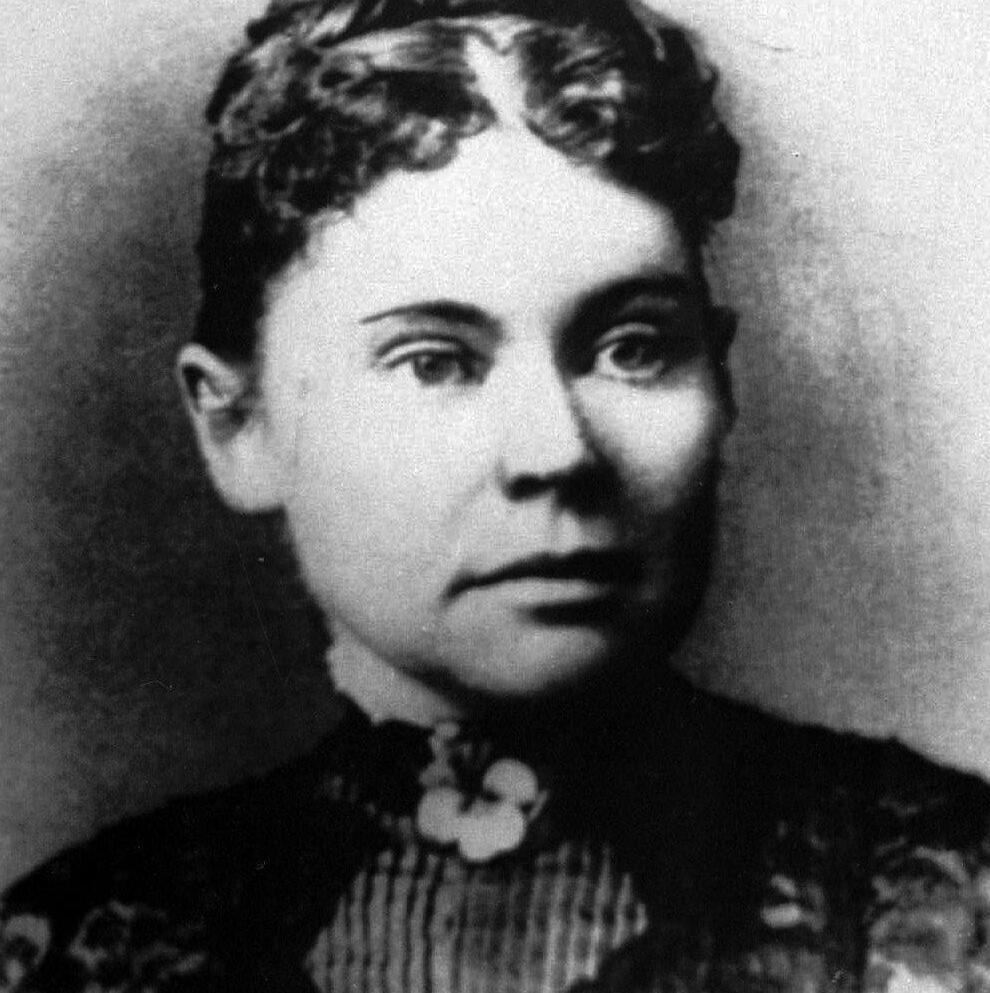
Lizzie Borden
(Photo: AP)
On June 20, 1893, after a trial that captivated the United States, an all-male jury acquitted Miss Borden. Borden herself remained silent and never confessed. Yet the public increasingly treated her acquittal as little more than a procedural accident or historical joke. And so every generation has brought Lizzie Borden back, reshaping the same facts to suit its own moment.
At times she has been portrayed as a heartless heiress. At others, as the victim of a miserly father and a suffocating household. She has been cast as a feminist icon and, more recently, as the heroine of ghost stories.
To understand why Lizzie Borden still fascinates us, and why so many people feel they know who killed Andrew and Abby Borden despite the absence of proof, you have to return to the house on Second Street.
The first act, when the axe appears
If you had been a fly on the wall at 92 Second Street in Fall River, Massachusetts, the first thing you might have noticed was that whoever designed the house seemed to have a passion for claustrophobia.
Privacy was almost nonexistent. Instead of a conventional hallway with bedrooms opening off it, rooms were arranged in sequence, meaning family members sometimes had to pass through one another’s spaces to cross the house. Doors between rooms were secured with locks, while the front entrance had several layers of protection.
Andrew Jackson Borden was one of Fall River’s wealthier men, a businessman and bank president whose fortune would amount to millions of dollars today. He was also famously frugal.
Modern plumbing, electricity and gas lighting were absent from the family home despite his ability to afford them. On the morning of his murder, the story goes, Andrew was walking through the oppressive August heat when he spotted an old broken lock in the street, wrapped it in paper and put it in his pocket.
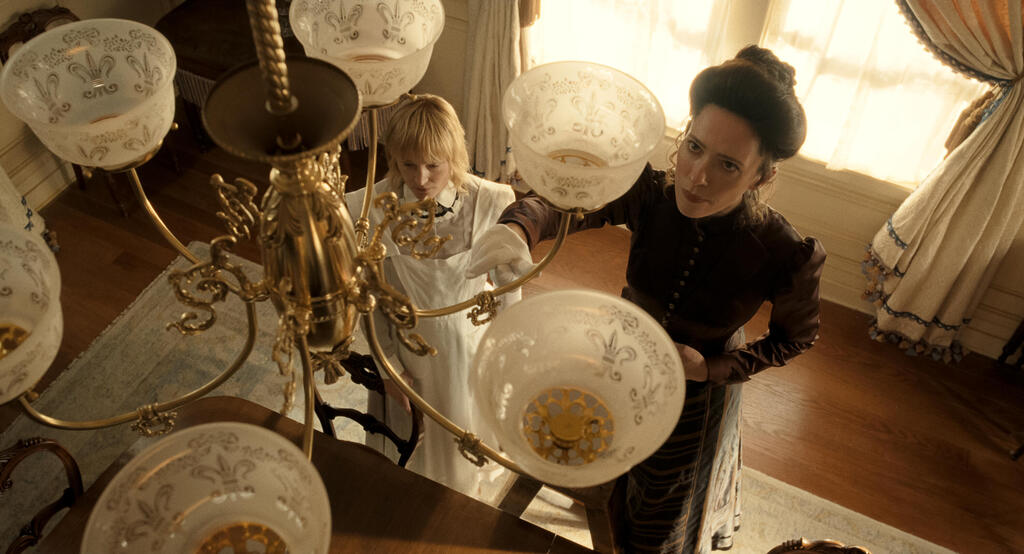
From ‘Monster: The Lizzie Borden Story’
(Photo: Netflix)
Abby Durfee Gray Borden had been Andrew’s second wife for 27 years. His first wife, the mother of Lizzie and her older sister Emma, had died years earlier. Abby was not remembered as a stereotypically cruel stepmother, but relations between her and Andrew’s daughters had deteriorated several years before the killings.
The family drama centered partly on money. Lizzie and Emma discovered that Andrew had purchased a house for Abby’s sister for $1,500. For unmarried women in the Victorian era, financially dependent on their father, the transaction looked like a warning that family wealth might increasingly pass to their stepmother’s relatives.
The sisters stopped calling Abby “Mother” and began referring to her as “Mrs. Borden.” Some have since viewed that episode as the moment the seeds of murder were planted. On the morning of August 4, 1892, Abby and Andrew were recovering from a night of severe nausea and vomiting. A brutal heat wave hung over Fall River, but Andrew Borden was not the sort of man to skip a workday.
At about 9 a.m. he left the house. Abby went upstairs to clean the guest room. Sometime between 9 and 10 a.m., she was attacked with a hatchet or axe. Eighteen or 19 blows, not the 40 promised by the rhyme, killed her. Bridget Sullivan, the family’s Irish maid, was outside washing windows and noticed nothing suspicious.
Later forensic analysis of the contents of Abby’s stomach led investigators to conclude that roughly 90 minutes passed before Andrew met the same fate. For that chilling hour and a half, the house apparently carried on as normal. Andrew returned home and lay down to rest on a sitting-room sofa. If the killer was inside, the killer was still there.
This time 10 or 11 blows were enough. The doctor who later arrived had difficulty recognizing Andrew’s face. Lizzie was the one who raised the alarm, calling for Bridget after finding her father’s body. Abby’s body upstairs was discovered later. Before that, however, Lizzie had already provided one of the great mysteries of the case: she said she had not been inside the house when her father was killed.

From ‘Monster: The Lizzie Borden Story’
(Photo: Netflix)
According to Lizzie, she had gone into the yard to eat pears and then entered the loft of the barn to look for pieces of lead that could be turned into fishing sinkers. She later explained that she and Emma planned to go fishing the following Monday and that their father had suggested saving a few cents by searching for old lead.
Because Lizzie was supposedly hunting for sinkers despite having no fishing line, rod or hooks with her, an investigator examined the barn loft. The apparently undisturbed layer of dust on the floor did little to ease his suspicions. By the time Borden’s trial opened 10 months after the murders, the American public had already been saturated by nonstop coverage of the case.
Twelve jurors, all men, sat across from her as prosecutors advanced a straightforward theory: Lizzie wanted the money, resented Abby and killed them both. Borden sat with an impassive expression as doctors described the victims’ devastating injuries. In some of Andrew’s wounds, the weapon had fractured the skull and penetrated the brain.
Prosecutors invited jurors to imagine Lizzie wielding the axe. Her defense asked them to imagine something else entirely: a respectable woman with no criminal past. She arrived in court carefully presented in a formal black mourning dress, carrying a fan and flowers, appearing every bit the vulnerable Victorian lady.
When the victims’ skulls were brought into the courtroom as evidence, Lizzie fainted. To jurors, that reaction could be interpreted as delicacy and fragility, an indirect answer to whether such a woman was physically capable of inflicting dozens of axe blows on two adults.
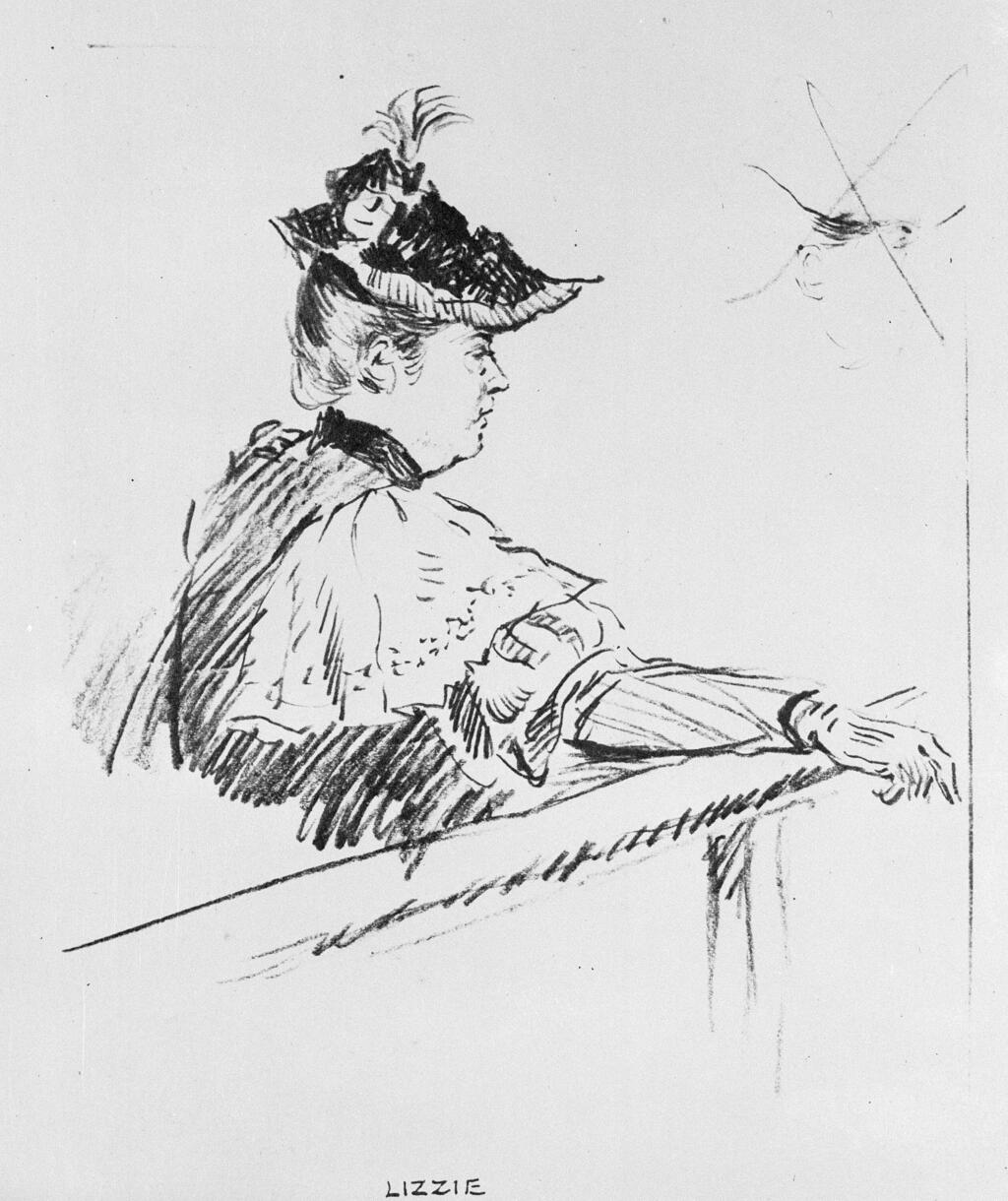
Illustration of Lizzie Borden on the witness stand
(Photo: AP Photo/Carl Nesensohn)
Long before the first day of testimony, Lizzie Borden had become famous, though not in any glamorous sense. Reporters poured into Fall River from around the country. Telegraph dispatches moved through news agencies, and Americans consumed every scrap of information that escaped the investigation. Newspapers chronicled Miss Lizzie in almost absurd detail: what she wore, how she looked, how she spoke, how she behaved and even what she did with her hands.
Borden did not respond to her parents’ brutal deaths in the way many observers expected. She did not collapse publicly or weep uncontrollably. Instead, she remained unusually composed. Some reporters interpreted that restraint as evidence of character. Others saw calculation and guilt.
Investigators meanwhile pursued the suspects whom the prejudices of the era made seem most obvious. Surely, many assumed, such savagery must have been committed by an outsider, an immigrant, a rough working-class man or some other socially marginal figure.
Police detained a Portuguese immigrant who had been wandering nearby and repeatedly questioned Bridget Sullivan, the Irish maid who lived in the Borden home. Lizzie, by contrast, taught Sunday school, belonged to a temperance organization and attended a respectable Congregational church.
Her social standing initially offered a degree of automatic protection, though not every newspaper saw her the same way. Elite publications tended to echo arguments for her innocence, while an Irish working-class newspaper attacked Lizzie and the enormous privilege surrounding her. With no convincing motive established, the yellow press did what yellow journalism does best: it invented one.
One of the most sensational stories claimed that Andrew had discovered Lizzie was pregnant outside marriage and threatened to throw her out unless she revealed the father’s identity, prompting her to murder him and Abby to prevent the disgrace.
The source was a private detective, Edwin J. McHenry, who fabricated the story, recruited false witnesses and sold the tale for $500, an extraordinary sum at the time, to Boston Daily Globe reporter Henry G. Trickey.
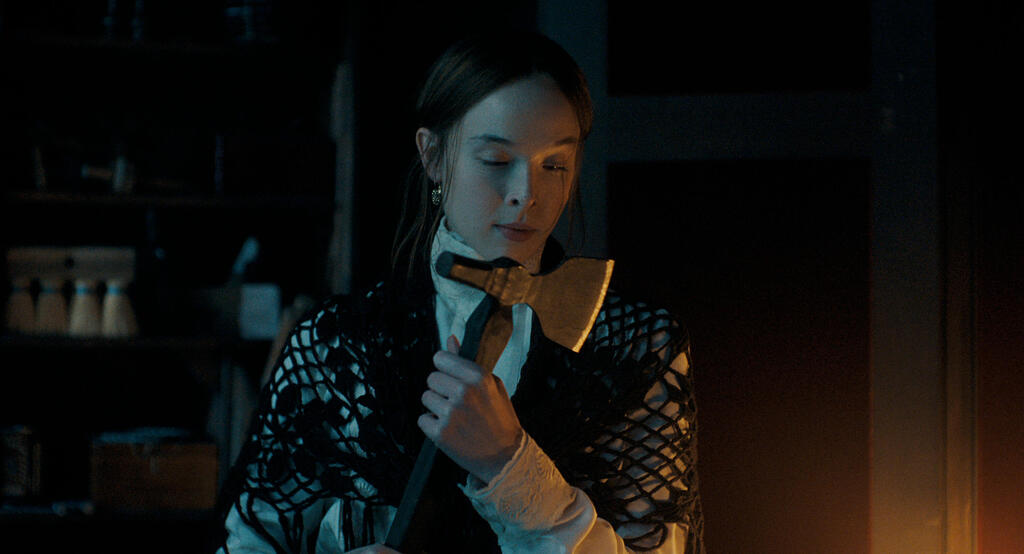
From ‘Monster: The Lizzie Borden Story’
(Photo: Netflix)
The Globe ran the story on its front page in October 1892. Within 24 hours, the family doctor said Lizzie had never been pregnant. The scoop collapsed and the newspaper was forced to publish retractions and apologies.
Trickey fled to Canada fearing legal consequences. There, in a strange final twist, he later died in a railroad accident after slipping beneath a train while trying to board it. As time passed, theories involving a mysterious outsider became increasingly difficult to sustain.
No one could adequately explain how a stranger could enter the heavily locked home, commit two killings, hide for more than an hour without being discovered and then escape in daylight without leaving an obvious trail of blood. Suspicion narrowed around Lizzie.
A woman could not have done this
When Borden’s trial finally began, evidence continued to pour into the courtroom, but none of it directly linked her to the killings. No murder weapon was definitively identified. No bloodstained clothing was found. No witness had seen her attack either victim. What prosecutors had was circumstantial evidence and inconsistencies.
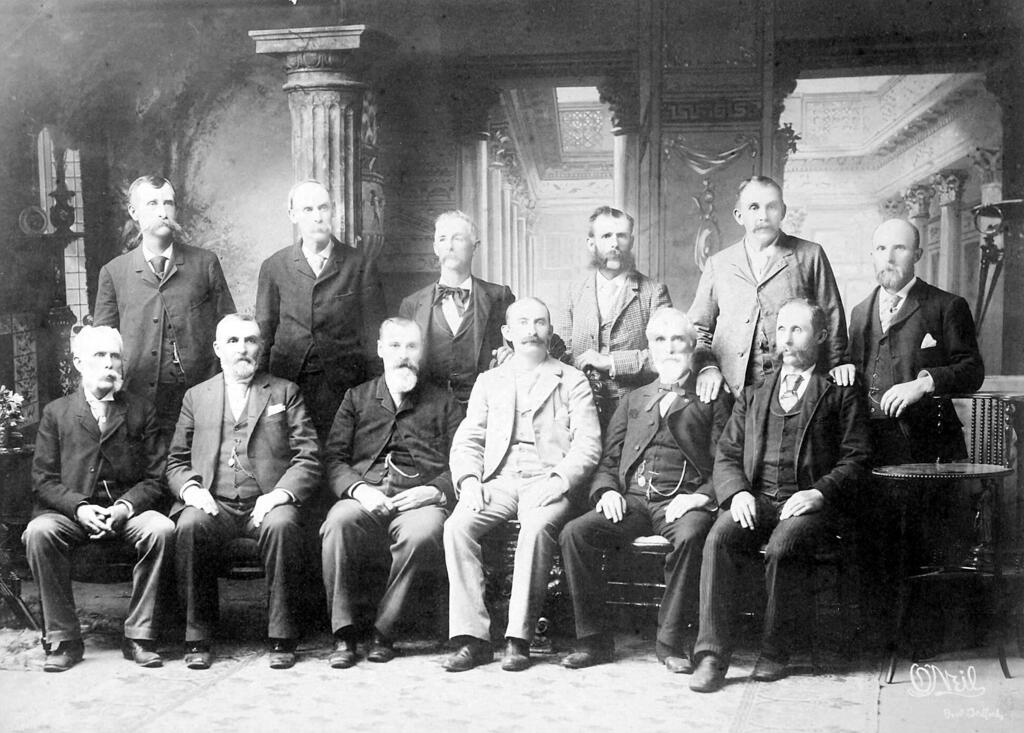
The jury in Lizzie Borden’s trial
(Photo: Wikipedia)
At one point, the court excluded what may have been the prosecution’s most powerful evidence: Lizzie’s statements during an inquest after the murders. Police records showed that she gave confused and contradictory answers about exactly where she had been in the minutes before her father’s body was found. The defense had a potent response: morphine.
The family physician had prescribed Lizzie large doses of morphine to calm her after the killings, while police had questioned her without a lawyer present. The judges also excluded testimony that Lizzie had attempted to buy poison the day before the murders, ruling that because poison was not used in the killings, the episode was irrelevant.
Even the disturbing account given by Lizzie’s close friend Alice Russell failed to produce the breakthrough prosecutors needed.
Three days after the murders, Russell said, she found Lizzie burning a dress in the family stove. Lizzie said she destroyed it because it had a brown paint stain. Whatever the explanation, burning the dress also destroyed any possibility that modern-style forensic examination might have revealed something useful.
Prosecutors were left with a circumstantial case. Prosecutor Hosea Knowlton made one final attempt to overcome the cultural assumptions protecting Borden, telling jurors that women might be physically weaker than men but that, when they hated, their hatred could be deeper and more savage. By then, however, the all-male jury appeared unconvinced that a woman of Lizzie’s background could have committed such a crime.
Even the presiding judge delivered instructions that emphasized her Christian character and the requirement of proof beyond a reasonable doubt. Two weeks after the trial began, jurors retired to deliberate. About 90 minutes later, they returned with a unanimous verdict: not guilty.
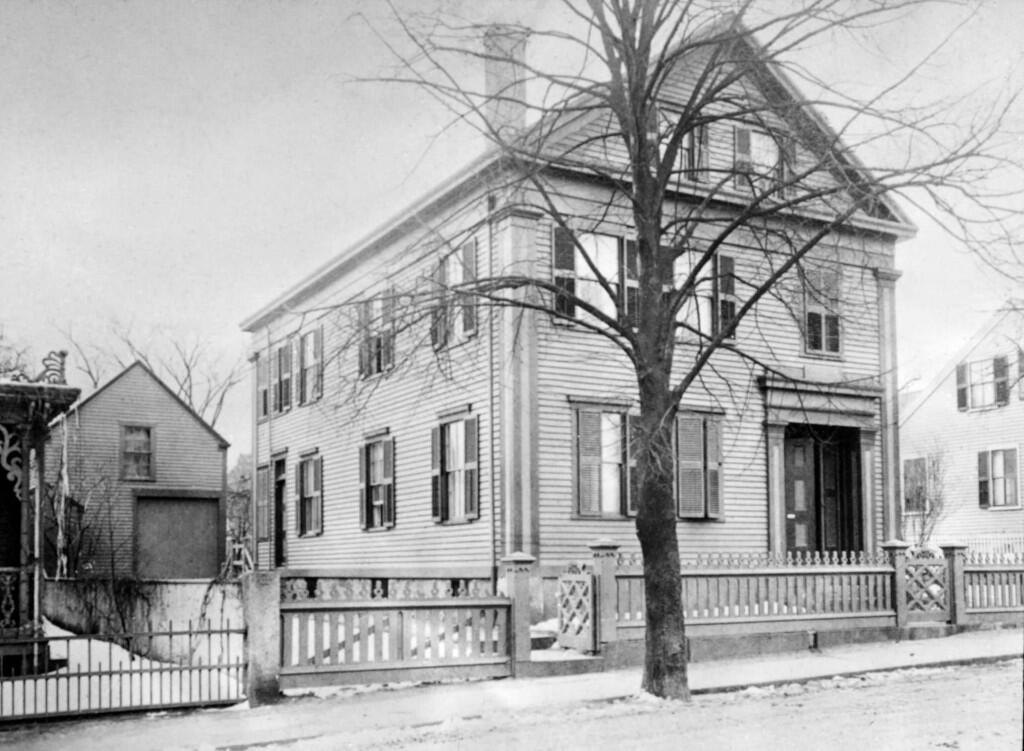
The courthouse where Lizzie Borden was tried
(Photo: Wikipedia)
Lizzie Borden left the courthouse legally free. Society was less forgiving. Soon after the trial, Lizzie and Emma inherited the family fortune, worth tens of millions in today’s money. One of their first acts was to buy themselves freedom from the old family house. They sold 92 Second Street and moved into a grand mansion in Fall River’s fashionable neighborhood known as the Hill.
Lizzie completed her transformation from restrained spinster to wealthy independent woman and began calling herself “Lizbeth.” She bought jewelry, traveled by hired carriage and indulged a growing passion for theater in Boston and New York.
In Boston she met Nance O’Neil, a charismatic and famous stage actress. The press described the two women as “close and intimate friends.” Lizzie hosted O’Neil and her acting company at lavish parties in her mansion, gatherings that increasingly irritated Emma, who was more conservative and private.
The rift between the sisters widened until 1905, when Emma moved out after a bitter argument. They never reconciled and did not speak again before their deaths.
Lizzie’s freedom came at a cost. Some Fall River residents refused to sit near her at church. Shopkeepers reportedly avoided serving her. Stones and eggs were thrown at her mansion at night. She raised Boston terriers, fed squirrels in her yard and left a substantial sum in her will to an animal welfare organization in Fall River.
Lizzie died at 66 following complications from pneumonia. On the day of her death, Emma suffered a fall. Nine days later, she too died.

From ‘Monster: The Lizzie Borden Story’
(Photo: Netflix)
The house at 92 Second Street eventually became both a museum and a hotel, where visitors from around the world pay hundreds of dollars a night for the chance to sleep in rooms connected to the murders. From the street it still looks remarkably ordinary.
Because much of its original layout has been preserved, the house also functions as something like a real-life escape room for amateur detectives. Guests can walk through the rooms, study the staircase, measure the distance to the yard and attempt to work out how the killings could have happened.
Conveniently for the legend, visitors occasionally report seeing a woman in a black Victorian dress, hat and veil in the parking lot, a figure some associate with Lizzie. Abby and Andrew, meanwhile, are considered the house’s resident ghosts, and owners have said some guests claim to have encountered them.
In the end, the nursery rhyme won the battle for public memory over the explicit verdict of the court. Without definitive evidence or a confession, the case refuses to die.
Lizzie Borden is repeatedly recast according to the psychological and cultural needs of each generation. For the moment, she has become another subject in Ryan Murphy’s Monster production line.
Murphy’s version describes Borden as “a woman trapped in a brutal Victorian household” and turns her relationship with maid Bridget Sullivan into a “fantasy of sex, power and revenge.” The series imagines a passionate sexual relationship between Lizzie and Bridget, concludes that Borden committed the murders, suggests that Andrew sexually abused his daughter and amplifies the violence surrounding the axe.
Murphy even brings serial killer Aileen Wuornos into the story despite the fact that she lived nearly a century later, using her to advance a broader theme about violent women and what happens when female rage collides with a society that expects women to remain silent.
Ultimately, as with almost any enduring legend, the way we choose to tell the story of Lizzie Borden may say more about us than it does about her. She can become almost anyone we decide she was.