

When Reese Witherspoon watched “Wednesday,” Netflix’s “Addams Family” spin-off about Wednesday Addams’ years at Nevermore Academy, something clicked. The idea of taking an iconic character back to high school appealed to her, and she began running through the characters she had played until she landed on Elle Woods, the charming, privileged heroine of “Legally Blonde,” who encountered real life while studying at Harvard.
Elle Woods was the ideal candidate for such a move. Luckily for Witherspoon, Amazon was also looking for ways to leverage the assets it acquired when it bought MGM, and “Legally Blonde” was one of the leading brands in its arsenal.
'Elle' trailer
(Video: Courtesy of Amazon Prime)


The result arrives today on Amazon Prime Video: “Elle,” a prequel series that unfolds over eight episodes and follows Woods during her high-school years. The goal, as always, is to attract a new audience that did not know Elle in real time in the early 2000s, as well as older viewers who still have a soft spot for her pink-tinged coming-of-age story.
“Legally Blonde” was a cinematic candy treat, but also a formative work in its genre. It did not only create the “Elle Woods effect,” the wave of women who went to law school after watching the heroine make it at Harvard. It was also an early expression of “girly feminism,” advancing the then-radical idea that a blonde woman in a bikini who cares about beauty and self-care is not necessarily unintelligent.
The film turned the “dumb blonde” cliché on its head by understanding that personal style and fashion do not indicate a lack of depth. Elle Woods graduated from law school with honors and proved to everyone, in her soft and pink way, that she was nobody’s fool.
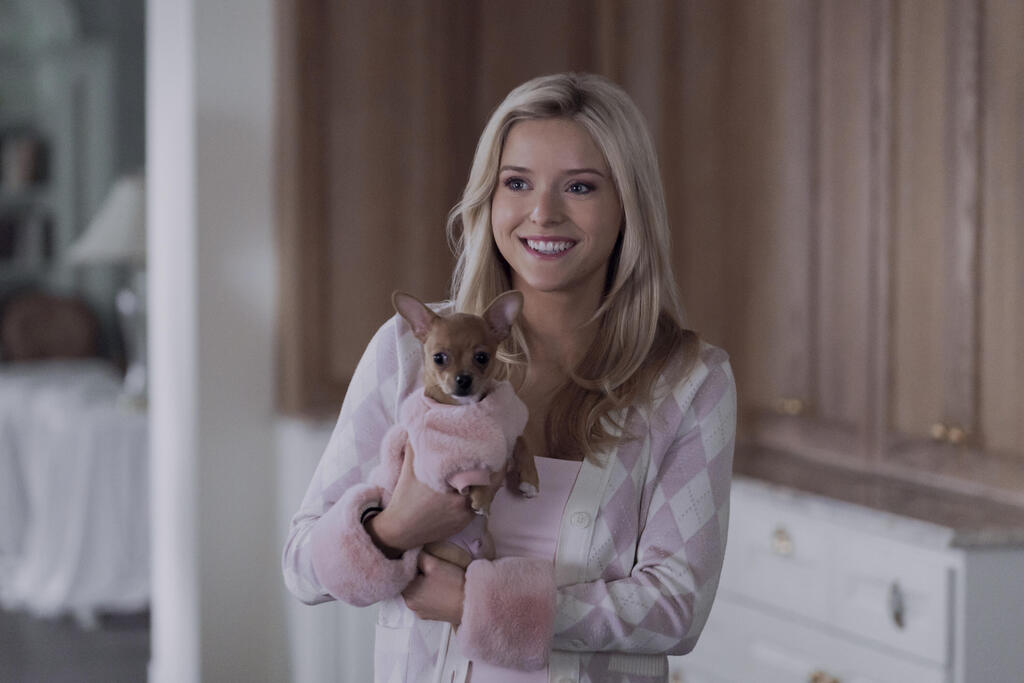
But “Elle,” released 25 years after that film, oddly chooses to send its heroine down the same path, only in 1995, when Woods is an 11th-grade student, and in rainy, judgmental Seattle rather than buttoned-up Harvard.
The actress playing her, Lexi Minetree, was relatively unknown before the role. She was cast after submitting an audition tape in which she recreated Elle’s famous Harvard admissions video from the original film. She absorbed the character’s charm so precisely that Witherspoon chose her immediately.
The Woods family’s move to Seattle is explained by a social necessity. Elle’s father, Wyatt, played by Tom Everett Scott, is a celebrity plastic surgeon who is forced to keep a low profile for a while after a botched operation on a famous actress. The family, which includes Elle’s mother, Eva, played by June Diane Raphael of “Grace and Frankie,” and Bruiser, Elle’s miniature dog, relocates to the birthplace of grunge.
It is precisely the kind of place, and the kind of moment, where wearing anything in a shade that is not dark or a texture that is not flannel is considered a crime against humanity. Elle, white, wealthy, full of good intentions and entirely unaware of herself, lands in a progressive school with political and social consciousness, where most students despise Los Angeles in particular and California in general. To them, she represents everything wrong with American society.
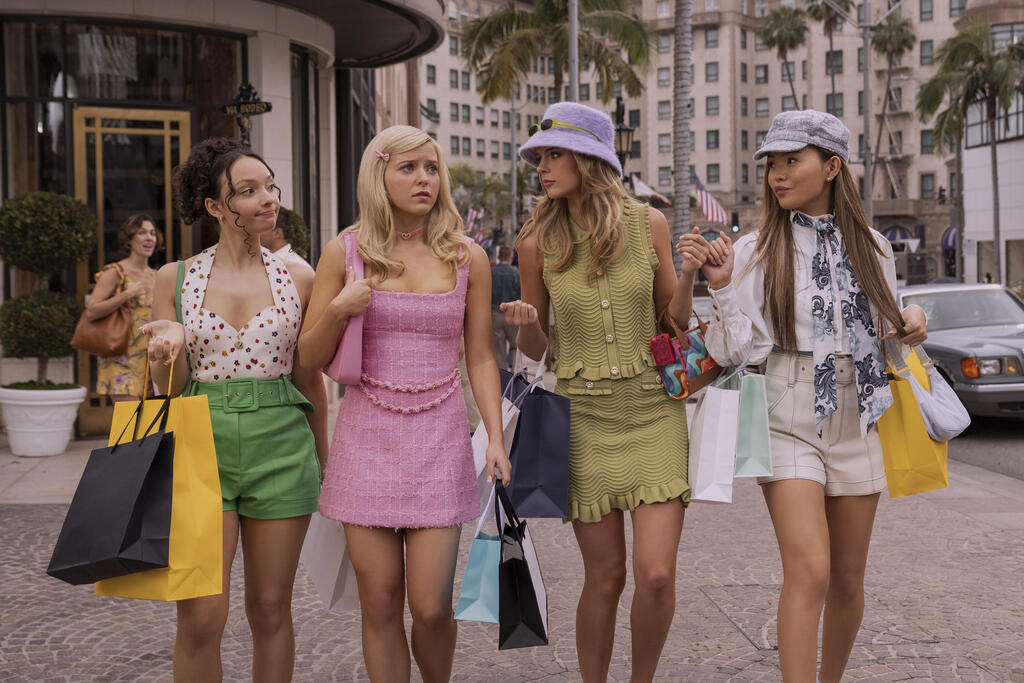
Cute but unnecessary
(Photo: Courtesy of Amazon Prime)
Of course, Elle manages to reach the hearts of the Seattle crowd. Along the way she learns a few things about the world and even kisses Ben. But eight fairly long episodes need more than that to justify themselves, especially when they make the film they are based on feel redundant.
It would be one thing if the plot of “Elle” were merely uninspired and guilty of violating the very idea that clichés can still surprise us. But it is impossible to watch the series without wondering: If Elle underwent such a deep and impressive transformation in Seattle, why was she so shocked when she got to Harvard? Was her memory so short that, within just a few years, she needed to learn the exact same lesson all over again?
“Elle” is a cute series, and perhaps it would have done a better job finding its way into viewers’ hearts, God knows it is better than “Emily in Paris,” if it were not being weighed against the original film.
The series did everything it could to maintain that connection. Witherspoon was involved in every detail of the production, held long conversations with Minetree to recreate the magic, and countless references to the film were planted throughout the script. The original film’s costume designer also returned for another round, and Minetree wore the pink Marc Jacobs dress Witherspoon wore to the film’s 2001 premiere at the series premiere.
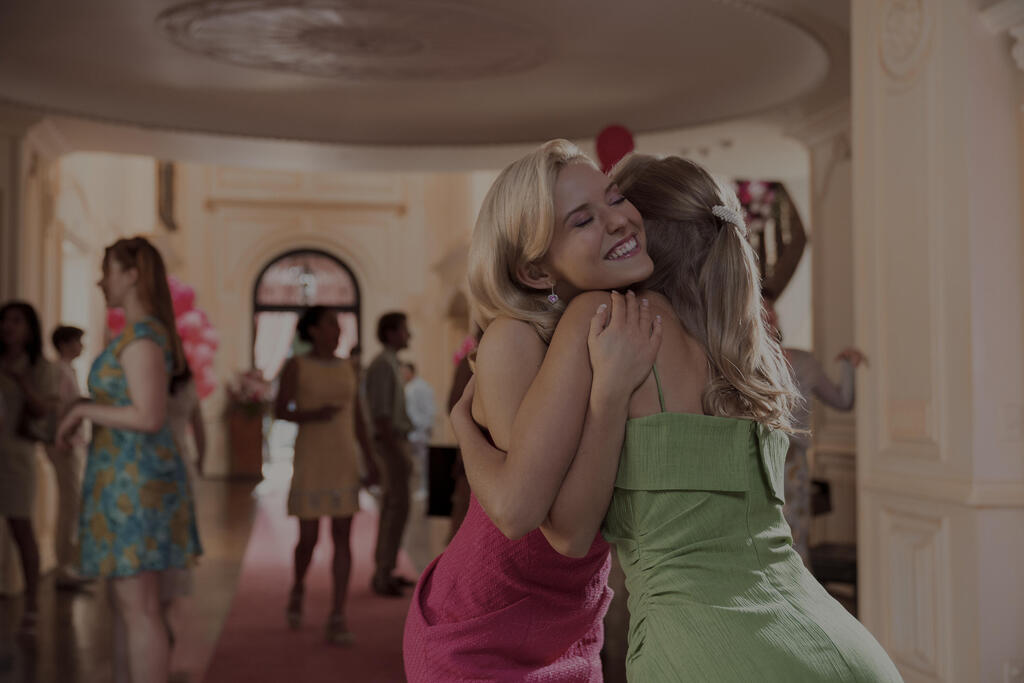
High school cliché
(Photo: Courtesy of Amazon Prime)
But even cute dialogue, which only just qualifies as comedy, cannot hide the fact that most of “Elle” is made up mainly of teen-series clichés: the battle with the mean girl, the social hierarchy, falling for the ex of the best friend. It never really manages to breathe new life into the original idea.
Seattle itself is also fairly depressing. If the glittering California color palette was part of the charm of “Legally Blonde,” “Elle” leaves viewers with heavy, serious grayness. The brand is strong enough that a second season is already underway. Maybe as a senior in Seattle, Elle Woods will do a better job remembering who she really is.