

For almost a thousand years, Baba Yaga, the mythical monster of Slavic folklore, did exactly what was expected of her: sat deep in the forest, ground children's bones with a mortar and pestle, and moonlighted as a particularly effective threat to unruly toddlers. But this fall, someone decided it was time for a software update.
Meet Baba Yaga 2.0 in Yaga, the new series created by Canadian playwright Kat Sandler (now streaming in Israel on HBO Max), which combines supernatural horror with a dark detective thriller. The old, shriveled monster is now played by Carrie-Anne Moss (Trinity from The Matrix films), but in this version she is no longer a decrepit old hag. She's charismatic, sophisticated and sensual, with a particular fondness for men several decades younger than she is. When one of them, a handsome, wealthy heir played by Hudson Williams (Shane from Heated Rivalry), disappears, all eyes, and eventually accusing fingers, turn toward her.
'Yaga' trailer
(Video: Courtesy of HBO)


So how did this transformation happen? How did the iron-toothed old woman, whose only interest in men was as a main course, become the seductress we meet in the series? And is this a belated feminist correction of a figure men spent centuries portraying as ugly, barren and lonely simply because they feared her, or just the replacement of one male fantasy with another? To answer these questions, you'll have to join me on a journey deep into the forest, to the hut that spins on chicken legs, and trace the origins of the original Baba Yaga.
Between light and darkness
Most of what we know about Baba Yaga comes from the collection of folk tales compiled by Alexander Afanasyev, something of a Russian Brothers Grimm, in the mid-19th century. She lives deep in the forest, in a hut that spins around and stops only when the magic words are spoken. The fence surrounding it is made of human bones, with a skull perched on every post, its eyes burning in the darkness. She doesn't ride a broomstick like those vulgar Western witches.
Instead, she flies inside an enormous mortar, propelling herself through the air with a pestle and using a broom only to sweep away the tracks she leaves behind. She has one leg made of bone, iron teeth, a long nose that touches the ceiling when she lies on the stove, and an openly acknowledged appetite for tender human flesh.
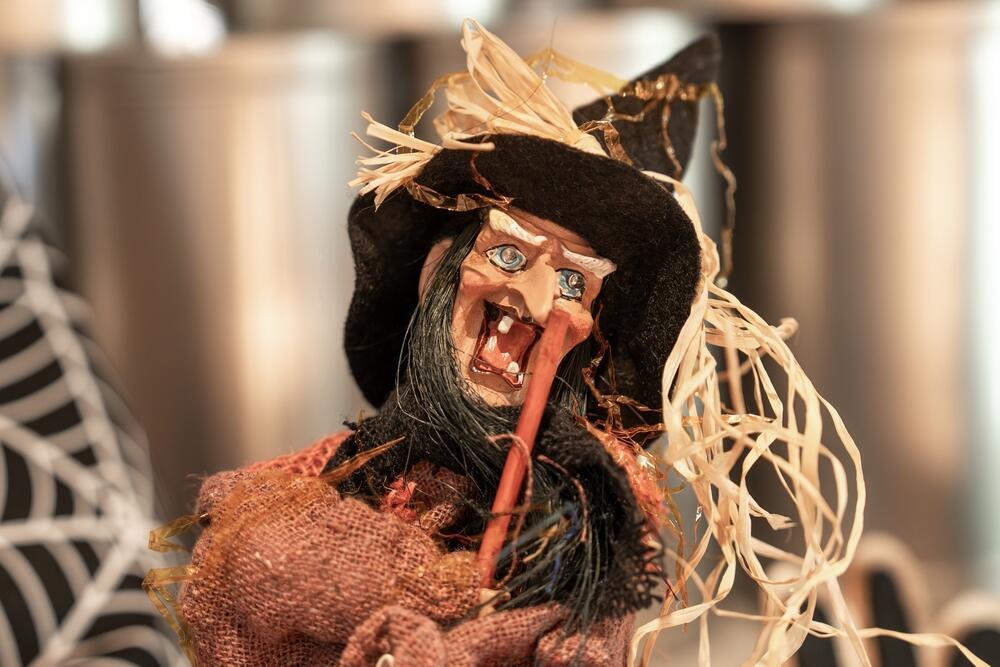
The name itself sounds almost childish: "Baba" means an old woman or grandmother in Russian, while "Yaga" continues to puzzle linguists, who have yet to agree whether it derives from pain, rage, illness or something else entirely. Nevertheless, parents across Russia and Ukraine used to invoke her as a threat when even the prospect of calling the police no longer frightened their children.
Over the years, she also slipped into popular culture. In the first John Wick film, Baba Yaga is the nickname given to the ruthless assassin played by Keanu Reeves. And in an amusing coincidence, Hudson Williams, who plays Henry, the wealthy missing heir in Yaga, bears a considerable resemblance to a young Reeves. The same Reeves who played Neo opposite Carrie-Anne Moss in The Matrix more than a quarter of a century ago. The universe, as you've probably noticed, is collapsing in on itself.
But Baba Yaga was never a straightforward villain. She is a classically ambivalent figure, moving between light and darkness. In some stories, she is a gatekeeper and teacher who puts the heroes through tests and rewards them with wise advice, magical objects and fire. Sometimes she is described as the guardian of the threshold to the world of the dead, while Jungian interpretations see her as an embodiment of the "Great Mother and Terrible Mother" archetype, representing the wild power of nature and feminine intuition, unconstrained by society's rules.

From ‘Yaga’
(Photo: Courtesy of HBO Max)
Her most famous story is Vasilisa the Beautiful, about an orphaned girl sent by her stepmother to the hut in the forest to fetch fire, in the hope that the monster will eat her along the way. Baba Yaga sets her impossible tasks: cleaning, cooking, sorting grains and passing what amounts to a series of special forces selection tests. When Vasilisa completes them all, Yaga gives her a burning skull mounted on a stick and sends her home. But then the skull's blazing eyes reduce the stepmother and her daughters to ashes. So you tell me, who exactly is the villain in this story?
Many of the women persecuted as witches in the past were midwives, herbal healers or older women who lived alone, without depending on a man. In traditional society, an outspoken, independent woman was considered a genuine threat. And just as an insecure man today might try to belittle a woman who intimidates him by calling her "ugly," men in earlier centuries knew how to turn powerful women into bitter, irredeemable monsters.
The Slavs didn't invent the wheel, of course. Almost every ancient culture has that woman onto whom we can project everything that frightens and fascinates us. The one who abducts babies and seduces men. Even Judaism came up with one of its own: Lilith appears as early as the Book of Isaiah, as a nocturnal creature finding rest among ruins. In the Talmud, she is already a female demon with long hair and wings, and men are warned not to sleep alone in a house, lest she pay them a visit.
But her starring role came in the Alphabet of Ben Sira, a satirical medieval text that transformed her into Adam's first wife, created, like him, from the earth, but unwilling to lie beneath him (in more ways than one). When they tried to put her in her place, she simply uttered God's ineffable name and went off to attend to her other business.
According to tradition, Lilith threatens women in childbirth and newborn babies, and for centuries Jewish women hung amulets above cradles bearing the names of the three angels meant to keep her away. Though between us, I'm sure she had far more interesting things to do.
Meanwhile, in the Zohar and Kabbalistic literature, that same Lilith visits sleeping men at night, seduces them and then gives birth to demons from their semen, no less. Lilith, incidentally, has since undergone an impressive feminist rehabilitation, from the American Jewish feminist magazine named after her to the women-centered Lilith Fair music festival founded in the 1990s. If Baba Yaga wants to know where all this is heading, she only needs to ask her Levantine aunt.
Female empowerment is a slippery business
After a thousand years of men writing her story, Baba Yaga isn't just starring in a television series. She's producing it, too. Carrie-Anne Moss is also an executive producer of Yaga, while the screenplay was written by Kat Sandler, who created the original play on which the series is based. The play Yaga premiered in Toronto in 2019, with three actors rotating through 14 different characters.

Carrie-Anne Moss
(Photo: Richard Shotwell/Invision/AP)
In the series, as in the play, Katherine faces detective Charlie Rapp (Noah Reid, the lovable Patrick from Schitt's Creek), an arrogant investigator who arrives to look into the wealthy heir's disappearance and quickly discovers that the red carpet hasn't exactly been rolled out for him. The first to see through his posturing is local detective Carson (Clark Backo), who appears to be the only clearheaded person within a radius of several miles. Sheila McCarthy joins the cast as Olena Yaha, the backup Baba Yaga, a Ukrainian-born local woman with a fondness for younger men and vodka, in that order or the reverse, depending on the hour.
The play opens with a monologue in which Baba Yaga herself addresses the audience, listing all the insults directed at her body throughout the centuries: old, barren, shriveled, repulsive to men. Then she starts answering back. In interviews, Sandler made it clear that she wasn't trying to create a suffering saint, but the kind of antihero audiences become addicted to.
A woman who operates according to her own moral code, inspired by characters such as Hannibal Lecter and Dexter, only with a professorship in the study of bones and better taste in men. The idea began taking shape after a visit to an exhibition at New York's Museum of Sex, where Sandler learned about mating behaviors in the animal kingdom and the ways females develop mechanisms of seduction to trap males. The visit led her to recognize the similarities between sexuality, seduction and witchcraft, and their connection to control and authority.

Kat Sandler
(Photo: Jason Mendez/Getty Images for ReedPop)
But female empowerment is a slippery business. History has taught us more than once that what presents itself as women's empowerment is sometimes merely the male gaze in disguise. One critic of the play argued that the attempt to restore Baba Yaga's dignity had become so tangled that it required three different endings. Another argued that beneath all the sophistication lay an ordinary detective story that once again warns men about the femme fatale.
And there's a grain of truth in that. We still see the story through the eyes of a detective who arrives from the outside, feels attracted, becomes frightened and tries to decide whether the woman standing before him is a witch. In other words, the creator is a woman, the protagonist is a woman, but the perspective, at least at the outset, still belongs to a man peering in. So what's really the difference between a witch who eats men and a woman who devours them in another way, if in both cases men are the ones telling the story? And does turning her into a sharp, sexy, seductive woman really transform older women's sexuality into a source of liberation, or is this simply another role written for the male viewer, only with better lighting?
Perhaps to make sense of the Baba Yaga question, we should also take a look at her neighbors on the shelf, because Baba Yaga isn't running through the forest alone. In March this year, Netflix released Vladimir, an adaptation of Julia May Jonas's novel, in which Rachel Weisz plays a professor in her 50s teaching at a small college. Her life begins to fall apart, and she develops an obsession with a younger, newly arrived colleague, played by Leo Woodall.
A professor, a small academic town, a younger man and a Slavic name floating in the air. If that sounds familiar, it's probably because this is almost the same story, with one significant difference: Weisz breaks the fourth wall throughout the series and tells us about her desire from the inside, in real time, complete with all the shame, embarrassment and pleasure it entails. Weisz herself described the series as a kind of heightened fairy tale about the power of desire. In other words, Vladimir is also a fairy tale about a witch, except this time the witch is the one speaking.
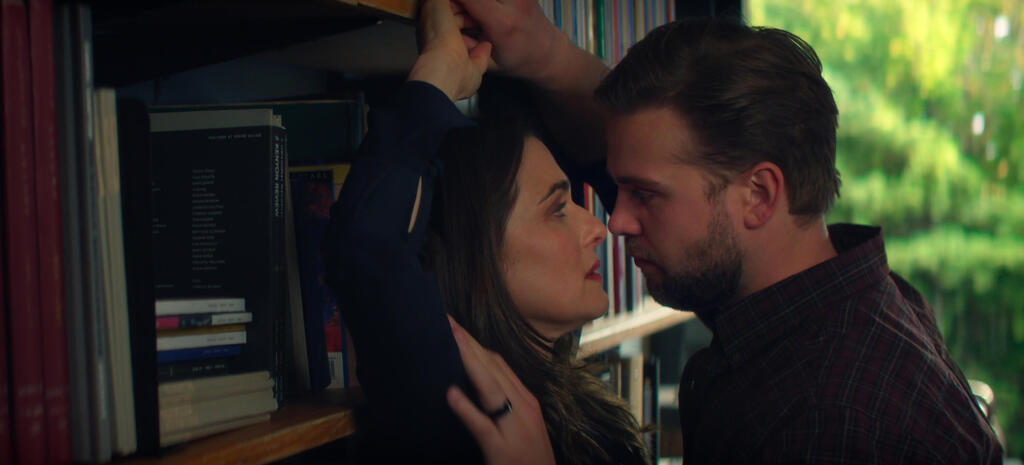
A scene from ‘Vladimir’
(Photo: Courtesy of Netflix)
Add to that Nicole Kidman in Babygirl, playing the successful CEO of a New York technology company who falls for a younger intern, or the same Kidman in A Family Affair, this time as a writer who falls in love with a younger movie star played by Zac Efron, and a trend begins to emerge: Culture is finally prepared to acknowledge that women over 50 have sexual desires, too. Sometimes they have to risk something to fulfill them, but at least those desires exist. Baba Yaga may have traded her bone leg for high heels and her mortar for the halls of academia, but in reality, she's still waiting in that same spinning hut for someone to say the right words. The good news? This time, at least, she's the one writing the check.