

On Aug. 5, 1962, Marilyn Monroe was found dead at her Brentwood home in California at the age of 36. Before the headlines, conspiracy theories and decades of mythology that would follow, French actor and singer Yves Montand called his wife, Simone Signoret, to tell her the news. Two years earlier, Montand and Monroe had conducted one of Hollywood’s most publicized affairs while filming George Cukor’s “Let’s Make Love.”
Signoret was having dinner in Toulouse with two friends from the film industry when the call came. She returned to the table and said simply: “Marilyn is dead.” “I was very sad, but not surprised,” she later wrote in her autobiography, “Nostalgia Isn’t What It Used to Be.” Within half an hour, journalists were already trying to find her. Signoret remained grateful to the hotel manager who refused to tell them where she was, sparing her from being thrust once again into a story the press had exhausted two years earlier.
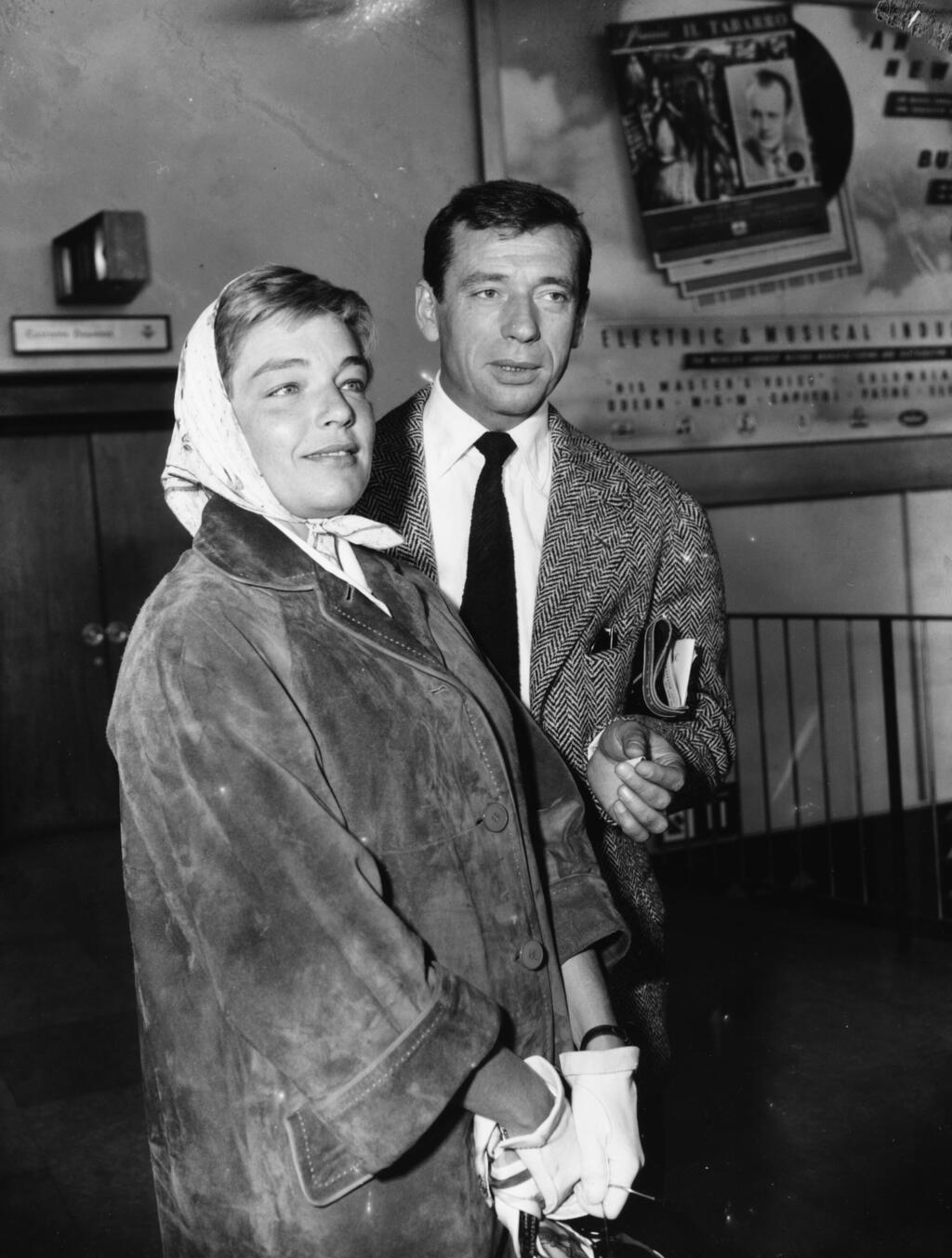
Signoret may have dismissed the affair as a “simple event,” but there was nothing simple about the spectacle surrounding it. By the end of the 1950s, Montand had arrived in Hollywood to star opposite Monroe while Signoret was at the height of her own career, winning at Cannes and later becoming the first French actress to win the Academy Award for best actress for “Room at the Top.” Montand and Signoret stayed at the Beverly Hills Hotel in a bungalow next to Monroe and her husband, playwright Arthur Miller. The couples became friends, and Signoret wrote warmly about Monroe, whom she fiercely defended against press portrayals she considered cruel and false.
More than six decades later, French Jewish filmmaker Diane Kurys has returned to the marriage, and particularly to the damage caused by the Monroe affair, in her feature “Yours, Always.” The film, starring Roschdy Zem as Montand and Marina Foïs as Signoret, premiered at Cannes and is being screened at the 17th Epos International Art Film Festival at the Tel Aviv Museum of Art.
“The big, big wound that she got, their wound that never cauterized, was Marilyn’s story in Los Angeles,” Kurys told Ynet. “You cannot compete with Marilyn, and she couldn’t. But she won in the end because he stayed with her. I think it was a very important point in their life.”
The affair the whole world knew about
Kurys said the relationship was impossible to separate from the intense publicity surrounding it. Montand was repeatedly unfaithful during his marriage, she said, but Monroe was different because the humiliation became global. “She was known all of a sudden in the world for being betrayed by her husband with Marilyn Monroe, the biggest star in the world,” Kurys said. “It’s something that you don’t recoup from very fast, very easily.”
The filmmaker was particularly struck by a famous series of black-and-white photographs by Bruce Davidson showing Montand, Signoret, Monroe and Miller dining together at the Beverly Hills Hotel. “The pictures are just insane,” she said. “The look they give one another tells everything, everything that is going to happen, or that has already happened.”
Montand never seriously concealed what happened, Kurys noted. “It was common knowledge. Everybody knew.” He later spoke about the connection he felt with Monroe, saying they had both come from poor families. Monroe helped him with his shaky English, while he supported her at a time when she was deeply frightened. Kurys said Monroe also wrote about the relationship in her letters and was “very much in love with him.”
Signoret eventually left Los Angeles to make a film in Italy, knowing that Montand and Monroe would remain in neighboring bungalows. Kurys suspects the affair had already begun before then. Signoret nevertheless stayed with Montand, despite his later affairs with other actresses and women.
Why? “Because she loved him,” Kurys said. She believes Signoret was, in many respects, the stronger of the two. “She was his conscience. She was more of an intellectual than him. They made each other. She made him read and learn, and he made her a better actress, maybe.” For Kurys, that is ultimately the real subject of the film: “Couples are complex. Why people leave, why people stay, that’s the subject of the film. Why do you stay? Why do you decide to change your life? It’s a question that is never easy to answer.”
A life far beyond Marilyn Monroe
That complexity is also why reducing Signoret to the wronged wife in a famous Hollywood triangle misses most of her story. Born Simone Henriette Charlotte Kaminker in Wiesbaden in 1921, she was the daughter of André Kaminker, a French Jew of Polish origin, and Georgette Signoret, a French Catholic. The family returned to France when she was young, and during the Nazi occupation she adopted her mother’s surname, both for her acting career and to conceal her Jewish background.
Signoret later described herself as having grown up in an entirely agnostic environment, with an assimilated Jewish father. During the war, she also became involved in activities connected to the French Resistance, at times without fully understanding what she was being asked to carry or deliver.
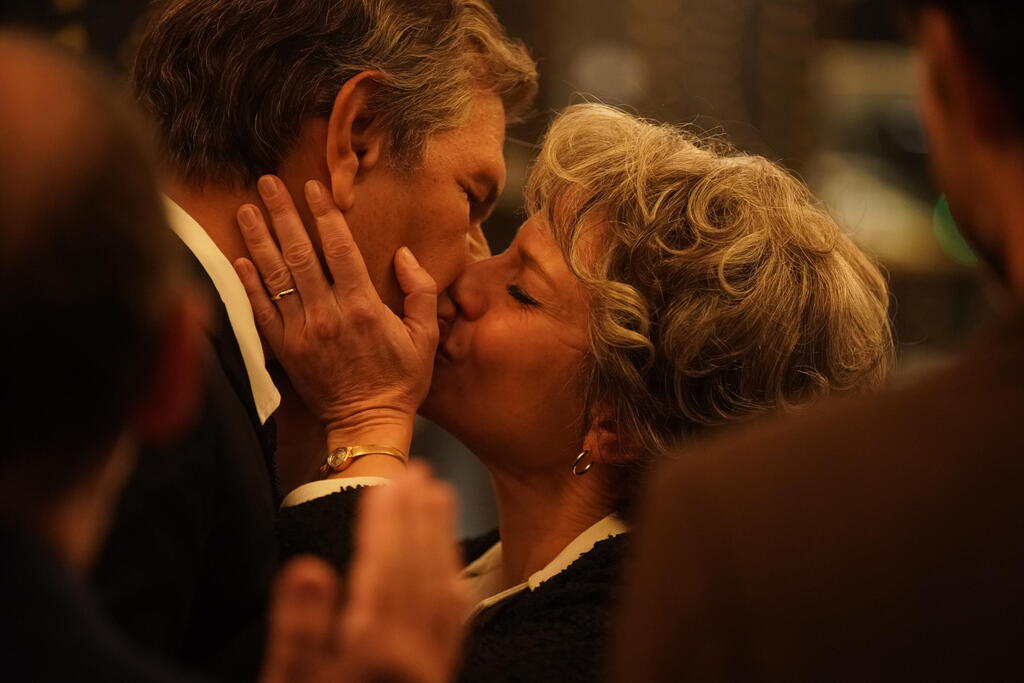
Yours, Always
(Photo: PR)
Kurys originally wrote a scene for “Yours, Always” that would have addressed Signoret’s Jewish identity directly. Set after the 1982 terrorist attack on the Jo Goldenberg restaurant in Paris, it had Signoret and Montand traveling toward the site and discussing her Jewish roots. Kurys ultimately decided not to shoot it. “Maybe I sort of escaped that for some reason,” she said.
Her view of Signoret’s identity is deliberately nuanced. “She had and she didn’t,” Kurys said of her connection to Judaism. “Her father was Jewish, her mother was not. She was concerned about Israel, she was concerned about Jewishness, but she was not religious.”
Signoret nevertheless supported Jewish causes, including the struggle for Soviet Jewry, maintained ties with Israeli leaders and criticized antisemitism within the French Communist movement. In 1959, she accompanied Montand on a visit to Israel that she later described in detail in her autobiography.
The couple dined in Tel Aviv with prime minister David Ben-Gurion and his wife, Paula. Signoret recalled Paula suddenly asking her in English: “And what kind of actress are you? A good actress or a bad actress?” Before she could answer, Ben-Gurion intervened: “Mama, Mama, please. I’m sure she is a good actress.” Paula shot back: “How do you know?”
They also visited a kibbutz populated by French-speaking Jews from Morocco, ate in the communal dining hall and watched Montand dance the hora with residents “as though he had danced the hora since childhood,” Signoret wrote.
The Israeli director behind her great comeback
One Israeli connection does play a significant role in Kurys’ film: Signoret’s collaboration with director Moshé Mizrahi. The pair made two films together in France, most famously “Madame Rosa,” Mizrahi’s 1977 adaptation of Romain Gary’s “The Life Before Us.”
Signoret played an aging, ailing Jewish former sex worker and Auschwitz survivor living in Paris and caring for the children of other sex workers. Her character forms a deep bond with Momo, a Muslim boy. The film represented France at the Academy Awards and won the Oscar for best foreign-language film.
Mizrahi later recalled that Signoret had disliked the novel and previously rejected offers to appear in an adaptation. She agreed to meet him because she admired one of his earlier films. Their conversation wandered far beyond “Madame Rosa,” but by the end she had been persuaded. At the 1978 Oscars, Mizrahi thanked everyone involved before adding: “Above all I want to thank Madame Rosa herself, Simone Signoret.”
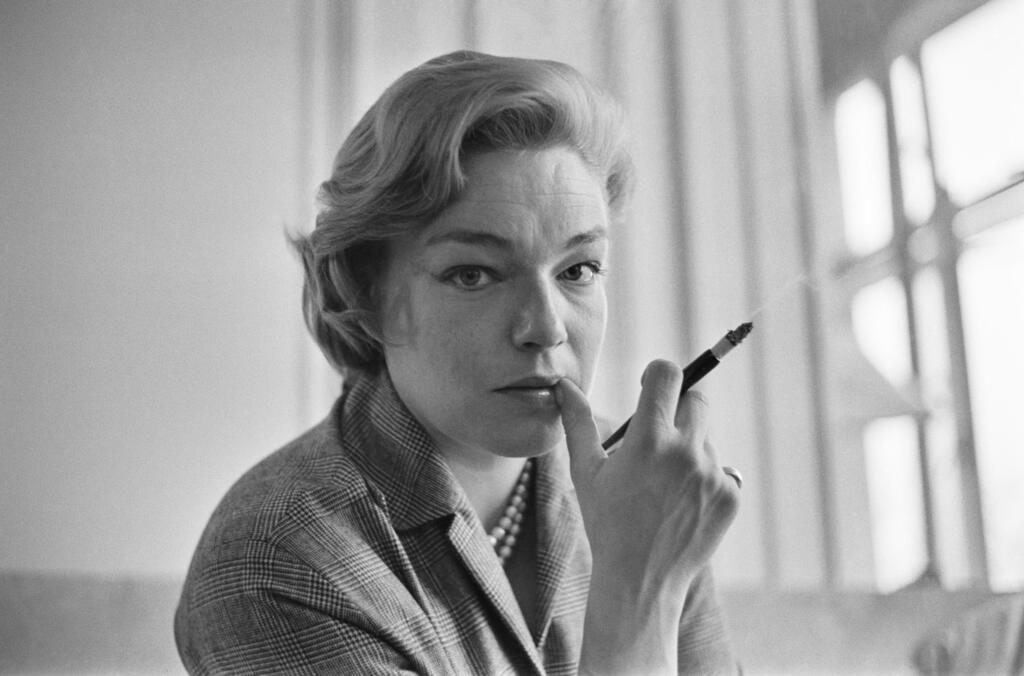
Simone Signoret
(Photo: Alan Meek/Daily Express/Hulton Archive/Getty Images)
Kurys sees the film as one of the great late surprises of Signoret’s career. “At the point where we start my film, she’s completely down. She has no offers. She doesn’t work,” she said. Signoret had gained weight, was drinking and smoking heavily and had stopped caring about maintaining the image of her younger self. Kurys does not see that entirely as self-destruction. “I think she loved life. She loved a glass of wine and good food.”
Montand, however, did not want her to play Madame Rosa, according to Kurys. “He wanted to keep the image of the young girl he met when she was 29, who was the stunning beauty.” Signoret went ahead anyway, accepting a role in which she appeared significantly older than she actually was at a time when major actresses rarely did so. “She was very brave in that sense,” Kurys said.
Kurys believes Signoret deserved both greater respect as an actress and a stronger career than she ultimately received. She had begun as an extra, graduated to roles as prostitutes and “bad girls,” then became one of France’s leading actresses before enduring periods without work. “Madame Rosa” was a final dramatic resurgence.
‘There’s no equivalent today’
Signoret and Montand were also something that Kurys believes barely exists today: celebrities who functioned as political and moral reference points for a large part of French society.
“There’s no equivalence today to what they represented,” she said.
Both were once close to the French Communist Party, although neither formally joined it. Their visit to the Soviet Union changed their view of communism, and their willingness to say so angered friends who remained committed to the movement. They participated in strikes, signed petitions, raised money and were constantly asked to lend their names to political causes.
“They were mainly a political couple,” Kurys said. “People would follow their opinion very much.”
It is one reason she wanted to make the film. Signoret and Montand belonged to the world Kurys grew up in, a world in which artists were not merely entertainers but public intellectuals whose positions mattered. Signoret also reminded Kurys of her own mother: They were born in the same year and died in the same year.
Signoret died of cancer in 1985 at just 64. Montand died in 1991. Their marriage had survived fame, political battles, career reversals and his repeated betrayals.
Marilyn Monroe remained the most famous of those betrayals, and perhaps the deepest wound. But Signoret’s story was never only about being the woman whose husband cheated with the biggest star in the world. She was an Oscar-winning actress, a politically engaged public figure, a woman whose Jewish roots and relationship with Israel remained part of her life, and an artist willing to dismantle her own glamorous image on screen.
The affair made her a headline. Her life made her Simone Signoret.