

She trademarked sex appeal and blonde glamour, became the most famous female icon of all time and remained forever enigmatic. This week marks 100 years since the birth of Marilyn Monroe, a one-of-a-kind screen legend who entered the world as Norma Jeane.
“Marilyn Monroe was a goddess shrouded in mystery: on the one hand, a desirable, stunning woman whose physical presence was electrifying, yet also a frightened child who never truly overcame the traumas of her childhood,” cultural researcher Dr. David Gurevich writes in his Encyclopedia of Ideas.
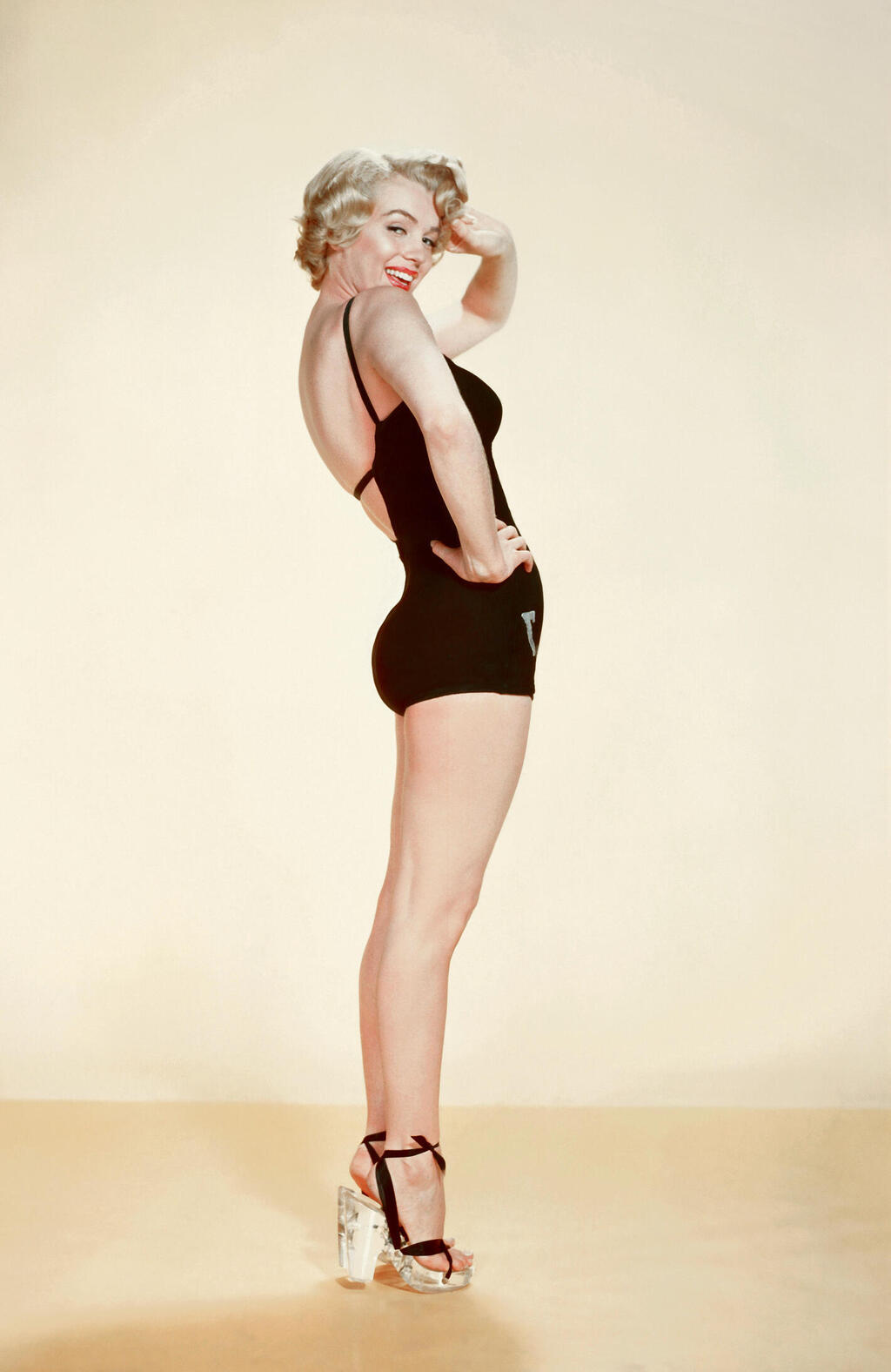
“Everything we do know about Marilyn Monroe comes nowhere close to exhausting the unresolved mystery that surrounded her,” Dr. Gurevich says, adding that any attempt to understand her through that mystery must avoid clichés, “because mystery cannot be a cliché.”
So that mystery was the source of her magic?
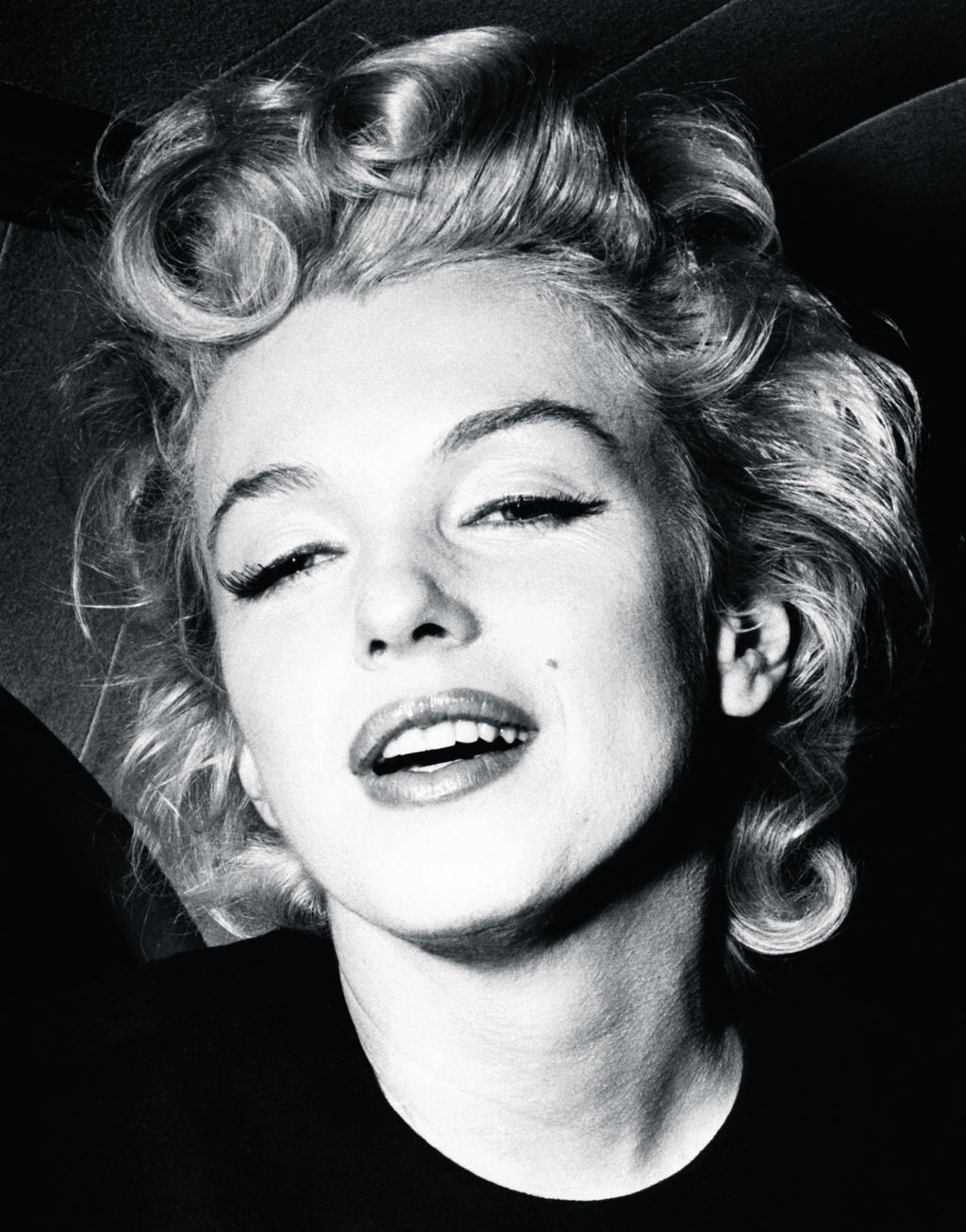
“Absolutely. In many photographs taken throughout her life, especially private moments rather than glamorous ones, you see an attractive, fit woman, but not perfect, not especially tall, not extraordinarily beautiful. What she projected was a combination that felt like a gift from the gods: vulnerability and sensitivity, gentleness and innocence, along with captivating eyes. Through that inexplicable combination, she managed to mesmerize everyone around her.”
Gentlemen Prefer Blondes
Indeed, beneath the dreamy gaze and flirtatious sexuality, Monroe wore a sophisticated and subversive feminism that ultimately helped her beat men at their own game — power and money.
“Marilyn Monroe was a complex, sharp and courageous woman who understood both the power of image and the price it exacted,” says Dr. Yaara Keydar, a fashion historian and curator. “She knew the world wanted her to be a fantasy — blonde, seductive and easy to consume — while constantly trying to break free of that role and demand depth, recognition and control for herself.”
Western culture then, as now, tended to assign less value to women associated with beauty, charm and sexuality.
“In Monroe’s case, the way people treated her was almost a cultural defense mechanism. It was easier to see her as a body, a joke or a fantasy than to acknowledge that she was an intelligent, hardworking, studious and ambitious woman,” Dr. Keydar says.
Yonatan Gat, a communications lecturer at Tel Aviv University and researcher of cultural icons, agrees that people remain fascinated by Monroe because of the contradictions she embodied.
“On the one hand, she was sexy and a sex symbol. On the other, she had such an innocent look. She was a star who understood media and constantly basked in front of cameras and flashing bulbs, yet she was also a very shy woman.” And it was not only the public who were drawn to her complexity. Her romantic partners likely were as well.
“Broadly speaking, she fulfilled every fantasy men wanted in a woman — a lost girl in the woods whom they could save and guide. Yet she was anything but naïve. She posed partially nude for Playboy and projected desirability and power. That combination pushed male buttons like no woman before her,” Gat says.
Some Like It Hot
It was not only her partners. Hollywood’s arrogant and controlling producers also believed they knew how to manage a woman who had been an abandoned child, a victim of sexual abuse, perceived as a frivolous starlet and iconic sex symbol, but who in reality was strong and independent.
They tried to force her into molds they had created for her and assumed they would succeed. Instead, Monroe, at a young age and despite the poor hand life had dealt her, skillfully spun the wheel of fortune in her favor.
In the 1950s, for example, while most women were still expected to remain in the kitchen, Monroe founded her own production company, a subversive and almost unthinkable move for a woman in Hollywood at the time.
“Her feminism was evident in her professional courage and business acumen. Her rebellion stemmed in part from staggering pay disparities. In *Gentlemen Prefer Blondes*, for example, she earned only a fraction of what men in Hollywood were making, despite being the real box-office draw,” Dr. Keydar says.
“In 1955, at just 29 years old, she and photographer Milton Greene founded Marilyn Monroe Productions, an independent production company, at a time when actresses were completely bound to the studio system. She served as company president and held a 51% stake, an unprecedented move for a Hollywood star of that era.
“Her rebellion succeeded spectacularly. Twentieth Century Fox was forced to concede and signed her to a new contract that granted her an enormous salary, artistic freedom and veto power over directors and scripts. It was a completely conscious act and a profound declaration of her right to define herself — and it happened 70 years ago.”
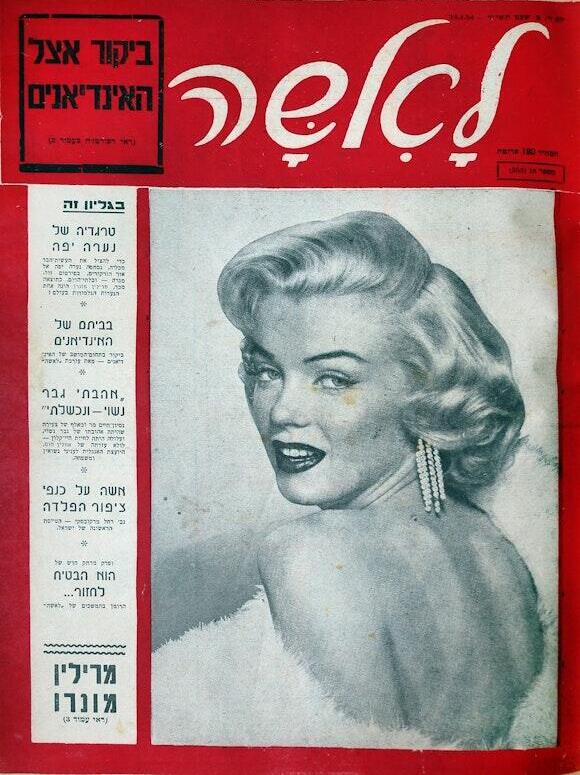
Marilyn Monroe on the cover of Laisha magazine, 1954
Marilyn Monroe Productions was her rebellious response to the powerful Hollywood producers who insisted on casting her as a ditzy blonde while she dreamed of, and ultimately succeeded in becoming, a serious actress and consummate professional. She traveled to New York specifically to study at Lee Strasberg’s renowned acting school and later produced her own film in London.
Acclaimed novelist and playwright Savyon Liebrecht extensively researched Monroe while writing a play about the relationship that developed in London between Monroe and psychoanalyst Anna Freud, daughter of psychoanalysis founder Sigmund Freud.
How did Marilyn Monroe end up with Anna Freud in London?
“In 1956, Monroe arrived in London as the producer of The Prince and the Showgirl. Not only did she produce it, she also starred opposite the legendary Shakespearean actor Laurence Olivier, who looked down on her and was condescending toward her.
“At the same time, she discovered a personal journal kept by her husband Arthur Miller in which he wrote that he was embarrassed to introduce her to his friends. She was at rock bottom professionally and personally and needed someone to talk to in London.
“In New York, she attended psychoanalysis several times a week, and her analyst, who had studied under Freud, connected her with Freud’s daughter Anna.”
Surprisingly, the two women shared several points of connection. Monroe had grown up in orphanages, a subject Freud studied extensively and worked with professionally as a child psychologist. They also shared a connection to Judaism. Monroe converted to Judaism in order to marry Miller, although the marriage ended after only a few years. Another common thread was the significance of the father figure in both their lives.
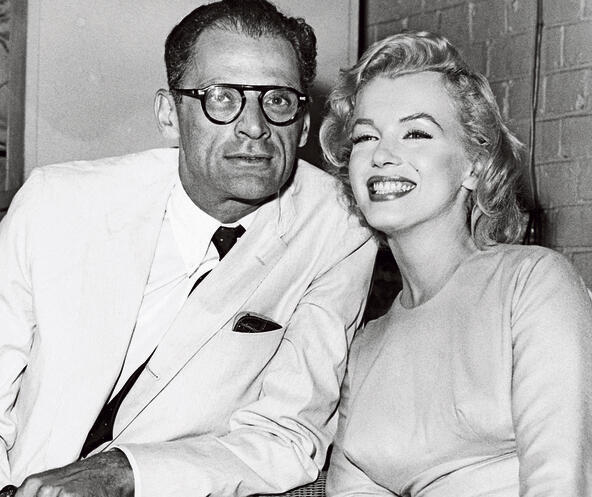
She converted to Judaism in order to marry playwright Arthur Miller
(Photo: Hulton Deutsch, Corbis via Getty Images)
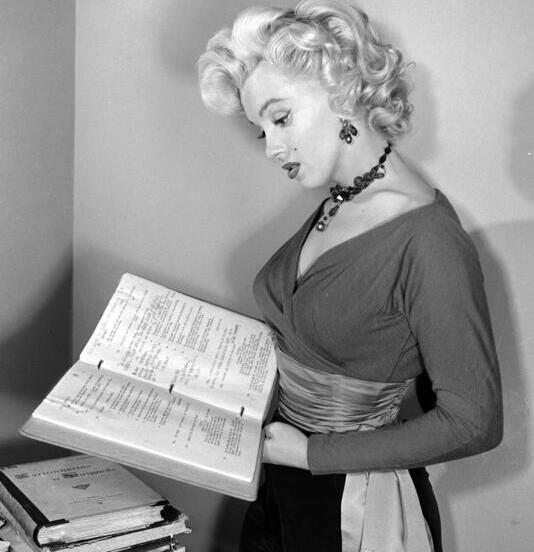
“For my research on Marilyn Monroe, I bought many books about her and studied her extensively,” Liebrecht says. “She was far more complex and feminist than people generally assume. She had very sharp instincts and knew how to navigate the studios. She was also much deeper than her public image suggested. She read constantly. Reading was important to her because she never received a formal education.
“When she arrived in Hollywood, she did what everyone else did. In those days, every actress slept with directors and producers, and she did too. But eventually Monroe rebelled. At the height of her fame as a sex symbol and star, she left Los Angeles for New York and studied acting seriously under Strasberg.”
Dr. Keydar agrees. “When she felt Hollywood was suffocating her, Monroe left everything behind and moved to New York to study at the most prestigious acting institution in the United States and refine her craft far from the cynical studio system. Strasberg, incidentally, believed she was one of the greatest actresses the world had ever known.”
“And from what I learned about her,” Liebrecht adds, “she was not only a good actress. As a person, she was much sweeter than people remember.”
“She was also highly educated,” Dr. Keydar says. “Reading became one of her main passions. One of the most astonishing things about her is that she was largely self-taught and loved learning. She had a personal library of more than 400 books and read deeply and devotedly, including works by James Joyce, Dostoevsky and Freud.”
(Photo: Bettmann, Bettmann Archive)
“It turns out she was a serious person with aspirations of becoming a serious actress,” Dr. Gurevich says. “After every role, she continued studying and taking acting classes. She said there were two important things in life: love and work.
“She was a good actress, but on screen she was often given minor roles — the gangster’s young mistress, the woman searching for a powerful man to support her.”
How to Marry a Millionaire
Her personal life reflected similar patterns. She married James Dougherty, baseball star Joe DiMaggio, from whom she separated the same year they married — and playwright Arthur Miller. She left all of them after only a few years. She always seemed to seek out the strongest men to lean on, even though her life demonstrated that she possessed strength of her own.
“She wanted the most famous, most powerful men,” Dr. Gurevich says. “Arthur Miller was America’s most celebrated playwright. Joe DiMaggio was the country’s most beloved baseball player in a nation where baseball holds near-religious status.
“And what could be more prestigious than being the mistress of President John F. Kennedy? It should also be remembered that she had a relationship with his brother as well.
“On the one hand, she appeared to let all these men dominate her and defeat her. Yet at the same time she sang ‘Diamonds Are a Girl’s Best Friend’ in a mesmerizing performance that showed she understood very well the power these relationships gave her.
“Even then, her message was that we live in a completely materialistic world, in a society where men buy women with money, and therefore women need to raise their price. And that is exactly what she did.”
(Photo: Screen Archives/Getty Images)
In that sense as well, Monroe was ahead of her time, almost painfully so. She lived decades before conversations about objectification and the #MeToo movement entered everyday feminist discourse, yet she understood better than anyone the power structures of a destructive culture that consumes images while erasing the human being beneath them.
That is why she became both the image of the blonde bombshell and its fiercest critic. Everyone thought she was playing the blonde. What they failed to understand was that she was also writing the role.
“Out of the vulnerability and helplessness in which she grew up, Monroe truly made many mistakes and lived amid emotional and social turmoil that stemmed in part from her need to cling to a home she never had,” Dr. Gurevich says.
“When her psychiatrist persuaded her to buy a house of her own, it was not for business reasons. It was to help her feel rooted in a specific place rather than constantly moving among hotels, resorts and cocktail parties, where other people held the power.”
All About Eve
Speaking of vulnerability and power dynamics, Monroe spent much of her life contending with powerful forces, including the FBI. According to various reports, the bureau concluded that Monroe had woven seductive ties around the president that could give her access to the highest levels of government in Washington, creating a potential blackmail risk, and worked to sever the relationship.
“Monroe then moved into the orbit of Robert Kennedy,” Dr. Gurevich says. “But as attorney general in his brother’s administration, he too feared being blackmailed by her. This fueled many of her paranoias and contributed to her descent into prescription drugs, substance abuse and the instability that had characterized her life from the outset.”
“To this day, the collective consciousness holds Monroe at two extremes,” Dr. Keydar says. “On one side, she is the ultimate pop icon: the white dress, red lips, blonde hair, smile and famous beauty mark. On the other, there is a desire to understand and see her again as a human being.
“Those who look more deeply can understand the price of the image, the violence of the entertainment industry, the loneliness behind the glamour and also her strength. The important question today is how to free her from cliché without erasing her magic. The answer, as always, is to let compassion lead and see her as a real woman.”
And speaking of a real woman, Gat offers an intriguing anecdote about the most mesmerizing woman of all. As part of psychiatric treatment and at her therapist’s recommendation, Monroe would occasionally go out in public without lipstick, makeup or glamorous dresses. She would tie her hair back with a scarf and discover that men were still attracted to her and approached her.
“Men were drawn to her absolutely, regardless of her fame,” Gat says. “She mesmerized them like a spaceship hovering in the sky. And you cannot understand how it happens.
“There were and are women sexier than she was, actresses better than she was and singers far better than she was. But none of them became Marilyn Monroe.”