

On November 17, 1943, at the Martin Beck Theatre in New York, the premiere of the revamped musical Yankee Doodle Dandy by the Jewish creative duo, lyricist Lorenz Milton Hart and composer Richard Rodgers, was held. Hart, an alcoholic gay man in the closet, attended the festive event completely drunk. His sister-in-law noticed his embarrassing state and persuaded him to accompany her home in Manhattan.
Hart stayed for some time at his brother and sister-in-law's home, then left. Despite the cold weather and heavy rain, he went out to continue drinking. A friend found him sitting in a sewer near his favorite bar on Eighth Avenue in Manhattan. The talented and famous lyricist was shaking, and his friend escorted him to the hospital, where it was determined that Hart had developed pneumonia. On November 22, 1943, about four days after being hospitalized, Hart passed away at the age of 48.
Blue Moon trailer
(Video: Courtesy of Forum film)


According to journalist and author Stephen Holden, Hart, who suffered from depression throughout his life, was especially depressed in the last months of his life. "Hart was devastated by the death of his widowed mother, with whom he lived. After her death, he drank heavily, more than ever," Holden wrote. "Sometimes he would disappear for weeks due to excessive drinking."
Hart was buried in Mount Zion Cemetery in Queens, leaving behind songs that became timeless classics, performed by countless leading singers, from Blue Moon to My Funny Valentine, The Lady Is a Tramp, and Manhattan. Five years after his death, Hart and Rodgers were commemorated in the musical film Words and Music, with Mickey Rooney portraying Hart in a sanitized and softened version of the late wordsmith.
82 years have passed since Hart’s death, and his work remains with us. However, his personal story is less well-known. Recently, the film Blue Moon by director Richard Linklater has brought it to light. The film competed at the last Berlin Festival for the Golden Bear, with Ethan Hawke portraying Hart.
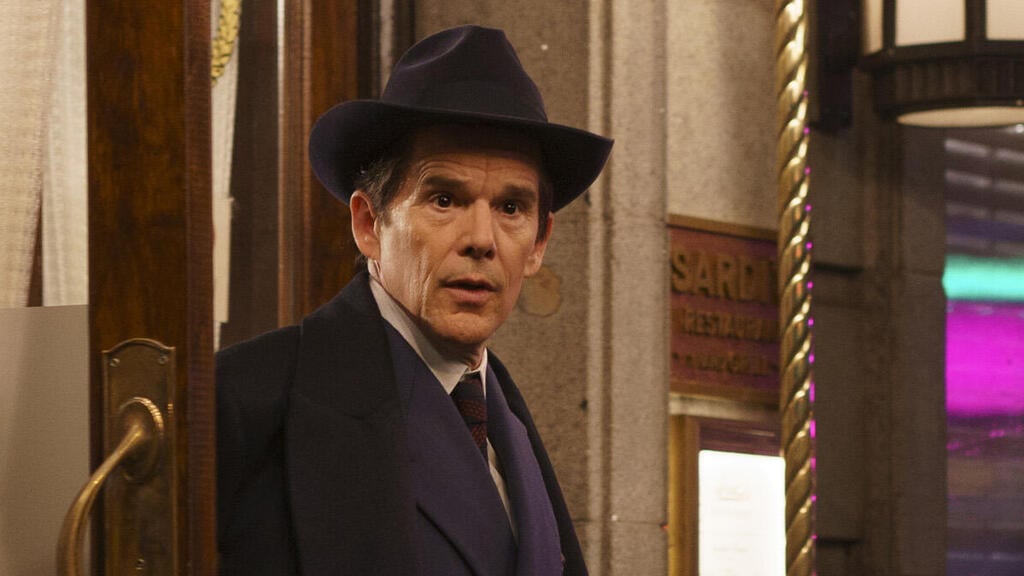
"I think Hart and I share a lot as human beings, beyond elements of sexuality or religion that we do not share," said Linklater at the Berlin Festival. "Look at the circumstances Hart was born into: on one hand, a terrible time - his sexual orientation was illegal, he was short, balding, alcoholic, and had an addictive personality. He had many problems. On the other hand, he was born at the right time to write those thousand songs professionally and express himself through them. But he certainly struggled. We all know people like that. Hart was extremely troubled."
Hart was acutely aware of antisemitism in American society and the entertainment industry. His Jewish identity contributed to his sense of being an outsider, which shaped his melancholic and ironic writing.
'Jews invented American humor'
Before delving into Blue Moon, which was recently screened at the 41st Haifa International Film Festival, it is worth recounting Hart’s sad and moving story. He was born into a Jewish family in Harlem, New York, in 1895, 130 years ago.
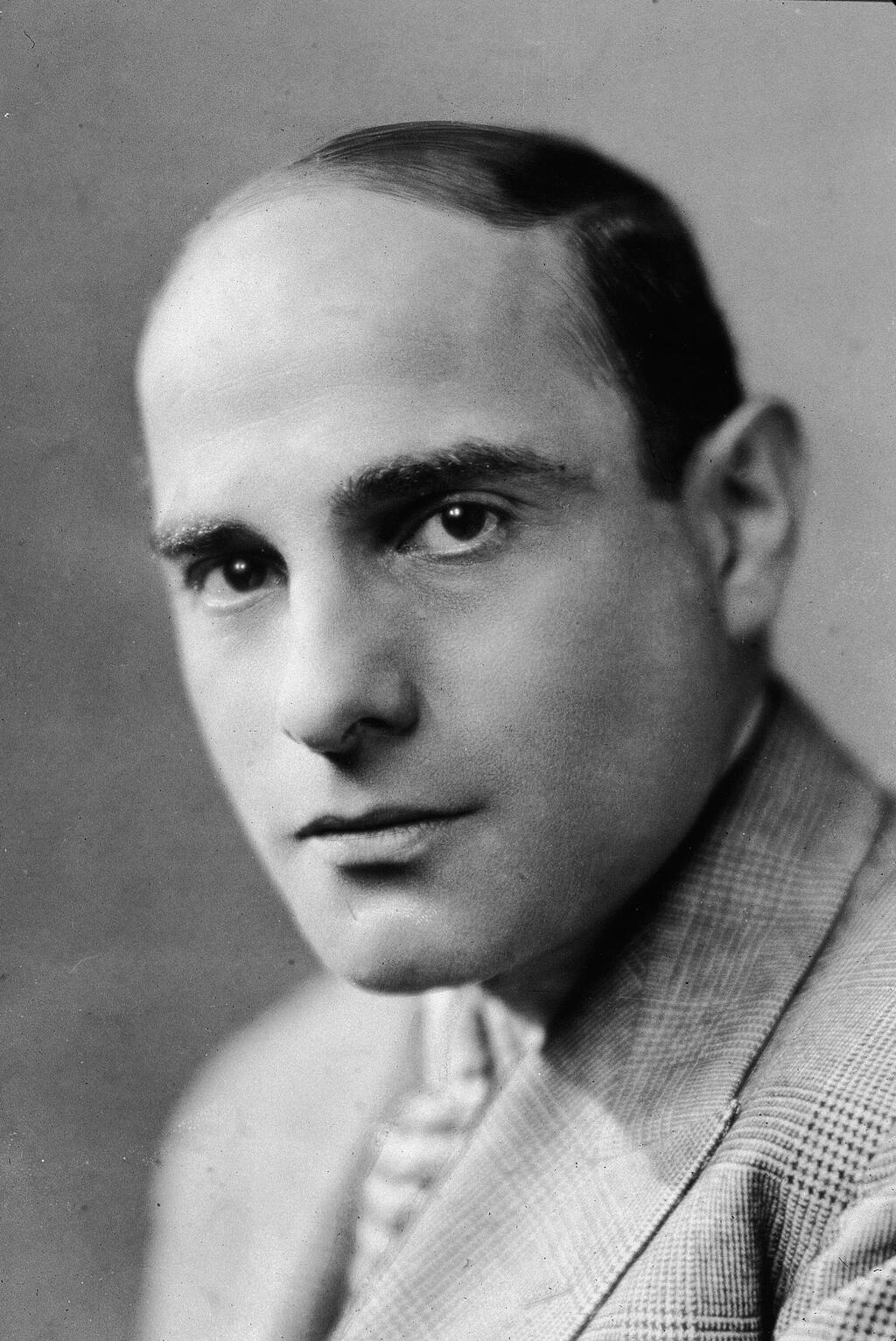
Sad and moving life. Lorenz Hart
(Photo: Hulton Archive / Getty Images)
Hart’s parents were German immigrants. His father was a businessman, and his mother was a relative of Heinrich Heine, the Jewish Romantic poet, philosopher, and publicist who converted to Christianity and was one of Germany's greatest creators of the 19th century.
Hart and his younger brother, Teddy (who later became a star of musical comedies), were sent to private school. Later, Hart studied at prestigious institutions. In 1919, a friend introduced 24-year-old Hart to composer Richard Rodgers, marking the beginning of a remarkable friendship and fruitful collaboration. Initially, they wrote for student productions, and Hart also translated songs from German to English. Gradually, they moved on to writing their own musicals and became important figures on Broadway.
"The founders of Broadway musicals, except one, were Jewish: Oscar Hammerstein II, Richard Rodgers, Jerome Kern, George and Ira Gershwin, Irving Berlin, Hart and the Marx Brothers," says Dr. Donny Inbar, a Jewish theater researcher living in the U.S. "Why were they all Jewish? Good question. Jews integrated into theater for many reasons. One was that theater was bohemian and less institutionalized, and it welcomed people from the margins of society, who were excluded elsewhere. In other professions, racism was more severe. Jews also invented American humor."
Rodgers, Hart, Kern, and Hammerstein were German Jews, not from the Yiddish theater tradition. "They came from privileged families of New York's Jewish elite, and some studied at Columbia University," says Dr. Inbar. "There isn't much information about Hart's Judaism; he came from a fairly assimilated family. He didn't reject his Judaism, but it wasn't part of his creative world. In contrast, Polish and Russian Jewish creators were more connected to their Judaism, and it is reflected in their works."
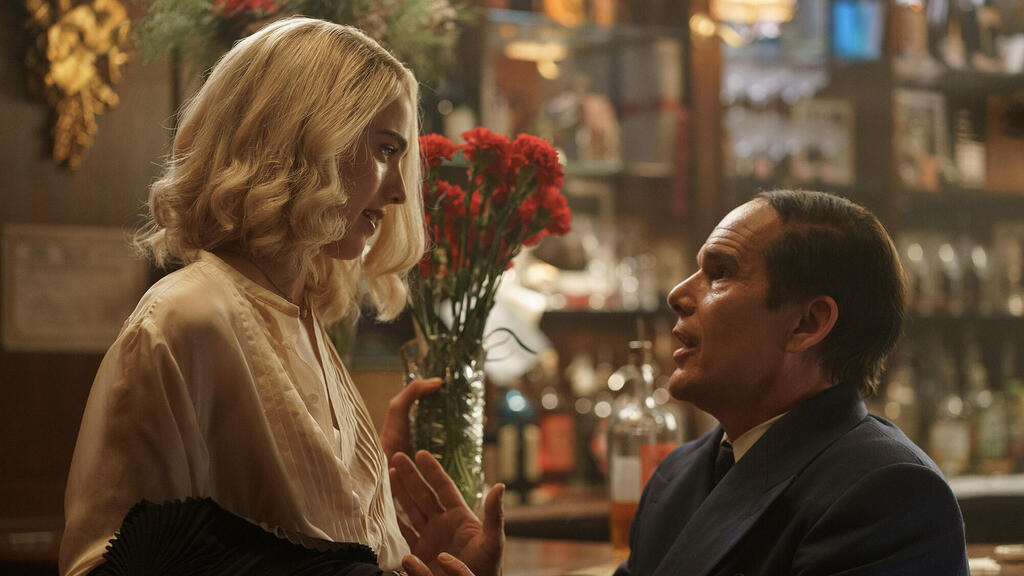
Judaism wasn't an issue for him. Hawke and Hart in Blue Moon
(Photo: Courtesy of Forum Film)
Rodgers and Hart wrote 26 musicals together over more than 20 years, including Babes in Arms, The Boys from Syracuse, By Jupiter, and On Your Toes. They also wrote for Hollywood films. “Lorenz Hart did wonders with the English language,” says Dr. Inbar. “He wrote sophisticated, witty, romantic rhymes. The keyword is elegant, sharp, and exceptionally lively wit. Many of his songs remain part of the American soundtrack to this day, written to amazing standards.”
A partner replaced
Their wonderful collaboration ended when Rodgers could no longer tolerate Hart's unstable behavior and alcoholism, which often caused conflicts. "In 1942, The New York Times reported that Rodgers, Hart, and Hammerstein II would adapt the play Green Grow the Lilacs into the musical Oklahoma!. Rodgers included Hammerstein II because Hart's condition had deteriorated," says Dr. Inbar. "Hart ultimately withdrew from the project because he couldn't connect to the rural and earthy style of Oklahoma!.”
Rodgers and Hammerstein went on to create award-winning stage works and films, including The King and I, Carousel, South Pacific and of course, The Sound of Music. Hart's career, by contrast, collapsed. He sank into bitterness and anger, eventually dying from self-destruction.
The film Blue Moon is named after one of Rodgers and Hart's most beloved hits. Interestingly, Hart never liked the song, which underwent several iterations and countless versions. He saw it as an example of a creation in which he had to restrain his art to make it more accessible.
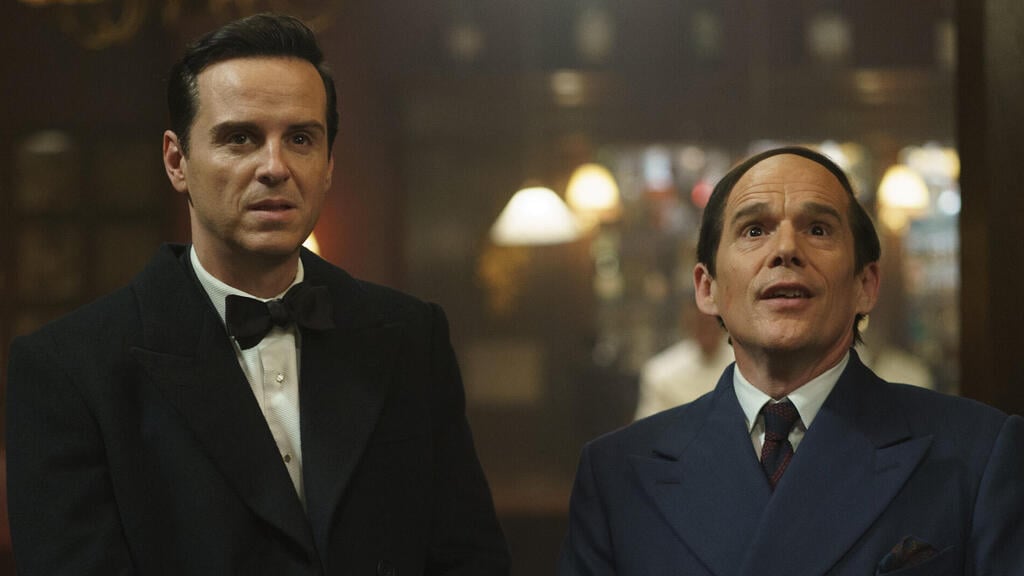
A bitter farewell. Andrew Scott as Rodgers, with Hawke's Hart in Blu Moon
(Photo: Courtesy of Forum film)
The film is mostly set at the New York bar-restaurant Sardi’s, where theater people used to gather, during the premiere of "Oklahoma!" in March 1943, months before Hart's passing.
'He was too smart'
In Blue Moon, Hart arrives at Sardi’s and meets his former partner, Rodgers. It is, of course, a tense and complex encounter. Hart mocks Rodgers and even accuses Oklahoma of being an escapist creation made amid the horrors of World War II.
"Culture left behind the genius Hart, who gave so much," says director Linklater. "Hart was the greatest in my opinion. Both a romantic and a cynic. Sharp and cutting to the bone. Too smart. But times changed and there is a war. Rodgers could adapt to it - that's his genius and talent - but Hart couldn't.
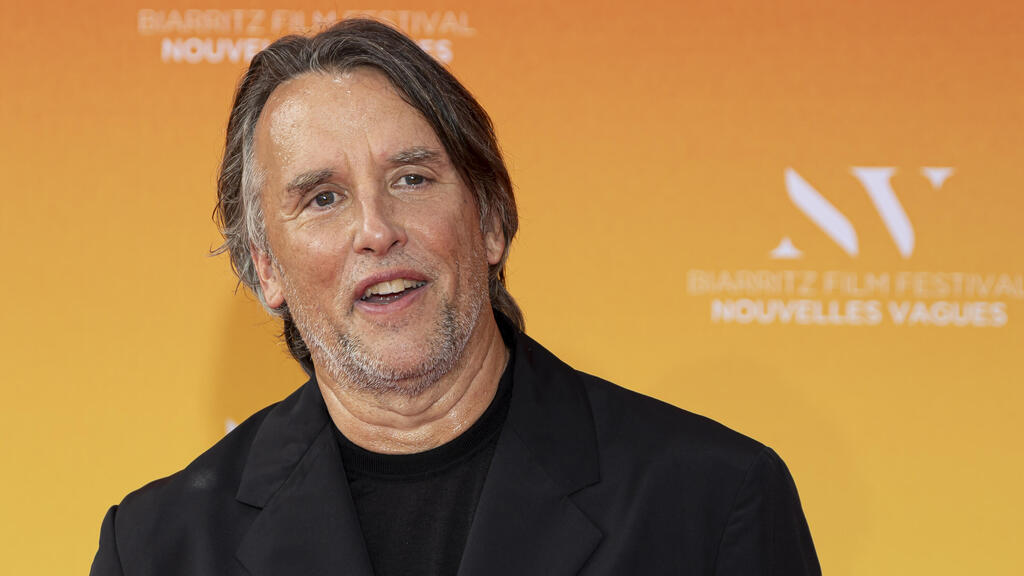
In his opinion. Hart was the greatest. Richard Linklater
(Photo: Sébastien Courdji / Getty Images)
"This is also a film about the end of a career. A sports career has a limited time, but an artistic career has no technical end. Still, artistic careers sometimes end: when you're no longer popular, your song ages, or no one buys your books. It's realistic. My film shows that time can bypass even geniuses. Our goal was to make the film feel like a Rodgers and Hart song - beautiful, slightly sad, and a bit funny all at once."
Linklater cast Andrew Scott as Rodgers (who won Best Supporting Actor at Berlin) and Ethan Hawke as Hart. Hawke is Linklater’s close friend, and they have collaborated on nine films, including "Boyhood" and the Before Sunrise trilogy.
Hawke is everything Hart was not – Christian, straight, tall and with a thick mane of hair. "A decade ago, I showed Ethan the script as a friend, but I didn't think it suited him. Ethan fell in love with the project, so I said, 'This film doesn't fit you. Maybe in ten years'. And that's how long it took," Linklater recounts. "One directing note I gave Ethan: 'Imagine you've lived a lifetime and no one wanted to sleep with you. It's hard to imagine, but that's the character.'"
In recent years, there has been debate about whether straight actors can play gay roles, or whether non-Jews can portray Jewish characters, and the like. Do you think your casting will stir controversy?
"I don't know if casting Ethan as Hart will upset people. True, my film isn't especially a Jewish production, relative to the Jewish environment we were depicting - Rodgers and Hart were very Jewish. For years, in theater and film, Jewish actors played non-Jewish roles, so in my view, this should be acceptable in both directions. In the same sense, there have been many gay actors who have played straight roles for a long time.
"I think everyone should have the opportunity to play anyone. I know it becomes sensitive when you use… I guess the word is ethnicity? I just think a creator should be considerate and do the best they can for the sake of the work. But yes, I see where it could be a little sensitive. In the context of this film, I don't anticipate any problems. It was so long ago, and its protagonists were not iconic figures."
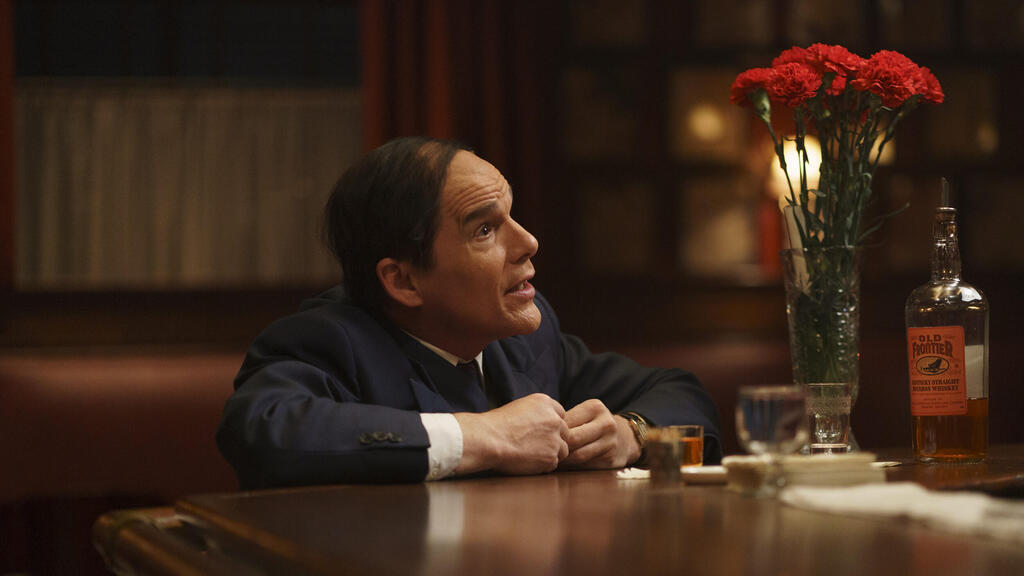
Anyone can portray anyone. Ethan Hawke in Blue Moon
(Photo: Courtesy of Forum Film)
Blue Moon also deals with Hart's homosexuality. The earliest stories confirming his sexual orientation focus on his life in Hollywood. He spent time at parties with the bisexual film star Tallulah Bankhead and William Haines, a silent film actor who lived openly with his partner. Hart also frequented nightclubs and bars in New York where drag queens performed. While at one club, he faced a blackmail threat and confessed to a friend that "my mother would die if she knew her son was gay." A business associate claimed that Hart constantly felt guilty about being gay. He was a lonely man who wandered the nights, leading secret and tormented erotic lives that included casual relationships with young men - lives only hinted at in his songs.
"If you think about poor Hart, he probably never had a mature and loving relationship, in the traditional sense, because homosexuality was illegal at the time," says Linklater. "In his songs, Hart was the ultimate romantic and had a deep appreciation for beauty. Hart is the greatest songwriter of songs about unfulfilled love, and that’s what, in my opinion, makes them so timeless."