


“Backrooms” is another internet phenomenon that has become a movie — a cinematic adaptation of a series of videos of the same name that first appeared on YouTube in 2022. As someone who encountered the story behind “the backrooms” only through the film, I should note that this is a fairly effective work when it comes to combining horror and liminal spaces. It has been a long time since I saw a horror film in which the design was the real protagonist.
The phenomenon known as “Backrooms” grew out of an internet photograph of an empty office space lit by fluorescent lights, with wall-to-wall carpeting and yellowish partition walls. Although the image itself had circulated online before, in 2019 it was first given the name “Backrooms” in an anonymous post and became what is known as “creepypasta,” an internet horror legend spread virally. In retrospect, the space was apparently identified as documentation of a renovation at a branch of a hobby and leisure products chain in Oshkosh, Wisconsin. In 2022, as noted, a 17-year-old YouTuber named Kane Pixels, the online alias of Kane Parsons, began uploading videos based on the phenomenon. The first video released is made as found footage — supposedly raw material discovered after the fact — in which an anonymous person, equipped with a video camera, explores an endless maze-like space designed like the original backroom and finds himself pursued by an unidentified creature.
The film “Backrooms,” which it will be interesting to see whether it too becomes a phenomenon, takes place entirely at a point in time that seems to be the early 1990s and tries to place the threatening space within a narrative context: to explain how we got to this space in the first place. It turns out to be located in the basement of a failing furniture store run by Clark, played by Chiwetel Ejiofor of “12 Years a Slave,” who is trying in vain to draw customers to his huge store while dressed as a one-legged pirate named “Captain Clark.” To his psychologist, Mary, played by Renate Reinsve of “Sentimental Value,” he pours out his frustration over the collapse of his marriage as a result of the financial distress that forces him to spend long hours at the store. In a role-playing exercise the two conduct, it appears the problem runs deeper.
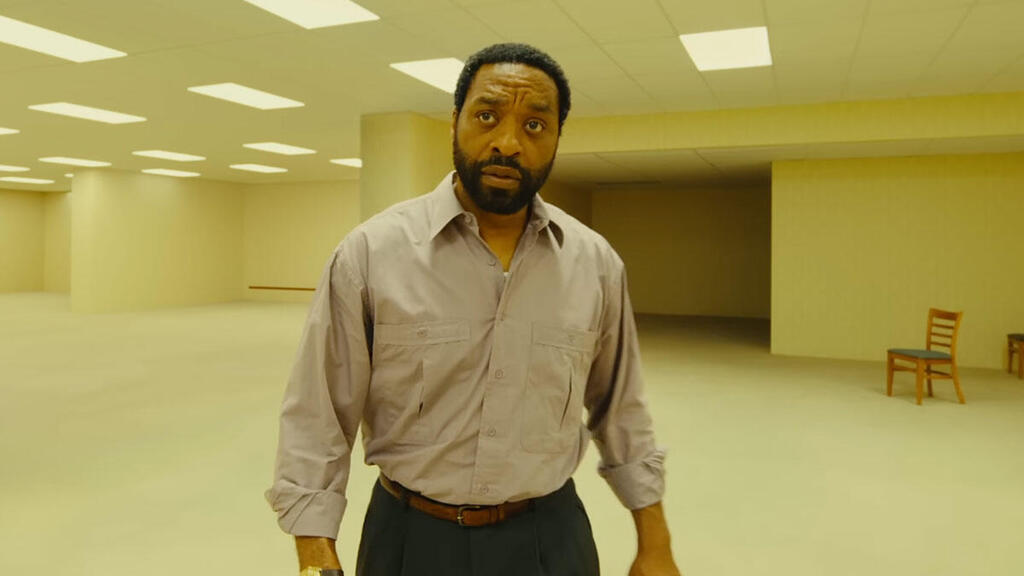
One night, when Clark stays behind to sleep in the store, he encounters a strange phenomenon. One of the walls in the basement is actually an entrance to a parallel space, made up of what seems like an infinite number of rooms, corridors, doors and niches that form an architectural labyrinth that may, or may not, be populated by other creatures. As the film progresses, it increasingly looks like “2001: A Space Odyssey” set in a space of abandoned offices. It is a space that is half real and half mental, where emptiness in fact contains an entire world.
What is beautiful about the film is the ability of director Parsons — now 20, and also the co-writer of the script with Will Soodik — to shape a surreal horror touched by David Lynch and based mainly on the movement of the characters and the camera through space. In one of the film’s loveliest shots, Mary crosses the wall separating the two worlds, and the camera, in a horizontal movement, crosses alongside her. We are familiar with camera movements that pass through partitions, or more precisely move freely between spaces as though the wall does not exist. The connection created here between the two movements, the human one and that of the camera, produces an interesting awareness of the deceptive meaning of camera movement in cinematic space. In this sense, “Backrooms” recalls a Borges story: The more the characters keep moving, the clearer it becomes that the space does not lead to a solution or an exit, but rather generates endless branches, repetitions and loss of direction.
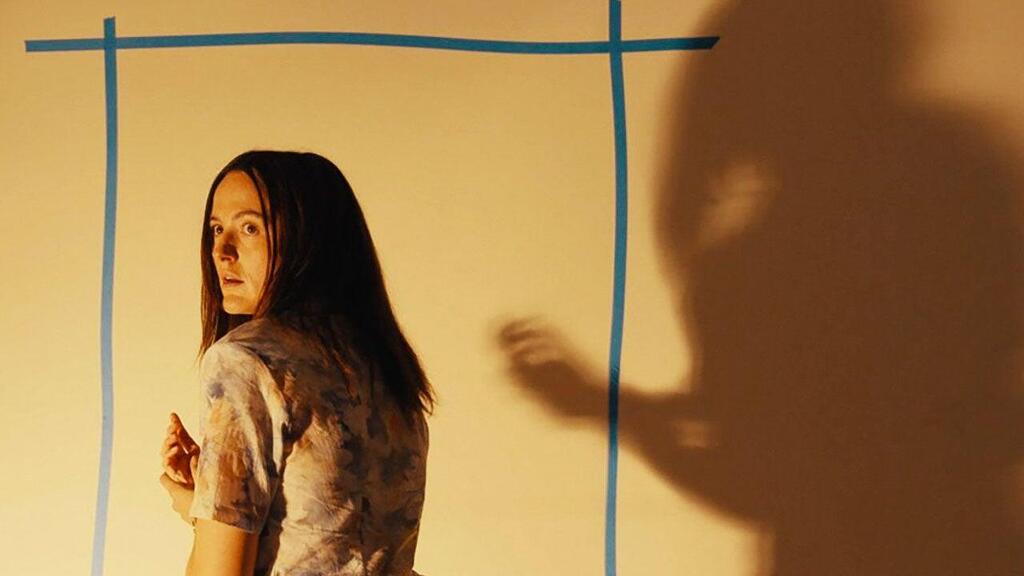
From 'Backrooms'
(Photo: Courtesy of Red Cape)
Parsons’ talent is certainly impressive, especially when one considers that only two or three years ago he was finishing high school. And not only that: How many creators can one think of who, at his age, directed what is expected to be one of the season’s hits, and under the auspices of A24, with names such as James Wan and Osgood Perkins on the producers’ roster? Like other creators of his generation — David Sandberg of “Lights Out” or the Australian duo known as RackaRacka of “Talk to Me” — Parsons is a product of an internet phenomenon more than the typical film student. He is a creator who grew up watching YouTube videos and absorbs their aesthetics, particularly in terms of narrative perception, into Hollywood cinema. How many filmmakers can be said to have spent their final year of high school responding to inquiries from production companies?
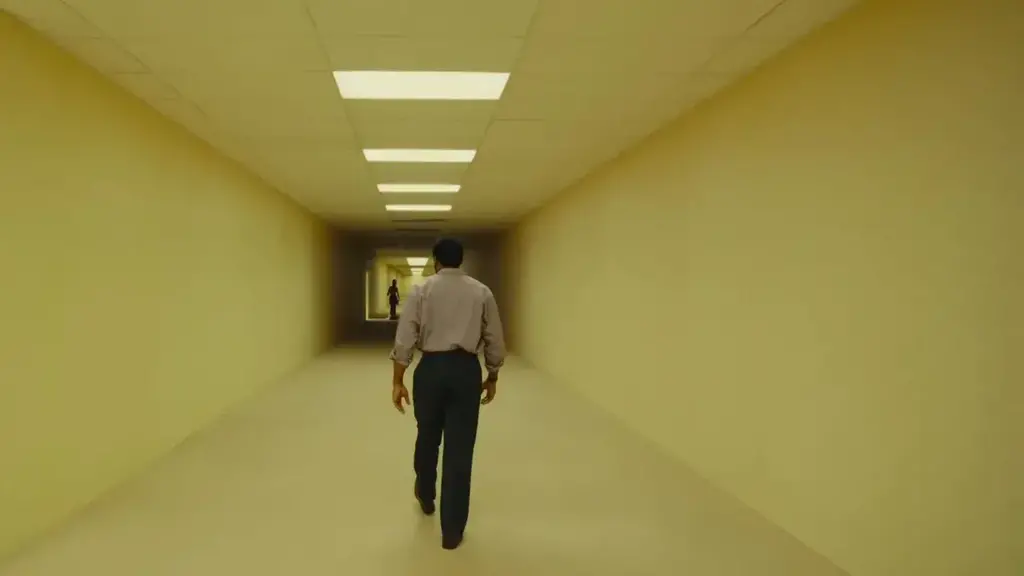
From 'Backrooms'
(Photo: Courtesy of Red Cape)
“Backrooms,” as noted, is based on a mythology created online. One of the interesting aspects of watching it involves the way Parsons translates that mythology, even appropriates it to some extent, into cinematic terms. This is a universe that exists in the shrinking gap between cinema and the David Lynch-like regions of the internet. Watching it is a little like playing a game in which we follow a character’s movements through a virtual space — except that, unlike in a game, we do not control them. The film does seem to succeed in compressing this overloaded mythology into the framework of a movie, while also preserving basic aspects of the horror genre, such as the girl fleeing a monstrous creature in a space over which she has no real control, or something murderous lurking in the darkness or in the tunnels.
The film also preserves the conspiratorial aspect that accompanied the original photograph, and even if this seems a little forced, it does open a door to a sequel. It is not certain that “Backrooms” manages to say anything original, if anything at all, about the mental space in which the characters lose their way — a traumatic backstory from Mary’s childhood does not really add much to the matter. But it is hard not to be captivated by its world of images, which becomes increasingly surreal as the film progresses. In other words, more than the film offers an intellectual experience, it is simply experienced for the most part on an aesthetic level. I did not imagine that mostly empty rooms could be so threatening when they seem to be placed side by side and on top of one another.
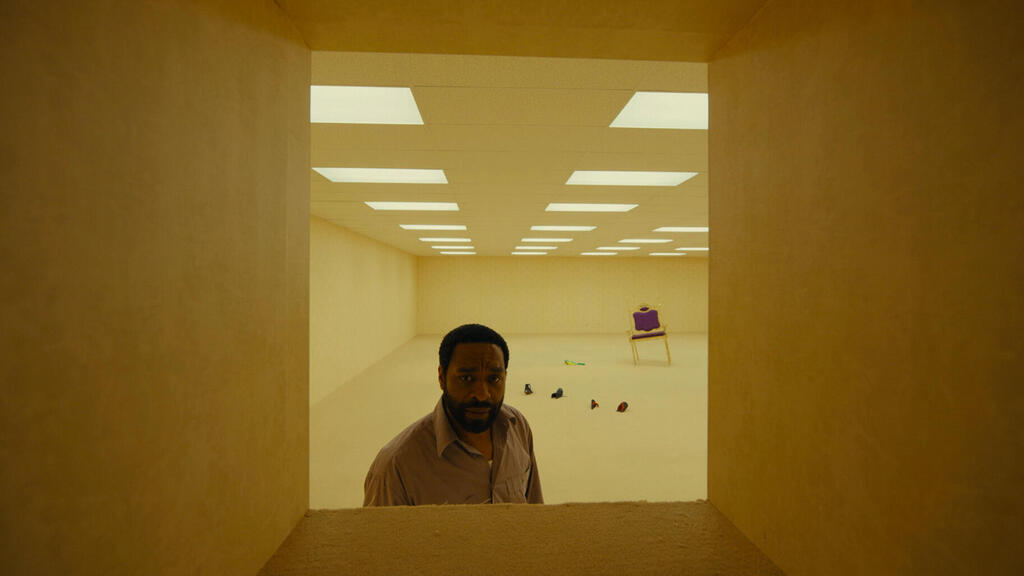
From 'Backrooms'
(Photo: Courtesy of Red Cape)
Ultimately, “Backrooms” offers an experience that is hard to process — and that does not necessarily attest to its complexity. It is an experience born of the encounter between cinema and the internet space, something that began with “The Blair Witch Project” but is now gaining momentum and more impressive dimensions. This is a film set in a space that its own creator admits he did not invent, and he wanders through it like a stranger, just like his protagonists. That sense of alienation within the space is what gives the film its power.