

More than six weeks after it opened in London, Mayor Sadiq Khan visited the Nova Exhibition London on Thursday, touring the memorial display dedicated to the massacre carried out by Hamas at the Nova music festival on October 7, 2023.
During the visit, Khan met survivors of the massacre and bereaved families. He was accompanied by Andrea Simon, London’s victims commissioner.
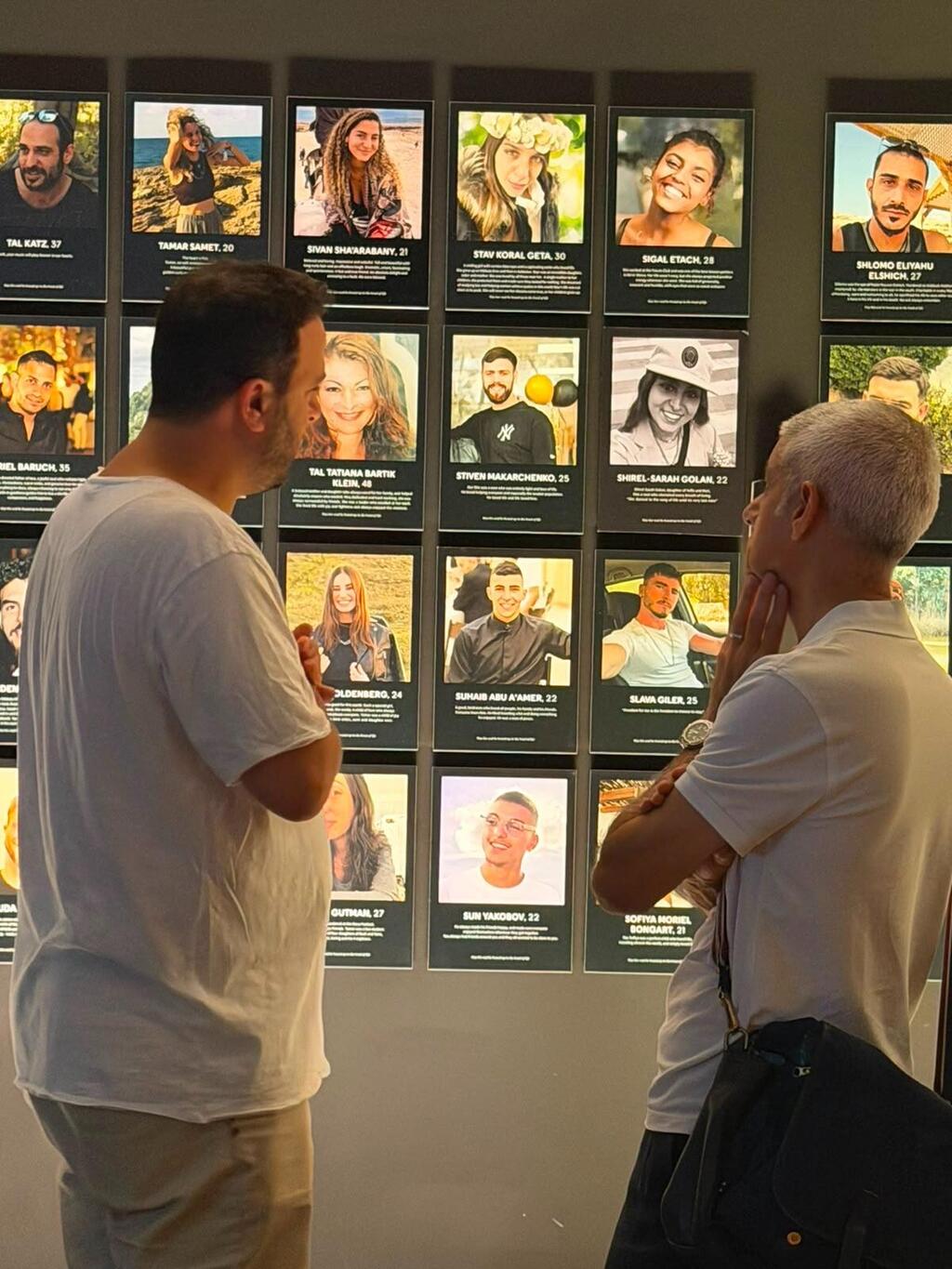
The exhibition opened in London in May and has recently been extended until July 15. According to Jo Wolfe, one of the organizers of the London exhibition, Khan’s office had been repeatedly invited to send the mayor for a visit, but the visit was not arranged for more than six weeks.
Wolfe told Jewish News that only after the exhibition’s run was extended was the visit scheduled, just days before its planned closing.
The exhibition was created by the producers of the Nova festival together with survivors and families of the murdered. It reconstructs the events of October 7 through installations, personal items collected from the massacre site, survivor testimonies and documentation from the first hours of the Hamas attack.
According to the organizers, its purpose is to commemorate the victims of the massacre, tell the stories of the hostages abducted from the festival grounds and give visitors a direct sense of what happened that morning.
Before arriving in London, the exhibition was shown in New York, Los Angeles and Miami, where it drew hundreds of thousands of visitors, including public officials, lawmakers, cultural figures and opinion leaders. In London, it has continued to attract visitors from across Britain, and demand led organizers to extend its run by several weeks.
Against that backdrop, organizers attached special importance to Khan’s visit. They said his call for the British public to come and see the exhibition for themselves carried significant public weight, especially given his status as one of the country’s senior elected officials.
The visit also drew attention because of Khan’s positions since the start of the war. The mayor, one of the most prominent Labour voices criticizing Israeli government policy in Gaza, has repeatedly called for a cease-fire and sharply criticized Israel’s conduct.
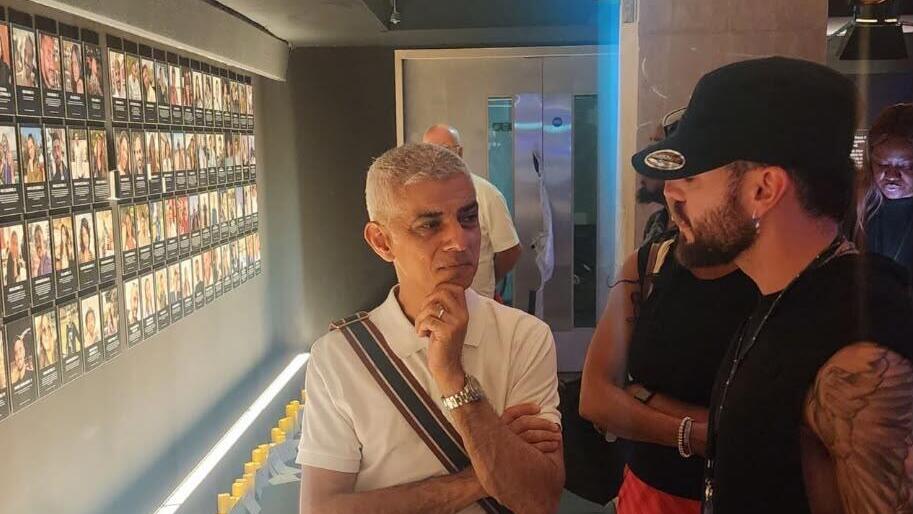
London mayor Sadiq Khan visited the Nova Exhibition London
(Photo: Nova Exhibition London)
In September 2025, he escalated his remarks, saying that in his view “what is happening in Gaza is genocide,” a statement that drew sharp criticism from Jewish organizations and pro-Israel figures in Britain.
Since the October 7 attack, Khan has also faced criticism from parts of London’s Jewish community, who argue that he has not taken a firm enough stance against the sharp rise in antisemitic incidents in the British capital. Khan has condemned antisemitism on several occasions and said that “antisemitism has no place in London,” but criticism from some Jewish groups has continued throughout the war.
For that reason, his visit to the Nova exhibition carried particular symbolic weight.
“This is not about the religion you belong to, the God you believe in, your politics or your views on one issue or another,” Khan said during the tour. “It is about coming and seeing for yourselves what happened that day. And if you are lucky enough to meet a survivor, it will be an experience that touches you, I promise.”
“What is clear is that these were people who came to a festival with only love and joy,” he added. “They wanted to have fun, and they lost their lives. Others survived, but their lives will never be the same. The bereaved families will never be the same families either.”
Khan also described the images from the exhibition that would stay with him after the visit.
“There are several things that will not leave me,” he said. “The children’s shoes, one of them was only 18, the clothes, the mobile phones. All of these remind you that these were human beings. You can watch a video or read an article, but here you understand that these were real people. But also what human beings are capable of, it is simply horrific. What will remain with me is also the hope and optimism, but also the horror of what happened.”
Khan compared the Nova massacre to the 2017 Manchester Arena terror attack, in which 22 people were murdered after a concert by singer Ariana Grande.
“When you see the pictures of those who were murdered, you notice the range of ages, 18-year-olds, people in their 20s, 30s, 40s and even 50s,” he said. “What they all had in common was their love of trance music, dancing and parties. They left home and left their loved ones behind thinking they would return the next day, but they did not return.”
“That also happened in other traumatic events around the world, such as the attack at the Ariana Grande concert, where parents never got to see their children again, and survivors’ lives changed forever,” he continued. “It is a reminder of all the things that connect us. There are too many people in the world trying to divide people and communities, while music, joy and gathering are things we all share.”
At the end of his visit, Khan again urged the British public to come to the exhibition.
“This is not about the religion you belong to, the God you believe in, your politics or your views on one issue or another,” he said. “It is about coming and seeing for yourselves what happened that day. And if you are lucky enough to meet a survivor or a bereaved family member, it will be an experience that touches you, I promise.”