


Let’s begin with the wink — the self-aware mischief — embedded in “Wuthering Heights” from the title itself. This is not quite Wuthering Heights, but “Wuthering Heights” in inverted quotation marks — the way the film appears on posters and in its stylized title sequence. Director Emerald Fennell seemingly wants to shield herself from devoted fans of Emily Brontë’s immortal novel and declare out loud: This is not an adaptation of the book. This is my version of Wuthering Heights — or “Wuthering Heights” — what I saw in the novel and chose to put on screen, with all the color, sex and pop songs on the soundtrack that, in my view, perfectly convey the tragic love story between Cathy (Margot Robbie) and Heathcliff (Jacob Elordi). I do not care about fidelity to the source material, and certainly not about historical fidelity to early 19th-century Britain. Take it or leave it. And we do.
Another way to frame it is this: On paper, “Wuthering Heights” is indeed a high-profile, big-budget, star-studded adaptation of Brontë’s 1847 novel, a cornerstone of British literary history. A book British high school students grow up on, or at least those who pay attention in advanced literature classes. In practice, however, this is really an adaptation of Baz Luhrmann. Yes, the Australian director of pop-infused romances like “Romeo + Juliet” and “The Great Gatsby,” both starring Leonardo DiCaprio, is the filmmaker who taught viewers of Fennell’s generation that if you adapt a canonical novel for the big screen — one that makes your literature teacher wrinkle their nose and ask, “You? What qualifies you to adapt Shakespeare, Brontë or Fitzgerald?” — you do it as a full-throttle affront to the purists. With a contemporary soundtrack, deliberate narrative distortions and no pretense of intellectual reverence. Brontë wrote a love story that has resonated for generations? Let’s see if it still works for the Instagram era.
And “Wuthering Heights,” even its detractors will admit, looks stunning. It brims with passion — not only from the characters, though that is more complicated, but above all from the filmmaker behind the camera. When Natalie Portman once dared to direct her Hebrew-language adaptation of “A Tale of Love and Darkness” — a charming film, in my view — she faced skeptical glances in Israel before a single frame was shot, along with whispers of “Who does she think she is?” In hindsight, her mistake — or the mistake of any future director who dreams of adapting S.Y. Agnon’s “Only Yesterday” — was not putting Noa Kirel songs on the soundtrack.
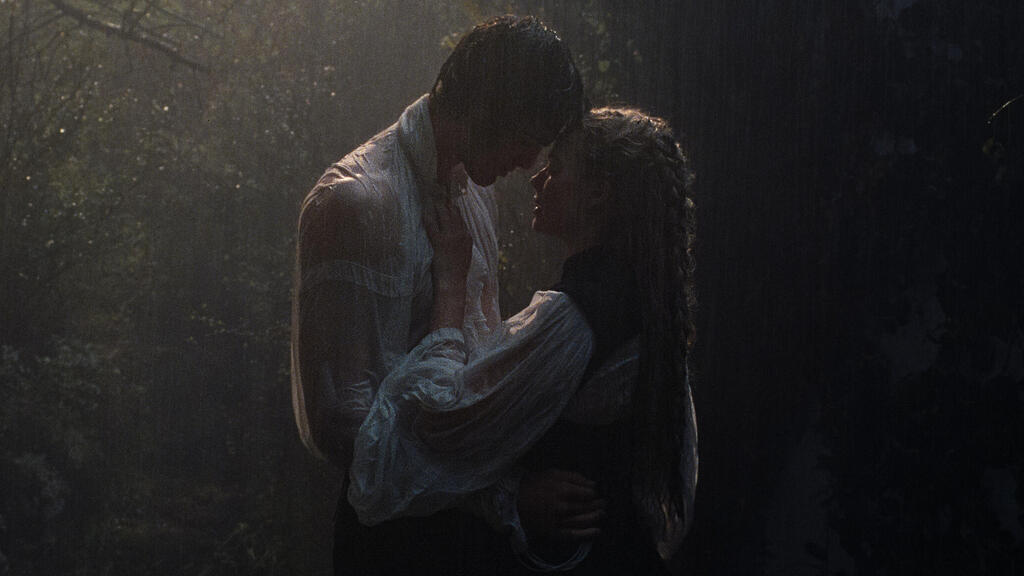
So what is “Wuthering Heights,” with or without quotation marks? For those innocent of Brontë and the countless screen versions that preceded this one, it is the anguished love story between Cathy, the daughter of a once-wealthy family living in a decaying manor, and Heathcliff, a nameless boy the family patriarch takes in from the street. In the novel, it is the father who names him; here, Cathy does, reinforcing her view of him as a kind of pet — one of many changes from the book. The first part of the film follows their childhood friendship and budding love (the two young actors, especially Owen Cooper — known for playing the tragic child in “Adolescence” — are excellent). The story then leaps forward to adulthood: Cathy remains a spoiled aristocrat, Heathcliff a noble savage. Enter Edgar Linton (Shazad Latif), a kindhearted gentleman who moves into the neighboring estate and courts Cathy, offering her an escape from financial trouble. Fennell repeatedly emphasizes how sexual, romantic and class considerations intertwine in her protagonists’ lives — sex, romance and money as overlapping tools of power.
This is Fennell’s third film. Known to many as Camilla from “The Crown,” the actor-turned-director won an Academy Award for best original screenplay at 34 for “Promising Young Woman,” a neon-soaked feminist revenge tale of the #MeToo era — and, in my view, her weakest film. Fennell, the daughter of a prominent British jewelry designer, embodies the very concept of “posh.” She likely attended the same parties and schools as distant cousins of William and Harry. That background makes her acutely aware of the role class plays in people’s lives, something she explored to great effect in her strongest film to date, 2023’s “Saltburn.” It is also central here.
Indeed, Fennell is Camilla. It may be glib to define a director by a television role that ended years ago, but “Camilla” neatly captures what she brings to cinema: the not necessarily glamorous mistress from an upper-class background whom everyone hates — until she becomes queen. In “Wuthering Heights,” as in the tragic saga of Diana and Charles, she crashes a party to which she was not invited and proceeds to rearrange the furniture.
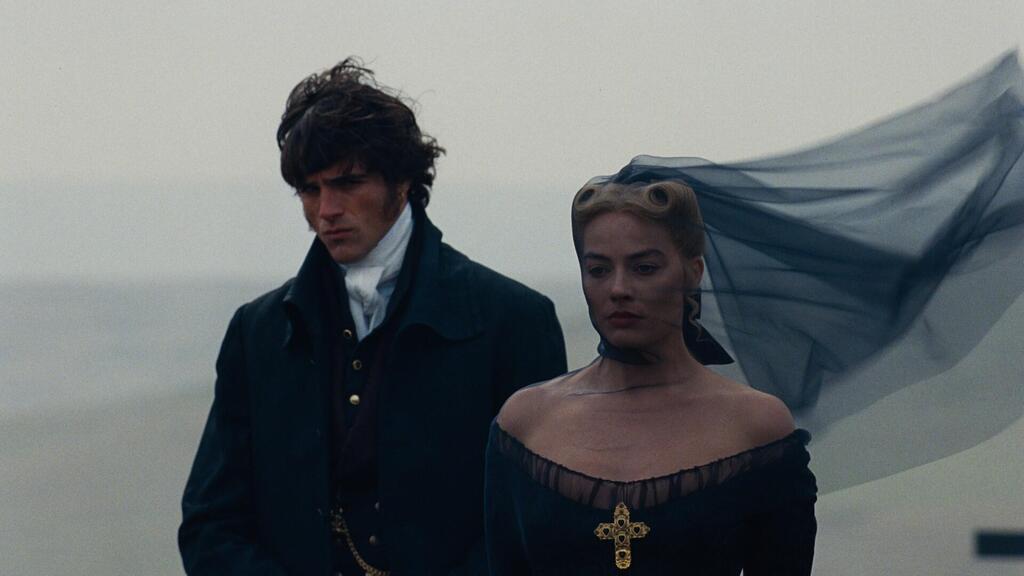
From 'Wuthering Heights'
(Photo: Courtesy of Tulip Entertainment)
Fennell’s “Wuthering Heights” ultimately feels like the version imagined by a horny teenager who read the book in high school and filled in the sex scenes in her head. And speaking of sex, what is disappointing is that the film does not go all the way. It is far less graphic and erotic than one might expect — or than Hollywood once delivered in the era of “9½ Weeks” and “Basic Instinct.” The intentions are there, however, and at least to me they are endearing. Literary canon is meant to be dismantled, twisted, reinterpreted and rebuilt with joy — not preserved as a museum exhibit.
Hence, the Charli XCX songs that carpet the soundtrack, even though the story unfolds in the 19th century, convey the sense that the characters are perpetually on the verge of snapping a sultry selfie. Yet “Wuthering Heights” is not merely a cerebral exercise about adaptation and meaning. It remains genuinely romantic and gothic, like the original novel, even as it changes almost everything. In Fennell’s world — and in Brontë as filtered through Fennell — three forces lurk around every corner: sex, death and social class.
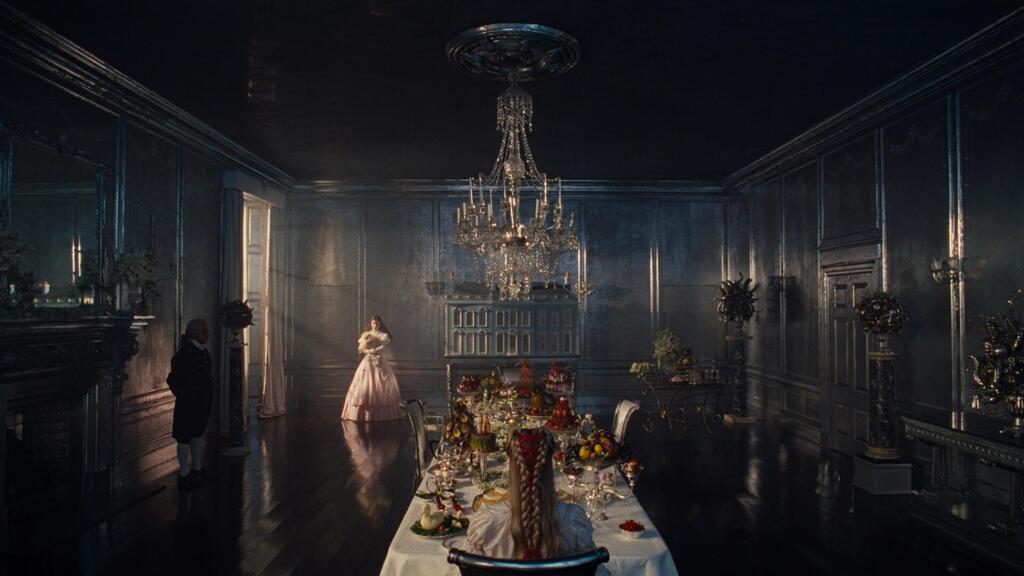
From 'Wuthering Heights'
(Photo: Courtesy of Tulip Entertainment)
That does not mean the film is without problems, and some decisions are infuriating even to viewers who embrace its radical approach. Chief among them is the casting — in terms of both age and race.
In Brontë’s novel and in most adaptations, the central romance unfolds when the protagonists are around 20 — an age when it was entirely plausible for young Cathy to marry a wealthy nobleman rather than risk becoming a spinster. Robbie, bless her, is 35, and it shows. Before you accuse me of ageism, consider the narrative leap: We first see the two characters as 12-year-olds discovering their feelings, then jump “a few years ahead” to the moment they explicitly recognize their romantic and sexual attraction — and they look like divorced suburbanites in Ohio. What were they doing at the manor during the intervening two decades?
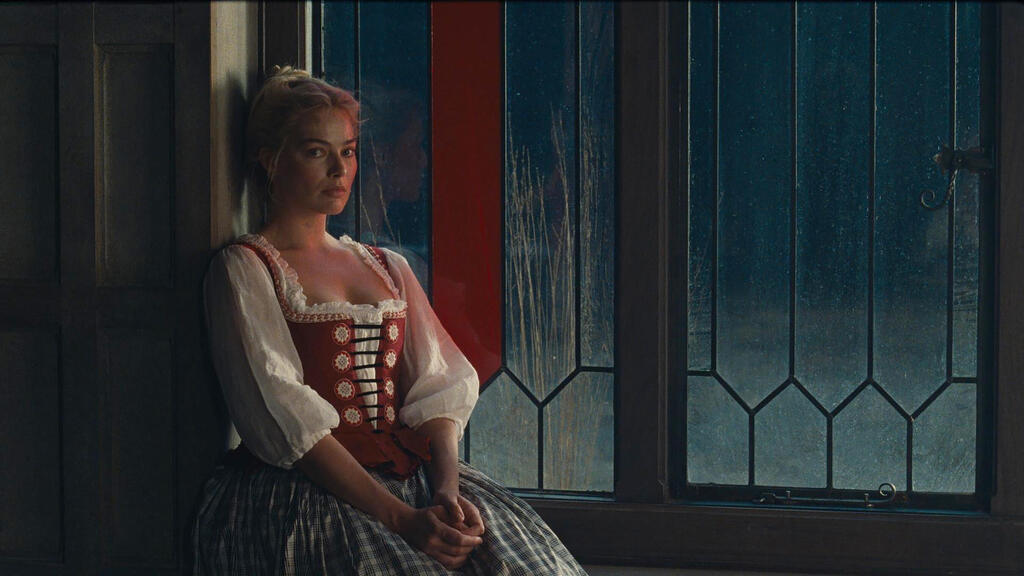
From 'Wuthering Heights'
(Photo: Courtesy of Tulip Entertainment)
Robbie’s casting is irritating but also inspired. The Australian actress plays Cathy with the same energy she brought to “Barbie” — and that seems entirely intentional. Fennell and Robbie’s Cathy is not merely spoiled but a woman living in a dollhouse: well-meaning in her own eyes, yet ruthlessly manipulative and painfully aware of her social standing. The film’s oscillation between sympathy, pity and revulsion works, somehow sustaining this potentially unbearable character for two and a quarter hours. Elordi is also solid, balancing Heathcliff’s noble and feral qualities and convincingly charting his gradual shift from saintly outsider to darker figure. Besides, he is handsome — and that counts for something.
Elordi’s casting sparked outrage because he is pale, whereas Heathcliff in the novel is described as dark-skinned, possibly Romani, a detail that underscores his outsider status. In Andrea Arnold’s excellent adaptation 15 years ago, Heathcliff was portrayed as Black, which felt truer to the spirit of the book than this. Yet Fennell discards our expectations here as well, including in the casting of supporting roles. Cathy is played by an Australian actress with a less-than-perfect British accent — fine. But what is happening with the supporting cast? Nelly, the housekeeper and narrator in the novel, is played by Vietnamese-born actress Hong Chau, who was Oscar-nominated for “The Whale” and is now 46 — though Nelly is meant to be Cathy’s contemporary. Meanwhile, Mr. Linton, the wealthy aristocrat and ostensibly the most powerful man in the story, is portrayed by British actor Shazad Latif, of Pakistani descent.
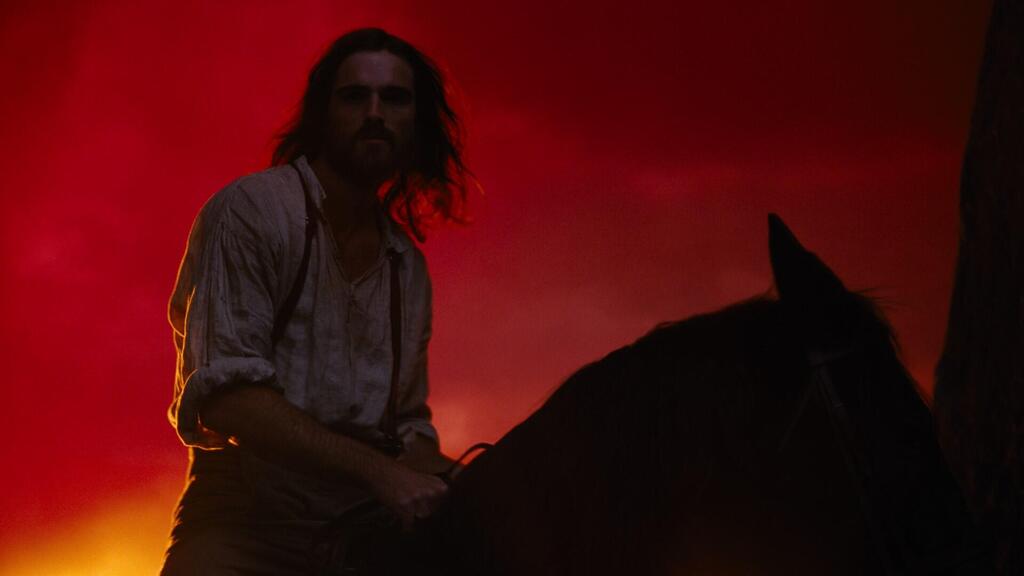
From 'Wuthering Heights'
(Photo: Courtesy of Tulip Entertainment)
I can already hear the reactions: “Woke!” Hollywood forcing multiethnic quotas — though in British productions, and on paper this is partly British, the trend is even more pronounced. But here it is hard to believe the choices did not come from the director herself, another broad “to hell with you” aimed at conservatives and purists. If Heathcliff is white, why not cast supporting characters as South Asian or East Asian? Deal with it.
The result is indeed strange, though not necessarily in a bad way. Ultimately, Fennell’s “Wuthering Heights,” with all its quotation marks, distortions and deliberate deviations, is a highly satisfying cinematic experience — romantic to the point of pain and appropriately gothic when needed. And perhaps it achieves the director’s most important goal: inspiring the next 16-year-old to leave the theater, buy Brontë’s novel and join the legion of “Wuthering Heights” fans — so she can later complain about how it was ruined in adaptation. A little more youthful idealism would not hurt any of us.
First published: 08:34, 02.16.26