

Judith Mergui, 39, a mother of one and a Tel Aviv resident, is an actress.
Childhood: “I was born in Paris to a Jewish family. My father is from Morocco and my mother from Algeria. I grew up on the story of my uncle, who made aliya, lived in a kibbutz and was the hero of his sisters. In the neighborhood where I grew up there were no Jews, and I studied in public schools. I had no religious markers and I wasn’t the cliché of the French Jewish girl, but my memories are, unfortunately, interwoven with antisemitism.
Gallery
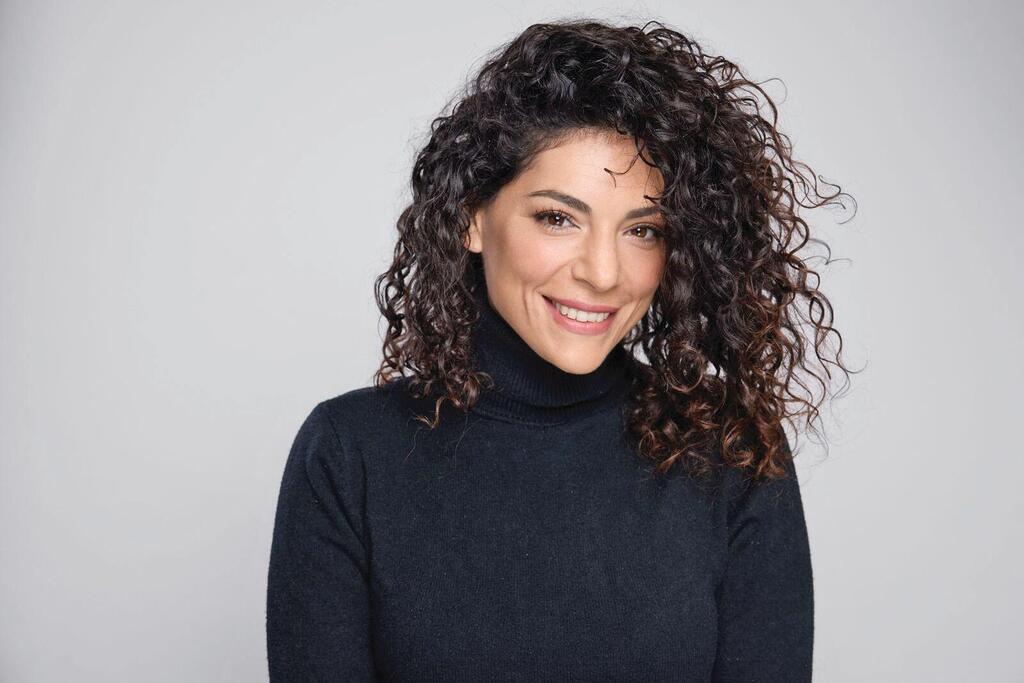
Judith Mergui. 'When I decided to make aliyah, they thought I was crazy'
(Photo: Haim Shraga, talent agency)
Antisemitism: “When I was eight, a girl at school called me a ‘dirty Jew.’ At 14, a few days after the lynching in Ramallah, students formed a circle around me in the hallway, passed around a newspaper, read out negative statements about Israel and kicked me. A teacher who walked by took me to the principal. I was injured and bleeding, and the principal told me, ‘Try to be a little less Jewish. They’re the majority and you’re alone.’
“I don’t know what hurt more, the blows or the principal’s words. After that I joined a Jewish youth movement. I went through all of them, from political right affiliation to left, from religious to secular. I took part in events, lectures and demonstrations. I found my place.”
Making aliyah: “In 2006, when I was 21, Ilan Halimi was murdered in France. I felt that the French weren’t even sad. When I decided to immigrate to Israel, people thought I was crazy. I had already completed acting studies, and they told me, ‘What are you going to do there? It’s a desert, there’s no Molière there.’ But I was convinced Israel would become known in the arts and that Europe no longer had much to say artistically. I didn’t feel I was leaving France, but that France had given up on me. I immigrated alone. My mother and sister came later.”
A goal and a scholarship: “I knew I couldn’t be an actress here until I knew the language. When I arrived at ulpan, I showed everyone - the head of the program, the technician, the cleaner - the dates for auditions at acting schools. I told them, ‘Within five months I’ll be there.’ I decided to stop speaking French. I would sit with ‘Hamlet’ in French and Hebrew, go word by word, trying to learn. I was accepted to Beit Zvi with an excellence scholarship, and after a year I transferred to Kibbutzim College.
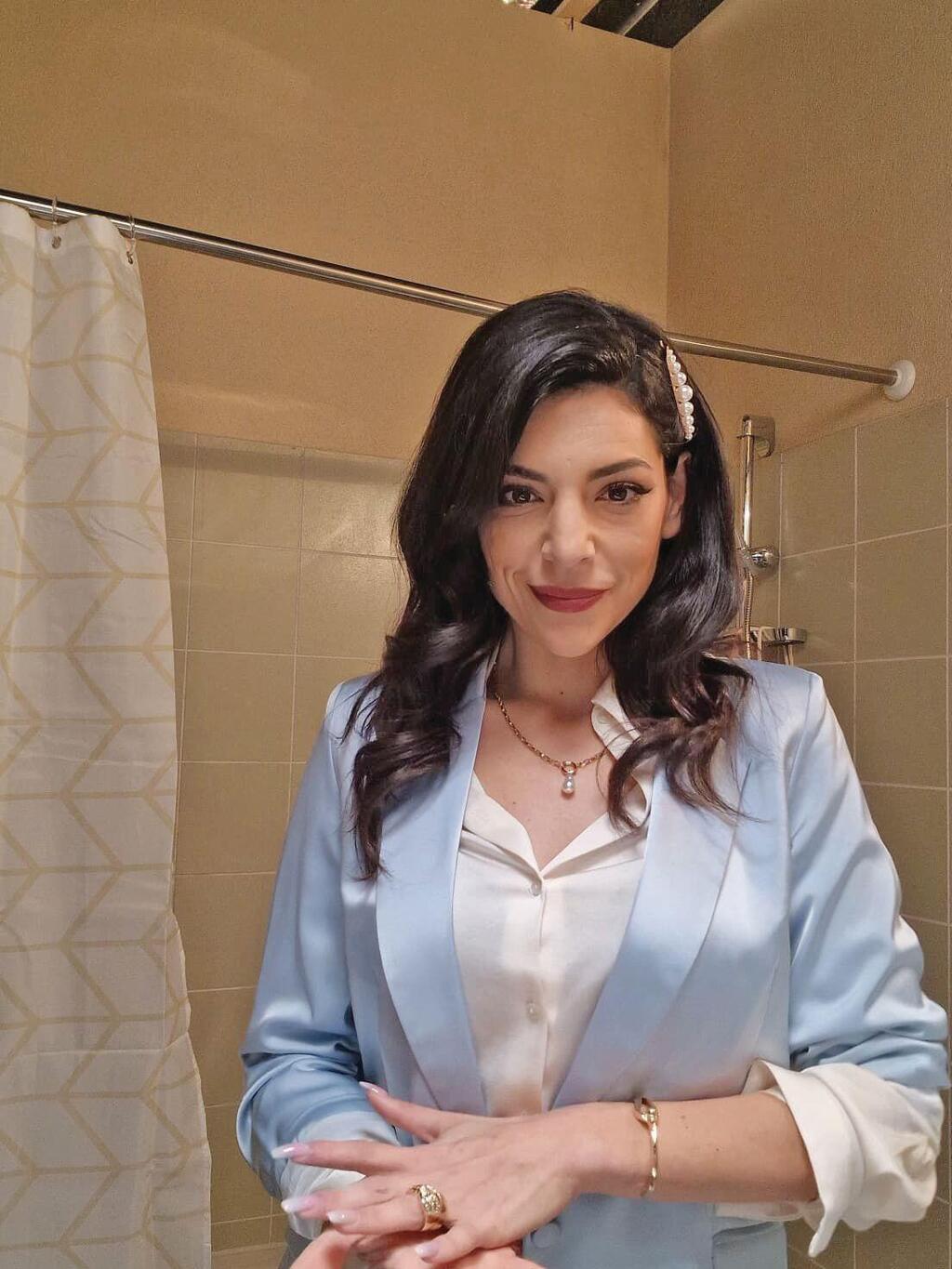
On the set of Zaguri Empire
(Photo: Haim Shraga Talent Agency)
A pivotal meeting: “In my third year, a young man from Be'er Sheva who had studied two years above us came to direct our production. His name was Maor Zaguri. With that production, we staged performances at fringe theaters.
“After graduation I lived in London with my partner at the time. A few months later I received a message from Zaguri saying he was writing a TV series and that there was a role for me. I wished him luck and assumed it would take forever, but a few months later I got a call saying they were waiting for me for an audition. That’s how I was cast in the first season of ‘Zaguri Empire,’ in the role of Michelle, and I returned to Israel.”
Career: “I knew my French accent would limit me here, so I decided to create my own projects. About a decade ago I performed a stand-up show I wrote called ‘Inshaaliyah,’ which dealt with the difficulties faced by olim from France. The show succeeded in Israel and abroad and ran until the COVID pandemic.
“Later I appeared in the series ‘Tahrir’ and also in a new series by Marco Carmeli, ‘Double Panther,’ which will air soon. When I look back at my life, I made many mistakes along the way, but there is one thing I did right, and that was immigrating to Israel. It’s a decision I’m proud of.”
What French habit should Israelis adopt?
“Gentlemanship. For example, an older man helping his wife put on her jacket.”
What will you never get used to?
“Tempers that flare up in an instant, going from zero to 100.”
What do you miss most about France?
“The cheeses.”
What is your favorite place in Israel?
“Tel Aviv, specifically Florentin, my neighborhood. That place lifted me back onto my feet.”