

On his first full day in office, between a dawn visit to a Bronx fire scene and a press conference on new consumer regulations, New York Mayor Zohran Mamdani briefly vanished from the public schedule.
As critics warned that his anti-Zionist views and tax policies would drive Jewish residents and wealthy New Yorkers out of the city, Mamdani chose instead to spend valuable time at a discreet meeting in the home of a Jewish billionaire who made the opposite choice. Steven Spielberg officially became a New York resident on January 1, coincidentally or not on the very day of Mamdani’s inauguration.
Gallery
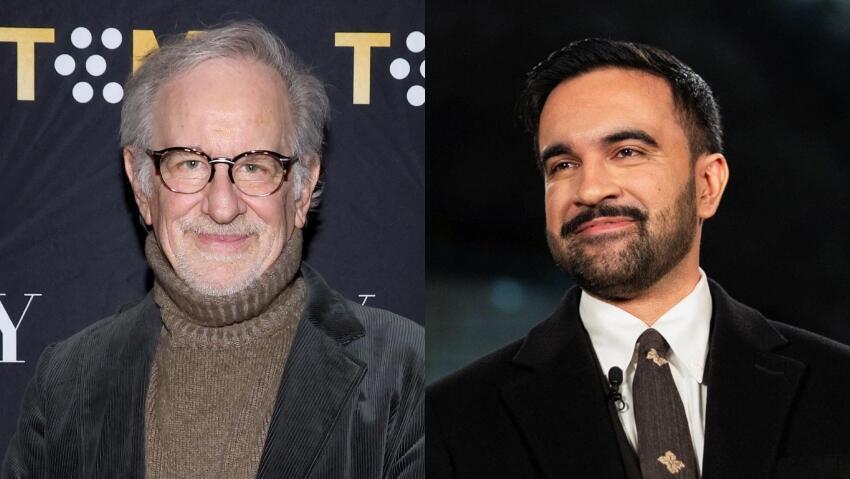
Zohran Mamdani and Steven Spielberg
(Photo: Amir Hamja/Pool via Reuters, Mike Coppola, GettyImages)
The legendary director hosted the mayor for what both sides described as a ‘friendly introduction’. The meeting, held at Spielberg’s luxury apartment in the San Remo building overlooking Central Park, offers a glimpse into the complex relationship between an openly anti-Zionist mayor and Hollywood’s Jewish elite. The meeting did not appear on the mayor’s official schedule. It came to light only after inquiries by The New York Times and was later confirmed by Spielberg’s spokespeople. Also present were Spielberg’s wife, actress Kate Capshaw, their son Theo and his wife, as well as Maurice Katz, Mamdani’s senior Jewish adviser.
The timing of Spielberg’s move to New York is notable, as it coincided with threats by wealthy residents to leave the city over Mamdani’s plan to raise income taxes by two percentage points for those earning more than $1 million annually.
There was no formal agenda for the meeting, but there was no shortage of potential topics. Mamdani grew up on the film sets of his mother, acclaimed director Mira Nair, and is well versed in Hollywood’s unwritten rules. What has raised deeper questions within the Jewish community, however, is the possible ideological and financial connection between the two men.
While donation records show that Spielberg did not contribute directly to Mamdani’s campaign, the director’s philanthropic funds have reached the mayor’s political orbit through indirect channels. The Righteous Persons Foundation, established by Spielberg in 1994 with profits from ‘Schindler’s List’ and later ‘Munich’, was founded with the declared goal of strengthening Jewish life and preserving Holocaust memory. In recent years, however, it has also become a prominent funder of progressive left-wing organizations.
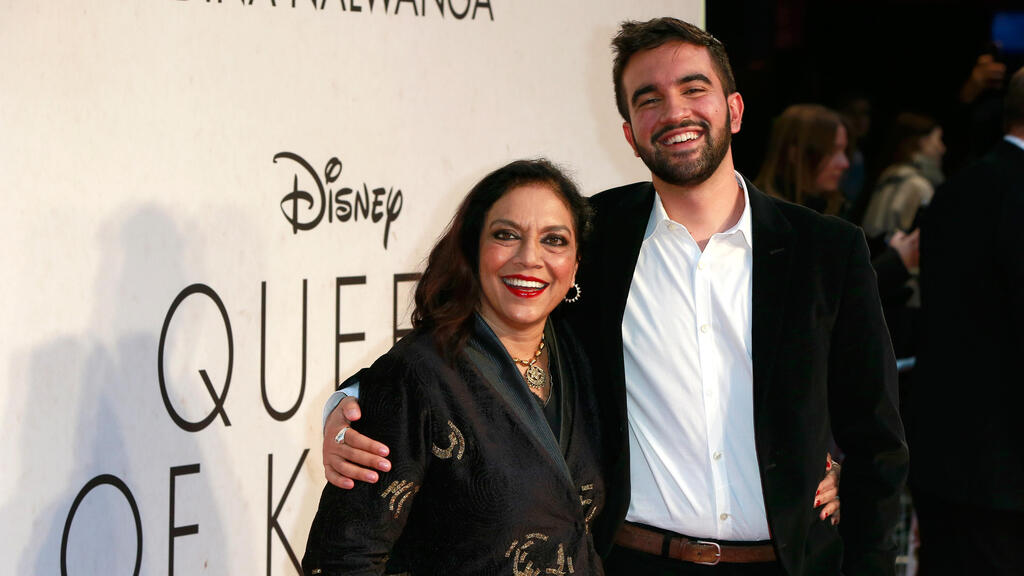
Raised in a Hollywood environment. Zohran Mamdani with his mother, director Mira Nair
(John Phillips / Stringer, Getty Images)
Financial disclosures published by the foundation, including in Frontpage magazine, show that since 2020 it has transferred roughly $2.4 million to progressive Jewish groups, including Bend the Arc and T’ruah: The Rabbinic Call for Human Rights. These organizations were among Mamdani’s most vocal supporters during his campaign and are known for harsh criticism of the Israeli government, including accusations of war crimes and calls for an arms embargo against Israel.
Jews United for Justice, another group that has received significant grants from the foundation, has signed letters calling on American Jews to engage in self-reflection over what it describes as ‘Palestinian oppression’ and has criticized the IHRA definition of antisemitism, arguing that it suppresses Palestinian voices.
At the same time, the foundation has supported projects such as Israel Story, which produced a ‘war diaries’ podcast documenting diverse perspectives during the conflict and collected testimonies from survivors of the October 7 attack. These testimonies were transferred to Israel’s National Library as part of efforts to combat antisemitism.
Critics within the Jewish community note with concern that while the foundation channels millions to progressive causes, its support for Holocaust memorial institutions has declined sharply in recent years. The most recent donation to the United States Holocaust Memorial Museum was made in 2019.
Spielberg has said in the past that he could not keep the profits from ‘Schindler’s List’ for himself, calling them ‘blood money’ that had to be returned to the community. Critics now argue that a portion of those funds is being used to empower groups that challenge widely accepted definitions of antisemitism and promote an anti-Zionist agenda.
Spielberg’s silence in the months following the October 7 attack, aside from a statement by his foundation about collecting testimonies, sparked outrage among many Jews. Holocaust survivors even addressed him in an open letter demanding that he speak out clearly.
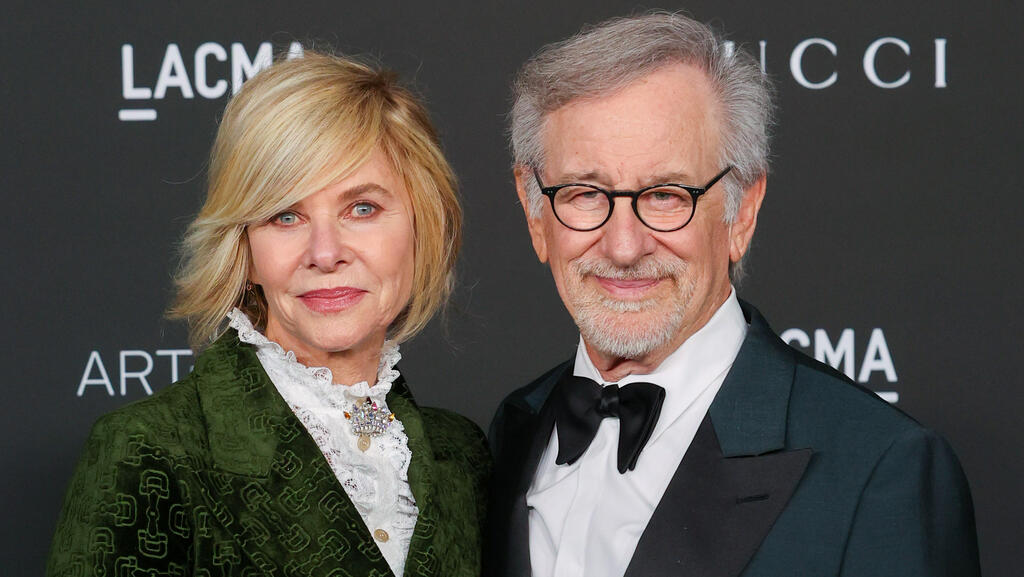
His silence sparked outrage; Steven Spielberg with his wife, Kate Capshaw
(Photo: GettyImages)
When Spielberg finally addressed the issue in a speech at the University of Southern California in March 2024, he struck a balanced tone that drew both praise and criticism. Speaking to Holocaust survivors, he warned of an ‘engine of extremism on campuses’ and said Jews were ‘condemned to repeat history’ and fight once again for their right to exist as Jews. He condemned Hamas, but in the same breath also condemned the killing of ‘innocent women and children in Gaza’. Some former supporters expected a more unequivocal stance.
The meeting with Spielberg is not the only instance in which Mamdani has benefited from Hollywood support. The mayor’s transition committee raised $1.2 million in small donations last month, an enormous sum by local election standards, with a significant portion coming from celebrity donors. Actors Mark Ruffalo and Lupita Nyong’o, both identified with critical views of Israel, donated the maximum amount allowed by law, $3,700.
Other names, including Julianne Moore, Marisa Tomei and Ramy Youssef, frequent signatories of petitions against Israel, attended a high-profile fundraising event held in Manhattan in December, alongside the mayor’s mother, who has publicly boycotted Israeli film festivals.
Is the Spielberg-Mamdani meeting a symbol of reconciliation between a new progressive movement and guardians of Jewish memory, or another sign of the transformation underway within America’s Jewish elite? For Spielberg, the move to New York and the meeting with the city’s new mayor may simply mark an entry point into the public life of his adopted city. For Mamdani, the connection with Spielberg provides valuable legitimacy at the heart of America’s cultural establishment, at a moment when he is viewed as a threatening figure by the business sector and the organized Jewish community.
And if his rise to power was supported, even indirectly, by funds generated from a film about the Holocaust, that seemingly casual conversation between the two men takes on a far greater meaning than a simple introductory meeting.