

Nearly three years after the October 7 massacre, and despite the deeply charged political climate surrounding Israel, Fauda is once again demonstrating an ability to cross borders.
The fifth season of the Israeli hit series, released globally on Netflix on September 8 after first airing on Israeli broadcaster yes, climbed into the streaming platform’s top ranks within days and entered the top 10 in dozens of countries.
According to FlixPatrol, the season ranked fourth among Netflix television series worldwide on September 10 and, at the time of publication, remained sixth globally.
The most striking numbers came from the Middle East. On September 10, Fauda ranked No. 1 in Lebanon, No. 2 in Jordan, the United Arab Emirates and Bahrain, No. 3 in Qatar, Oman and Kuwait, No. 4 in Egypt, No. 5 in Morocco and No. 9 in Saudi Arabia.
The performance is particularly notable because two episodes, seven and eight, deal directly with the events of the October 7 massacre.
The Lebanese ranking is especially unusual given the country’s anti-Israel boycott law. A Lebanese campaign advocating a boycott of Israel and its supporters has previously accused Netflix of violating Lebanese law by making Israeli productions available locally, including Fauda, which it said promotes “a security narrative inspired by figures who served in the Israeli military.”
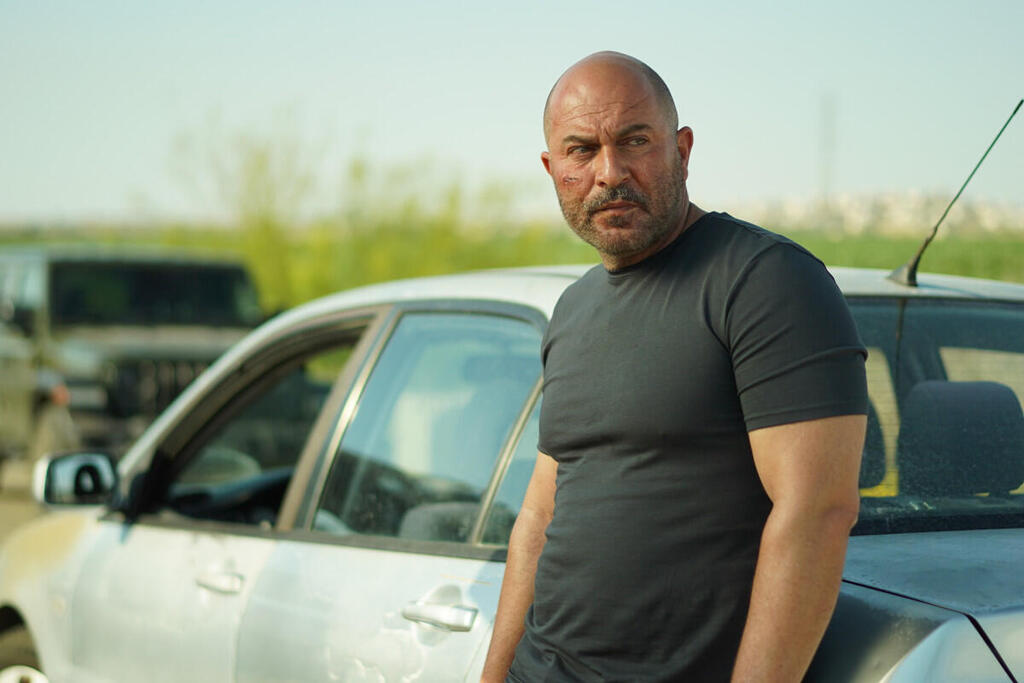
The new season also drew criticism elsewhere in the Arab world. Qatar-based newspaper Al-Araby Al-Jadeed published social media posts on September 8 marking the season’s Netflix release, alleging that “actors from the series participated in the war of genocide against Gaza” and noting that “the Israeli series Fauda returns to Netflix.”
The newspaper referred to actor Idan Amedi, who was seriously wounded while serving in Gaza during the war, and cited remarks it attributed to actor Doron Ben-David in 2023 supporting the fighting there. The season’s Netflix release was covered as far away as Yemen.
At the same time, episodes seven and eight triggered intensely emotional reactions from viewers around the world. One viewer, who stressed that he was neither Israeli nor Jewish, wrote: “I cried my soul out. I usually don’t cry at shows or movies.”
Another viewer who identified as non-Israeli wrote: “Honestly, I couldn’t speak for the entire two episodes and for a while afterward. Everything felt far too real. No Hollywood production comes close to this.”
A non-Jewish American viewer wrote that she believed the series had done “an excellent job” with the season. “As difficult as it is to watch, it is incredibly important for people to see what Israel went through and is still going through,” she wrote.
A viewer from England added: “Episodes 7 and 8 broke me. I cried a lot. The season is definitely different from the previous ones, but I still enjoyed it.”
“This is the first time I’ve had an anxiety attack while watching a television series,” another user wrote. “I can’t imagine what it is like for people who actually went through this.”
One viewer said he had watched the first six episodes consecutively but needed several days before he could finish episode seven. “I couldn’t stop crying at the scene where Eli’s daughter tells her mother, while the terrorists are outside the safe room, ‘I’m sorry, Mom, I forgot to put the cake back in the refrigerator,’” he wrote. “How difficult it is for Jews simply to live normal lives, something so many of us take for granted. Best season ever.”
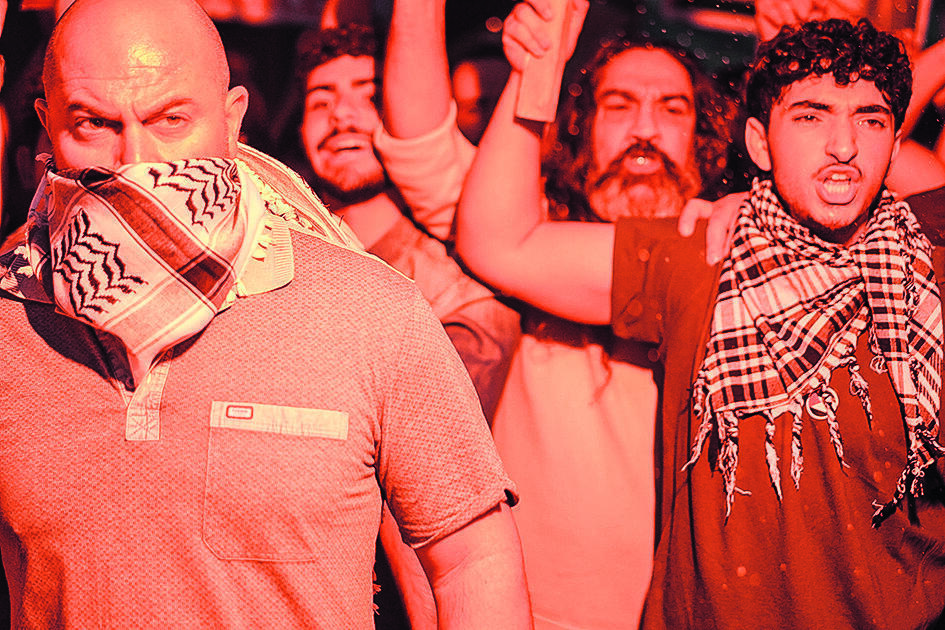
From Fauda
(Photo: Elia Spinopoulos, courtesy of yes)
A positive reaction also came from a viewer in the Gaza Strip, who called it “one of the strongest, most suspenseful and compelling seasons of the series.”
Others, however, sharply criticized the story being told. A viewer from Libya argued that the new season presents “a biased narrative” that maligns Palestinians and distorts their struggle through its portrayal of the events, characters and Palestinian perspective.
“The problem is not that it deals with the events of October 7 or that a drama was produced about them,” he wrote. “The problem is the narrative the work presents, its portrayal of Palestinians and their struggle, and its interpretation of events in a way that serves one narrative at the expense of the Palestinian narrative.”
Lior Raz, Fauda co-creator and star, told Ynet that the scale of the season’s international success had caught the team by surprise. “The success on this level surprises us,” Raz said. “We did not expect the intensity of the response around the world, or what we are seeing on social media, and certainly not what is happening with Fauda in Arab countries.”
“The reactions to the episodes about October 7 are especially moving. Our intention, as always, was to create a high-quality television series, a season that would take Fauda another step forward, and at the same time tell the world what the State of Israel went through and experienced in the October 7 massacre.”
“We are very proud that Fauda is reaching homes all over the world. This is much more than ratings.”
Avi Issacharoff, Raz’s co-creator, said the goal was to bring an experience deeply familiar to Israelis to audiences abroad. “Our hope was to bring the entire world a story that burned inside us and inside every Israeli who experienced October 7,” he said. “People always say, ‘An outsider won’t understand.’ We hope that this time, outsiders will understand a little better.”