

Step into Or’s gaming room and it becomes immediately clear that this is not a casual hobby. It is a carefully designed ecosystem of machines, screens and memories. Arcade cabinets line the walls, classic consoles sit ready for play, and the unmistakable glow of CRT screens fills the room with a distinctly analog atmosphere.
We meet Or, an economics lecturer from Hadera, inside the gaming room he spent the last year building. What begins as a tour of retro games quickly evolves into a deeper conversation about technology, emotional value and the economics behind collecting physical gaming artifacts in a digital-first world.
The machines that defined an era
At the center of Or’s collection stands a Japanese arcade cabinet, the Taito Egret II, a classic “candy cab.” Unlike the tall American arcade machines, this cabinet is designed for seated play, prioritizing comfort and long gaming sessions. Today, it is considered one of the most desirable arcade cabinets among serious collectors.
These machines rely on original hardware boards rather than modern software emulation. In the 1980s and 1990s, arcade operators adopted the JAMMA standard, allowing games to be swapped by simply replacing the board. That same standard now enables collectors to preserve authenticity while maintaining flexibility.
Or is unequivocal about one thing: CRT screens are essential. Modern LCD displays and emulators introduce input lag, a delay between pressing a button and seeing the result on screen. For fast-paced retro games, this delay fundamentally changes the experience.
CRT technology offers near-instant response times, exactly as the games were designed to function. To bridge authenticity and practicality, Or also uses MiSTer FPGA technology. Instead of emulating software, MiSTer recreates the original hardware logic, delivering gameplay that is almost indistinguishable from the original machines, without the prohibitive costs of rare arcade boards.
Gallery
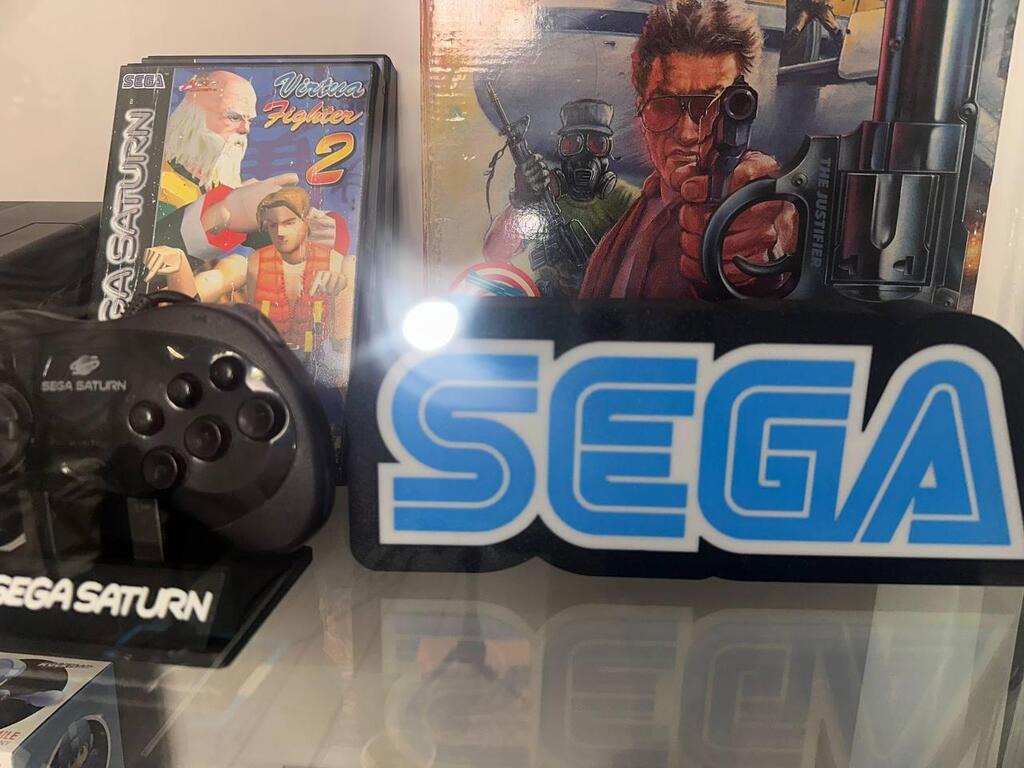
A Sega Saturn console and controller are displayed alongside retro gaming memorabilia in Or’s gaming room in Hadera
(Photo: Bar Gindy)
The room also serves as a living timeline of home gaming. From the NES, known in Israel mainly through local clones, to Super Nintendo, Sega Mega Drive, PlayStation 1 and 2, Sega Saturn and Dreamcast, each console reflects a moment when technology reshaped home entertainment.
The crown jewel is the Neo Geo AES. Released in 1991, it brought uncompromised arcade-quality games into the home. Its price was staggering: $650 for the console and $200–$300 per game, equivalent to around $1,500 today. It was never intended for the masses and is now one of the most expensive and sought-after retro platforms.
In Israel, acquiring original hardware was always challenging. Most authentic machines arrived through specialty retro shops or complex personal imports. With cabinets weighing nearly 100 kilograms, shipping often costs as much as the machine itself.
Games that became memories
Or’s favorite genre is the beat ’em up, games built around timing, cooperation and shared physical space. Titles like Golden Axe, Final Fight, Cadillacs and Dinosaurs, and Teenage Mutant Ninja Turtles are not just collectibles. They are emotional anchors.
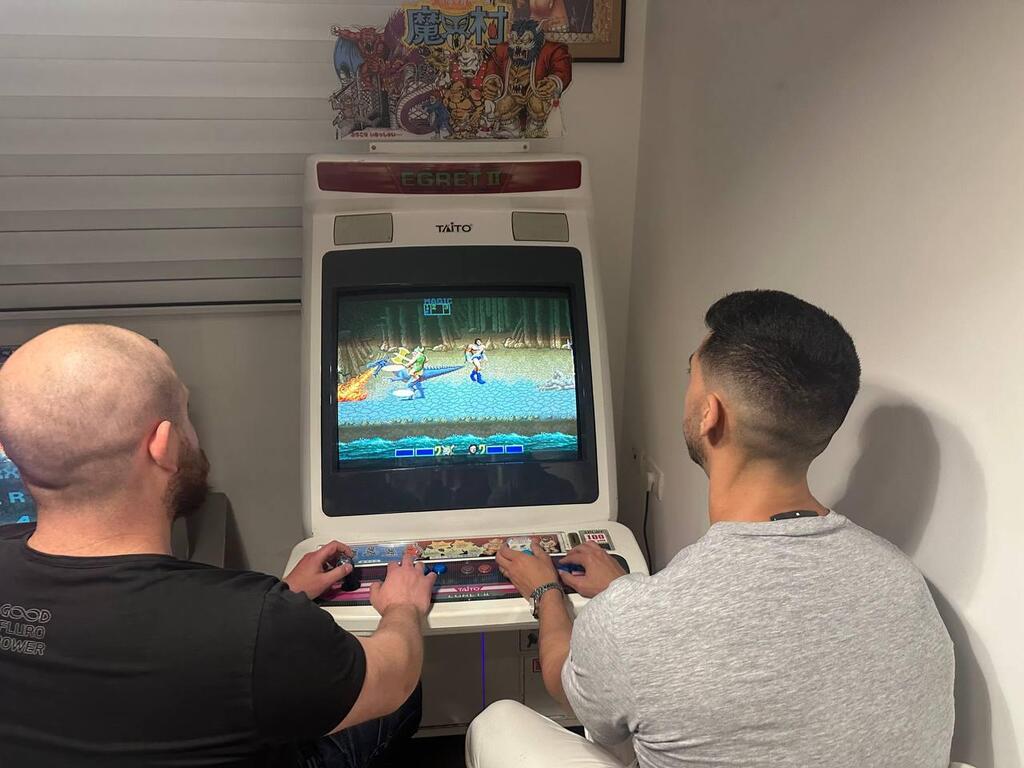
Bar Gindy, host of the People & Collectors podcast, left, and Or play on a Taito Egret II Japanese arcade cabinet in Or’s gaming room in Hadera
(Photo: Bar Gindy)
Or recalls playing Final Fight during family vacations at a hotel in Eilat, memories that now carry meaning far beyond the screen. His most expensive title, Teenage Mutant Ninja Turtles, cost about 1,700 shekels ($545), a reflection of how nostalgia, rarity and condition converge into real market value.
Or began collecting more intensively following the events of October 7, during the Iron Swords war. The gaming room became a form of escape, a controlled space offering focus, familiarity and emotional relief during uncertain times.
Most retro gaming collectors today are men in their 30s and 40s who remember arcades as social hubs. Before online gaming, arcades were places where players exchanged tips, learned by watching others and built communities in person.
Original arcade boards are best compared to vinyl records. They are heavy, expensive and require maintenance. Yet for those who love them, they deliver an authenticity that no digital file can fully replicate.
- For more stories from Or and other collectors, check out the People and Collectors podcast. The full interview is available with subtitles in English and 50 other languages.