

During a press conference for the premiere of his new film Her Private Hell at the Cannes Film Festival, Nicolas Winding Refn shared a startling and deeply personal revelation. A routine examination had uncovered a heart valve leak that was damaging his lungs, and the acclaimed Danish filmmaker was sent for emergency surgery. During the procedure, his heart stopped and he was clinically dead for 25 minutes.
Refn, 55, eventually emerged from a coma alive. Looking back, he says the encounter with death restored his appetite for life and creativity at a time when both had begun to fade.
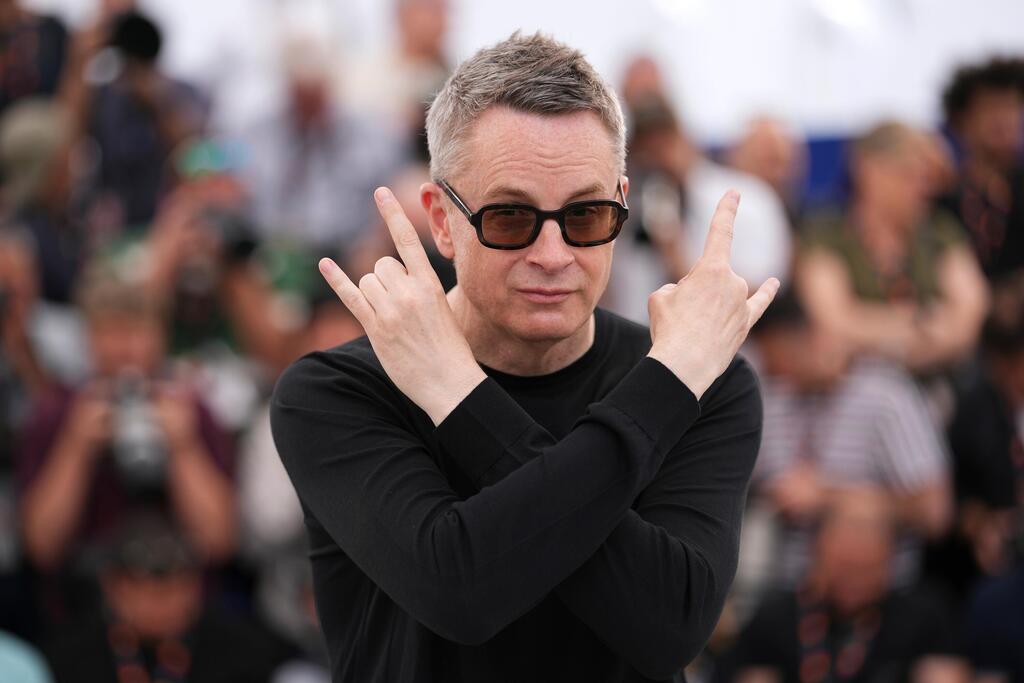
“During those two weeks waiting for my surgery, not knowing whether I was going to live or die, I came to realize that I had been given a gift, and that I shouldn’t worry,” he told ynet in an interview. “When you come to the realization that you might die, you have to make peace with your life. I had never had a doctor ask me if I had written a will before that day.”
That confrontation with mortality became part of the emotional foundation of Her Private Hell, a dark thriller that reflects Refn’s own ordeal through its central character, Elle, played by Sophie Thatcher. Elle sets out to find her protective father after he disappears into a gloomy city drenched in neon and covered in heavy fog.
Her journey is threatened by a terrifying figure known as the Leatherman, a seemingly superhuman serial killer pursuing her and two other women: the pleasure-seeking Hunter, played by Kristine Froseth, and the seductive Dominique, played by Havana Rose Liu, who is also Elle’s stepmother.
Moving between her fractured inner world and an equally nightmarish reality, Elle is forced to face her fears alone. Her imagined protector is Private K, played by Charles Melton, a military veteran trying to rescue his own daughter from the same monstrous figure.
“It’s the story of a young girl whose lover marries her father and becomes her stepmother, and then, as a stepmother, takes her father away,” Refn said. “It is highly dramatic, almost operatic.”
“Trapped in this situation, she fantasizes about the father she will never have: Private K. He is a protector figure who is going to help bring back a daughter who has been taken by a monster called the Leatherman, a monster she was introduced to through a fairy tale told by her own father.”
The film’s twisting plot invites psychoanalytic readings about fathers and daughters, abandonment, identity, sexuality, primal desire and survival. But for Refn, the idea of a private hell is broader and more personal.
“A private hell can be many things,” he said. “It is the sense that everything you consider sacred has been taken away from you.”
“Thematically, those ideas are very compelling because, like a fairy tale, the film can be read in many different ways, especially when it comes to the relationship between daughters and fathers.”
Refn said the film is also his own story “in a sense.” During his health crisis, he went through what he described as daily cycles of grief, anger, frustration and fear.
Before then, he had regarded himself as almost invulnerable, “like the bionic man.” Facing the possibility of death forced him to reconsider how he had lived and how he wanted to spend whatever time remained.
“After my health scare, I realized I’ve lived my first 50 years, and I want to spend my remaining years being completely free,” he said. “And I mean completely free, free of ego, vanity and external expectations.”
“True pleasure in the creative process only comes with total freedom. Working creatively is when I feel alive. The finished product is just something for the audience to consume and run with.”
“My actual existence is tied to the process of making. To get the full satisfaction out of that, I have to free myself from categories, boxes and even the concepts of winning and losing. Those are obsolete to me. I am beyond competition. I only care about being true to myself.”
‘As fathers, we never feel good enough’
Refn’s brush with death also led him to reassess his relationships with his wife of 30 years and their daughters, Lola and Lizzy Lou.
“I made my peace with my wife of 30 years,” he said. “My eldest daughter was old enough to step into her own world and live her life without me. But my youngest, Lizzy Lou, was still too young to lose her father.”
“As a parent, you feel you must be there to protect them. That anxiety became Private K.”
The character belongs, Refn said, to the same lineage as the violent and enigmatic antiheroes who populate his earlier work: Mads Mikkelsen’s warrior in Valhalla Rising, Ryan Gosling’s stunt driver in Drive, Julian in Only God Forgives and Miu in Copenhagen Cowboy.
Private K, however, emerged directly from Refn’s fear that he might no longer be present to protect his younger daughter.
“As fathers, we all live with the pain of feeling like we are never good enough, never there enough, or lacking the tools to protect our children,” he said. “Every parent struggles with that, but especially fathers.”
“That is why men tend to get so much satisfaction from watching other men use violence to protect innocence. It temporarily relieves our own feelings of inadequacy.”
Refn described Her Private Hell as a kind of reverse engineering of Only God Forgives.
“That film was about the mother-son dynamic and a mother devouring her son,” he said. “This film is about a father leaving his daughter.”
“Because of that abandonment, she imagines the ultimate superhero father who will go to hell and back to save her.”
From masculine antiheroes to female protagonists
Refn built much of his reputation on films centered on highly masculine, dominant and often brutal men, including Mikkelsen in Valhalla Rising, Tom Hardy in Bronson and Gosling in Drive.
That direction changed with The Neon Demon in 2016, starring Elle Fanning as a young model swallowed by an industry obsessed with beauty, youth and predation. Her Private Hell continues that shift, placing a young woman named Elle at the center of another stylized and threatening world.
“I really enjoy working with female protagonists,” Refn said. “When I work with male alter egos, they often function more like set pieces. They are part of the experience, but they aren’t the experience itself. They serve a function.”
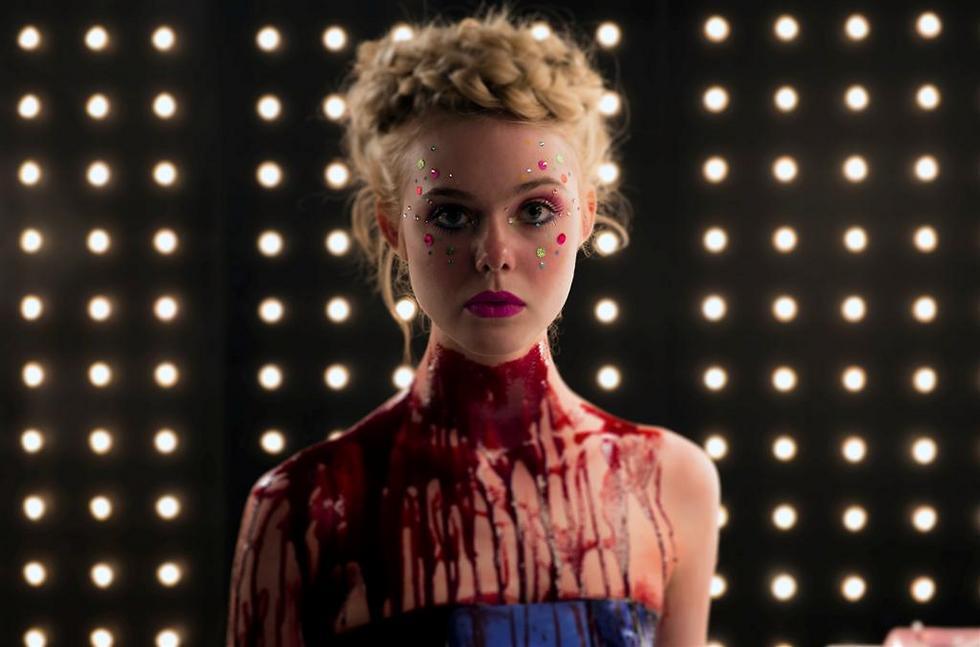
Elle Fanning in The Neon Demon
After his health crisis, Refn knew he wanted to return to the territory he had explored in The Neon Demon.
“I loved making The Neon Demon and working with Elle Fanning and the rest of the cast,” he said. “When I returned to filmmaking after my health scare, I knew I wanted to do more of that and explore further.”
“I love photographing it, dressing it up. It’s my own version of playing with dolls.”
That idea runs throughout Her Private Hell. Its people and objects are presented like toys, carefully dressed and arranged, while even Private K is designed to resemble an action figure displayed in a box.
“There is a lot of iconography in this film tied to objectification,” Refn said. “People and objects are treated like toys. They are dressed like dolls, they look like dolls and they wear doll-like things.”
“Even Private K is designed to look like an action figure in a box with a utility belt.”
Refn is himself a toy collector, an obsession he links to his desire to preserve a sense of childhood.
“It stems from a desire to never truly grow up,” he said. “That youthfulness keeps me mentally young and reminds me to have fun.”
‘I always felt I should have joined the army’
Military imagery also occupies a prominent place in Her Private Hell, particularly through Private K and his carefully constructed uniform.
Refn said his attraction to that imagery is rooted in one of the few regrets of his life: avoiding Denmark’s roughly yearlong military service when he was younger.
“I’ve always had a fetishization of the military uniform, probably because one of the few regrets in my life is that I never joined the army,” he said. “I always felt I should have spent a year in the military, but I never did. All of those personal reflections played into the film.”
Those reflections sit alongside the film’s exploration of objectification, self-image and the possibility of retaining a unique identity in a world where people are styled, exchanged and consumed like objects.
For Refn, that tension also reflects his position as a filmmaker with one of the most recognizable visual signatures in contemporary cinema, working in an industry often driven by formulas and repetition.
“Let’s not categorize human instincts,” he said. “Let them exist on their own terms. A gaze is a gaze. It crosses political and cultural boundaries.”
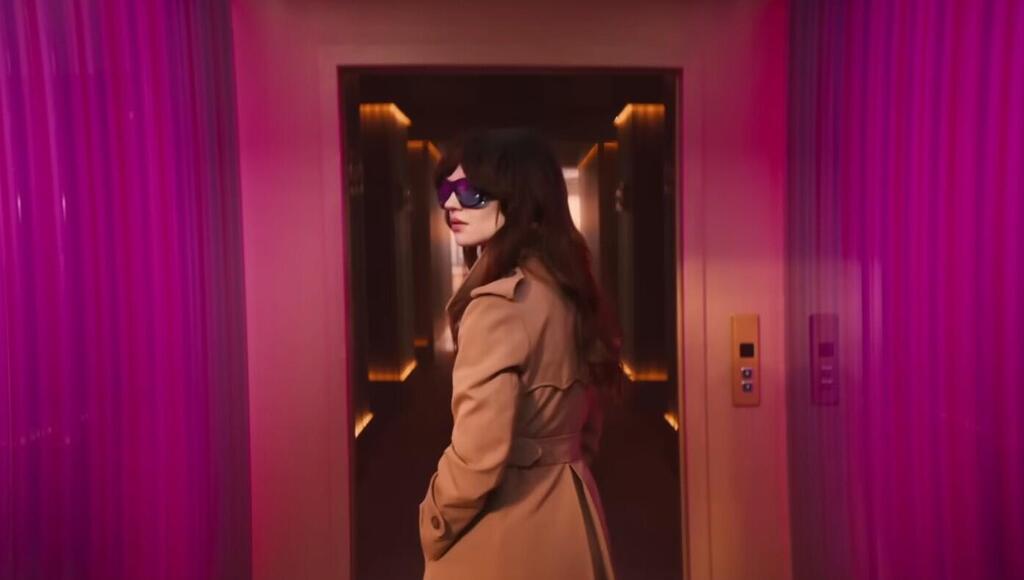
Her Private Hell
Refn argues that art can bridge divisions that politics, technology and the circulation of information repeatedly fail to overcome.
“Art is the only format that can bring the most chaotic situations to a state of peace,” he said. “While information serves to stabilize society by creating a baseline of understanding, things inevitably blow up again. Art, however, is the only element that can functionally bring us together collectively.”
“We can come from entirely different parts of the world, hold entirely different beliefs and even be sworn enemies, but there are still certain artistic expressions we can enjoy together.”
“That doesn’t come from politicians or the billionaires who control technology and the flow of information. It’s as simple as drawing a picture.”
“We must always remember that art is sacred. It is a sacred format. Therefore, art always wins.”
Asked whether Israelis and Palestinians might simply need to watch Her Private Hell together in a movie theater, Refn embraced the idea.
“That is an experiment I would love to try,” he said. “I would gladly fly to Jerusalem and sponsor that.”
“I’d be there to say, ‘Guys, let’s just take it easy. Just sit here for two hours together. You can do whatever you want afterward, but for two hours, you’re just going to sit here.’”
“I’m all for that.”