

Anointing oils are plant-infused oils applied to the body with focused intention, prayer or ceremony. They are not a wellness trend. They are a thread that runs through every major civilisation on earth: through Jewish scripture and Sephardic folk tradition, through the pharmacopeias of ancient Greece and Egypt, through Indigenous ritual practices across every continent.
At the heart of every one of these traditions is a truth that modern medicine has largely forgotten: the body cannot be separated from the spirit, and healing that ignores the soul heals nothing at all.
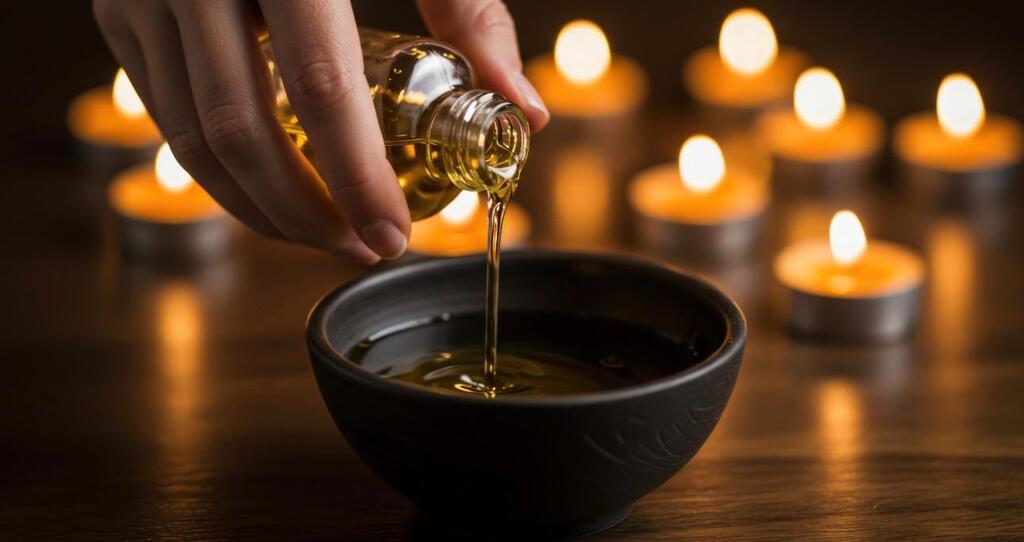
This is not a medical argument. It is a cultural and philosophical one, backed by thousands of years of history, for why herbal anointing rituals matter, what Judaism has to teach us about intentional healing and why the most important ingredient in any sacred oil is neither the plant nor the oil. It is the person holding it.
Shemen HaMishcha: The Sacred Oil of Judaism
The Hebrew Bible is saturated with oil. Olive oil, shemen zayit, appears in the Torah not merely as food or fuel for the Temple menorah, but as the physical medium through which divine blessing is transmitted to human beings. To anoint, in Judaism, is to consecrate: to mark someone as set apart, elevated, touched by the sacred.
In Exodus 30:22–33, God gives Moses a precise recipe for the shemen HaMishcha, the holy anointing oil, blended from myrrh, cinnamon, calamus, cassia and olive oil. It was used to anoint the Ark of the Covenant, the altar and every sacred vessel in the Tabernacle. Samuel anointed David with oil; Elijah anointed Elisha. In each case, the act was understood as the physical enactment of an invisible spiritual truth: that a human being had been chosen, prepared and transformed.
The very word Mashiach, Messiah, means "the anointed one." Oil was the conductor. The body was the instrument. Intention was the electricity.
Anointing oils
This tradition flowed forward into Sephardic Jewish folk practice across the Ottoman Empire, North Africa and the Middle East, where women maintained a living tradition of plant-based ritual care for generations. In Kabbalistic thought, oil carries unique spiritual significance: it does not mix with other substances, it rises, it burns cleanly and it produces light. For the Kabbalists, this made oil the perfect symbol for the divine soul within the human body, something pure, elevated and capable of illuminating darkness when properly kindled. To anoint was to draw divine light downward into the physical form, to open the body as a vessel for sacred flow.
My Great Uncle Baba Sali, Rabbi Yisrael Abuhatzeira, the revered Moroccan Kabbalist who lived until 1984, embodied this tradition in his lifetime. He was famous for blessing olive oil and dispensing it to the sick and suffering as a vehicle for divine healing. Thousands came to receive it from communities across Israel, North Africa and beyond. They did not come for medicine. They came for intention, prayer and connection to something beyond themselves. The oil was the vessel. The blessing was the point.
"Oil was the conductor. The body was the instrument. Intention was the electricity."
What the philosophers and herbalists knew
The Jewish tradition is not alone in this understanding. Across the ancient world, philosophers and healers arrived at the same conclusion independently: that the power of a plant is inseparable from the inner state of the person using it.
Anointing oils
Hippocrates of Kos prescribed aromatic oil baths and plant-infused massages as central to healing, but insisted that recovery required the participation of the patient's own spirit. His concept of physis, the vital force within every living thing, held that the physician's role was not to overpower illness but to awaken the body's own healing intelligence. The oils were catalysts. The patient's consciousness was the medicine.
Avicenna Ibn Sina, the eleventh-century Persian polymath whose Canon of Medicine shaped medical tradition for six centuries, described aromatic plant preparations as "movements of the soul." He argued that the mind, spirit and body formed one unified system, and that the aromatic intelligence of plants could shift a person's inner climate and create the conditions in which healing becomes possible. The plants, in his understanding, did not heal. They invited the person to heal themselves.
Hildegard of Bingen, the twelfth-century German abbess and herbalist, understood every herb as a carrier of viriditas, the greening, vitalising force of divine creation. Every healing she practiced was understood as a collaboration between the healer, the plant, the patient and God. Prayer was not separate from the medicine. Prayer was part of the formula.
Not medicine. Intentional. That is the point.
It must be said clearly: herbal anointing oils are not pharmaceuticals. They are not treatments for disease. If you are unwell, please see a doctor. Medical care and sacred ritual are not in competition. They address entirely different dimensions of the human being.
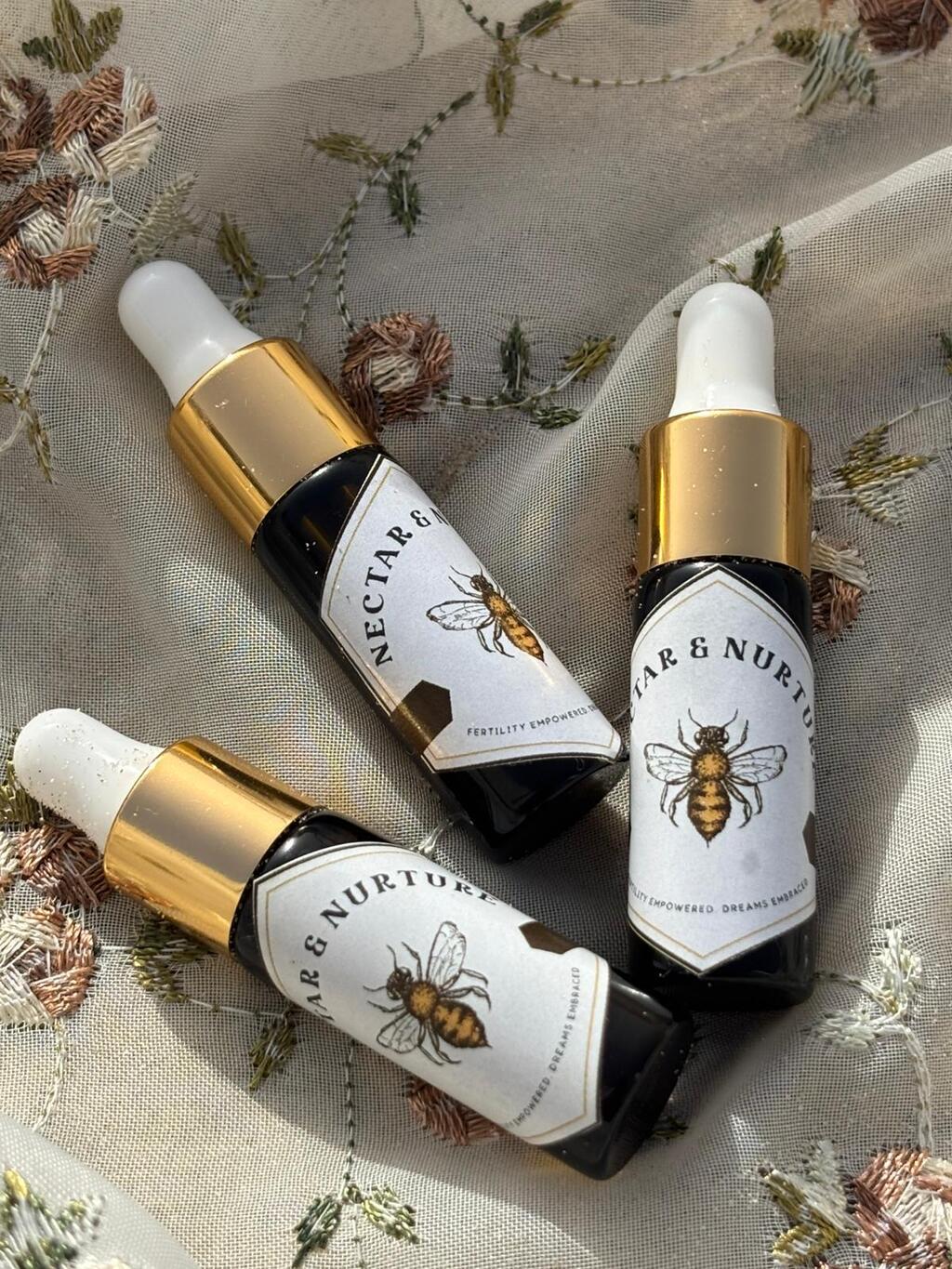
Nectar & Nurture anointing oils
(Photo: Eden Abohasira)
When you anoint yourself with an oil prepared with intention and prayer, you connect yourself to every healer, every grandmother who has ever done the same. You are saying: my body is sacred. My healing matters. I am worthy of ceremony.
What an anointing oil can do, what it has always done across every tradition, is serve as a physical anchor for intention. The oil gives intention to the body. It makes the invisible tangible. It gives a spiritual act a sensory form the nervous system can recognise and respond to.
And in that act, in that deep, intentional moment of self-recognition, the mind, the soul and the body finally arrive in the same place at the same time. That is what ignites the power of the plant. Not magic or chemistry alone. The wholeness of your own presence.
When you warm oil between your palms, place your hands on your body, slow your breath and ask sincerely what you are holding and what is ready to be released, something real is happening. You are turning your full attention toward a part of yourself that modern life has taught you to ignore. You are creating a moment of presence. You are performing an act of self-recognition.
The most powerful healing force is not a drug. It is the moment a human being turns toward themselves, fully and lovingly, and says: I am here, and I am willing to be made whole.
These statements are not intended to diagnose, treat, cure or prevent any disease or medical condition. Please consult a qualified healthcare professional for medical concerns.
- Eden Abohasira is the great-niece of the Baba Sali, Rabbi Yisrael Abuhatzeira. Raised in New York, she left a career in criminal justice and made aliyah to Israel in 2019, where she began a journey inward toward healing, spirituality and the ancient wisdom of plants. She crafts sacred anointing oils under her brand Nectar & Nurture. Follow her on Instagram.