


Stephen King wrote The Running Man in a drug-fueled burst that, by his own account, lasted no more than 72 hours. Published in 1982 under the pseudonym Richard Bachman (a pen name he had used three times before), the book was a way to bypass his publisher’s annual release quota.
Set in a dystopian United States in the year 2025, the novel imagines a brutal capitalist society where the working class is crushed under the weight of economic and social inequality. King focuses on a sinister form of social control: mind-numbing, violent television entertainment. In the most popular reality show, “The Running Man,” contestants are hunted down and killed for public amusement. Any contestant who survives for 30 days is promised a billion-dollar prize, but no one ever has. It’s a dark, raging satire that reflects King’s raw fury.
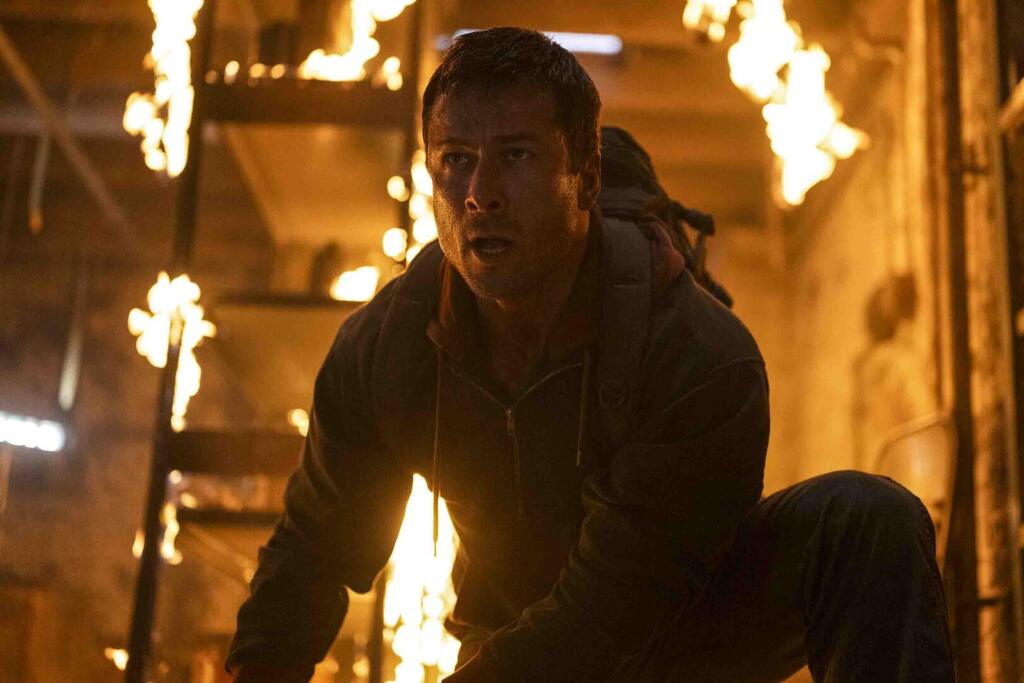
King, one of the most prolific writers of our time — with 63 novels and around 200 short stories — also holds the distinction of being one of the most frequently adapted authors, with 37 films and 37 television projects based on his work as of late 2025.
The story was first adapted in 1987 into a schlocky, satirical action film starring Arnold Schwarzenegger, directed by Paul Michael Glaser and written by ’80s action stalwart Steven E. de Souza (48 Hrs., Commando, Die Hard). Taken with a grain of salt, it’s an entertaining B-grade satire in the vein of Paul Verhoeven (RoboCop, Starship Troopers). Clad in a bright yellow bodysuit, Schwarzenegger delivers signature one-liners while fending off absurd, pro-wrestling-style assassins, including a biker wielding a chainsaw, a samurai on an ice rink and a rotund German opera singer dressed in flashing armor who electrocutes his victims to Wagner’s Ride of the Valkyries.
Now, Edgar Wright — the director fondly remembered for the “Cornetto Trilogy” (Shaun of the Dead, Hot Fuzz) — returns with a new adaptation. After his 2017 hit Baby Driver, Wright has made only one feature film, the 2021 box office disappointment Last Night in Soho. With The Running Man, he faces the challenge of a bigger production and the expectation to deliver a politically relevant update.
Unfortunately, the result is underwhelming. Alongside screenwriter Michael Bacall (Scott Pilgrim vs. the World), Wright crafts a version that stays relatively faithful to the novel — roughly 80% King’s original, with about 20% of the campy flair from the 1987 adaptation. But the blend doesn’t quite land. The film lacks political edge and fails to fully entertain, ultimately feeling like a missed opportunity to adapt King’s 1982 vision for 2025 audiences — something filmmakers like Paul Thomas Anderson have done more successfully with other works.
Glen Powell stars as Ben Richards, a blue-collar worker struggling to find employment due to his outspoken opposition to unsafe labor conditions. When his young daughter falls seriously ill and his wife Sheila (played by Jayme Lawson) can’t cover the cost of medication on her waitress salary, Richards reluctantly applies to join a degrading reality show. But he’s manipulated by Dan Killian (Josh Brolin), the head of the network, into entering “The Running Man” — a deadly game from which no one returns. Killian sees in Richards a potent mix of desperation and rage that promises compelling television.
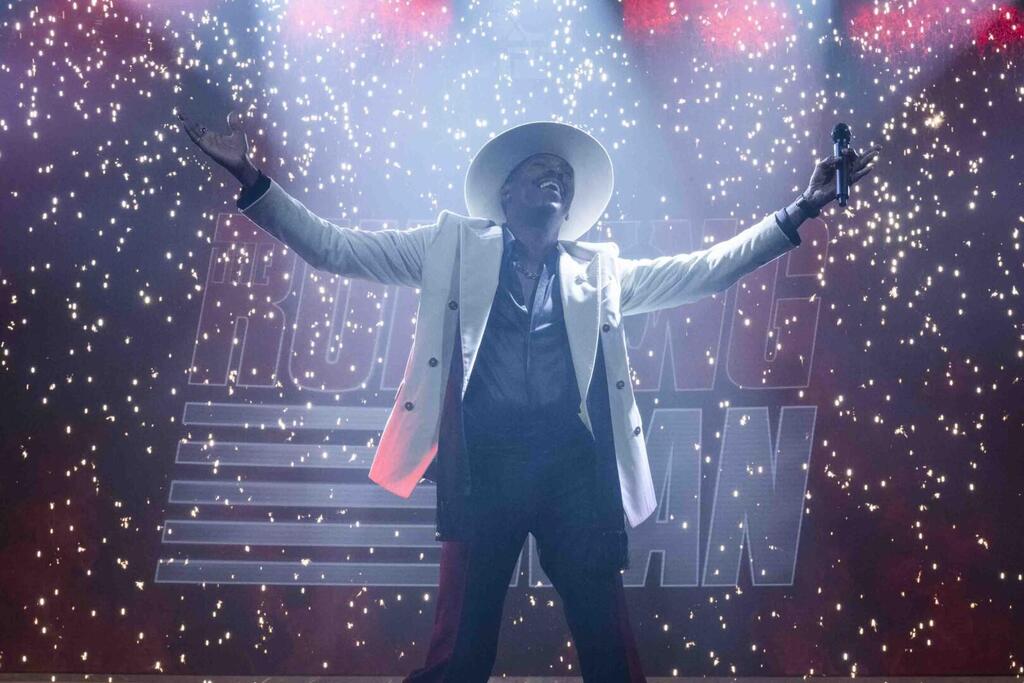
From 'The Running Man'
(Photo: Courtesy of Tulip Entertainment)
Also featured is Coleman Domingo as the manipulative host Bobby T, who frames the contestants as villains to be exterminated. Viewers are drawn into the hunt, incentivized with prizes if they provide tips on the fugitives' whereabouts. Oddly, for a story set in 2025, the satire remains tethered to outdated media models, with television as the dominant force and only a token nod to current technologies like deepfakes and AI-driven viewer manipulation.
This lack of modernization isn’t the only shortcoming. The plot drags until the game begins, side characters appear and vanish without consequence and much of the film rests on Powell’s shoulders. As Richards, Powell is on screen nearly the entire time, positioned as a successor to Tom Cruise–style action stardom. Unlike his supporting role in Top Gun: Maverick, this time he carries the full weight of the film. While he brings charisma and physical presence (including a scene where he escapes a trap clad only in a small towel), the script fails to give him material that matches his more laid-back energy.
Adapting The Running Man more than 40 years after it was written is no small feat — especially with audiences already familiar with similar dystopian survival concepts from Battle Royale (2000) and The Hunger Games series. In September, another King/Bachman work, The Long Walk, also set in a brutal reality-TV-style future, was adapted by director Martin Lawrence. That film, unlike Wright’s, leans into the harshness of its premise without trying to soften or balance its brutality, making for a more compelling and meaningful result. The Long Walk has been acquired for distribution, and one hopes it reaches Israeli theaters soon.