

Miriam Mattova has a face the fashion industry wants to photograph and convictions that make some people wish she would stay silent.
An international model whose work has appeared in Marie Claire, Elle, L’Officiel, Cosmopolitan and Harper’s Bazaar, she has chosen to use her visibility for something far more consequential than another magazine cover: defending Israel, confronting antisemitism and insisting that October 7 must never be erased from public memory.
Gallery
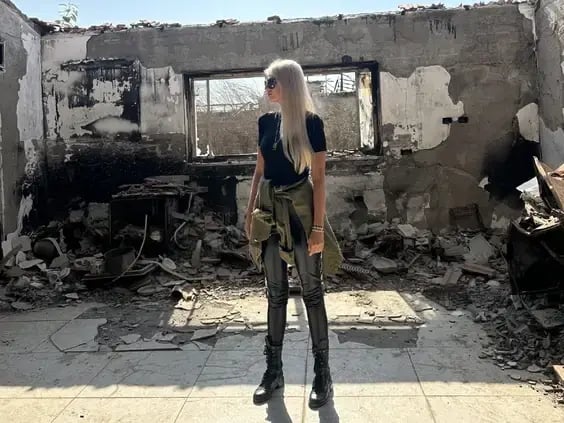
Miriam Mattova has chosen to use her visibility for something far more consequential than another magazine cover
(Photo: Social media)
Her willingness to speak out has come at a personal cost, including death threats and antisemitic harassment. But intimidation has not persuaded her to retreat. If anything, it has strengthened her resolve.
“Fashion gave me a platform, but eventually I had to decide what I wanted to say with it.”
For Miriam, that decision has exposed a contradiction at the heart of modern culture. The world celebrates women who speak their minds until they express opinions that make the right people uncomfortable. Individuality is applauded, provided it stays within acceptable boundaries. Empowerment is celebrated, provided it does not challenge the prevailing narrative.
Miriam has little patience for those boundaries.
Beautiful enough for the covers, too outspoken for comfort
The fashion industry knows how to sell confidence, and Miriam refuses to separate the woman photographed for a magazine from the woman who speaks publicly about Jewish identity and Israel. She does not believe she should have to choose between professional ambition and personal conviction or between being taken seriously in fashion and standing firmly behind her heritage.
“If your principles disappear the moment they become unpopular, they were never principles to begin with.”
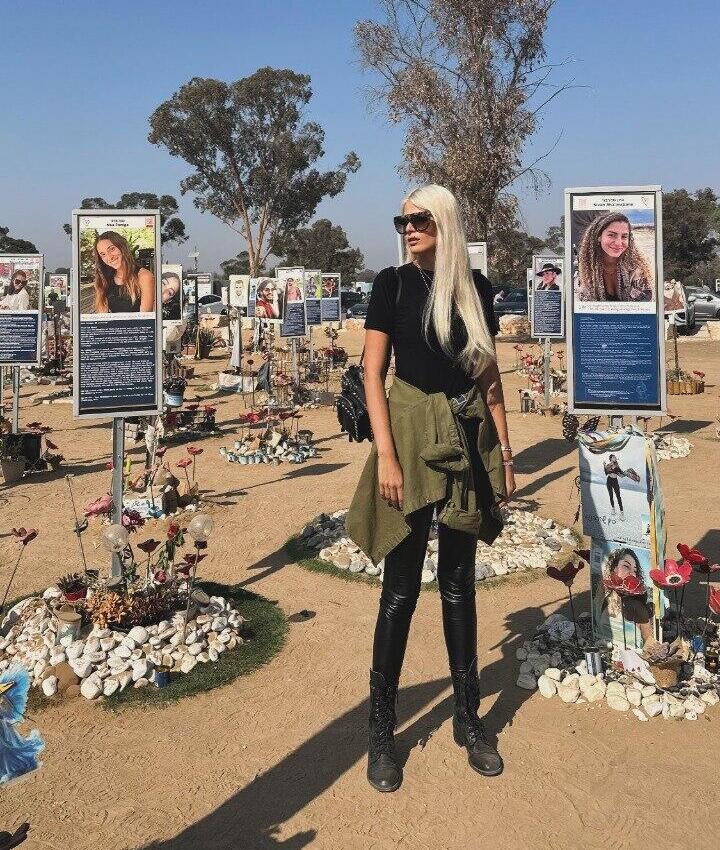
Miriam Mattova refuses to let the world decide when she is allowed to be Jewish, when she is allowed to stand with Israel or when the world is allowed to forget October 7
(Photo: Social media)
It is a position that comes with risks, particularly in an environment where public figures can face immediate professional and social consequences for expressing political opinions. Miriam has spoken about the hostility directed at her online, including threats connected to her public advocacy. Rather than treating those threats as a reason to disappear, she has made accountability part of her mission.
Her argument is simple: A public platform should not become a space where intimidation determines who is permitted to speak.
October 7 is not up for erasure
The Hamas-led attacks of October 7, 2023, left Israeli civilians murdered, families shattered and people abducted to Gaza. For Miriam, defending Israel’s right to protect its citizens is not a passing political position. It is a matter of principle.
She argues that criticism cannot become a pretext for denying Israel’s right to exist, excusing terrorism or treating Jewish suffering as politically inconvenient.
The question she wants people to confront is uncomfortable: Why should a Jewish woman have to calculate the professional consequences of saying that Israeli civilians deserved to live, that hostages deserved to come home and that Israel has a right to defend itself?
Why is solidarity so often conditional? Why are some people expected to prove their humanity before their suffering is acknowledged?
Miriam is unwilling to wait for support for Israel to become fashionable again. She believes that the most meaningful test of conviction is not what people say when an opinion is popular but what they are prepared to defend when it is not.
Her grandmother survived the Holocaust. What excuse do we have for silence?
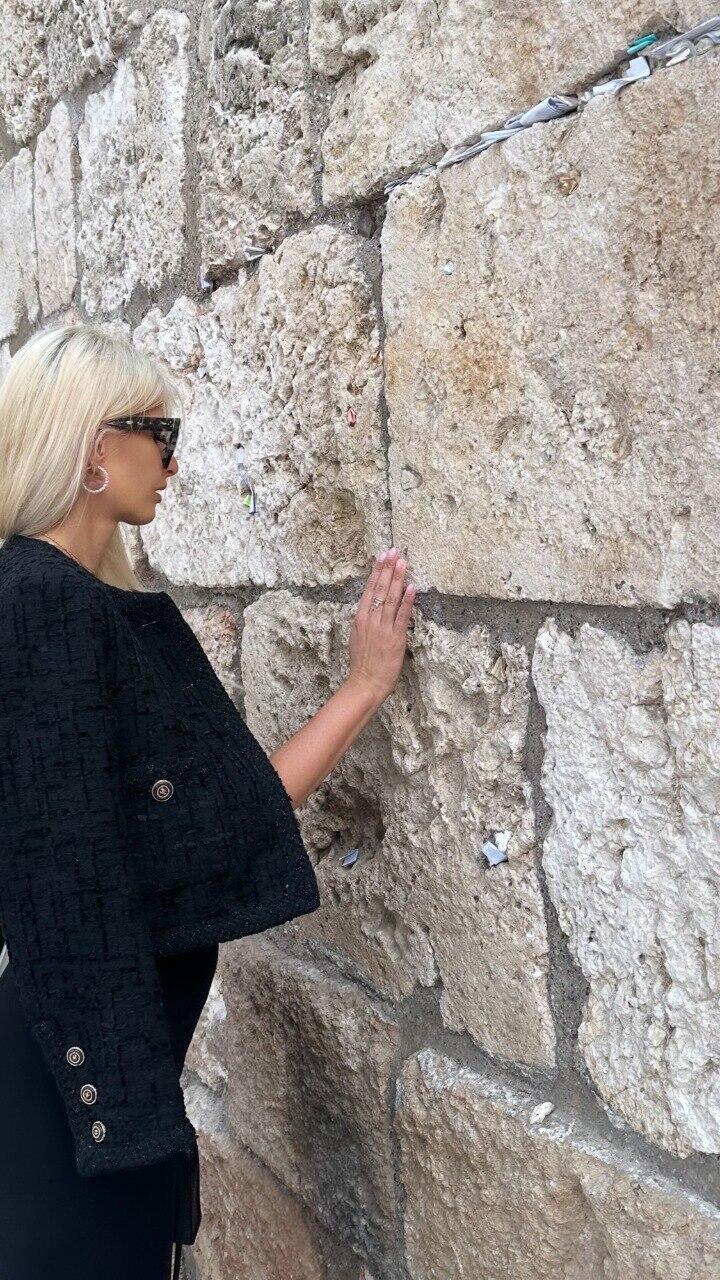
Miriam Mattova visits the Western Wall
(Photo: Social media)
Miriam’s determination is deeply personal. Her grandmother survived the Theresienstadt concentration camp. Her family history is a reminder that antisemitism is not an abstract debate and that the consequences of hatred can extend far beyond the words in which it first appears.
As a child, Miriam asked her grandmother how people had allowed the Holocaust to happen. Her grandmother’s answer stayed with her: “Because people were silent.”
That sentence became a responsibility.
Miriam does not claim that today’s events are identical to the Holocaust. Her point is that history demands vigilance: Hatred must be confronted, dehumanization must be recognized and silence must not become an excuse for inaction.
For her, remembering the Holocaust is not simply an annual act of commemoration. It means asking what people are doing now, when Jewish communities face hostility and antisemitism is once again being expressed openly.
What does remembrance mean if it demands nothing of us?
Conservative values in an age of conformity
Miriam also identifies with conservative, pro-family values, emphasizing personal responsibility, loyalty and the importance of family. She rejects the idea that an independent woman must abandon traditional convictions to be considered modern, ambitious or empowered.
To her, independence means having the courage to decide what matters for herself rather than accepting someone else’s definition of progress.
That same principle shapes her advocacy against online antisemitism. Miriam has called for greater accountability from social media platforms, arguing that online hatred cannot simply be dismissed as content when it can intimidate real people and contribute to a climate in which hostility becomes normalized.
The challenge, she believes, is not to silence legitimate disagreement. It is to ensure that threats and targeted harassment do not become the price people pay for expressing their identity or convictions.
There is a difference between being challenged and being intimidated. A society that confuses the two risks protecting the aggressor at the expense of the person who speaks.
She will not make herself smaller
Miriam could choose a quieter public life. She could keep her professional image separate from her Jewish identity, avoid controversial subjects and leave the difficult conversations to someone else.
But that would mean accepting a condition she refuses to accept: that her opportunities matter more than her principles.
Her story is not simply about a model speaking about Israel. It is about what happens when visibility becomes responsibility, when inherited history shapes present-day choices and when a woman refuses to let public pressure dictate which parts of herself she is allowed to express.
The fashion industry may photograph her appearance. It cannot decide what she stands for.
Miriam Mattova refuses to let the world decide when she is allowed to be Jewish, when she is allowed to stand with Israel or when the world is allowed to forget October 7.
Some people may find that position uncomfortable. She considers that a reason to speak more clearly, not less.