


His name is hardly familiar to most viewers, and none of his films has become a massive blockbuster. And yet Irish director John Carney has more or less created a genre of his own — and a fairly beloved one at that. You know the type: sweet comic dramas about unlucky singers who, through a musical connection with other artists, usually while working on one magical pop song, form a bond with their soulmate.
Actually, one of Carney’s films did become a hit, if indirectly. We are talking about “Once,” from nearly 20 years ago, Carney’s breakthrough film about two broke singers who connect on the streets of Dublin. It charmed the Academy and won the 2008 Oscar for best original song. But “Once” mostly enriched its creators, and Carney, of course, when it was adapted into a successful Broadway musical — hooray for royalties. It seems all of Carney’s films could have become successful musicals because they pump out easily digestible plots, paired with excessively likable, sweet, huggable actors, soulful and tender songs and, of course, an underdog story that is hard to resist and ends just before the big breakthrough.
Carney has tried several times to recapture his magic in Hollywood and its offshoots. Some fondly remember “Begin Again,” which was basically “Once” with better-looking actors, led by Keira Knightley as a puppy-eyed singer. All his films have their fans. I am less among them, because Carney’s formula has always seemed too transparent and ingratiating to me. So imagine my surprise when I saw “Power Ballad,” which takes the same story and the same already-worn John Carney Productions genre and gives it a slightly — slightly — darker twist.
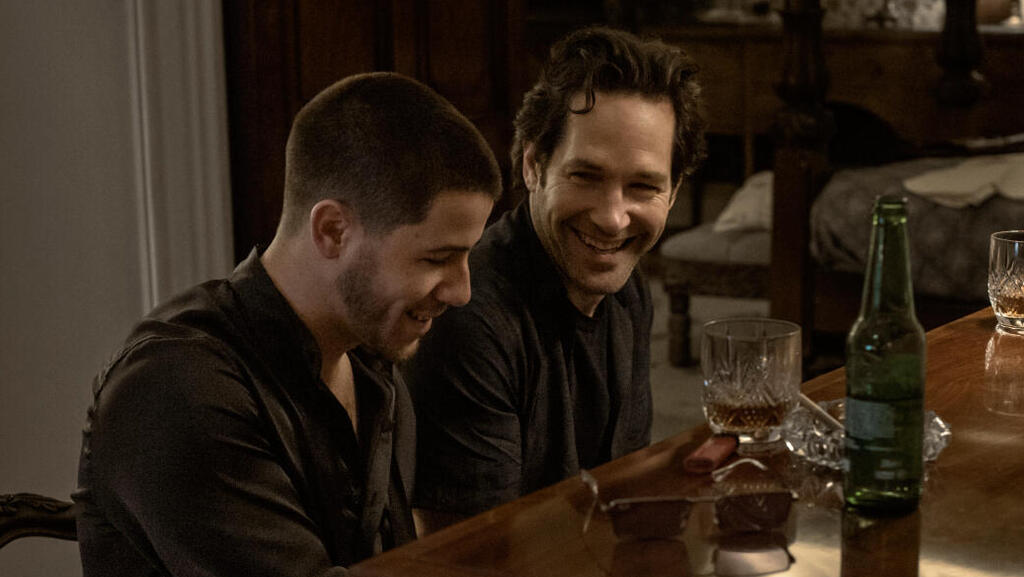
As expected, “Power Ballad” brings together two music-world protagonists yearning for success. One is an American wedding singer who has settled in Ireland, played by Paul Rudd — yes, we think we have finally spotted wrinkles — a man who thought he would become a star but gave up on his dreams more or less 20 years ago in favor of a satisfying family life with his Irish wife and daughter.
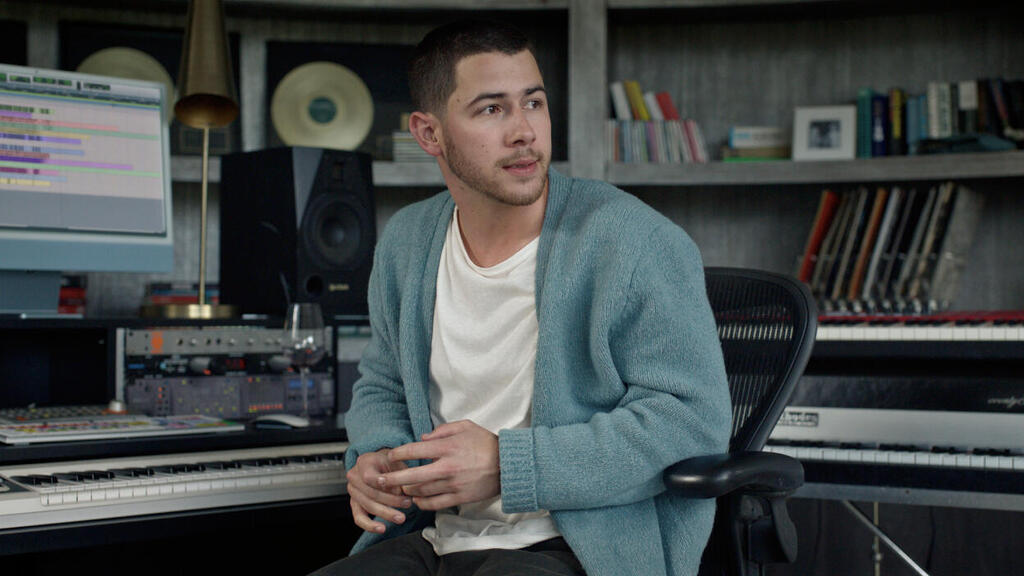
The other is Nick Jonas playing himself, sort of: He portrays a pop singer best known as “that guy from the boy band” who has spent several years juggling the unfulfilled promise of a solo album that will finally establish him as a “serious” artist and the fear of becoming a joke on reality shows alongside other has-beens. The two meet by chance at a fancy wedding, where Rudd has been hired to play and Jonas is a guest who steps onstage for a moment to jam with him. Sparks fly.
Indeed, for the first half hour, I was sure I was watching another cute John Carney movie, this time on speed: an encounter between two painfully likable people who live and breathe music, and we are all supposed to melt over how sweet, hopeful and soulful they are as they sit together with a guitar and try to perfect the chorus of a song floating around in their heads. Happily, the film goes on to take a more interesting path.
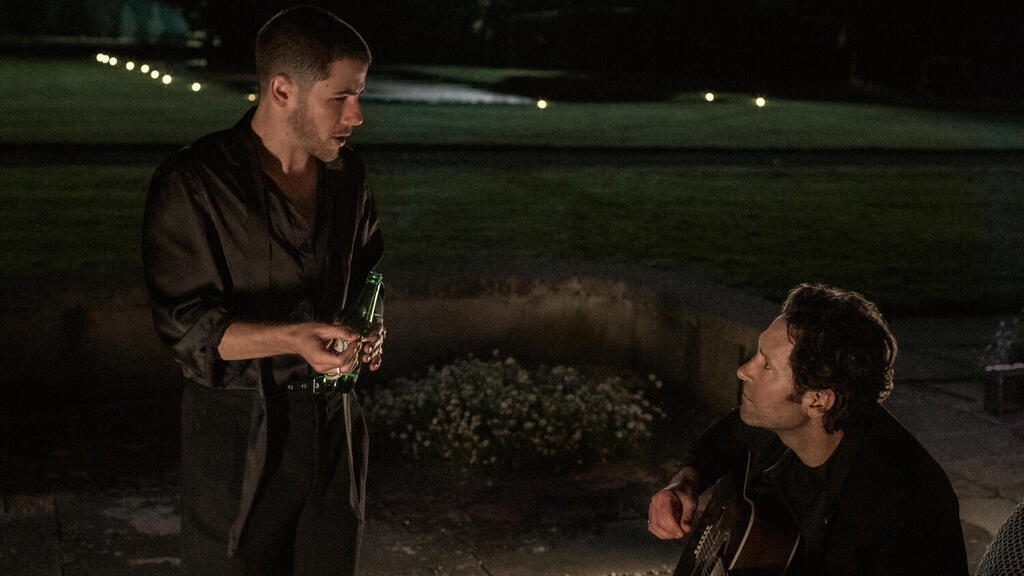
From 'Power Ballad'
(Photo: Courtesy of United King Films)
At the first turning point — revealed in the trailer, so spoiler haters should blame the filmmakers, not me, for deciding it was fair game — Rudd discovers after a few months that Jonas has done something rotten: He took a song they worked on together that magical night, one that is essentially 90% Rudd’s, and forgot to give shared Lennon-McCartney-style credit. In short, he stole it.
Rudd is horrified to discover that the song has become a huge hit, blazing across radio stations like Adele, the kind of song every couple in the world is convinced is “theirs,” while no one knows it is his. Truly, no one: In one of those screenwriting decisions that feels necessary but, when you think about it, a little absurd — because otherwise the film’s entire plot collapses — the filmmakers tell us there is no prior record showing Rudd worked on the song for 15 years, and no one close to him remembers ever hearing it.
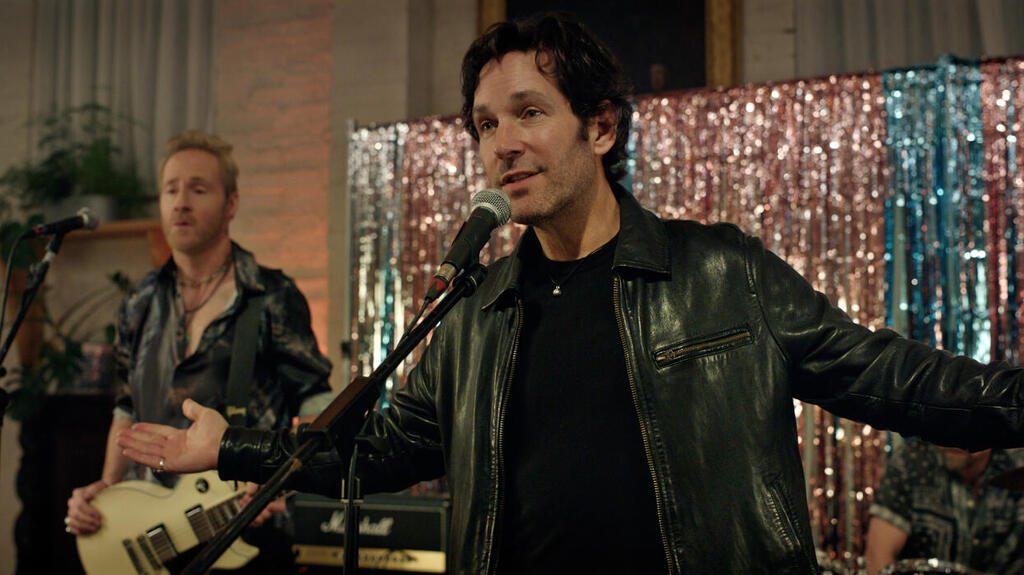
From 'Power Ballad'
(Photo: Courtesy of United King Films)
That opens the door to some excellent gaslighting from Nick and his circle, who say that if there is no proof, it is not at all certain Rudd created the song, and maybe he is just a fantasist. Jonas, in his first substantial film role, does a good job portraying a pop singer with a classic impostor syndrome complex: a person who, even when he is on top of the world, feels like a nobody, and under the circumstances presented by the film, with good reason.
The film clearly finds it very important — as Rudd’s character says, by the way — to make clear that this is not a “villain,” but a person who found a collection of justifications for why it was acceptable to steal the song and not give credit. One of them is the not entirely unreasonable thought that without a famous singer delivering it in a polished package, even the best song in the world will not easily become a hit.
From 'Power Ballad'
(Photo: Courtesy of United King Films)
None of this turns “Power Ballad” into “Amadeus,” and at times it seems Carney is really pressing, in the script and direction, on the instruction that “everyone is all right! In the end, everyone is a good person!” so as not to betray his legacy and to send viewers out of the theater with a smile. And so, despite a final act in which he allows the conflict between them to intensify and shows Jonas in a very unflattering light, the film remains somewhat stuck in second gear, or more precisely, in Zen Buddhist gear.
In that sense, the casting of Rudd — an actor who is always likable but has never been especially brilliant or interesting — fits perfectly here. A bit like his role as “Ant-Man,” which will be written on his tombstone, that is, if the bastard ever dies, given the slowest aging process on Earth that he seems to display, his character here shows the same scruffy affability. Rudd is an aging singer who wanted to become a pop star, but nothing in his conduct suggests he really wanted it — meaning, fought for it with his teeth, stepped on people and so on. The best part of the film is the part in which he confronts that fact for the first time.
In those respects, if the heart of the film is certainly Rudd, then its mind and soul are the character played by Jonas — who, again, Carney is careful to make clear, is not a bad person, but someone willing to do whatever it takes, as they say.
Or perhaps the film’s smarter point about music and life in general is different: Songs mean different things to different people. A ballad that is a love song to one person is a breakup song to another, and so on, while the creator is only a footnote. Maybe. But Carney is obsessed with creators and cannot help loving them.
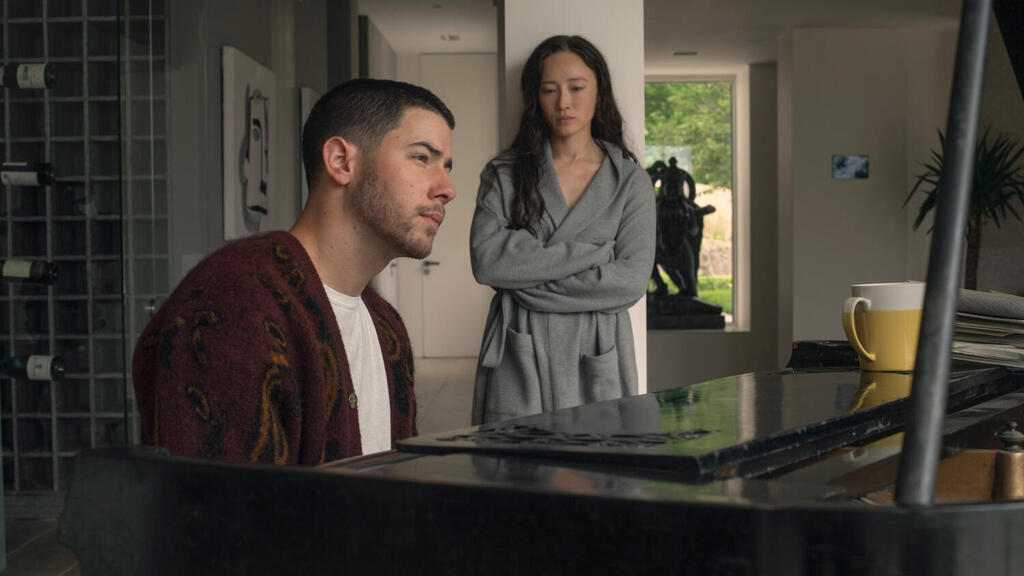
From 'Power Ballad'
(Photo: Courtesy of United King Films)
One final point: As befits a film built entirely around one song — which is supposed to be a stadium-scorching pop anthem — prepare to hear it in the movie again and again and again. My understanding of this kind of music is limited, so I cannot say whether the tune presented in the film, “How to Write a Song Without You,” is truly a worthy candidate for that title and will appear at the next Oscars as the hit that saved Nick Jonas’ career. But in the end, I liked it well enough.
In that sense, and in others, this is a successful film overall. A bit like a ballad you heard on the radio as a child that never climbed to the top of your favorite songs list, but when you encounter it again, it is nice to hum along.