


Blame it all on Everything Everywhere All at Once. The sci-fi surrealist comedy that unexpectedly swept the Oscars three years ago with seven wins — equaling Schindler’s List and surpassing The Godfather — instantly transformed A24 from the quirky hipster label that doodles sad teddy bears in its notebook into the most influential studio in town.
A24 had already won best picture almost a decade earlier with Moonlight — remember the envelope fiasco — but back then it was still an eclectic home for “oddball” filmmakers of all types: horror, sci-fi, coming-of-age dramas, LGBTQ cinema. After Everything Everywhere broke through, A24 stopped being just a studio. It became a tastemaker, an awards machine, a formula. And the formula is obvious: if you have a film that plays with alternate dimensions or dreams, stars second-tier actors angling for Oscars and relies on intentionally low-tech aesthetics (you could make a YouTube video about all the graters and wrenches in A24 films), head straight to “the cool kids” at A24. The problem? The movies are getting worse.
Exhibit A: Eternity, A24’s new warm-hearted romantic comedy, which mostly exists to show a version of the afterlife (low-tech, of course). The plot: an elderly suburban couple dies within a week of each other and arrives at the first stop on the way to heaven, restored to their young, attractive selves (Miles Teller and Elizabeth Olsen). There, after a very long exposition delivered to the husband, the newly deceased must choose their version of “eternity” and, if they wish, the person they want to spend it with.
Our hero listens, waits for his wife and then — cue the first “turning point,” straight out of a screenwriting manual — she discovers that her first, long-lost husband (Callum Turner of Fantastic Beasts), killed in the Korean War more than 70 years earlier, is waiting for her. A love triangle ensues: will she choose the man she built a life with, or the one she lost? Anyone who cannot predict the ending from this paragraph is welcome to see the film. The rest can skip it.
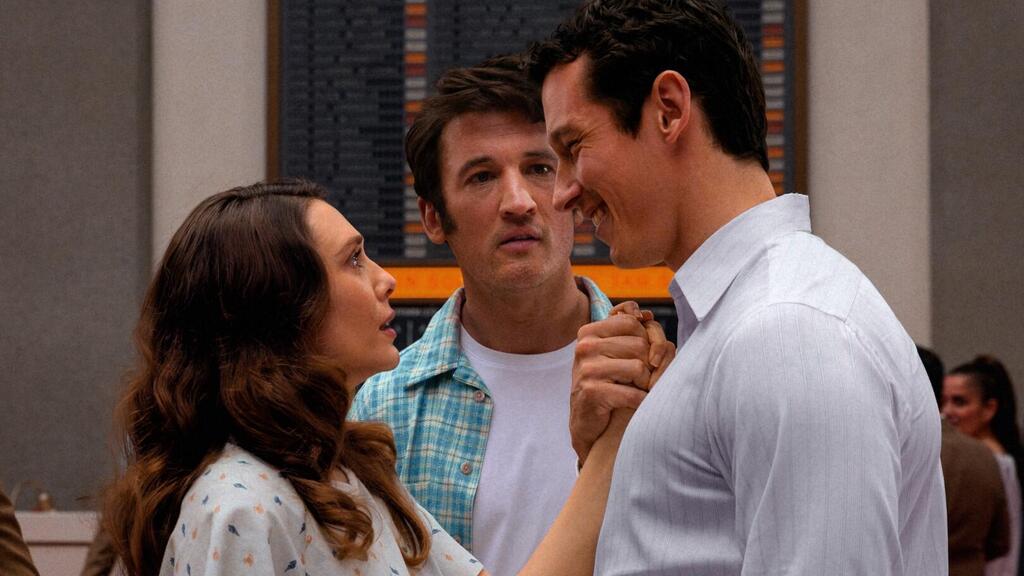
One of the surprising — and depressing — things about Eternity, which premiered at festivals in September and opened quietly in November without leaving any cultural footprint in the U.S., is that its screenplay sat for years on the Black List, the not-so-secret compendium of Hollywood’s best unproduced scripts. Past entries like Slumdog Millionaire, Spotlight, Argo and The King’s Speech went on to win Oscars. Eternity, decidedly, will not.
In an era when Hollywood rarely produces original scripts and just hunts for the next superhero sequel, the Black List is supposed to showcase the freshest, most exciting concepts begging to reach the big screen. It’s unclear whether writer-director David Freyne — making his third feature and co-writing with Patrick Cunnane — is a talented writer who cannot translate his vision to film, but the result suggests a weak, unappealing concept.
From Eternity
(Photo: Courtesy of Lev Cinemas)
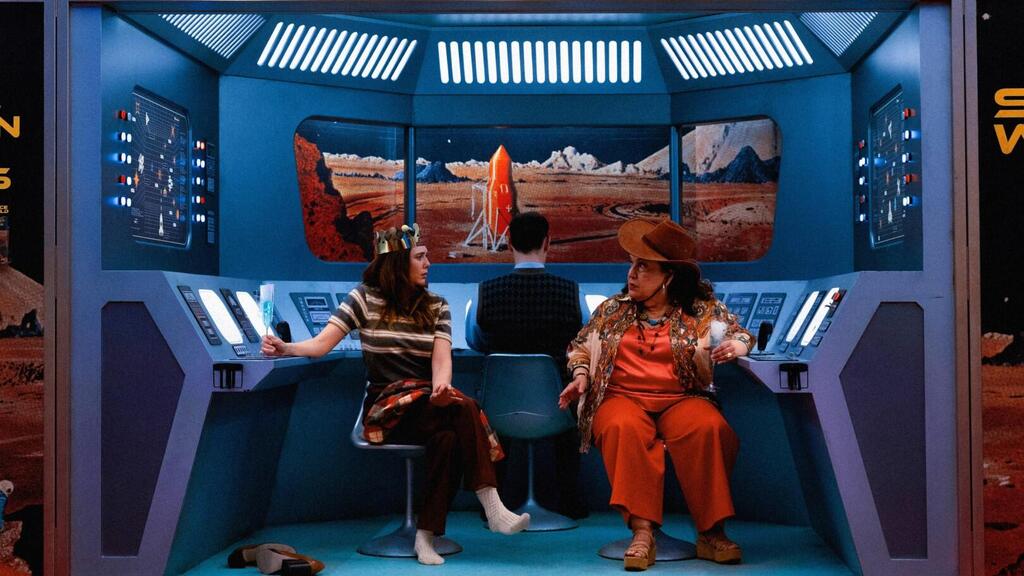
Sure, it’s “a thing” that this in-between afterlife realm looks like a dull business hotel. It’s “a thing” that the rules are intentionally confusing and arbitrary, and even our protagonist’s guides don’t quite understand them — as if to say that in heaven you may shed earthly responsibilities, but not bureaucracy or existential angst.
There are several problems. The first: a sense of recycling and derivation. Hirokazu Koreeda’s After Life (1998) also imagined the passage between life and death as a drab transit station, and several plot points here raise suspicions of borderline plagiarism. Even if not, the film evokes an entire tradition of movies about angels, the afterlife and last-minute existential choices: What Dreams May Come, Warren Beatty’s Heaven Can Wait, Pixar’s Soul, the charming indie adaptation of Etgar Keret’s Kneller’s Happy Campers (Wristcutters: A Love Story), Beetlejuice, the recent Good Fortune with Keanu Reeves, and of course the genre’s godfather, Frank Capra’s It’s a Wonderful Life. All of them played with the arbitrariness and absurdity of the afterlife because human rules never quite map onto eternal ones. Eternity pales beside them all.

From Eternity
(Photo: Courtesy of Lev Cinemas)
The film’s afterlife feels no richer than a basic sketch from Israeli comedy shows Zehu Ze! or Eretz Nehederet. Am I supposed to laugh when, every time the characters walk through the hotel lobby, someone tries to upsell them on their ideal heaven — “Beach World,” “Disco World,” “Safari World,” “Weimar Without Nazis,” “A World Without Men”? Mildly funny the first time; eye-rolling thereafter.
The “afterlife scenario” is notoriously hard to write and often drifts toward heavy sentimentality. Of the films above, only a handful truly succeed, but even the weaker ones — like Wristcutters or After Life — have more humor and imagination than Eternity. Here, everything is spelled out by the earthly protagonist (Teller), who reacts with constant surprise and explains the plot to the audience. Viewers, unsurprisingly, stay a step ahead at all times.
From Eternity
(Photo: Courtesy of Lev Cinemas)
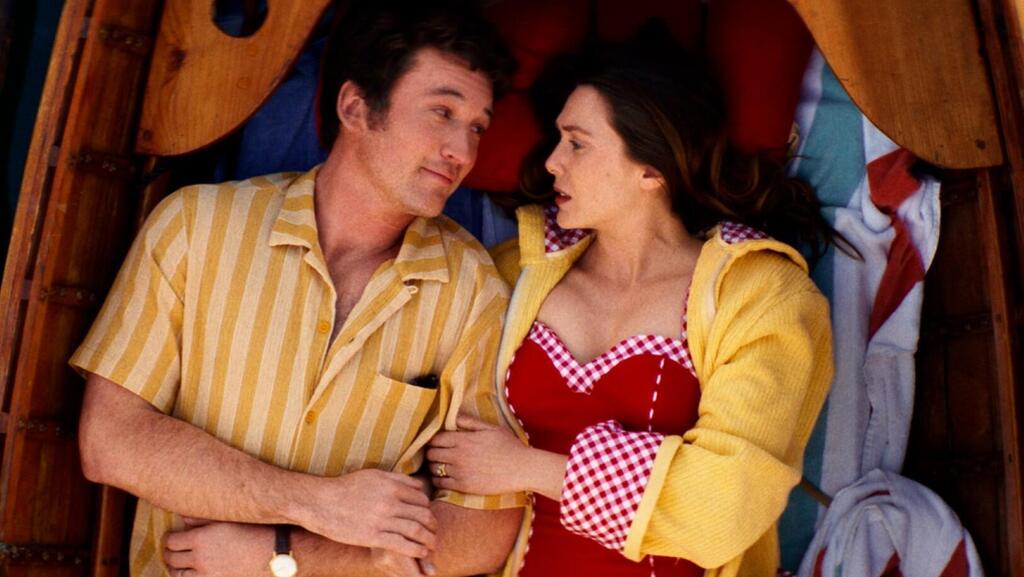
What can be said in the film’s favor is that its two leads — Olsen and Teller — give it their all, committing fully to a clear directorial note: they are elderly souls in young bodies. Teller plays a grumpy old man, Olsen a sweet grandmother; both marvel at their pain-free joints and rediscover sexual possibility. At moments, I wished Eternity had simply been a surreal comedy in the reverse vein of Big: two senior citizens waking up young and having to navigate the gap between body and spirit. But that is not the film we got. The best one can say is that Eternity is perfectly adequate — the kind that elderly couples debate seeing on a quiet night out, affectionate but sniping at each other, reminiscing about their youthful spark.
The compliments stop with the supporting cast. Turner, the romantic rival, is handsome but unsettling from the first frame and never convincingly worthy of decades-long devotion. The biggest disappointment is Da’Vine Joy Randolph, fresh off rave reviews and a well-deserved Oscar for The Holdovers, who is grating here as the “afterlife guide,” the angel shepherding Teller through the process. It’s a diminutive, clichéd supporting role — the sassy, knowing Black woman shaping the white romantic hero’s journey. There is also an angel coded with queer mannerisms (John Early), a reminder that certain Hollywood clichés never update. The straights get the spotlight; everyone else is there to applaud them.