

When a TikTok video posted by Efrat Elmalich reached 60 million views, she was still working as an order picker at a supermarket in Netivot, a city in southern Israel, and had little idea how to turn her sudden exposure into a career. In the video, which she titled "I hate my job," she filmed herself crying in the supermarket restroom, with photographs of herself at work appearing in the background.
Within minutes, comments began pouring in, most along the lines of: "What are you doing there? Go become a model." But Efrat, then 19, had never considered modeling a realistic possibility. She needed the paycheck and, more importantly, was convinced her religious parents would never allow her to turn what she loved doing on TikTok into a profession. "The comments just rubbed salt in the wound," she says.
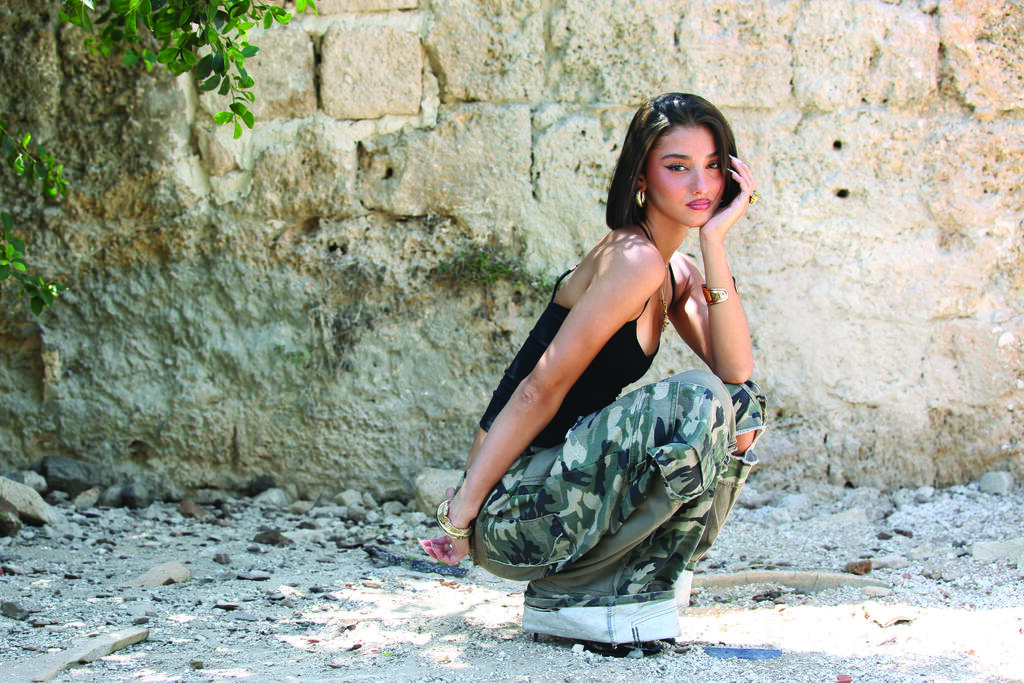
Today, at 20, after completing national service in a kindergarten for children with special needs, Elmalich is a social media star with nearly a million followers across platforms. She describes herself as "religious in every way except for how I dress."
She grew up in a deeply religious household in Netivot, in an ultra-Orthodox neighborhood. Her mother teaches at a religious girls' high school, while her father teaches at a yeshiva, a Jewish religious school. She is the seventh of nine children.
Her family maintained a very strict set of boundaries, yet the outside world began discovering her long before her family was ready for it. For a long time, she led a double life: At home, she tried to respect the rules, while online she presented a very different image, one that gave little indication of her religious upbringing.
"I was always a rebellious child," she says. "It didn't start with clothing, but with boundaries that felt suffocating." As a child, her rebellion began with the smallest acts of defiance. "On Saturdays, they'd tell me to come back from reciting Psalms at four, and I'd come home at five."
‘I lied so I could go to Bnei Akiva’
In seventh grade, at a religious school in Netivot, her difficulties intensified. "Every morning, the rabbi would stand at the school gate and check the length of our skirts. If he didn't approve, he'd send me home to change. Sometimes I'd leave and never come back to school that day. I wasn't a good student, and he would humiliate me in front of everyone. One teacher told me, 'Do you really expect to amount to anything if you carry on like this?' It made me hate religion. What are you saying? That I'm worthless if I don't dress modestly?"
Her parents forbade her from attending Bnei Akiva, a religious Zionist youth movement, because boys participated in its activities. They would only allow her to join a girls-only youth group. "I would lie and go to Bnei Akiva," she says. At the time, she had almost no interaction with boys, so even an ordinary encounter could frighten her. "When boys spoke to me, I felt like I was doing something wrong. I was waiting to be punished. I'd think, what's going to happen now? Am I going to fall? To this day, I still have those feelings of guilt. That guilt weighs very heavily on me."
Even in sports, which could have offered an escape, she felt overlooked. "I was very good at floor gymnastics," she says, showing TikTok videos of herself performing complicated routines with impressive skill. "When I wanted to advance to competitions, my parents wouldn't allow it because there were men at the competitions and in the sports halls. My dream in life was to make it to the Olympics. I felt they had destroyed my dreams."
Only when she transferred at 15 to the religious girls' high school where her mother teaches did things begin to feel different. There, too, she was judged by her academic performance and clothing, but at least she was not humiliated in front of the entire class, and there were discussions about values. "When people see you as a human being, it feels different," she says. "It made me start over with religion, to begin reciting the morning blessings again after I'd been avoiding them." She completed 12 years of schooling but did not earn a full high school matriculation certificate. "I didn't feel I was doing my best academically. I would take Ritalin to help me succeed, and it simply didn't work."
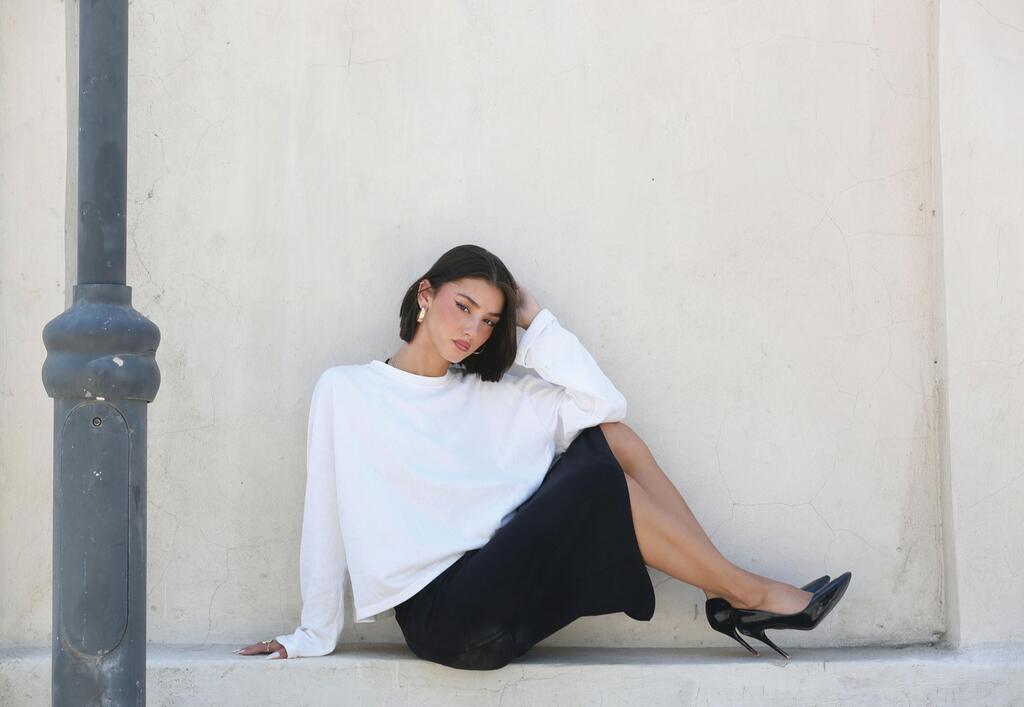
'I've always been rebellious.' Efrat Elmalich
(Photo: Ryan Frois)
During her time at the religious school, she did something she had dreamed of for years: She wore pants. "I'd see secular girls wearing pants and think how much I wanted to be like them, and then feel guilty for even thinking it. They seemed free to me, without problems. When a friend gave me a pair of pants and I went out wearing them for the first time, I felt so happy."
‘They turned my shirt into a cleaning rag’
Around the same time, a new dream took hold: becoming a model. "My parents refused to even hear about it," she says. "It became a huge issue at home, with a lot of difficulties."
How does a religious teenager start dreaming about modeling? Where does that come from?
"My parents gave me a cellphone, but their condition was that it would have content filtering suitable for the religious world. It blocked social media and also restricted certain internet content from 6 a.m. until midnight. So I would stay awake and watch content, and that's where my desire to model came from. I went on TikTok and Instagram using a friend's phone. I'd scroll and discover an entire world. I opened an Instagram account on her phone and started uploading photos and videos.
"I blocked everyone I knew so my content wouldn't reach them and cause problems with my parents, and apparently that's what got my account onto international For You feeds. Then I filmed a video showing my outfit, long jeans and a short top, nothing special. It reached 7 million views and half a million likes. From then on, every video I posted got huge numbers of views and likes."
How did that make you feel?
"I felt like I was somebody. As a religious girl, your self-esteem is low. You don't even think you have the right to be seen in the world. And suddenly, getting likes just for wearing a shirt and jeans, I felt that people could see me."
And you managed to hide it from everyone? Despite millions of views?
"Only my best friend knew. I couldn't talk about it with my parents. I felt like I had no backbone when it came to them. At first, I'd film at school, take off my skirt, change clothes and shoot my videos."
Why there specifically? Did you want to get caught?
"Maybe. It was the only place I felt comfortable. On a school trip in 12th grade, we went hiking on a trail where there were students from other schools. They recognized me and asked to take selfies with me. The teachers asked what was going on. I said, 'It's TikTok,' and didn't elaborate. They didn't say anything. Later, when I got a new phone, I managed to download Instagram and TikTok. My parents would check my phone, so every time I'd delete the apps, show them the phone and then reinstall them."
How did you make the transition from an Instagram account to a career?
"When people started recognizing me as 'the girl from the global For You page,' Leon Schneiderovsky, a social media content creator, contacted me and wanted to film a video together. Afterward, he introduced me to agent Shir Yodfat. I was afraid of the meeting. I told my older sister, who at my age was already married and a mother. She told me, 'You're in a world of lies, but I'll come with you because I don't want you going there alone.' Shir told me that if I wanted to move forward, I needed to open an Israeli account. So I started sharing things, talking and showing my personality."
How did people respond to your complicated identity, a religious young woman who dresses in ways that don't conform to religious modesty rules and posts videos on social media?
"It's tough. Secular people who see videos of me praying and hear that I observe Shabbat think I'm ultra-Orthodox. Among religious people, I'm considered secular, because what kind of clothing is that? Girls send me private messages saying they identify with me but are afraid of their parents' anger. At the end of the day, I have my religion. I used to have the God of religious people, and now I have my own God."
You film your daily outfit videos near your home. How is that received in your ultra-Orthodox neighborhood?
"I get stares and humiliation. I know when the neighbors leave for synagogue in the morning, and I time my departure so I won't run into them. I don't like it when they see me and lower their heads as though I'm a sinner. Out of respect, I leave the house wearing a long-sleeved shirt that I really love, and when I get out of the neighborhood, I take it off, put it aside and film my video. Once, when I finished filming, the shirt was gone. When I came home that evening, I saw that someone had put my shirt on a mop and turned it into a floor rag."
Why do you still live with your parents in that neighborhood?
"It's my home. Why should I give it up because of them? My parents aren't proud of what I do, but there's nothing they can do about it. They haven't kicked me out of the house, and they love me. When I'm home, I try to respect them and follow the rules. At first there were a lot of problems, and we still have disagreements, but I'm glad we're managing to find solutions."
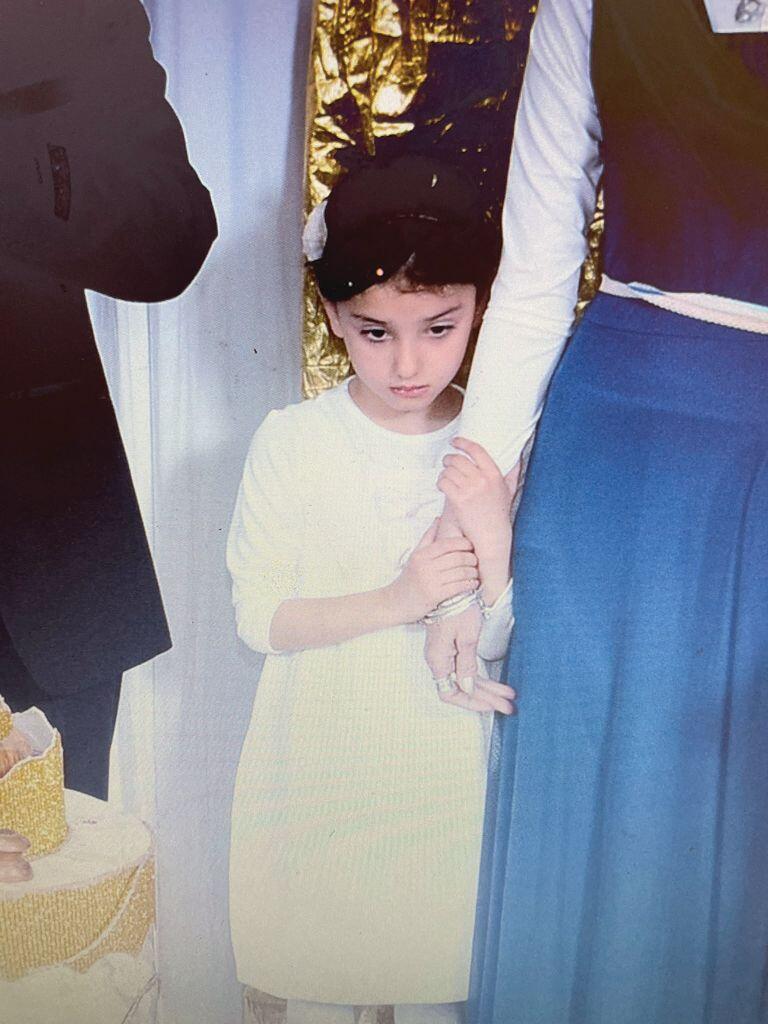
'I've always been rebellious.' Efrat Elmalich as a child
(Photo: Courtesy)
What do you tell them when you have photo shoots?
"There are things I don't tell them because I know they wouldn't agree. For example, I didn't tell them about my first photo shoot. The first payment I received was equal to three months of work at the supermarket. I was on cloud nine, walking around as though I were drunk. I bought clothes and a face cream I'd wanted for so long but couldn't afford. I was the happiest person on earth."
Today, two years after her first video, she works with brands including Adidas, Israeli fashion retailer Adika and skincare company CeraVe.
"I used to look at those brands and think, who are these rich people buying this stuff? A CeraVe cream cost 54 shekels, and I didn't have the money to buy it. Now, in a single campaign, I earn what I used to make at the supermarket in an entire year. When I worked there, it was frightening. I didn't know what I'd do in the future without a matriculation certificate. Today, when people tell me, 'You're working in a superficial field,' I don't pay attention. As far as I'm concerned, I'm in the most exciting place I could possibly be. When the deal with Adidas was finalized, I was happy because it's my dream brand, but I was also sad. How was I supposed to explain to my family that I'd achieved the thing I wanted most, when to them it's all meaningless vanity?"
Do you have any red lines when it comes to work?
"You can see that I don't dress modestly, and nobody can say a word to me about my clothing. That's what pushed me away from religion. If I have a boyfriend who has a problem with the way I dress, then bye. But I won't advertise underwear. Not long ago, I received an offer to fly abroad for an underwear campaign. I've never been abroad, I didn't even have a passport, so even though traveling overseas is a dream of mine, I turned it down. Those are my values."