

Just five years ago, Shon Weissman broke the transfer record at Real Valladolid, a top-tier Spanish league team. Ronaldo Nazário, the club’s owner and World Cup winner with Brazil in 2002, signed Weissman for €4 million at the request of head coach José Pacheta, who insisted on bringing him to the team.
In recent months, Pacheta and Weissman reunited at Granada in Spain’s second division, but this time, Pacheta has stopped relying on the Israeli national team striker.

The decline in Weissman’s standing with a coach who once valued him highly at Valladolid is not due to his on-field performance, as Pacheta himself has stated. Instead, it stems largely from Spain’s increasingly hostile climate toward Israel following the events of October 7. Weissman’s situation highlights the grim reality for Israeli athletes today, even before considering the extreme incident he experienced in Germany.
Weissman had finalized terms with Fortuna Düsseldorf in Germany, passed medical tests and even posed with the team jersey. However, the club’s management abruptly canceled the deal after fans protested over past social media posts by Weissman, in which he had made strong statements about Gaza. He was immediately sent back to Spain.
The international standing of Israeli sports has been deteriorating in recent weeks, reflecting the global shift in sentiment toward Israel. This has escalated into what feels like a tsunami of anti-Israel sentiment. Many influential figures, particularly in the Muslim world, have been working behind the scenes to push Israeli sports to the margins, viewing this as a significant ideological victory.
An unofficial but very real boycott of Israeli athletes is taking place across many European countries. This is not always driven by anti-Israel ideology but often by fears of backlash from local fans or locker room tensions with Muslim players. Many agents now prefer to keep negotiations involving Israeli players secret until the last possible moment, fearing public exposure could lead to protests that derail deals, as seen with Maccabi Tel Aviv forward Dor Turgeman’s failed transfer to Scottish giants Rangers.
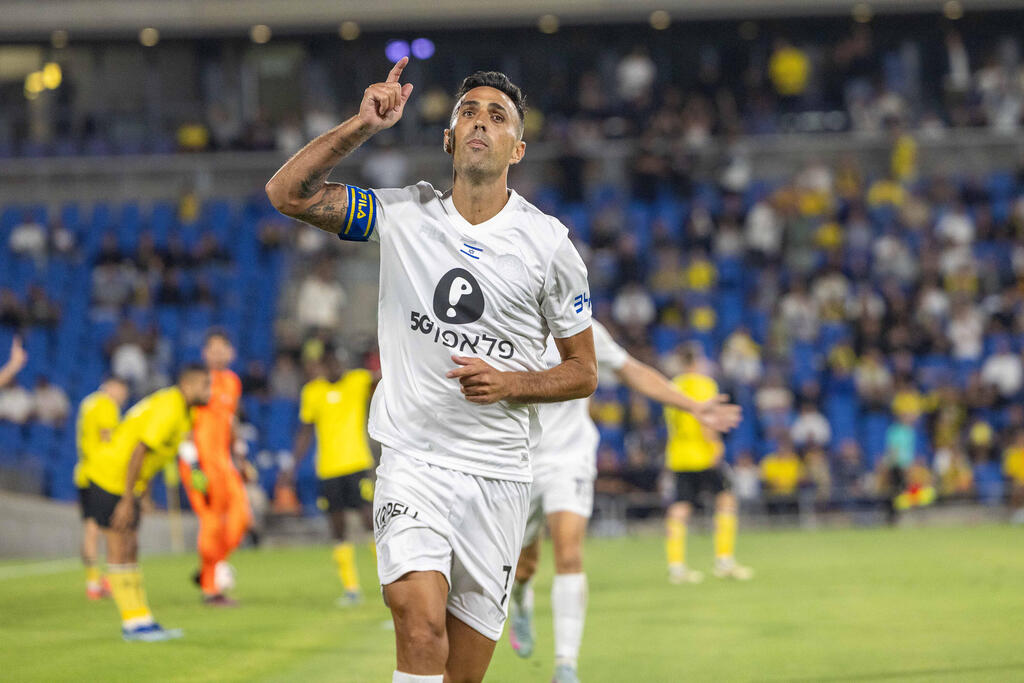
Eran Zahavi's transfer to Qatar was cancelled last minute
(Photo: Tal Shahar)
As a result, agents are redirecting Israeli players to less competitive markets in relatively friendly countries. Many players are now joining the growing "colony" of Israelis in the United States or leagues in Hungary, Bulgaria and Romania. In contrast, Dubai’s league has been closed to Israelis since the war with Iran. Maccabi Tel Aviv Eran Zahavi, for example, had finalized terms with Qatari side Al Nasr, but the club canceled the agreement.
Israeli clubs are also struggling to recruit foreign talent, both in terms of quantity and quality, despite the Israeli Football Association's increase in the number of foreign players allowed. Consequently, clubs have turned to less prominent markets, such as the second division in Brazil or lower-tier leagues in Portugal. Even major clubs with significant budgets are finding it difficult to sign high-impact players. Some teams are waiting for last-minute opportunities, while others, like Hapoel Be’er Sheva, have refrained from signing players altogether.
Adding to this challenge, some foreign players are seeking to leave Israel due to security concerns, as seen with Wesley Petacci and Tjaronn Chery at Maccabi Tel Aviv and Maccabi Haifa, respectively.
Financial and logistical hurdles
The financial struggles are particularly evident in basketball, with clubs like Maccabi Tel Aviv and Hapoel Tel Aviv competing on Europe’s biggest stages. To attract top talent, these clubs have had to make compromises. For example, Hapoel Tel Aviv owner Ofer Yanai, aiming to build a strong EuroLeague team, established a base in Sofia, Bulgaria. Foreign players like Elijah Bryant and Daniel Oturu have been stationed there temporarily, with plans to return to Israel only for critical league stages. Some Israeli staff and players have also relocated to Sofia.

Hapoel Tel Aviv owner Ofer Yanai
(Photo: Oz Mualem)
Another major issue is the inability to host international matches. Israeli clubs and national teams have grown accustomed to playing abroad, resulting in significant revenue losses and increased travel expenses. Even host countries that were previously friendly, such as Hungary, Serbia and Romania, are now under pressure to avoid hosting Israeli teams due to fears of street protests. Clubs have issued strict guidelines to fans traveling with the teams.
Diplomatic and mental health efforts
Israeli Football Association Chairman Shino Zuaretz acknowledged the challenges: “The situation is sensitive, and it has significant economic implications, but we will not stop our activities. There are attempts to suspend us, and we are working hard to counter them. Every player and fan has a responsibility for how they express themselves.”
Get the Ynetnews app on your smartphone: Google Play: https://bit.ly/4eJ37pE | Apple App Store: https://bit.ly/3ZL7iNv
Financial losses are widespread. For instance, Maccabi Tel Aviv basketball relies on season ticket sales for 60% of its budget, and the inability to host games has created a financial crisis across multiple sports. Israel has been excluded from hosting international events for two years, including the Judo Grand Slam, cycling competitions at the Hadar Yosef Velodrome and rhythmic gymnastics tournaments. Young athletes now often travel abroad alone to gain experience and improve their global rankings, with parents covering the costs, including accompanying coaches.
Athletes are also facing unprecedented mental challenges. Israeli competitors must travel with heavy security to every event, remain confined to hotels and leave behind families in a country under rocket fire. To address this, the Olympic Committee has bolstered its mental health support system, which was initially established a decade ago to help athletes prepare for competition. This system now focuses on helping athletes cope with the unique challenges of the current situation.
Israeli sports, like the country itself, are under immense political, security and economic pressure, with significant consequences yet to fully unfold. The greatest fear is that one domino will fall, triggering a chain reaction that could collapse entire sectors of Israeli sports.