

On October 1, Netflix dropped all seven episodes of "East of Eden" at once, and ever since, half the world has been sitting on the couch arguing over whether Cathy Ames is a monster or simply a woman who never stood a chance. The series, written by Zoe Kazan and starring Florence Pugh, adapts a novel of roughly 650 pages that most viewers, let's face it, never actually finished. We all know someone who says they "read it" when what they really mean is "I watched the James Dean movie."
But that's all right. Kazan's "East of Eden" is a worthy and respectable adaptation of Steinbeck's classic, and some might argue it even takes the story a step further. It may also be one of those rare shows whose behind-the-scenes stories are every bit as fascinating as what happens in front of the camera. If you're in the mood for a little extra viewing experience, keep reading. Just know that you're about to encounter plenty of spoilers. Don't say we didn't warn you.
East of Eden trailer
(Video: Courtesy of Netflix)


Cain and Abel and the biblical connection
Let's start with the most talked-about reference, the one everyone can recite in their sleep. The biblical story of Cain and Abel, two brothers bound by a cruel shared fate, appears in several variations throughout the plot. The characters are marked by the first letters of their names: Cyrus, Charles, Cathy and Cal all begin with C, like Cain, while Adam, Alice, Aron and Abra begin with A, like Abel.
Steinbeck apparently really wanted to drive the point home, or perhaps he simply didn't trust his readers. Either way, this symmetry repeats itself from generation to generation, sometimes more than once. The abusive father Cyrus's cold response to a gift from Charles is echoed when Adam refuses to accept a gift from Cal. The same sacrifice, the same indifferent God, the same disappointment.
The title of the book and series is actually an address. In Genesis 4, the Bible tells us where Cain went after murdering his brother: "And Cain went out from the presence of the Lord, and dwelt in the land of Nod, on the east of Eden." In other words, Steinbeck is sending us to the murderer's home, not the Garden of Eden itself.
Gallery
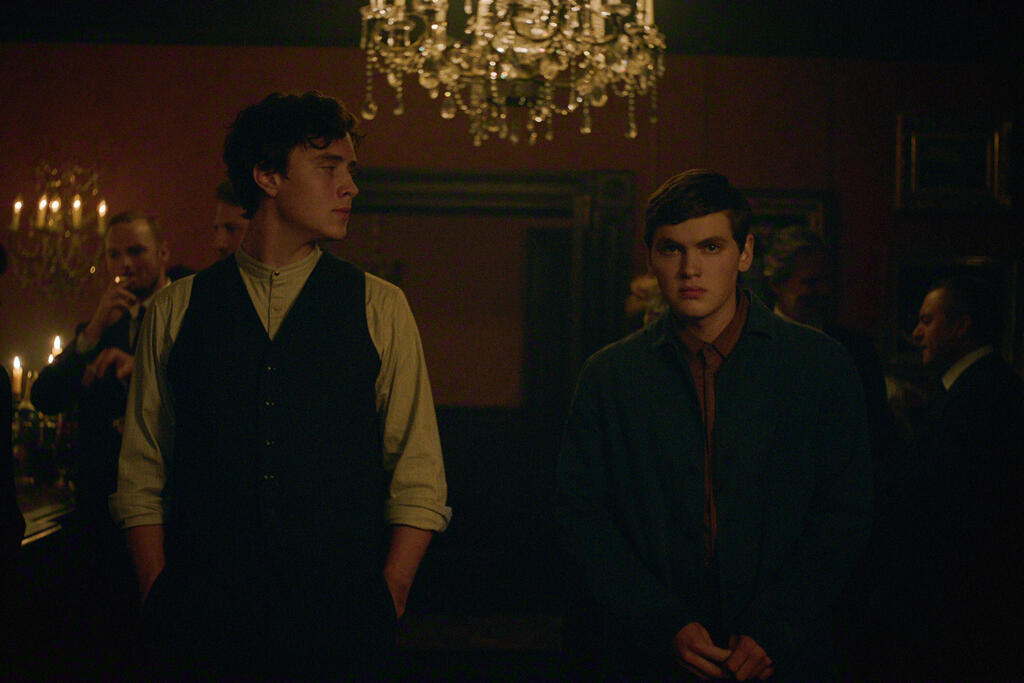
Casting that knows exactly what it's doing. Joe Anders in 'East of Eden'
(Photo: Courtesy of Netflix)
You may also have noticed a visual choice in the direction: Characters whose names begin with C tend to wear dark, earthy, faded colors, while the A characters are dressed in soft, light fabrics. It's a subtle visual trick played on the viewer's subconscious.
Incidentally, one particularly interesting casting choice is Joe Anders as Aron. Anders is the son of Kate Winslet and Sam Mendes. Nepo baby or not, in a series about what parents pass on to their children, it's hard to complain about casting that understands the subject quite so literally.
Another reference, not biblical this time, is "Alice in Wonderland." When Cathy, now known as Kate, comforts a young woman injured at the brothel, she tells her that as a frightened little girl, she used to think about Alice drinking a potion and shrinking. Kazan said she read those descriptions as "a portrait of dissociation."
Dear editor
Steinbeck wrote his novel on the right-hand pages of a notebook given to him by his editor, Pascal Covici, reserving the left-hand pages for daily letters to that same editor. The letters, written between January and October 1951, were later published as "Journal of a Novel."
At first, Steinbeck pitched Cathy to Covici as "a monster unlike any you've ever seen." But as the writing progressed, he began referring to her as "my dear Cathy" and acknowledged that "there is probably monstrous blood flowing through all of us."
Later, he predicted that readers would hate her "not because she is unfamiliar, but because she is familiar."
Kazan read those letters before beginning work on her adaptation and used them as a compass. As she put it, Steinbeck had "lost control" of Cathy, and the series simply picked up where he left off.
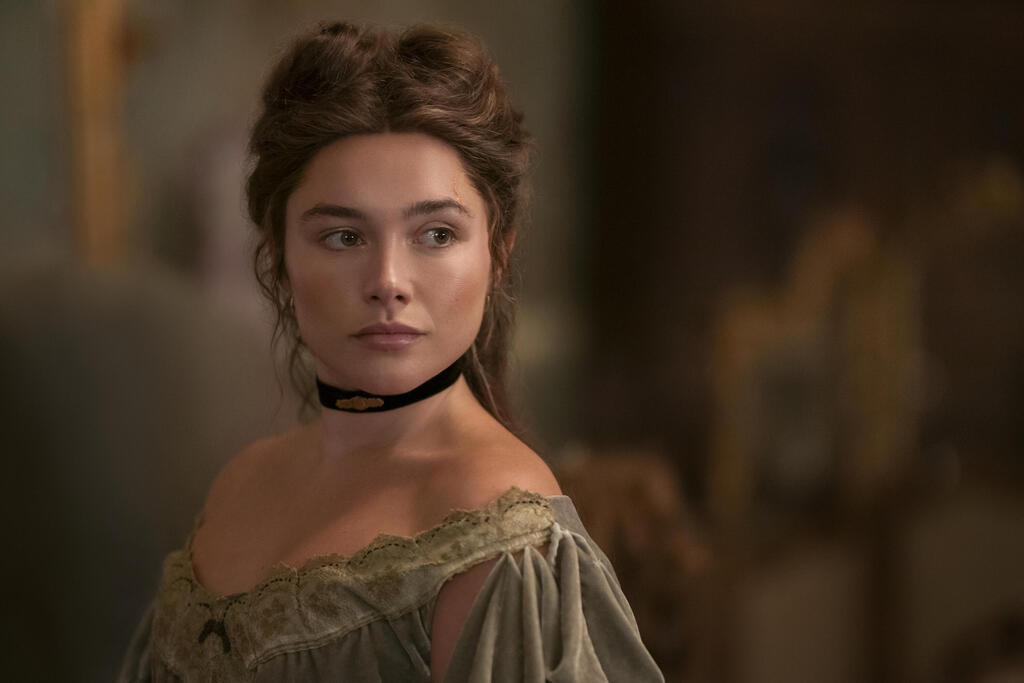
A monster unlike any you've ever seen? From 'East of Eden'
(Photo: Courtesy of Netflix)
The show's opening line, "I believe there are monsters born in this world to human parents," was taken directly from Chapter 8 of the novel, where Steinbeck first introduces Cathy to the reader.
But Kazan, in a rather cunning conceptual move, took the line away from the narrator and handed it to Pugh, who plays Cathy herself. So while the novel gives us a respectable, detached male narrator introducing a monster supposedly born without conscience or morality to ordinary parents, the series lets the monster introduce herself.
Which inevitably leaves the viewer wondering: Is she even talking about herself, or is someone else the real monster?
All in the family
Zoe Kazan has a family legacy of her own to contend with, and if that isn't irony, what is? Her grandfather, legendary Hollywood director Elia Kazan, was the first to adapt "East of Eden" for the screen, back in 1955, with James Dean playing Cal.
Zoe, who read the book at 15 and became an admirer, wasn't particularly happy with the fact that her grandfather's adaptation focused entirely on the final third of the novel. It was, in her words, "very loosely adapted." At some point in her life, she wrote to her agents that if the rights to "East of Eden" ever became available, she would "know what to do with them."
Kazan had already spotted Florence Pugh in "Midsommar," and by the time she pitched the project to Netflix, Pugh was part of the package.
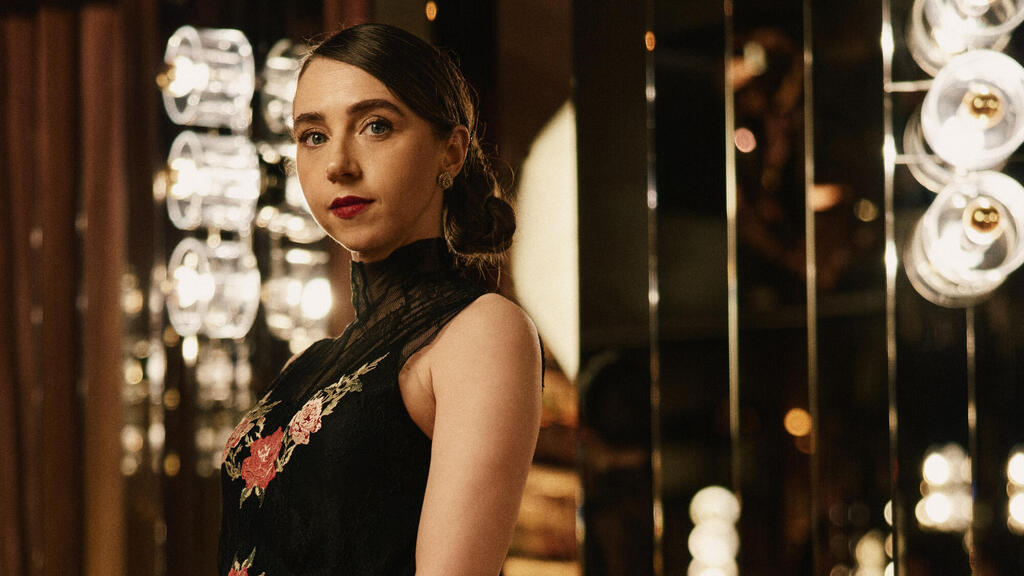
Zoe Kazan
(Photo: Emilio Madrid/Getty Images for Netflix)
When the long-awaited call about the rights finally came, Kazan was in Australia, working as an actress on another series. She had one week to put together a pitch for the production companies.
She boarded a 17-hour flight with her 18-month-old daughter and, between chasing the toddler up and down the aisles, tried to organize her ideas into something resembling a proper proposal.
The following day, she arrived at the production company's offices in a car her father had lent her. Just before going into the meeting, she spotted an old parking ticket lying in the car, pulled it out and scribbled the structure of the series and its episodes on the back. And that, ladies and gentlemen, is how a major Netflix production gets its blueprint.
What happened to the other half?
Kazan admitted to The Hollywood Reporter that even with seven hours of television, "half the book isn't in the series." The biggest casualty is the Hamilton family, which Steinbeck based on his own mother's family.
According to Jeb Stuart, the co-showrunner Netflix insisted Kazan bring aboard, "the whole Hamilton family isn't really in the series." Samuel remains, played by Ciarán Hinds, along with brief appearances by his wife and one of his sons. The nine other children have vanished, much to Kazan's sorrow.
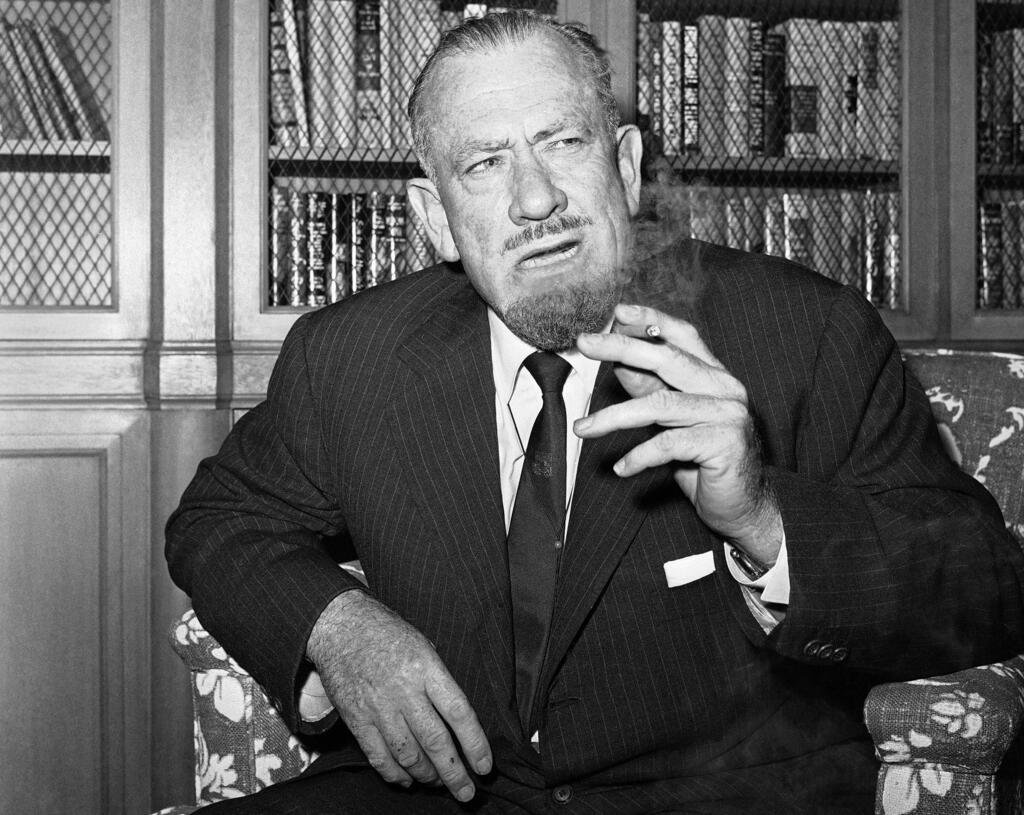
John Steinbeck
(Photo: AP Photo/Anthony Camerano)
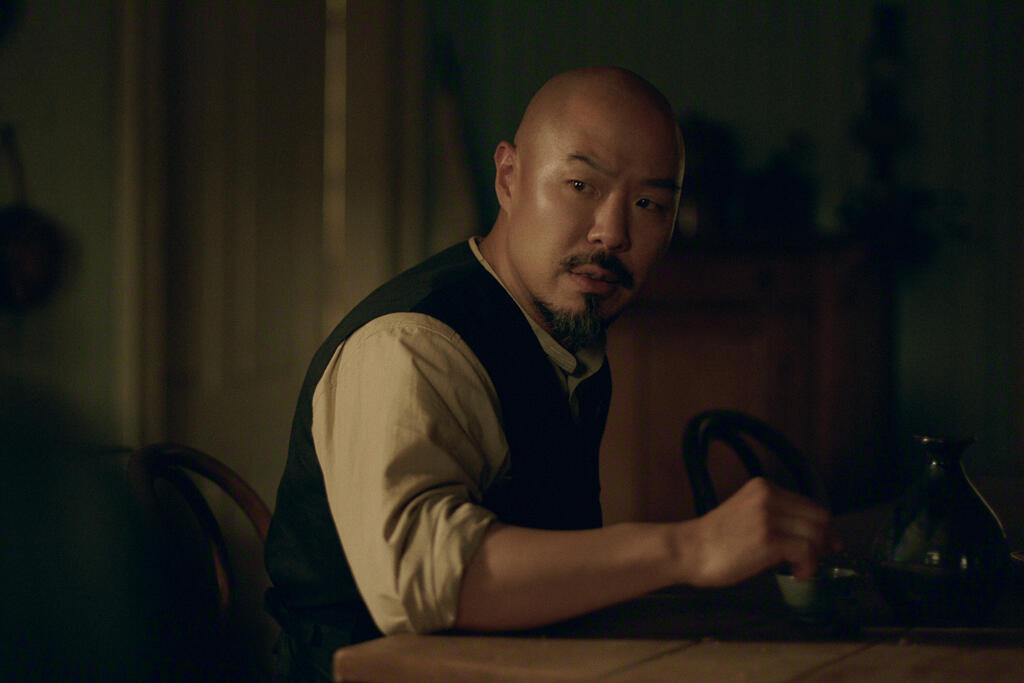
Kazan also had to make cuts during the writing process. She wrote eight episodes; Netflix approved seven. The missing installment was a standalone episode devoted to Lee, the Chinese American character played by Hoon Lee.
Kazan, who described Lee as a character who "keeps secrets even from Steinbeck," had written an episode following his journey to San Francisco in 1912 as he tried to fulfill his professional ambitions.
Had it been filmed, that single episode would have increased the production budget by a third. As Kazan explained to Variety, there was simply no financial logic in building a set representing San Francisco in 1912 for one episode, complete with locations that would never be used again.
Even so, compared with the film, Lee receives considerably more attention in the series. He cooks, raises and educates the twins, and manages the finances of Adam Trask's household.
Kazan, who was a new mother while writing the adaptation, portrayed him as the person who steps into the role Cathy abandoned when she fled, while Adam himself spends his time mourning his wife's disappearance.
In Elia Kazan's film, by comparison, Lee did not exist at all. Some have argued that his exclusion reflected the racial attitudes prevalent in Hollywood during the mid-20th century.
Another interesting departure from the book concerns Lee's reasons for returning to Adam Trask. In the novel, he returns because of loneliness. In the series, it is the racism Lee encounters that forces him to abandon his dream.
From 'East of Eden'
(Photo: Courtesy of Netflix)
There's no place like home
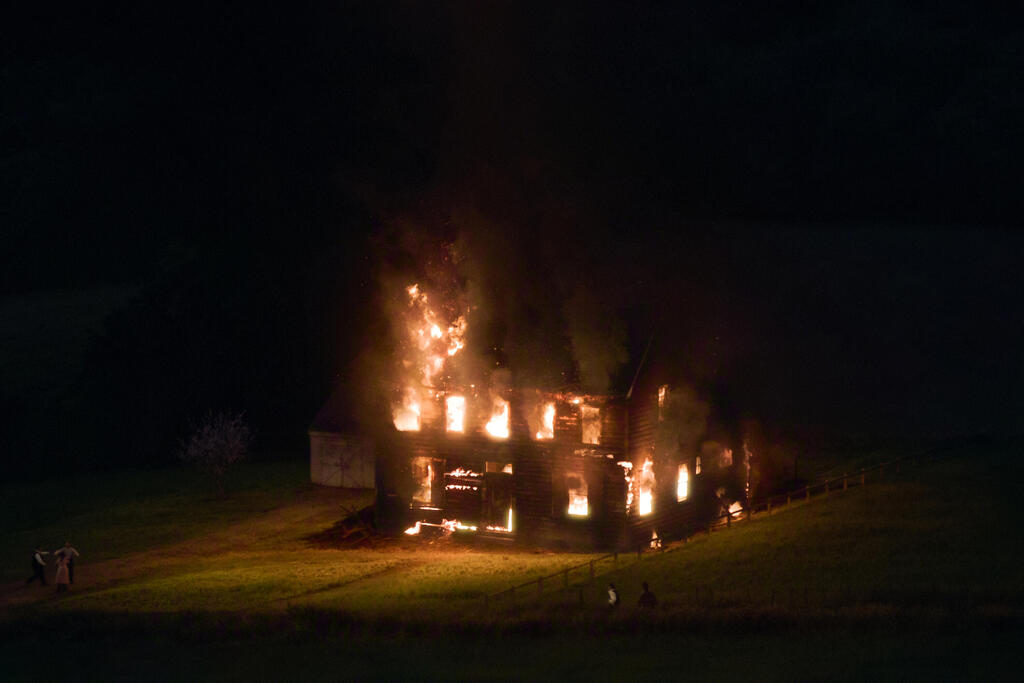
The Trask family home and farm were not existing buildings. They were constructed from scratch on previously untouched land on New Zealand's North Island, under the direction of Oscar-winning production designer Grant Major.
The production did not stop at building the house. The surrounding land was plowed, and real vegetables were planted to make the setting feel authentic.
To give the house the appearance of a neglected building that had stood empty and abandoned for years, the crew went to extraordinary lengths, right down to scattering artificial bird droppings across the floor.
The finished buildings were so impressive that the New Zealand landowners asked for them to remain on the property after filming ended. Unfortunately, insurance considerations won the argument, and the structures were demolished.
From 'East of Eden'
(Photo: Courtesy of Netflix)
A childhood remembered
Mike Faist, who plays Charles, and Christopher Abbott, who plays Adam, also performed scenes that were not actually written for them, but for the younger versions of their characters.
Director Garth Davis instructed the two actors to perform the childhood scenes to create a shared emotional memory of their characters' love-hate relationship as brothers. That memory would then inform their scenes together as adults.
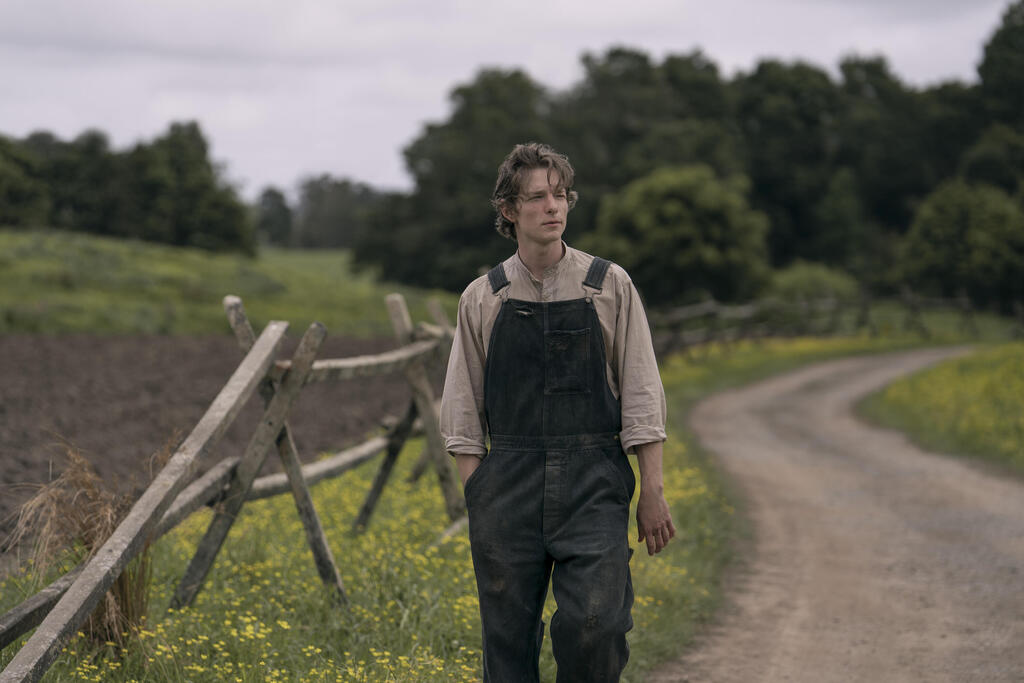
When Faist received Charles's boots from the props department, he discovered, to his horror, that they caused him excruciating pain.
But Faist, a thoroughly committed actor and perhaps a little bit of a masochist, decided to wear them every day of filming. The pain reminded him of a passage in the novel describing Charles as a man who invested every cent he had in the farm and refused to buy anything for himself.
So the limp and stiff gait viewers see on screen are the result of a combination of noble character and terrible footwear.
Faist also allowed himself considerable freedom with the script. In the tense scene in which Cathy brings the suspicious Charles dinner as a peace offering, Faist decided to dispense with his lines altogether.
Instead, he pulled an apple from his bag, took a conspicuous bite in front of Cathy and then kicked over the basket of food she had brought him. The shock on Pugh's face was entirely genuine.
The limp and stiff gait viewers see on screen are the result of a combination of noble character and bad footwear
(Photo: Courtesy of Netflix)
Faist was supposed to physically depart the series at a certain point, when his character dies, and continue appearing only as a voice in the recesses of Cathy's mind during her later years.
The usual procedure in such cases is for a production assistant to read the dead character's lines aloud on set so the other actor has something to react to. The actual actor records the dialogue later, and it is edited into the scene.
But Faist apparently doesn't believe in editing, or perhaps the catering was simply that good. He insisted on coming to the set, getting dressed and made up as Charles, stepping into the shot, crouching behind Pugh and whispering his lines to her in real time.
His determination ultimately led Kazan to expand his presence in those episodes from a handful of lines into an actual relationship between the psychologically unraveling Cathy and the ghost of Charles.
And one last Faist story, we promise. The actor arrived in New Zealand six weeks before filming began. When he discovered the farmhouse the production had built, he asked Kazan for permission to spend his weekends there.
Once the construction crew left, Faist would drive to the farm, leaving behind even his cellphone and laptop, and spend the weekends in complete solitude. His goal was to experience the silence of the 19th century. Or perhaps to throw secret parties that nobody would ever find out about.
When the set design, props and costume departments heard that Faist intended to live in the house on weekends, they were delighted. They put together a crate filled with period objects: candles, lighters, cigarettes, pens, old toys and, naturally, those painfully tight boots. Faist wandered around the house dressed as Charles and worked in the vegetable garden.
Timshel
And, of course, we can't finish without the Israeli connection. The final word of the novel, and the title of the series' final episode, is "Timshel," a Hebrew word meaning "thou mayest."
Adam says it to Cal and then, as Steinbeck writes, closes his eyes and falls asleep.
In that same fourth chapter of Genesis, God addresses Cain shortly before he kills his brother: "Sin is crouching at the door; its desire is for you, but you shall rule over it."
In other words, evil is lurking at your doorstep, and although you may be tempted to give in to it, you have the power to choose whether to master it or surrender.
The Hebrew word "timshel" can be interpreted in several ways. Steinbeck, and Kazan after him, chose to understand it as an expression of free will.
In other words, just because you come from a long line of sinners, or have even done terrible things of your own accord, does not mean you are incapable of change.
It's not fate, not blood, not your mother's genetics, which everyone seems so fond of blaming for everything these days. It's a choice you make again every morning.
Remember that the next time you demand that your parents pay for your therapist.