

Two weeks ago, in the round of 16 of the 2026 World Cup, France defeated Paraguay 1-0 with a penalty kick from national team captain Kylian Mbappé, the son of African immigrants. The South American team played a rough and aggressive match, including physical confrontations, taunts and insults. After the game, which sent France into the quarterfinals, Paraguayan politician Sen. Celeste Amarilla attacked Mbappé, calling him “an idiot who has not even learned to write,” “arrogant,” “resentful” and “ugly.”
French President Emmanuel Macron backed the national team captain and condemned the “racist attacks.” Paraguayan authorities quickly apologized.
The senator’s outrageous and absurd comments angered Jeffrey Wright, the African American film and television star.
“There’s some politician in Paraguay who said all this racist, ridiculous stuff about Mbappé, to the point where they had to censor her,” Wright said, visibly frustrated, when we met shortly after the match at the 60th Karlovy Vary International Film Festival, held in the Czech spa town. “What bull***t. What is she even talking about? And you’re just sitting there saying, ‘What the hell…?’”
“Here you have a guy who is one of the greatest football players in the world. Just watching him play on the field is enough for anyone — unless they’re a complete idiot — to understand what a significant player he is and how significant his contribution to the game is.

Paraguay team captain Kylian Mbappé
(Photo: Reuters)
“People love Mbappé all over the world. He’s an incredible player. And then he has to listen to this nonsense from a woman who is too lazy to broaden her horizons. Someone who is elevating herself and only looking for her own gratification. She’s the kind of person who tries to draw a sense of ‘me and myself’ and power from making offensive comments about him.
“She thought she could diminish his power on the field with her stupidity? It’s incredible. And things like this keep happening again and again and again. That’s why someone like Mbappé needs to have a clear sense of purpose, to be who he is no matter what. When you’re someone with power like Mbappé, these people won’t be able to stop you.”
Wright struggles to calm down and continues returning to the subject.
“There are just people you want to grab and shake. Racism is still going on! You see people in stadiums doing things that are just ridiculous. You idiots!”
The actor also connects these events to his own background.
“An artist’s life can be a complicated thing,” Wright says. “People ultimately win through the power of their creativity, despite the limitations people try to impose on them. I come from a very specific place in American history, but I think there’s an advantage to that: It has given me a wider perspective on America itself. Out of necessity.
“Yes, I’m Black, and for me that’s a political category, not a biological one. It’s a construct. Race, in my view, is more of a political construct than anything else. I don’t care where you come from or what your skin tone is — I’ll work with anyone on stage as long as you want to tell a story that we have a shared interest in telling: a white actor, a Black actor, an Asian actor — I don’t care.”
'I have crises, but I feel great'
Wright, who received a lifetime achievement award in Karlovy Vary, is the father of a son and daughter from his marriage to British actress and singer Carmen Ejogo, whom he divorced in the previous decade. Last December, he turned 60.
What did you do to mark the occasion?
“Wow… It was a very quiet birthday. I was in a very reflective mood. I cooked dinner and hosted a few friends, and my son and his godfather were there too. We didn’t make a big deal out of it. I kind of didn’t believe it was happening at all. But it was a very good night.”
How do you feel about turning 60? Are you experiencing a midlife crisis?
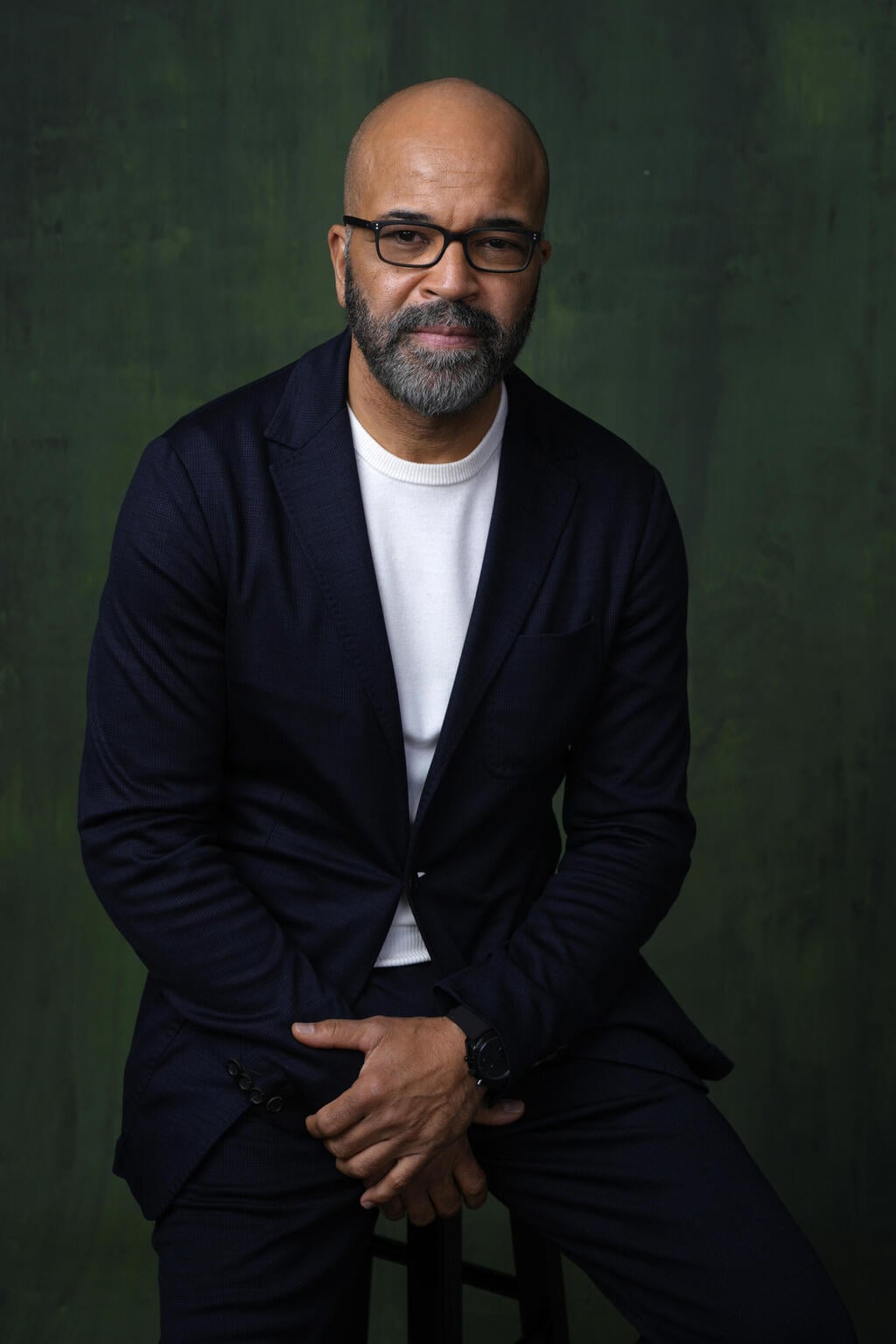
'An artist’s life can be a complicated thing,' Wright says
(Photo: AP)
Wright bursts out laughing.
“There are any number of crises I could point to. But I feel great. In some ways I think I’ve gotten smarter and in other ways I feel like I still don’t know anything.
“One of the things I am getting smarter about is knowing how to take care of myself. It becomes more critical as you get older. When you’re young, you don’t have to think about it. So I’m trying to get back on track, although I’m not necessarily as consistent as I should be. I try to exercise every day.
“When I was younger I was an athlete, so fitness came naturally. I didn’t work out and I didn’t like doing cardiovascular exercises and things like that. It bored me to death.
“Now I’m living in London for filming and I said, ‘Okay, I’ll live near the studio so I can bike to work.’ And I do. I ride my bike to work every morning. It gives me energy and wakes me up in the morning.
“Exercise is good for the body, the mind and the spirit. I kind of like life, so I try to take in as much of it as I can, for as long as I can.”
'The massive sets of James Bond films are actually intimate places'
Wright’s career has moved between theater, art films and blockbusters (including “The Hunger Games”), while he has also found time for television series such as “Boardwalk Empire,” “Angels in America,” “Westworld” and “The Last of Us.” He can now be seen on HOT alongside Richard Gere in “The Agency,” a spy thriller based on the excellent French series of the same name.
Wright plays Henry Ogletree, deputy chief of the CIA’s London station. He is the direct supervisor and mentor of the show’s protagonist, played by Michael Fassbender. Henry is a veteran intelligence officer who is experienced and level-headed, tasked with balancing support for his agents and moral dilemmas against the heavy pressures placed on him by his superiors.
Trailer of the second season of 'The Agency'
(Courtesy of Paramount+)


“My mother was a lawyer with the U.S. government for about 35 years. So I grew up in a culture of public servants,” Wright says. “That’s why I connected with Henry — a responsible person who comes to do his job on behalf of his government.
“He works under enormous pressure. The CIA’s actions can be controversial and sometimes even achieve the opposite result, but Henry is basically doing the best he can within the boundaries and circumstances in which he operates, despite the moral and ethical complexities involved.”
This is not the first time Wright has found himself in the world of espionage. He appeared in three James Bond films alongside Daniel Craig: “Casino Royale,” “Quantum of Solace” and “No Time to Die,” playing Felix Leiter, a CIA field officer and Bond’s friend.
“Strangely enough, the massive sets of James Bond films are actually intimate places,” he says. “It’s the biggest franchise in human history and at the same time it’s a family business. And it’s loved. Not only by movie fans, but also by the people who work on it.
“Many members of the crew have been working there for decades. There’s also a sense of British pride that exists there — the most subtle kind of national pride. It was a good experience. I really enjoyed it.”
During our conversation, Wright says that “I grew up in Washington, D.C., and politics runs through your blood there. I’m a little addicted to the news and a little addicted to politics. So the world where ‘The Agency’ takes place suited me perfectly.”
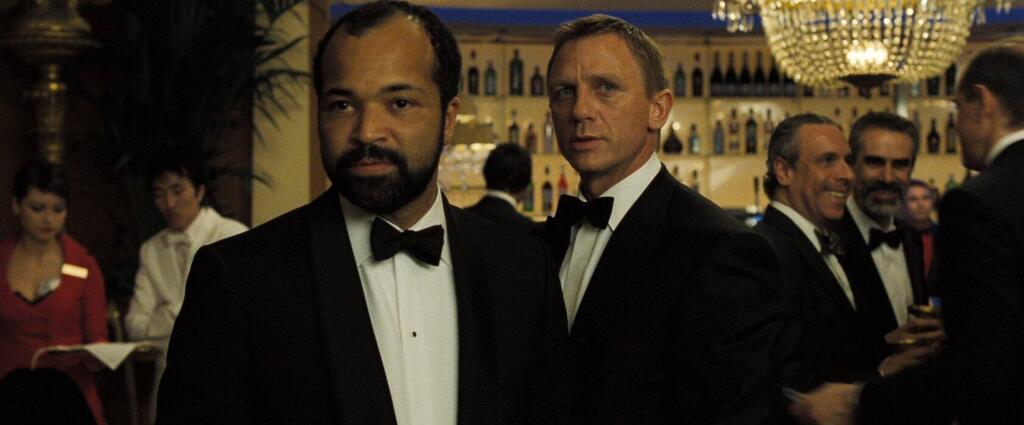
'It’s the biggest franchise in human history and at the same time it’s a family business'
(Photo: Screenshot)
Still, he is careful in his remarks. He does not make direct or harsh statements and does not attack Donald Trump’s administration. He is willing only to say:
“Our politics is becoming more and more like show business. A lot of times I’ve chosen projects that gave me a feeling of fulfilling a civic duty. Those are the opportunities that feel the most complete to me.
“I’ve also had many opportunities to find people who feel the same way I do, who recognize that stories — especially today — can express the things that need to be said out loud. Things that might be suppressed or silenced.”
“Theater and film are not meant to exist in an isolated corner far away from society itself,” he continues. “They are integral to who we are, integral to our understanding of who we are and to our understanding of the things happening around us. They can serve that purpose and they have an important role.”
Even in his acceptance speech at Karlovy Vary, Wright, unlike French star Juliette Binoche, who spoke at the closing ceremony about the Middle East and Ukraine, remained cautious and spoke in more abstract terms.
“There are forces in the world trying to divide us,” he declared. “But our stories, our films and our history insist on saying something else.”
In our conversation, however, whenever the issue of racism came up, Wright was much more direct.
“People are so afraid of conversations about race. They’re just afraid and they don’t admit it. I suppose there’s something very human about that, but these conversations aren’t really that difficult once you break through the barrier of fear.
“Humor and irony allow people to do that.”
'When I arrived on set and saw David Bowie and Dennis Hopper, I realized something big was happening'
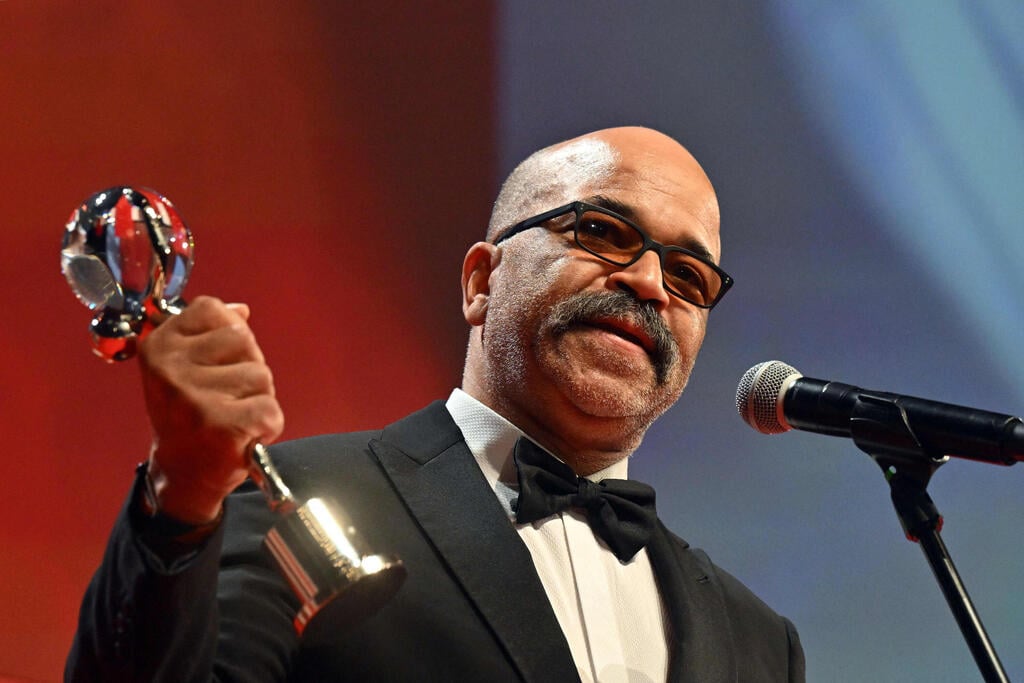
The stylish and heavy statuette Wright received at the Czech festival joins the impressive collection he keeps in his living room, including a Golden Globe and Emmy Award for his performance in the miniseries “Angels in America” and Tony Awards for his stage work.
Two years ago, Wright starred in “American Fiction,” playing a serious writer forced to write stereotypical material in order to make money. For the brilliant role, he won numerous awards and received his first Oscar nomination.
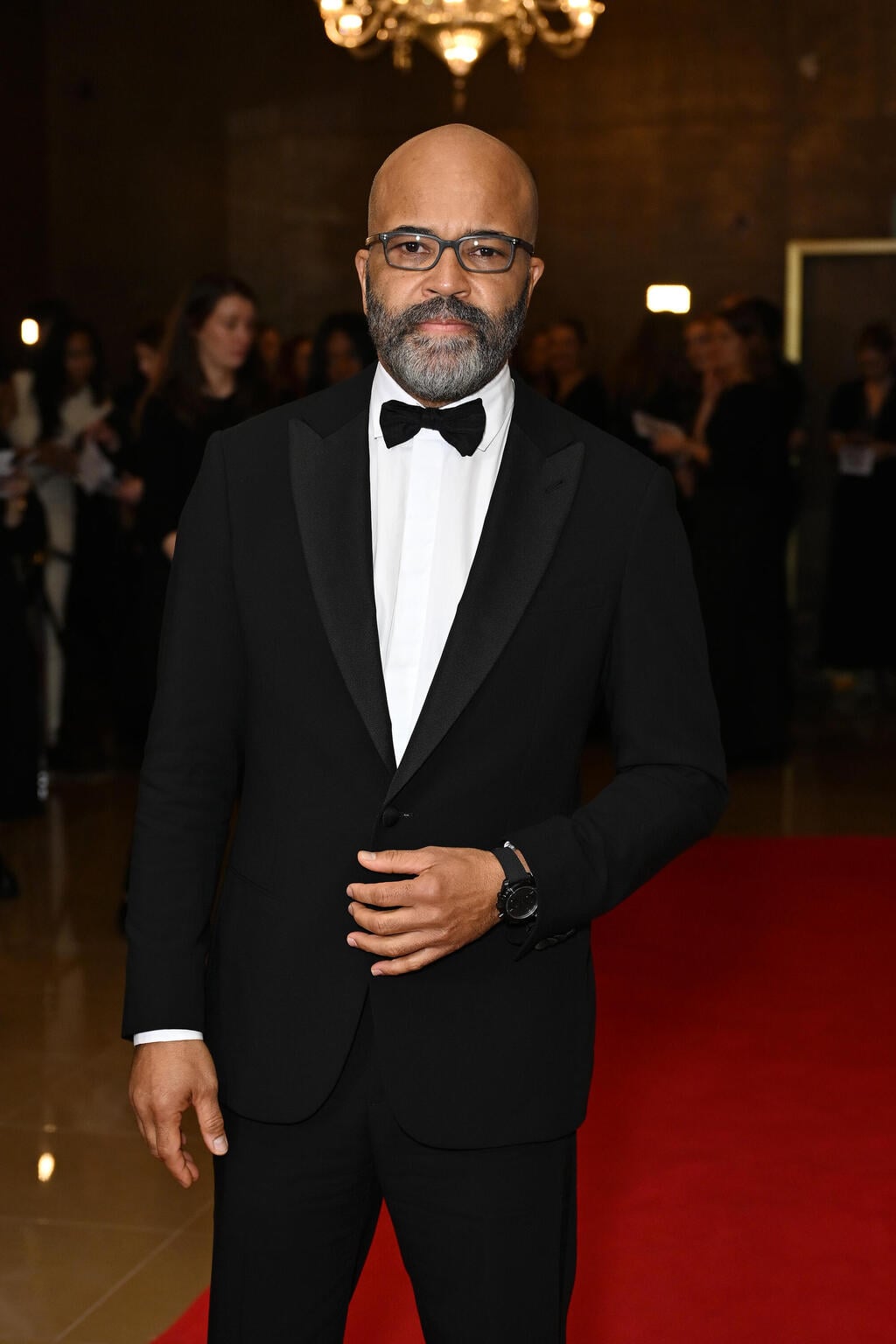
'Anyone in this business who says they’ve never thought about the Oscars is completely lying,' Wright told reporters
(Photo: Gareth Cattermole/Getty Images)
“Anyone in this business who says they’ve never thought about the Oscars is completely lying,” Wright told reporters after learning about his nomination. “Of course I always thought about an Oscar.
“It’s wonderful to be nominated because nominations are determined by your peers in the industry. How can you not be happy when your colleagues are telling you, ‘Congratulations’?
“Of course awards have real value — they can bring more people to sit in those theater seats. When I work, I try not to focus on things like the possibility of winning awards. But if they’re handing out awards, I’ll take them.”
At the closing ceremony of Karlovy Vary, a representative montage of Wright’s performances from his 35-year career was screened. It reflected his talent, range and abilities.
He has appeared in films by some of the most acclaimed directors — Woody Allen (“Celebrity”), Ang Lee (“Ride with the Devil” — “the most underappreciated film I’ve ever done”), Michael Mann (“Ali,” about boxer Muhammad Ali, “I had a real opportunity to spend quality time and laugh with him”), Jonathan Demme (“The Manchurian Candidate”), Jim Jarmusch (“Broken Flowers,” “Only Lovers Left Alive”) and Wes Anderson.
“Working with Wes is always very satisfying creatively and intellectually. When I met Wes, he told me he had actually seen all of my plays that were performed in New York and I had no idea.
“He quietly appreciated my work and wrote the character in ‘The French Dispatch’ with me in mind. That really moved me. It was a wonderful and surprising gift.
“I love that he works without caring about anyone else’s opinion. He is loyal to who he is and he is a genre unto himself. He also has a theatrical and surreal quality that I appreciate. And an irony that I connect with.”
'My mother was always there for me'
Turning 60 is a good opportunity to look back and reconstruct the impressive path Wright has taken since his childhood in Washington, D.C., where he lost his father at a young age.
“I was very lucky that I was raised by two women: my mother, who was a lawyer, and her older sister. Because I was an only child, I received a lot of attention and my mother had very high expectations of me.
“In high school I played football and I was a lacrosse goalie. My mother would come to watch the games, and even when I played amazingly — I could block 20 goals and miss only one — she would ask me, ‘What happened? Why did you miss that one?’
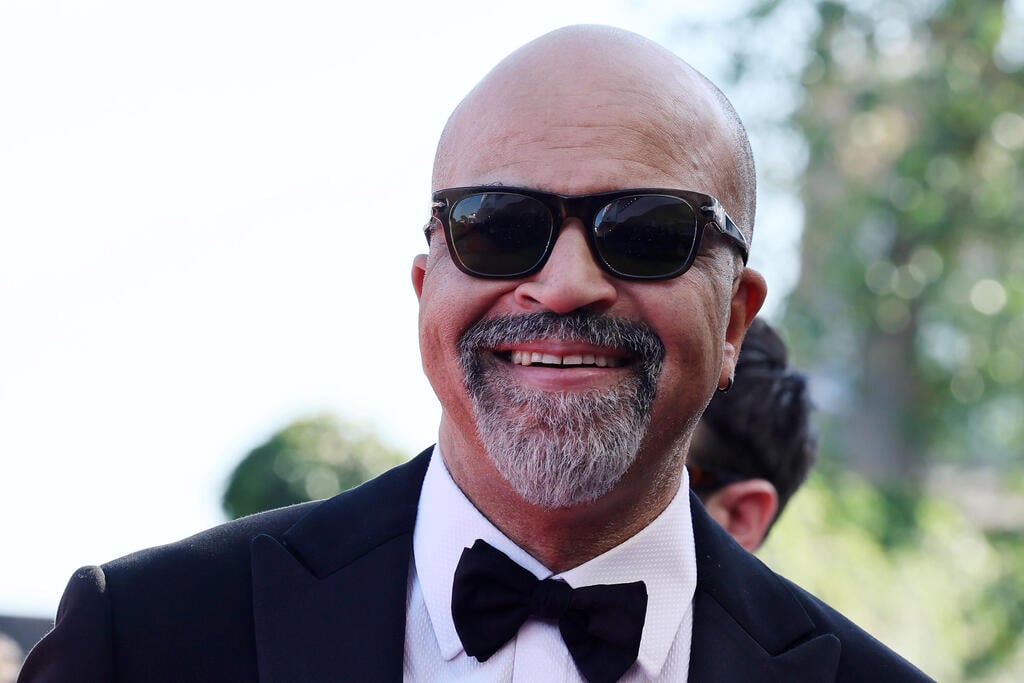
'My mother had very high expectations of me'
(Photo: Theo Wargo/Getty Images)
“When I was in elementary school, I once got a ‘very good,’ which was the highest grade you could receive. But my mother didn’t know that, so she said, ‘Why didn’t you get excellent?’
“But at the same time, whenever I needed help, as a child or as an adult, she was there for me. During the worst periods of my life, she was my rock and my savior.
“Since she died, there’s a picture of her right next to me in my home. And when I found out I was nominated for an Oscar, I told her.”
When did you realize you wanted to become an actor?
“My mother was a lawyer, as I said, so I thought I would follow in her footsteps. In the end I studied political science because it was a field that really interested me.
“At the same time, my mother took me to the theater from a young age and it always fascinated me. But I didn’t have the courage to act.
“In my junior year of college, I took an acting class and participated in a play. My mother wondered what was going on with me,” he says, laughing.
“What I was trying to do was combine my two areas of interest. To find works that weren’t necessarily escapism for the sake of escapism. I enjoyed films that had political elements.”
"When I arrived on set and saw David Bowie and Dennis Hopper, I knew something big might be happening"
Wright’s breakthrough film role came with “Basquiat” (1996), in which he played Jean-Michel Basquiat, the artist discovered by Andy Warhol who struggled with addiction and died at the age of 27, in a film directed by artist Julian Schnabel.
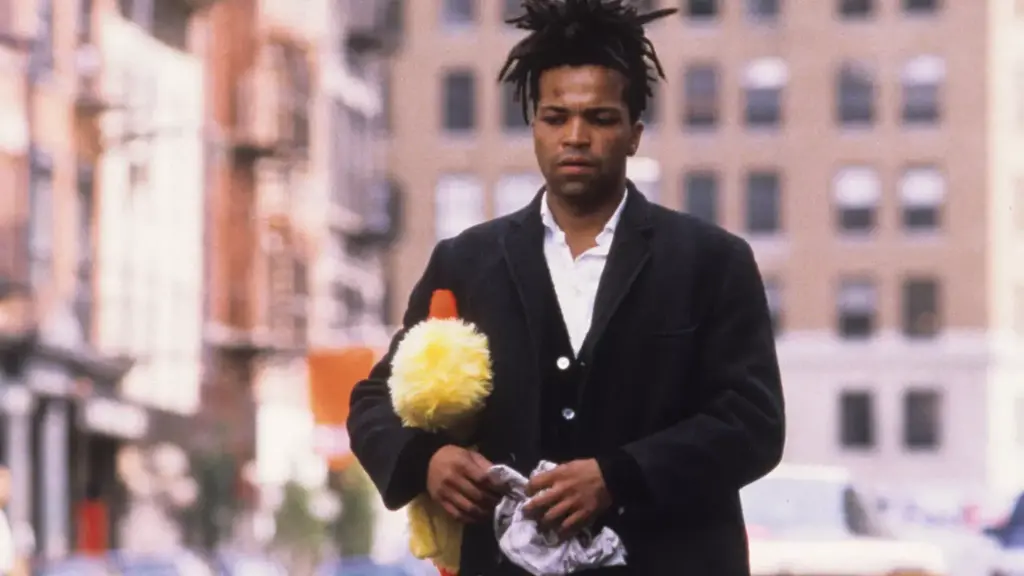
'I really identified with the role.'
(Photo: Screenshot from 'Basquiat')
“I really identified with the role. Obviously, I had a different life than Basquiat, but I understood what it meant to be a young creative person from the Lower East Side trying to find your way through those circles, which were circles I also moved through when I arrived in New York.
“When I arrived on set on the first day and saw David Bowie and Dennis Hopper, I understood that something significant might be happening here.
“I could feel even then that this film was an incredible gift being offered to me. It’s really cool to see the popularity that Basquiat’s work has gained over the years — and not only because of the film I made. It gives me great pride.”
The actor sees a direct connection between Basquiat and the writer he portrayed in “American Fiction.”
“These are two stories about men who create art and want to express themselves in a way that reflects their inner worlds. They want people to see them as they really are.
“It’s the outside world that tells them, ‘No, no, no.’ That there are limitations to who you are, categories that define you. They are not the ones making that decision.
“This happens to everyone, but with Black people it happens in very specific ways.”
Next year, Wright will return once again to Basquiat’s story — this time playing the father of the graffiti artist in the film “Samo Lives.”
“At first I wasn’t sure if I wanted the role at all. They asked me a few times and I kind of said I wasn’t sure I should do it.
“But ultimately, I felt that I had an opportunity to give back in a way that had been given to me by the people who were in my film.
“Kelvin Harrison is a wonderful actor and he really wanted me to be part of it. I played his father in another film called ‘Monster’ and we worked really well together. I think he’s very talented.
“So I thought, you know, I was given this wonderful gift early in my career and he also wanted to play this role because Jean-Michel Basquiat resonates with him in a very powerful way.
“I agreed to do it and I’m really glad I did, because I hadn’t thought about certain aspects of his life in the ways that I thought about them when I worked on this film.
“Obviously Julian Schnabel is telling this film from his perspective as the director. In the first film, the father doesn’t really play such a significant role.
“But he plays a very significant role in ‘Samo Lives’ because he had a massive influence on Jean-Michel Basquiat’s life in ways I hadn’t appreciated before.
“In some ways — no, actually like all of us — Jean-Michel Basquiat is a product of his parents. Like all of us.
“Whether it’s in ways we appreciate and love, or ways we don’t. Even in absence, a parent has an influence.
“We are all products — not only biologically, but behaviorally and psychologically — of our parents.
“This young man who became this great artist was influenced in so many interesting ways, not only as a young man but as an artist, by who his father was. I hadn’t really appreciated that before.”
'These characters survive because the stories are rooted in moral dilemmas'
These days, Wright is busy filming “The Batman Part II” in London. Matt Reeves is directing and Robert Pattinson will once again wear the cape of the Dark Knight.
Wright plays James Gordon, Batman’s ally in the Gotham City Police Department.
The first film grossed around $800 million worldwide and introduced a new generation of fans to Wright’s abilities. As for the sequel, strict secrecy surrounds the project, but Wright is willing to discuss Batman, the brand and the phenomenon surrounding it.
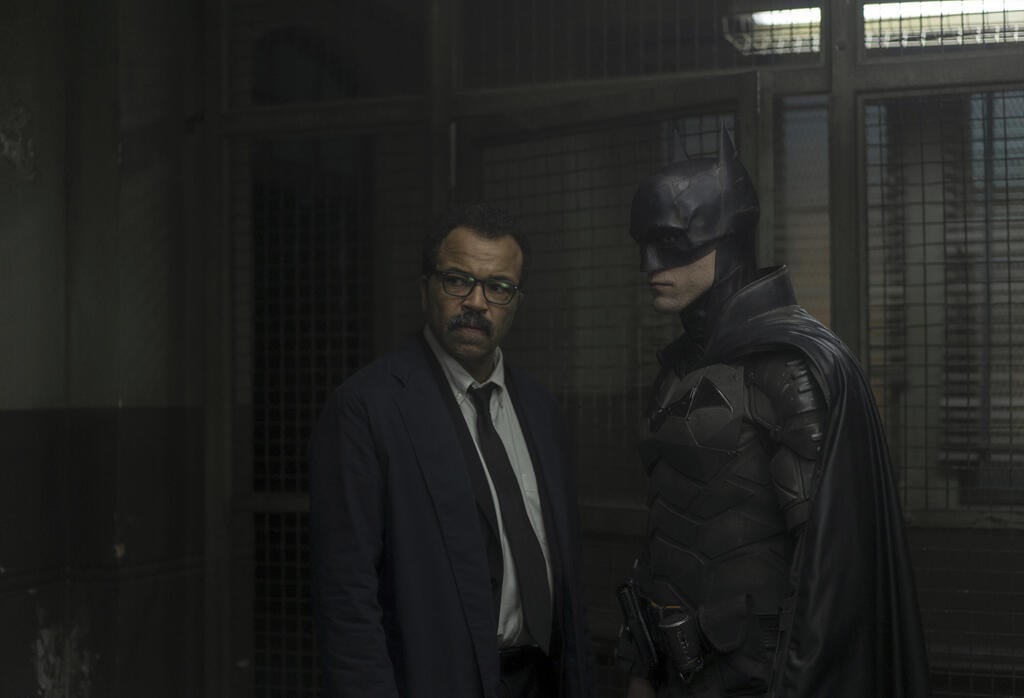
'Matt has really tried to use that to the fullest extent possible, to really dig into the source material and bring out the best of it'
(Photo: Courtesy of 'yes')
“Batman is an iconic character, as are all the other characters who inhabit the Gotham universe, and we’ve known them for decades.
“These characters have survived for so many years not because they’re superficial, but precisely because there are layers there and there’s a dynamic quality to them.
“The stories are originally grounded in moral dilemmas framed through a detective story structure. So I think Matt has really tried to use that to the fullest extent possible, to really dig into the source material and bring out the best of it.
“It’s classic stuff.
“There’s also something about the play of masks that, in some ways, connects with older forms of storytelling — the art of Kabuki and commedia dell’arte. I think that connection is part of the appeal of the franchise.
Wright also has plenty of praise for Reeves.
“Matt was crazy enough to try to expose elements of the story that we would usually take for granted. He takes the stories that appeared in the comics and translates them through a much more complex cinematic lens.
“Even while working on the new film, he’s referencing films from 1970s American cinema — films that you would never think had any connection to Batman.
“I won’t get into the names.
“Matt has this intense, almost childlike sense of wonder toward this franchise. He has this almost endless enthusiasm for it, and also a deep respect for cinema.