

In 1850, Patrick Brontë commissioned a sanitary report on the Yorkshire town of Haworth, where he and his family lived. In one sense, the report came too late. Brontë, the town’s clergyman, was already exhausted and battered by grief.
A year earlier, his youngest daughter, Anne, had died at 29 from complications of tuberculosis. In the year before her death, the family had lost Emily and Branwell, its only son. The family’s two eldest daughters, Elizabeth and Maria, had died 25 years earlier, when they were children. The only surviving sister was Charlotte, author of the classic Jane Eyre. She would die five years later, in the early months of her pregnancy.
Gallery
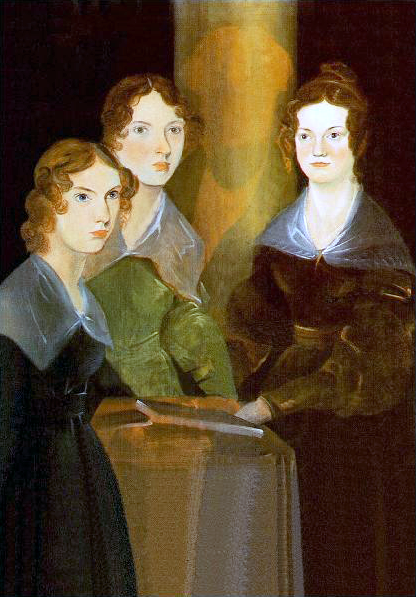
Anne, Emily and Charlotte Brontë in a painting by their brother Patrick Branwell Brontë
(Photo: Wikipedia, National Portrait Gallery, London)
The report by Benjamin Herschel Babbage, an inspector who wrote environmental reports, was horrifying. The small town had mortality rates far higher than those of nearby towns of similar size. Nearly half the town’s children died before age 6. The average age at death was 25.
Babbage's investigation revealed what he believed was behind the grim figures: The town was polluted. There were not enough privies for the population, they were not properly drained, and some sewage ran through the streets. The cemetery, which surrounded the Brontë family home on the hill, was overcrowded and neglected. Decomposing matter from the graves seeped into the town’s water supply, causing widespread illness and inflicting severe damage on the immune systems of residents, especially the Brontë family. In Haworth, the dead were killing the living.
There are plenty of good reasons to remember the Brontë sisters now. Charlotte Brontë, the sister who survived to tell the story, is marking her 210th birthday, and looking excellent for her age. If she is watching us from above, she is probably smiling with dark satisfaction. The seeds she and her sisters planted in the 19th century are flourishing in today’s pop culture.
Emerald Fennell directed a ruthless film adaptation of Wuthering Heights, starring Margot Robbie and Jacob Elordi. The novel has already returned to shelves in new editions. And in the latest season of Netflix’s You, a show known for its affection for literature, the new woman who enters the life of Joe, the modern toxic boy, is simply named Brontë.
But when you go back in time, forget the picturesque image of the Brontë girls sitting in period corsets before the mist-swept moors, chewing on their quills before dipping them into ink and writing another bestseller. The lives of the Brontë sisters were a daily fight for survival in a cramped, poor, soot-covered town, an effort to dodge sanitary disasters, collapse under the burden of a narcissistic, addicted brother who consumed all the family’s resources and, of course, death.
It does not sound like the ideal description of a creative environment. But in retrospect, it was precisely those hardships that turned the Brontë sisters, women who rarely left their home, into some of the sharpest and boldest social critics of their time.
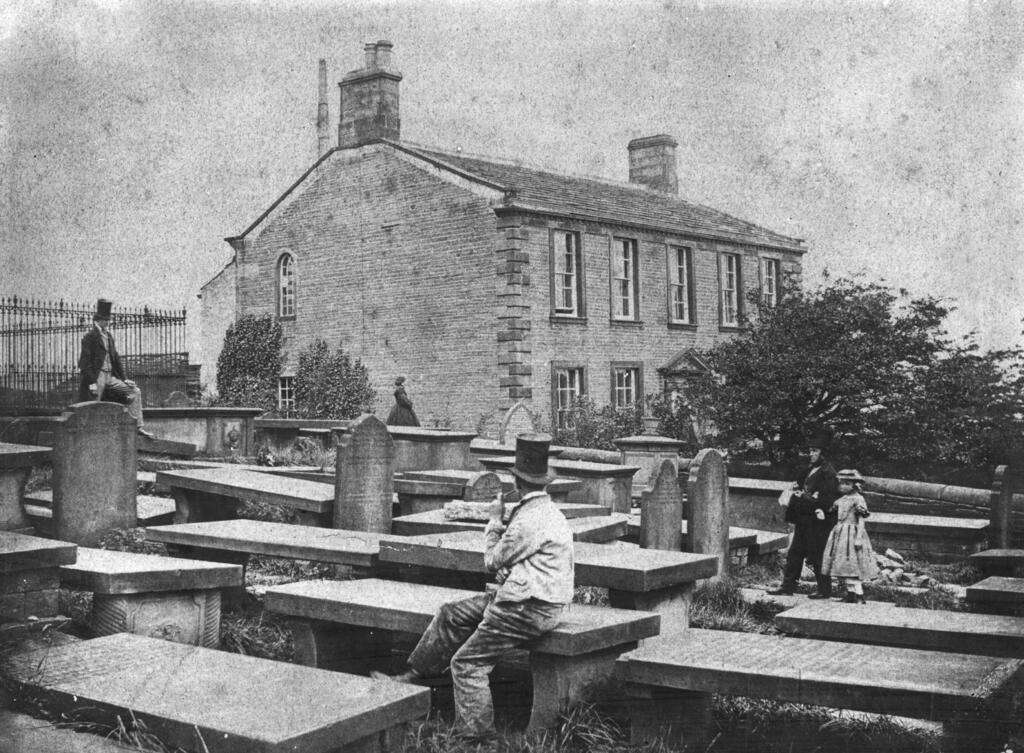
The Brontë family home, seen from the cemetery in Haworth, Yorkshire
(Photo: Hulton Archive/Getty Images)
Patrick Brontë was born into a poor family in Ireland as Patrick Brunty. Against all odds, he managed to gain admission to the University of Cambridge, where he understood that if class-conscious England was to accept him, he needed to shed his peasant name. He changed it to Brontë, hoping to benefit from the wave of admiration then directed at the Duke of Bronté, Admiral Nelson. When he was appointed a clergyman in Haworth in 1820, the Brontë family relocated to the town.
Brontë sent his four eldest daughters to the Clergy Daughters’ School at Cowan Bridge, but it proved to be less an educational institution than a survival camp. Living conditions were horrifying. The girls suffered from cold, rotten food, psychological abuse and an almost total absence of medical care. Maria and Elizabeth, the two eldest, contracted tuberculosis and were sent home only to die. Charlotte and Emily returned to Haworth scarred.
Years later, Charlotte would reconstruct the trauma and avenge her sisters in her depiction of the cruel Lowood school in Jane Eyre, with the character of Helen Burns, who dies a tragic death, based on her sister Maria. That literary revenge was so precise that the founder of Cowan Bridge considered suing her for libel when the book came out.
Shut inside the parsonage, motherless after their mother had died of cancer a few years earlier, the four remaining children, Charlotte, Emily, Branwell and Anne, received a gift: a box of wooden toy soldiers. With a father who believed in strict religious authority and in the absence of outside stimulation, they built fantasy worlds around the soldiers, creating kingdoms named Glass Town, Angria and Gondal. They wrote the adventures of their characters in tiny booklets, notebooks the size of matchboxes filled with dense handwriting that required a magnifying glass.
Those worlds, Charlotte later said, were not sweet fairy tales; they were full of political intrigue, betrayals, sex, wars and violence, and looked more like Game of Thrones than Victorian children’s literature. This was the stage at which the Brontë sisters learned how to articulate the human soul, especially when it confronts a destructive reality.
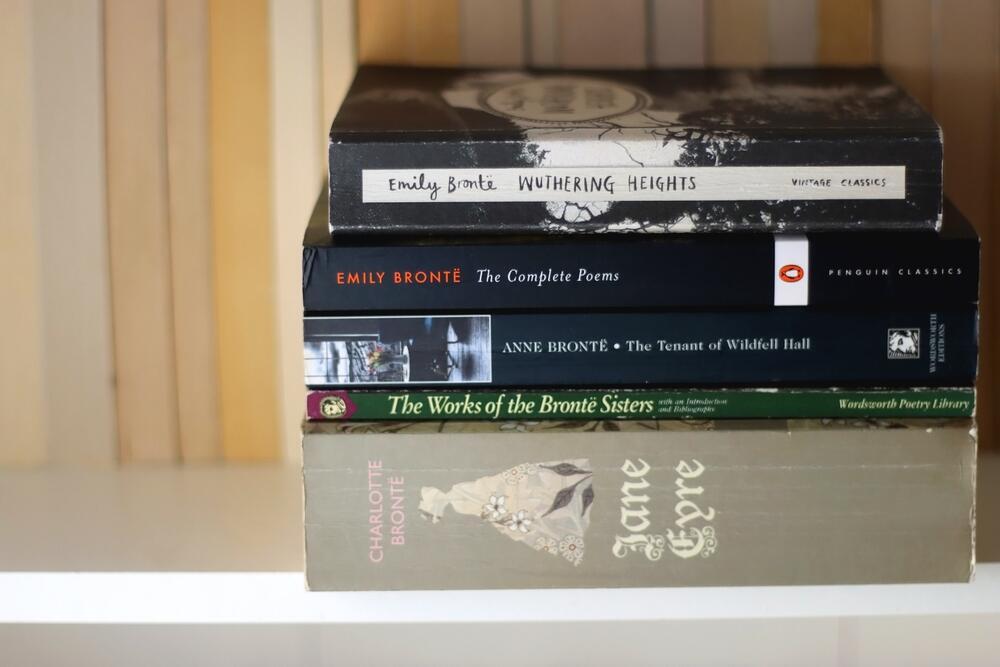
Books by the Brontë sisters
(Photo: Shutterstock)
A living model for toxic male characters
The New York magazine InsideHook called Branwell Brontë “the Rob Kardashian of his time,” the brother left in the shadow of his three successful sisters, and not without reason. In Victorian reality, where women were considered an economic burden and their purpose amounted, at best, to marriage or, less ideally, low-paid work as governesses, Branwell was the family’s great hope, and all the chips were placed on him.
He was considered a genius and received an intensive education, at home, of course, from the family patriarch, along with private art lessons and pocket money. His sisters, meanwhile, worked as governesses for wealthy families, an experience they all loathed and documented in their books.
But the dream crashed into reality when the "caterpillar refused to become a butterfly". Branwell zigzagged between professions. Among other things, he was a failed portrait painter, a railway clerk fired over financial irregularities and a tutor dismissed after becoming entangled in a forbidden affair with his employer’s wife. In his free time, he sank into severe addictions to alcohol and various forms of opium, and accumulated debts.
At one point, he was sent to study at the Royal Academy of Arts in London, a dream his sisters would not have dared to imagine. But he got drunk in the first pub he found, wasted all the money he had been given and returned home in disgrace, without showing anyone his portfolio.
Years later, a famous portrait he painted in 1834 of himself and his three sisters would hang in London’s National Portrait Gallery. Branwell painted himself in the center of the picture, but later erased his own figure and replaced it with a blurred pillar, an exact metaphor for his life: present and absent beside his sisters.
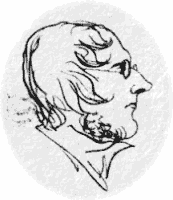
Patrick Branwell Brontë, self-portrait
(Source: Wikipedia)
Absurdly, Branwell’s only real contribution was as a living, tangible model for the toxic male characters in his sisters’ books. His violent mood swings, narcissism and decline were reflected directly in Hindley, the drunken brother in Wuthering Heights, and in Arthur Huntingdon, the abusive, alcoholic husband in Anne’s The Tenant of Wildfell Hall. The time Branwell passed out with a lit candle and set his bed on fire, until Emily came and dragged him out, found its way into Jane Eyre, when Jane saves Mr. Rochester from a similar fate.
Despite their socially isolated lives, the sisters witnessed daily displays of self-destruction and the fragility of the male ego. Branwell was the inspiration for the prototype of the “toxic boy,” the damaged man and antihero of television and literature. The sisters did not need to imagine him. He slept in the next room and vomited in the parlor.
One man or three women?
The Brontë sisters’ literary career began with a commercial failure. In 1846, they decided to publish a poetry collection, the only literary work they wrote together. They knew the Victorian market would not embrace female writers, so to get around the gender barrier they chose male pen names that preserved their original initials: Currer, Ellis and Acton Bell.
Their poetry book sold two or three copies, depending on whom you ask. Accounts suggest Charlotte was the one who realized the business model was not exactly working and decided to move to prose.
A year later, the novels came out and proved Charlotte right. Jane Eyre became an immediate hit. Wuthering Heights shocked critics with its “morbid” violence, and the assumption was that only a particularly disturbed man could have written it. Anne’s second book, The Tenant of Wildfell Hall, which presented an abusive relationship with astonishing realism for its time, became a huge success, quickly surpassing the sales figures for Wuthering Heights and later even outpacing Jane Eyre.
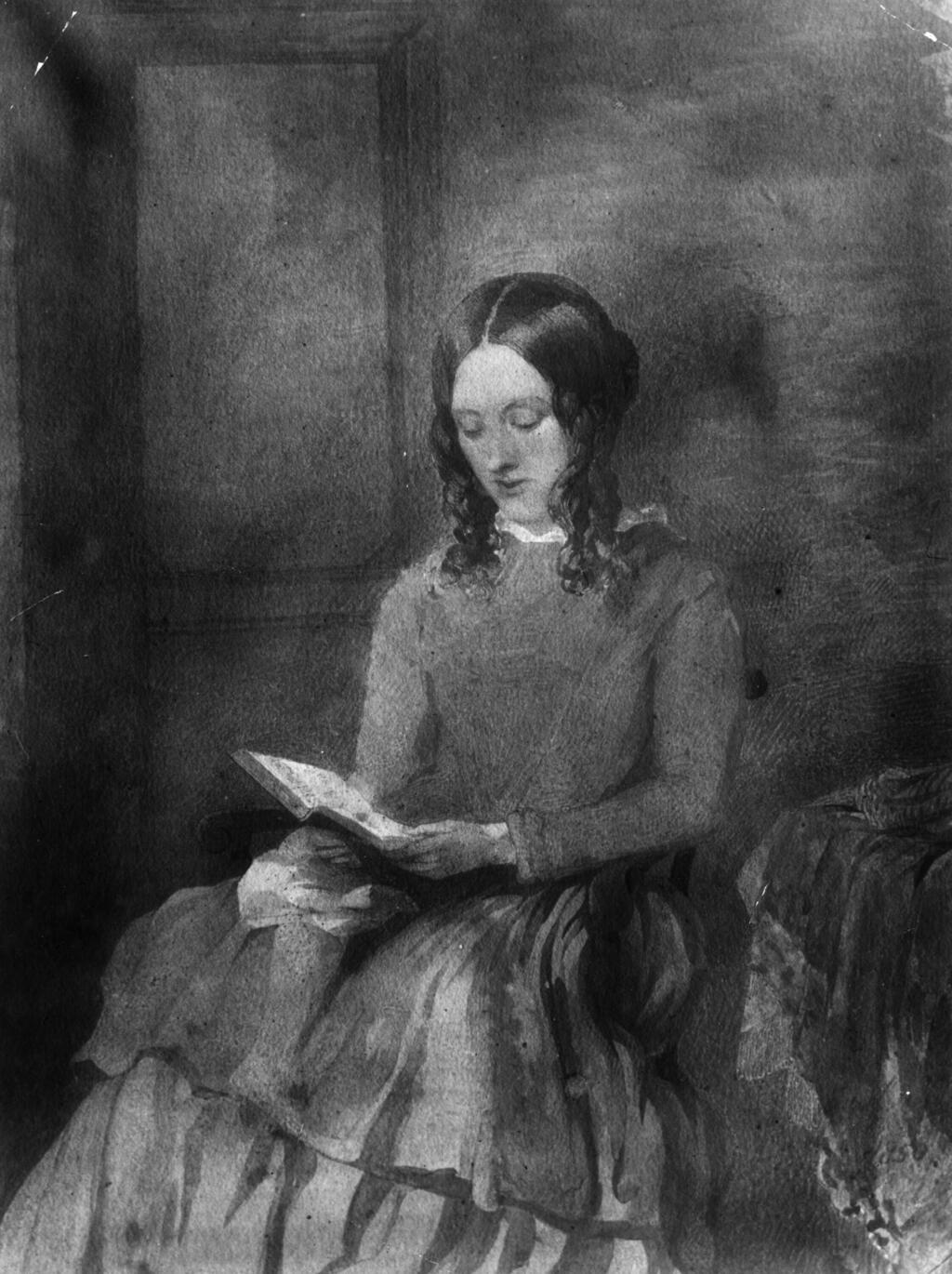
Charlotte Brontë
(Photo: Hulton Archive/Getty Images)
The sisters’ London publisher was convinced the Bell brothers were, in fact, one man. When the rumor reached Charlotte and Anne, they boarded an exhausting night train from Yorkshire to London, an unprecedented step for women of their class, and walked into the publisher’s office in their plain provincial clothes.
Charlotte placed on his desk the last letter he had sent them and made it clear not only that the Bell brothers were not one person, but that they were not brothers at all, and that, yes, the violent and turbulent masterpieces of the period had been written by the women standing before him.
His astonishment was understandable. Even if they had been written by men, the Brontë sisters’ books repeatedly broke the literary conventions of the time, hurling at readers a combination of passion, daring and blunt realism. Until the Brontë sisters, the plots of the literary novel politely moved within a clear social world of manners, matchmaking and heroines expected to play music, embroider and not threaten the social order. Charlotte, Emily and Anne kicked that model aside and replaced it with dark, rough psychological drama.
If, before Jane Eyre, women were not supposed to be angry, and certainly not to express desire, the Brontë heroines demanded justice and recognition of their inner lives.
If marriage was considered the happy ending of a plot whose purpose was to restore the class order, Anne did the unthinkable in The Tenant of Wildfell Hall. She brought the reader into the bedroom of an abusive marriage and described with chilling precision what life with a violent alcoholic looked like.
She gave her heroine what was inconceivable at the time: She took her son and left home. It was a truly radical act, and even contrary to the law, because a woman was considered the property of her husband. But Anne let her take control of her own fate instead of retreating into watercolor lessons.
The novel was considered so unusual for its time that even Charlotte, in the years when she managed the family brand alone, refused to authorize new editions so as not to stir up further scandal. Like a savvy showrunner, she softened the edges to keep the brand alive and make the books easier for Victorian society to accept.

First edition of The Tenant of Wildfell Hall, 1848
(Source: Wikipedia, Internet Archive)
Charlotte also added an apologetic preface to Wuthering Heights, explaining that Emily was an “isolated child of nature” who did not really understand what she had written. Modern adaptations of Wuthering Heights do tend to portray Heathcliff as a softened, tragic romantic figure. But Emily Brontë’s Heathcliff is violent, vengeful and obsessive, the perfect example of the sisters’ great innovation: the antihero, without whom we would not have Tony Soprano or Don Draper. The dark, damaged, manipulative protagonist whose psychological complexity is precisely what draws us in.
Contrary to the romantic image of the sisters, Emily and Anne were as complex as the characters they created. Emily was not a mystical, pensive child of nature, but a shrewd financial investor who managed the family’s money in railway stocks with cold composure. Her piano students remembered her as a distant figure who held lessons only at times convenient to her, ignoring the girls’ needs, and as someone who tended to dodge social obligations and barricade herself at home. She was also Branwell’s primary caregiver during the worst days of his addiction.
In the short years in which the Brontë sisters worked on their novels, they dragged the literary style out of the tea parlor and into the mud of human complexity, trauma and repressed sexuality, much as Marlon Brando later transformed acting from something theatrical and ornamental into something human and emotional.
Bleak lives that became a wild binge
The final chapter of the Brontë sisters’ lives shows just how short and brutal their years were. Babbage’s report clarified in retrospect the source of the early death that struck the family. It was nothing poetic about Victorian plumbing.
Branwell, obeying the family tradition of dying young, breathed his last at 31. Emily refused medical treatment and died three months later, at 30. Anne, despite attempts to save her through the sea air of Scarborough, died six months later, at 29.
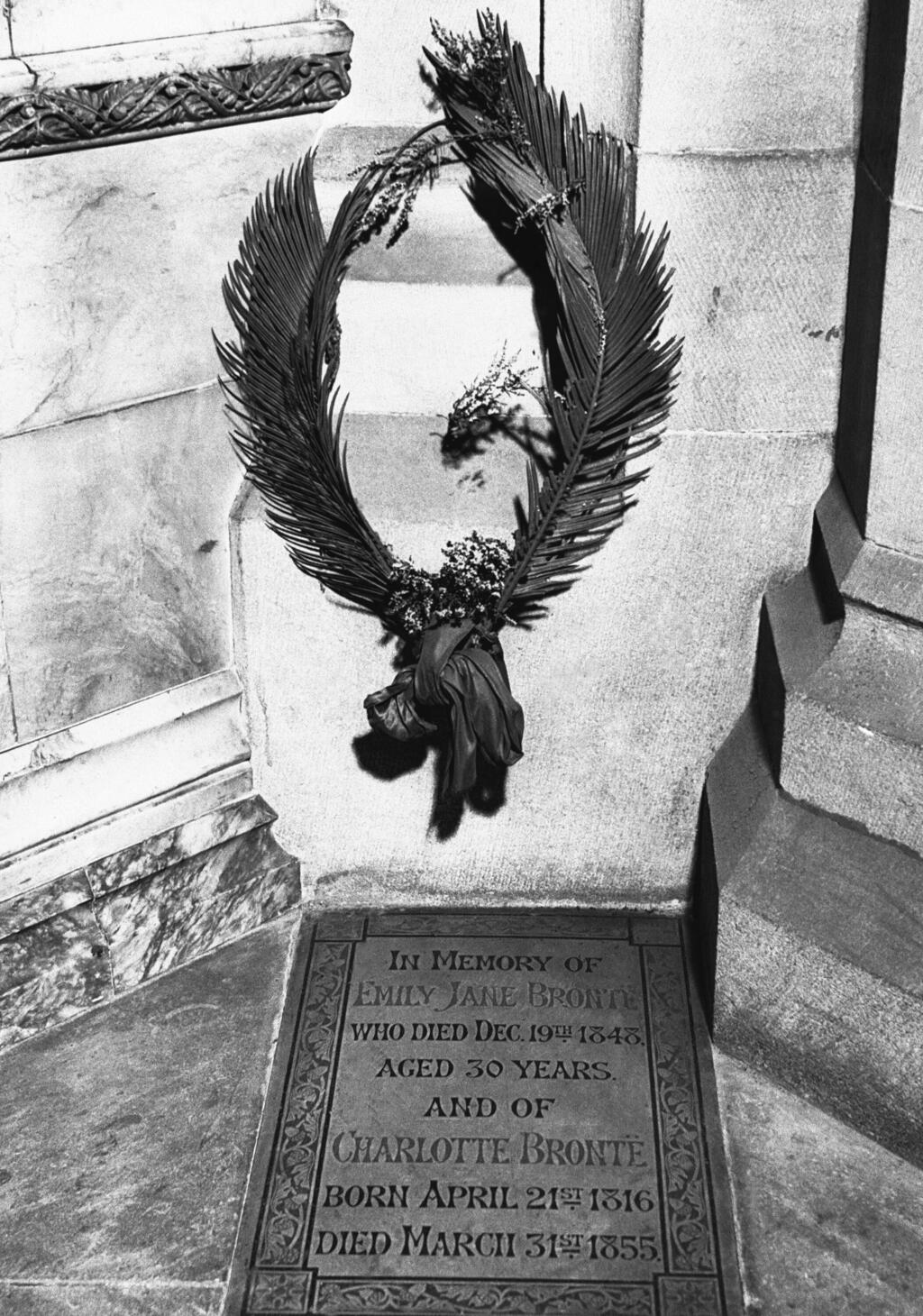
The graves of Charlotte and Emily Brontë in Yorkshire
(Photo: AP)
Charlotte remained the last survivor, alone with her aging father. A few years later, she married Patrick’s curate, Arthur Bell Nicholls, who probably also gave his middle name to the sisters’ pen names. She may even have been happy for a while. But a year later, a combination of pregnancy complications, tuberculosis and water that remained polluted brought about her death at 38. Patrick, the family patriarch, lived to 84, apparently blessed with ironclad intestinal bacteria and an exceptionally resilient immune system.
In her final years, Charlotte managed to publish two more books, Shirley and Villette. The latter was based on the period she spent in Brussels with Emily, at the Heger family’s language school, where she fell desperately in love with its married head, Constantin Heger. The desperate letters she wrote to him were torn up by him, stitched back together by his furious wife and discovered only many years later.
Hundreds of thousands of literature enthusiasts from around the world have turned Haworth into a pilgrimage site. The parsonage at the top of the hill, surrounded by the wild, gloomy moors that seeped into the sisters’ novels, became a museum where visitors can see the original furniture and the writing table on which their masterpieces were written.
Emily, Charlotte and Anne were three Victorian unmarried women who took their bleak lives, poverty, social isolation, a brother who set himself on fire in bed and water that tasted of death, and turned them into a wild binge that today would be served to you as the dark prestige drama of the decade.
Long before Phoebe Waller-Bridge broke the fourth wall in Fleabag, or Lena Dunham feasted on the unglamorous flaws of young women in Girls, the Brontës understood the point. Reality is the name of the game. They read us long before we read them.
And when you watch Emerald Fennell’s Margot Robbie and Jacob Elordi fall in love and suffer in the new Wuthering Heights film, and look for Hindley, the cruel alcoholic brother, remember the Brontë sisters’ important lesson: Hell is just outside the window. So maybe next time, you would be better off staying home and playing with imaginary soldiers.