


In one of the banal scenes in this astonishingly banal film, one of the wizards and sorcerers who run the Land of Oz brags that the ordinary people before whom he and his friends deliver speeches and empty declarations are “hollow,” incapable of thinking for themselves.
Yes, this is one of those movies packed with extras who drift from scene to scene, their job to cheer, to rage or to hold their breath in awe of the film’s heroes as they deliver fire-and-brimstone speeches, noble figures, rulers of districts and kingdoms, because they are the only ones worthy of having their story told on screen. Democracy at its finest.
Well, that is exactly how the studios and creators of 'Wicked: For Good' think of you, their viewers - as a herd of idiots, and pardon the harsh language. Everything is spoon-fed. Everything is chewed up and explained for no reason.
'Wicked: For Good' trailer
(Courtesy of Universal Pictures)


The original sin of 'Wicked,' like so many greedy Hollywood projects, is the sin of stretching things out. The hit stage musical written and composed by Stephen Schwartz, running on Broadway for 23 years, is under three hours long in its original form, including intermission, as far as I understand. The film adaptation is smeared into five hours split in two, because why not make those “hollow” people, meaning the audience, pay twice for the popcorn and parking.
That means forcing in another song or two, or five, that nobody wants or needs to hear, and making sure the characters explain in every scene that yes, exactly, this is what they think. Yes, let’s say it again. I’m angry. I feel betrayed. Betrayed and angry. Here is a landscape of Oz under pink skies. Pretty, right? Here is our character staring at it again. She still feels betrayed. And angry.
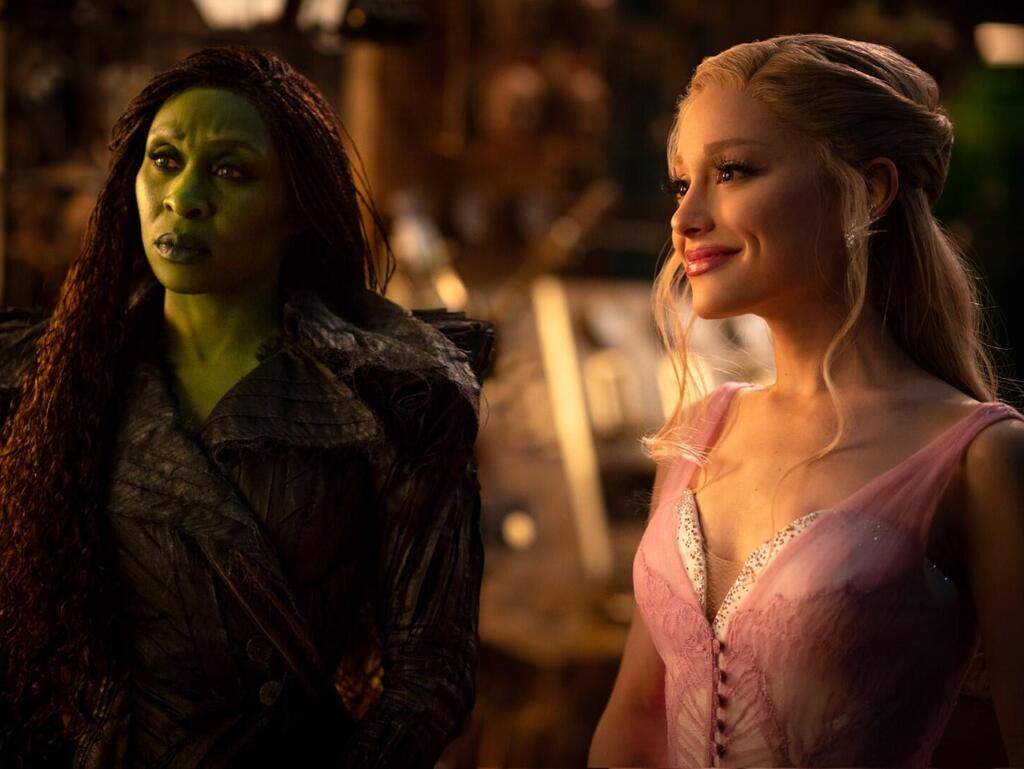
When you stretch a book adaptation, like the final “Harry Potter” installment that was split into two films, you can at least argue that there are extra stories and moments between the pages that would not make it to the screen in a normal adaptation. Here it is pure greed, and laziness. The split also damages the narrative flow of each movie, especially Part 2.
Part 1 of "Wicked," released last year, pulled in $750 million after a massive publicity campaign and 10 Oscar nominations, an exaggeration in hindsight. It still benefited from the charm of discovering the world for those who had not seen the musical or the “Wicked” phenomenon. It told the coming-of-age story of Elphaba (Cynthia Erivo) and Glinda (Ariana Grande), the future “wicked” witch and the future “good” witch, who in their early years were simply the odd girl versus the queen bee. It had a measure of mischief and humor, like a teen movie filtered through over-the-top costumes. A bit of “High School Musical” with magic, or “Harry Potter” with songs.
But the musical, alas, already used up its two most memorable numbers in Part 1, “Popular” and “Defying Gravity,” which ended the previous film in a crescendo and in the stage show lands just before intermission. Now we are in Part 2 and, musically, welcome to the desert of Oz. Plot-wise, things are not much better.
“Wicked: For Good” opens when Elphaba is already branded the wicked witch, leader of the rebellion. At the film’s starting point, like in so many needlessly grim adaptations of children’s stories, we are shown how the beloved land has fallen into the arms of a cruel regime, the kind of “now things get serious” turn, and the skies literally darken. Elphaba is no longer a rejected girl but the leader of the animals’ revolt. What does that revolt look like? Who takes part besides her? Unclear. But forget it, Hollywood says, it’s for kids. And of course, how could we do without Nazi imagery. Everyone the heroes dislike is a xenophobic selector in the Nazi mold, people with prejudices, “not like us.” Or Trumpists.
The film nods to that too, lazily, through the Wizard, played by Jeff Goldblum in a partly successful casting as a charlatan who does not really want power but once he has a chance to rule without limits, he goes along. This time Goldblum also gets the only likable song in Part 2, which for a few minutes revives his laid-back Goldblum charm.
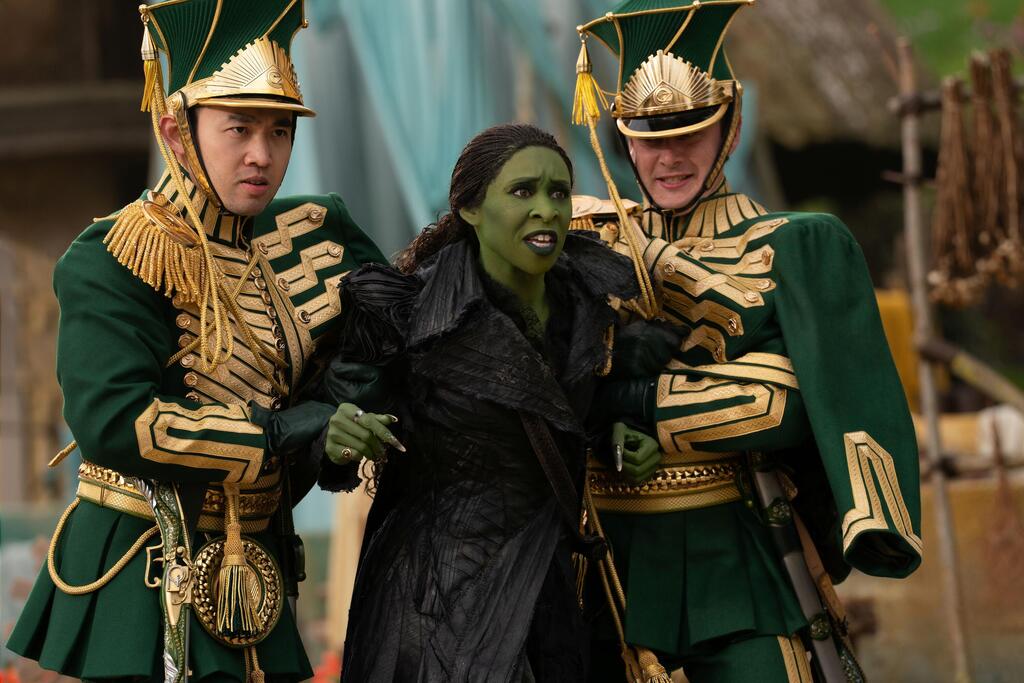
A one-woman rebellion. From “Wicked: Part 2.”
(Courtesy of Tulip Entertainment)
If you try to look past the shallowness, you can say that “Wicked,” as a musical, is still an interesting product of its time. The original stage show premiered in 2003, a blink in historical terms after the Sept. 11 attacks and the global war on terror centered then on Iraq. There is something refreshing, even subversive, in a super-mainstream musical that tries to trace the origin story of a villain, to argue that evil is culturally constructed, a matter of propaganda.
The problem is that in the years since, we have seen countless attempts to crack this theme. “Maleficent” with Angelina Jolie drew clear inspiration from the musical. Series like “Dexter” and “Breaking Bad” asked the same questions, all products of the Bush era and later the Trump era, including “Joker.” Soon, bin Laden.
Now the cinematic “Wicked” looks like a work that missed the train it helped set in motion. So Elphaba is actually a good witch, and Dorothy is just a silly girl used to sell us a fairy tale? I’m not impressed.
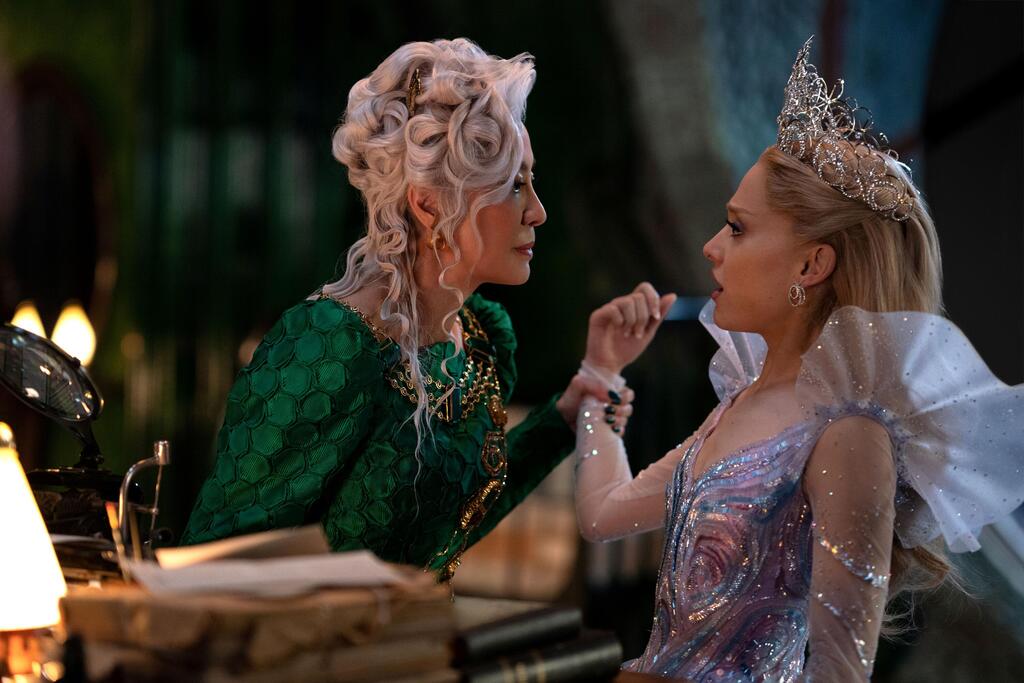
Squandering her Oscar-earned goodwill. Michelle Yeoh, left, in 'Wicked: For Good'
(Photo: Courtesy of Tulip Entertainment)
There is also a basic internal paradox in “Wicked,” because there really is a wicked witch in it, Madame Morrible (Michelle Yeoh, the Oscar winner for “Everything Everywhere All at Once,” who has been squandering her hard-earned credit since taking home the statue). She is responsible for all the troubles in Oz. She is the real magician pulling everyone like puppets on a string. In short, she is the witch. And if the witch is Asian, Hollywood gets to return to the expected stereotypes of children’s tales. So is evil a cultural construction or an absolute term? Do not look to “Wicked” for philosophical answers.
What remains is a stale origin story, another one among dozens churned out by Hollywood in recent years, plus tedious “Wizard of Oz” side plots about legacy props and characters, a foundational asset in American and global culture since Frank L. Baum’s original novel was published in 1900. Look, here is how the Scarecrow and the Tin Man were made, even if their backstories create about 20 possible plot holes against the familiar tale. Here is how the red shoes and the Yellow Brick Road came to be. Interesting? Not really.
Even in Part 2, the standout performer is still Ariana Grande, and she is also responsible for the only character that remains somehow compelling in this fiasco. Her Glinda lives between worlds. She empathizes with her rebel friend Elphaba and tries to protect her, but she is addicted to public adoration, likes if you will, and buried deep in service to an establishment that pampers her and despises her at the same time. The “between worlds” idea is a theme you can find in every other Hollywood film, and here it is served in a children’s version. Most Disney products offer more adult insights on that theme than “Wicked” does.
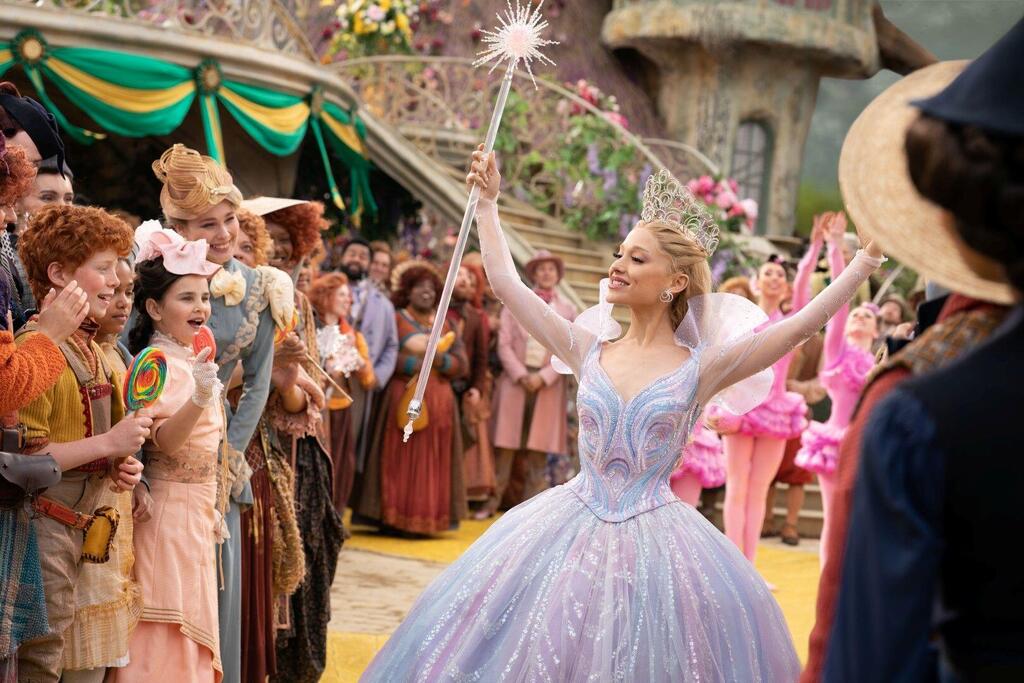
The standout performer. Ariana Grande in “Wicked: Part 2.”
(Courtesy of Tulip Entertainment)
I am aware that in the comments, beyond the insults, people will say I am not the target audience, that I do not connect with themes of empowerment and friendship that were central to the musical and are presented that way in the film.
For the record, I am a big fan of musicals. I happily tear up on Broadway, in the West End and in Tel Aviv. But the director Jon M. Chu, who also made Part 1 and has not been mentioned here until now and not by accident, delivers especially uninspired work in the musical sequences. Where did the spark go that he had in “In the Heights,” or even in Justin Bieber’s concert films?
Even if “Wicked” was never written for me, the job of a film adaptation is to turn me into an ordinary fan. This one did the opposite. After Part 1 I said I was not a hater, more like indifferent, someone who knows “Wicked” exists and is happy to move on. Now, thanks to Part 2, I’m a hater.
First published: 22:41, 11.23.25