

Mary Shelley’s literary masterpiece Frankenstein; or, The Modern Prometheus (1818) merges the English Gothic and Romantic traditions of the 19th century with the early science‑fiction genre. Its dark Gothic horror merges with a romantic‑mythic confrontation between creator and creation, and its science‑fiction elements raise questions about the scientist’s responsibility for powers once reserved for gods.
The Creature, unnamed in Shelley’s novel, rebels against its creator and against the creator’s race. Born pure, it gradually acquires human sensibilities, learns language and educates itself. Its grotesque outward appearance prompts cruel rejection by humans, triggering its rage and thirst for revenge.
'Frankenstein' - Trailer
(Credit: Courtesy of Lev Cinemas)



Shelley structured the novel in an epistolary format: Captain Robert Walton records the testimony of scientist Victor Frankenstein, which in turn includes the Creature’s own narrative. The layering of perspectives enriches the philosophical complexity of the work.
From the first cinematic adaptation in Thomas Edison’s studios (1910) to Frankenstein — the new film by Guillermo del Toro — hundreds of versions have been made featuring the Creature. The vast majority bear little resemblance to Shelley’s original text. The common error of attributing the name “Frankenstein” to the Creature rather than to Victor underscores this divergence.
Consider the lineage: Mel Brooks’ 1974 parody Young Frankenstein draws on Boris Karloff’s 1930s Universal horror films that portrayed the Creature with a flat head, bolts in the neck, grunts, outstretched arms and severely limited intelligence — all far from Shelley’s tragic, complex being. The first Universal film, Frankenstein (1931), was not a direct adaptation of Shelley’s novel but of Peggy Webling’s 1927 stage play, itself a loose rendition. That Creature was fundamentally a brutish bully yearning for acceptance — once again far from Shelley’s layered creation.
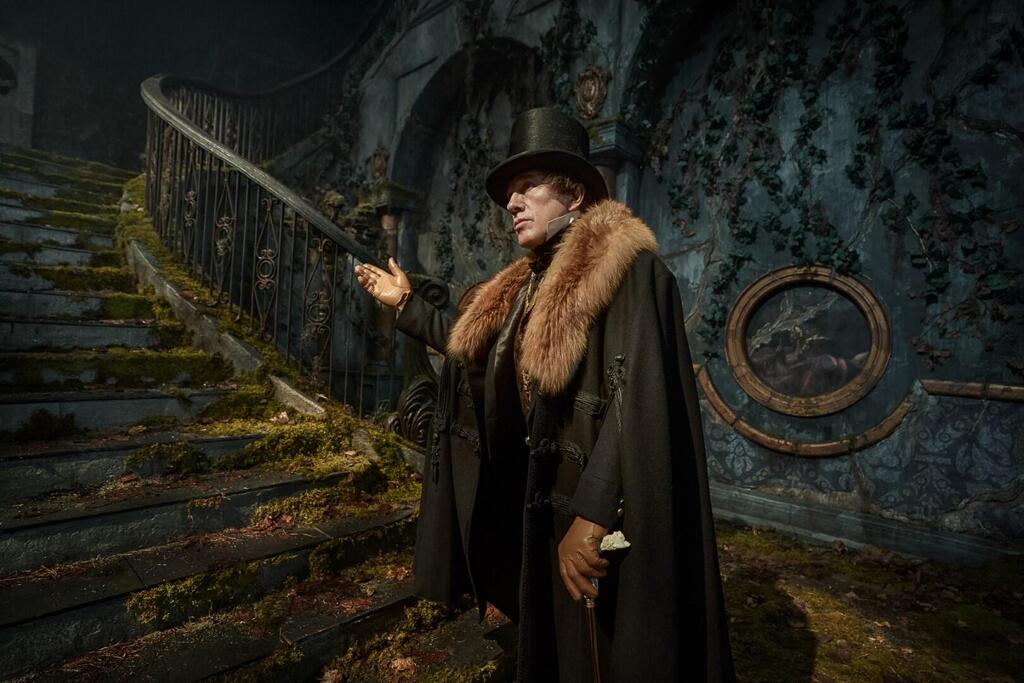
From 'Frankenstein'
(Photo: Courtesy of Lev Cinemas)
Only two screen versions have truly aimed for fidelity: Kenneth Branagh’s 1994 Mary Shelley’s Frankenstein, ambitious and interesting though it falters near the end, and the 2004 Hallmark miniseries Frankenstein (2004), which followed the novel’s plot more closely but lacked dynamism. Del Toro’s film joins these rare attempts — thoughtful and talented — yet still shows a gap between ambition and realization. The shortfall stems in part from the director’s own layered ideas and the intrusion of superficial pop‑culture influences (e.g., the Creature gains Wolverine‑like healing and super‑strength), as well as Netflix’s production demands.
The film opens with a sequence echoing the novel’s frame narrative: a Danish ship trapped in polar ice, commanded by Captain Anderson (Lars Mikkelsen), whose crew takes aboard Victor Frankenstein (Oscar Isaac) fleeing from the creature (Jacob Elordi, famed for his role in Euphoria). Running 150 minutes, the film divides into two distinct halves: Victor’s testimony followed by the Creature’s perspective — a preserved structural element of the original novel, while replacing Shelley’s fictional letters with a more immediate form of witness testimony.
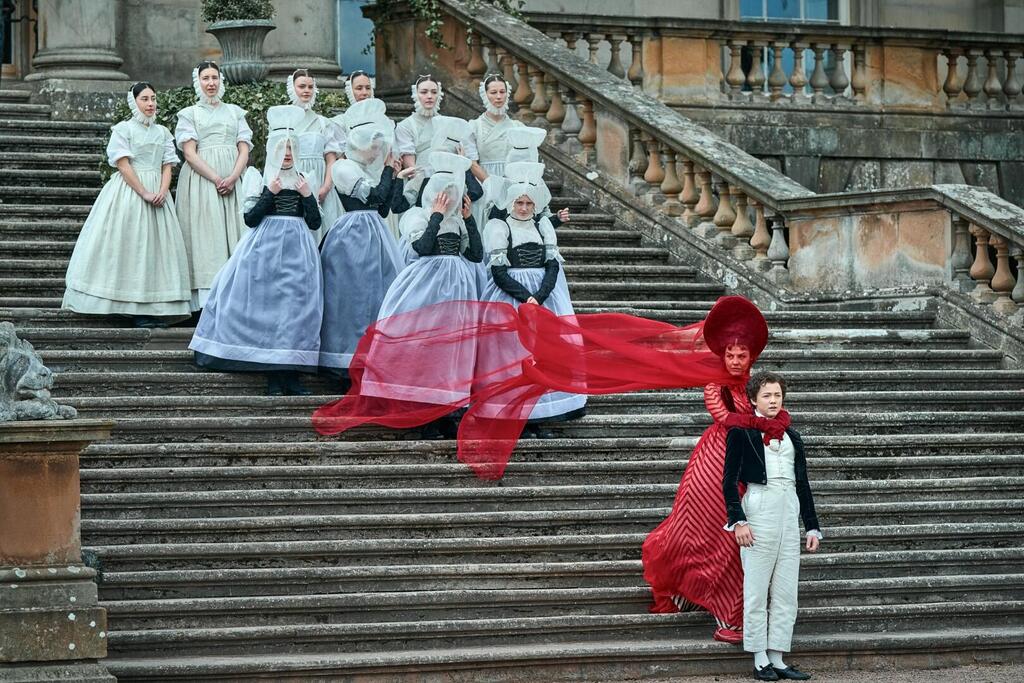
From 'Frankenstein'
(Photo: Courtesy of Lev Cinemas)
The basic plot of the new film should be familiar even to those who haven’t read the 1818 novel by Mary Shelley. It follows the trajectory of Victor Frankenstein, whose lifelong ambition to conquer death is rooted in his mother’s passing and his medical studies, where he clashes with his father Baron Leopold Frankenstein (Charles Dance), a renowned doctor.
Unlike a conventional romance plot, director Guillermo del Toro frames Victor’s feelings less as love and more as an obsessive drive for control, motivated by dark psychological impulses. The object of those impulses is Elizabeth Harlander (Mia Goth), an astute amateur anatomist engaged to Victor’s younger brother William (Felix Kammerer). At the heart of the story lies a triangle defining the relationship between Victor, the Creature and Elizabeth.
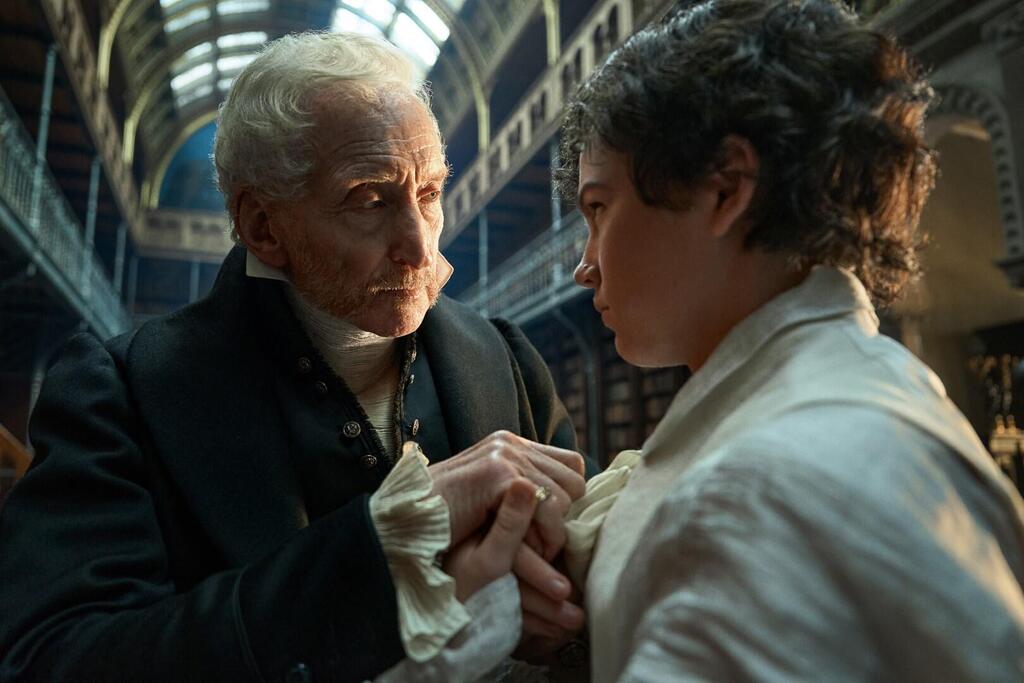
From 'Frankenstein'
(Photo: Courtesy of Lev Cinemas)
Del Toro belongs to an elite cadre of filmmakers whose work echoes their childhood fascination with monsters (such as Tim Burton, Joe Dante and especially Peter Jackson). Traces of Shelley’s Frankenstein appear in del Toro’s earlier films — from Cronos (1992) to Pan’s Labyrinth (2006). It’s no surprise that his Frankenstein adaptation has been a project nearly two decades in the making, or that thematic continuity flows between this film and his earlier works.
In his Oscar‑winning The Shape of Water (2017), Guillermo del Toro explored a romance between a woman and a sensitive amphibious monster — with echoes of the 1954 film Creature from the Black Lagoon. In his new film, he introduces a similar narrative thread: a love connection between a woman and a creature, a substantial departure from Shelley's novel.

From 'Frankenstein'
(Photo: Courtesy of Lev Cinemas)
Given that the Creature is depicted not as a bumbling zombie but as a 6′5″ “Hunk‑stein”, the idea of a romantic link becomes easier to accept. However, critics argue the film doesn’t satisfactorily establish this relationship. Unlike The Shape of Water, there’s insufficient time or narrative build‑up for a believable bond between woman and monster.
Del Toro also folds in themes that were not in Shelley’s novel — such as the moral distortion of science entwined with war profiteering: Elizabeth’s uncle Henrich Harlander (Christoph Waltz) funds Victor’s experiments via weapon sales, and Victor uses bodies of war dead, underscoring the film’s critique of industrialized violence.
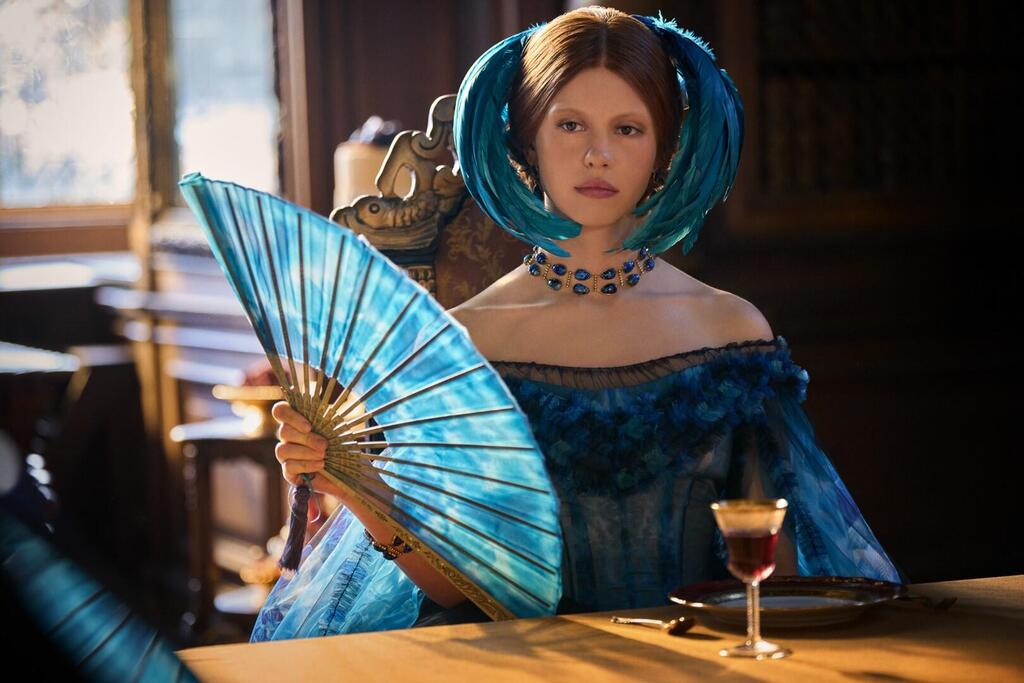
From 'Frankenstein'
(Photo: Courtesy of Lev Cinemas)
The real monstrous figure here becomes Baron Leopold Frankenstein, and the film’s father‑son conflict mirrors Victor’s tortured relation to his creation. And while del Toro’s presentation is visually lavish, the explicit violence — bone‑saws, facial mutilation, CGI gore — is far more brutal than most Frankenstein adaptations.
Frankenstein opens this week in a limited theatrical release before its Netflix premiere in two weeks. Fans of del Toro and Frankenstein lore are advised to experience it theatrically; others will be more than satisfied streaming at home.

First published: 19:30, 10.26.25