


The “culture film of the month” slot is filled by “Colours of Time” (“La venue de l’avenir”), a rather charming film by French director Cédric Klapisch. Its wares are on display from the start: an old house in Normandy for atmosphere, a fashion shoot against the backdrop of Claude Monet’s “Water Lilies” at the Musée de l’Orangerie for a statement and name-dropping of Parisian celebrities from the late 19th century for a dash of ooh la la. Show me one bourgeois viewer who would not purr with pleasure.
That is not necessarily meant as criticism. Cultural cinema, when done well, can offer a certain kind of pleasure: the charming actors, the flattery of the audience and a moment or two that can be unexpected, even genuinely delightful. “Colours of Time” has those.
The film opens as several dozen people gathered in a hall learn that they are descendants of a woman who lived in the second half of the 19th century, Adèle Meunier, of whom they have never heard. Adèle left behind a country house in Normandy, on land where a large entertainment complex is supposed to be built. For that to happen, the heirs must approve the opening of the house, which has been sealed for 80 years, to see what it contains.
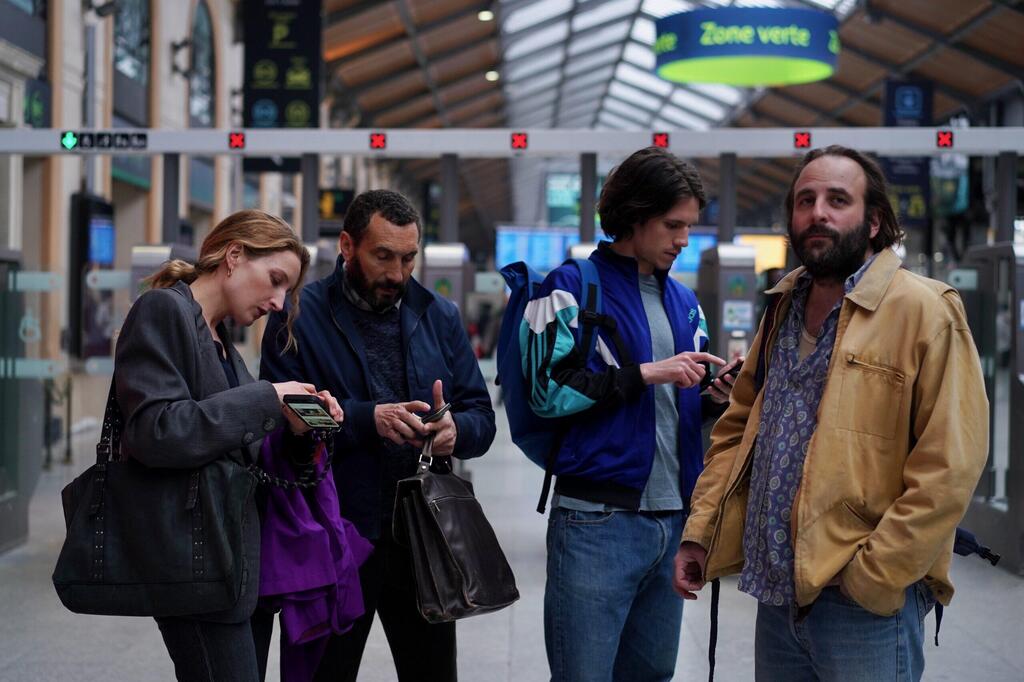
The action committee representing them includes a young fashion photographer who has lived with his grandfather since his parents died in an accident, a beekeeper, a businesswoman and a high school teacher on the verge of retirement. The various objects they find there lead them to insights not only about their genealogy, but also, of course, about what really matters in life.
At the same time, and rather surprisingly, the plot also shifts to the late 19th century and follows Meunier, a poor young woman who comes to Paris to find the mother she never knew. There she meets two young men, one a painter and the other a photographer, allowing the film to include several clichéd observations about the differences between the arts and the nature of representing reality.
This is the period known as the Belle Époque, and Paris is full of artists, some of whom appear in the film: stage actress Sarah Bernhardt, writer Victor Hugo, photographer Félix Nadar and impressionist painter Claude Monet, whose implausible involvement in the story turns out to be rather enjoyable. Together, they give the film the cultural aroma that comes from parading artistic icons across the screen.
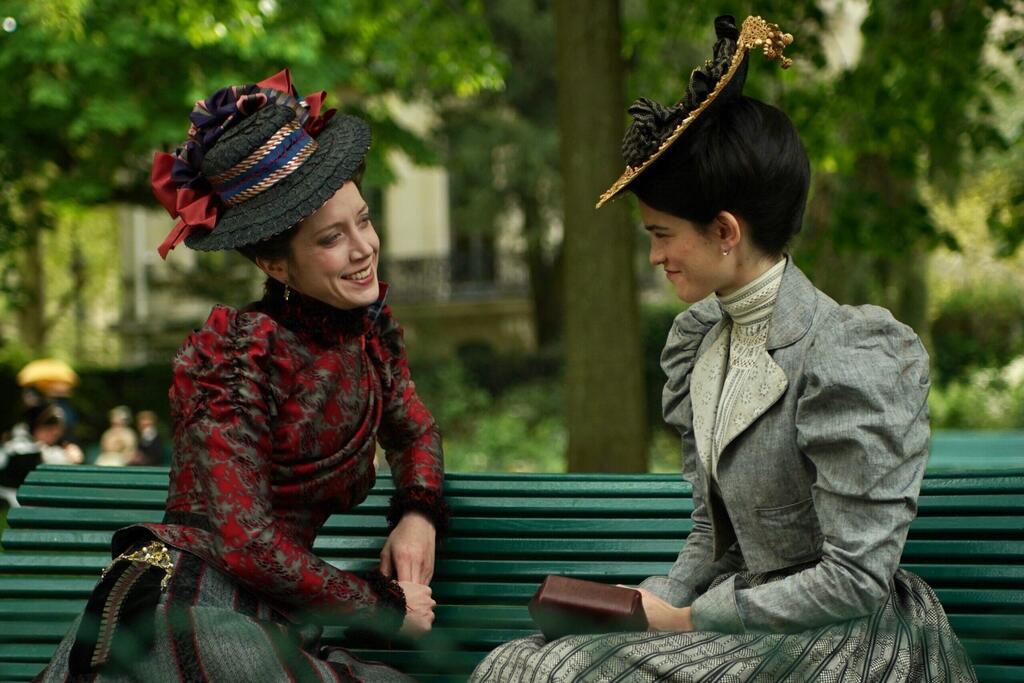
From 'Colours of Time'
(Photo: Courtesy of Lev Cinemas)
The connection between present and past, beyond presenting the female character as a kind of “great mother” whose many descendants fill a hall and an entire world, seeks to say something about family, traditional versus digital art and the ways people living in different eras connect in strange and varied forms.
Klapisch (“Back to Burgundy”) states the obvious and turns the journey into the past into little more than a story of discovering, through photographs and letters, a not especially interesting figure. The transitions between the periods are fairly mechanical, and the human solidarity created through the forced connection between complete strangers who turn out to be distant relatives is little more than a predictable screenwriting device.
The search for Adèle’s life story also becomes an artistic mystery, and its solution is another of those moments that remind us “Colours of Time” is a series of clichés — most of which, incidentally, work — associated with cultural cinema. One such cliché is the young photographer’s grandfather, a character designed to supply life lessons accompanied by affectionate chuckles. In cultural films, there is always such a grandfather, who knows how to say the right thing at the right time.
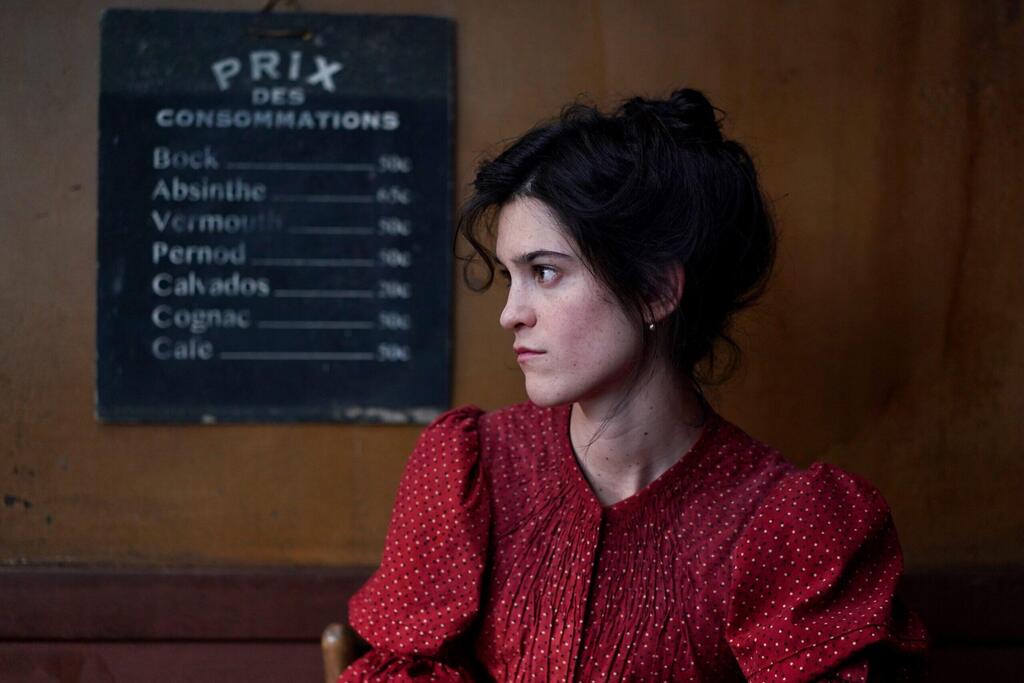
From 'Colours of Time'
(Photo: Courtesy of Lev Cinemas)
Like most of Klapisch’s films, this one also deals with young people — Adèle and her photographer-descendant — each of whom, in their own way, is facing the future. Under other circumstances, the two could have been a couple in a story set either in the past or the present, and the film finds a graceful way to make that clear.
One of the film’s amusing scenes finds the four members of the extended family under a hallucinogenic influence, imagining themselves in one of those turn-of-the-century art salons, where they meet the celebrities of the era. Woody Allen already did this in “Midnight in Paris,” and not with great success, but at least this scene does not overstay its welcome. It also highlights the artistic dilemmas of the young photographer, who gets to encounter a version of himself there. To Klapisch’s credit, most of the time the shifts between periods are not clumsy, even if the result sometimes feels simplistic.
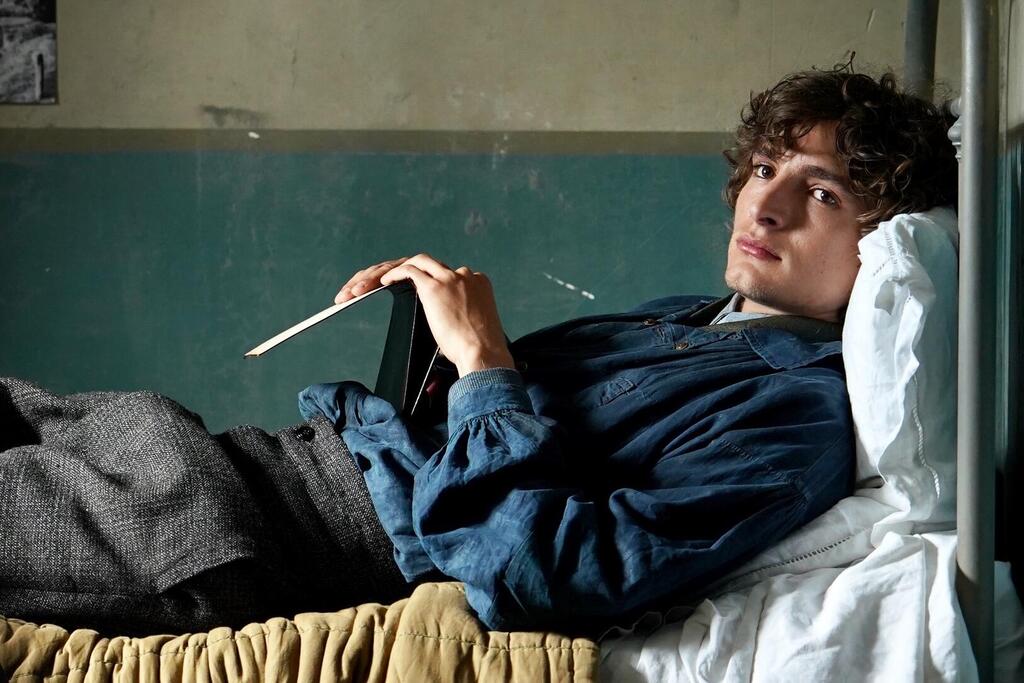
From 'Colours of Time'
(Photo: Courtesy of Lev Cinemas)
Klapisch earned justified acclaim for a trilogy about the self-discovery of a young writer, played by Romain Duris, whose search takes him to different places. The first installment was “L’Auberge Espagnole” in 2002, followed by “Russian Dolls” in 2005 and “Chinese Puzzle” in 2013. That interest in the emotional journeys of young people, which recalls something of François Truffaut’s films, is also present here, through two characters, past and present, each connected in one way or another to the art world.
Like the hero of that earlier trilogy, these two young people are also searching for themselves. But unlike there, following them is no more than charming — there is that word again — at best, while the film itself stretches beyond what it has to offer.