

For more than 40 years, an English-language theater company in the Negev has quietly been doing more than putting on shows. It has been absorbing olim.
The Light Opera Group of the Negev—known as LOGON —brings together new immigrants, veteran olim and Israeli-born performers, all sharing the same stage. Over the years, its cast and crew have included immigrants from the United States, France, Brazil and Argentina, alongside Israelis from Be'er Sheva, Omer and nearby kibbutzim and communities along the Gaza border region. That mix has taken on added weight since October 7.
Gallery
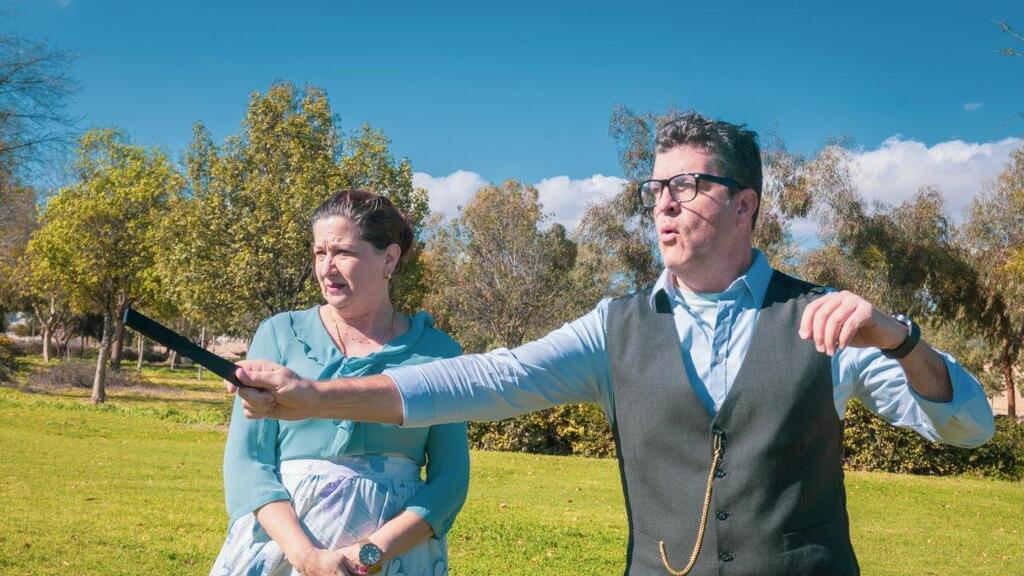
From the Light Opera Group of the Negev's 'The Pajama Game'
(Photo: Shahar Bracha (used with permission))
One of the company’s members, Louis Har, performed with the group before he was taken hostage into Gaza and later rescued. Despite the upheaval that followed the attack—when some members were displaced and others unable to rehearse—the company went ahead with its 2024 production. The season was delayed by three months, but the curtain rose. Har attended the premiere.
Now, as LOGON prepares its 2026 production, another personal story underscores the role the theater plays beyond the footlights.

From 'The Pajama Game'
(Photo: Shahar Bracha (used with permission))
Tiffany Schatz, the company’s newest immigrant, recently arrived from Philadelphia. A breast and thoracic surgeon specializing in robotic lung cancer procedures, Schatz is not new to Israel—or to the stage. She studied medicine at Soroka Medical Center from 2005 to 2010 and, during those years, appeared in LOGON productions of "Guys and Dolls" and "Anything Goes."
After returning to the United States, building a family and completing her medical specialization, Schatz felt compelled to come back following the events of Oct. 7, initially hoping to volunteer at Soroka Medical Center. Hospital officials told her they needed full-time physicians, not short-term volunteers. Schatz and her husband made a different decision: they brought their entire family and made aliyah.
Her husband, a high-tech professional, left behind colleagues and a job. Schatz says the existence of a ready-made community—especially the theater—played a decisive role. She is now cast as Mabel in LOGON’s upcoming production of "The Pajama Game."
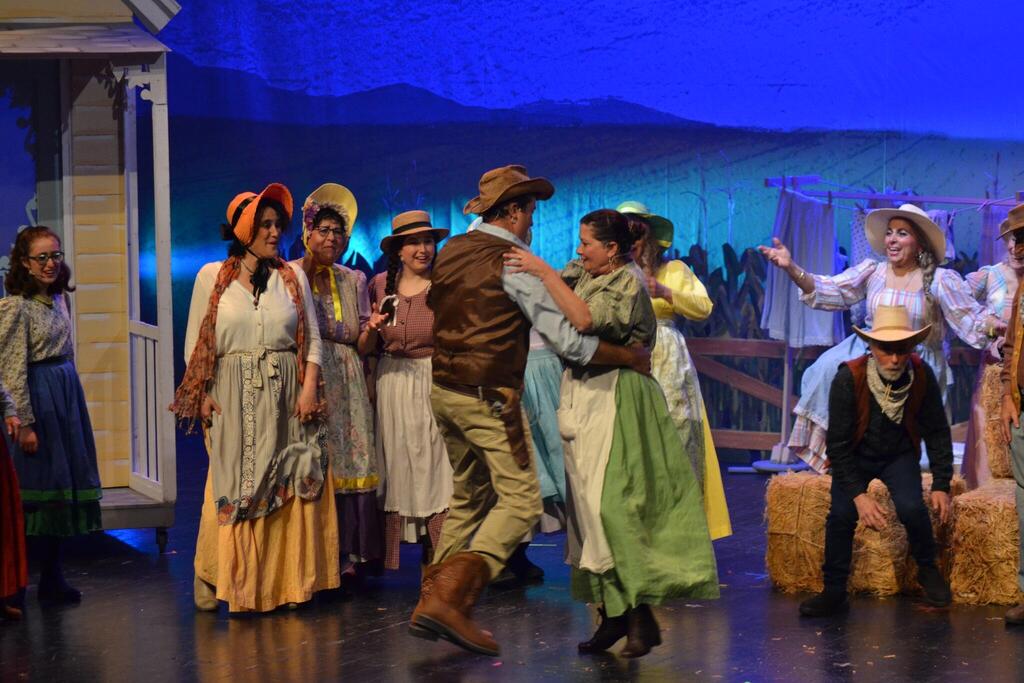
The Light Opera Group of the Negev previously staged a performance of 'Oklahoma'
(Photo: Avital Cohen (used with permission))
Other members reflect similar journeys. Noah Herman, who immigrated from the United States, appears alongside his father, Michael Herman, a veteran oleh who never fully mastered Hebrew but found his place on the English-speaking stage.
Lexi Leitner came to Israel eight years ago on a Birthright trip with her university, Ithaca College - a visit that changed her life. She met Tzvi Bar, her now fiancé, during that trip. During the COVID-19 pandemic, Leitner completed much of her university coursework online while physically based in Israel, including dance and theater classes. She later returned to the United States to finish her dual degree in Theater Arts and Television-Radio, while simultaneously applying to make aliyah.
Eight months later, she officially immigrated to Israel. Today, she has been performing with LOGON for four years, even as her fiancé studies medicine in Poland. The couple maintain a long-distance relationship while she continues to build her life in Israel as an actress and dance teacher.
Another cast member, Tamar Naggan, represents the second generation: the daughter of the late Prof. Lechaim Naggan, a prominent Be'er Sheva physician and public figure.
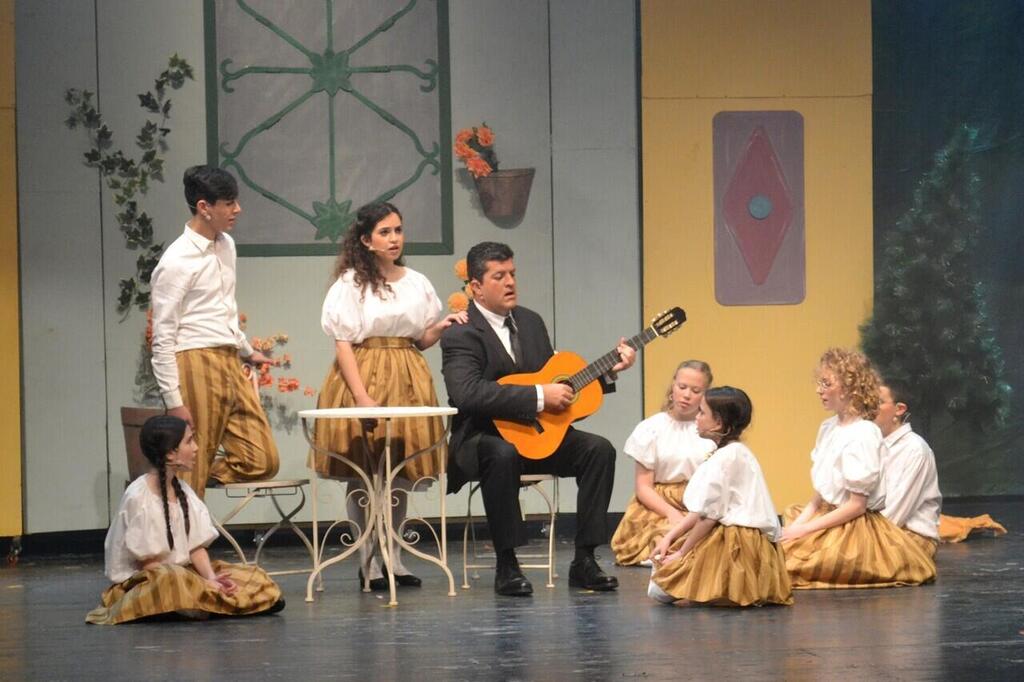
LOGON presented a performance of 'The Sound of Music'
(Photo: Avital Cohen)
The company’s new production, "The Pajama Game," will tour venues across Israel beginning February 17. The musical will be performed in English with Hebrew subtitles.
First staged on Broadway in 1954, "The Pajama Game" ran for more than 1,000 performances and won the Tony Award for Best Musical in 1955. A 2006 revival earned the same honor. Based on Richard Bissell’s novel "7½ Cents," the story is set in a Midwestern pajama factory in the 1950s, against the backdrop of a labor dispute and a budding romance between a factory inspector and the head of the workers’ grievance committee. Its choreography marked the first major Broadway work by Bob Fosse, with “Steam Heat” becoming one of his signature pieces.
LOGON has never missed a season since its founding in 1981 by Dr. Ed Spitz, an allergist who immigrated from the United States and settled in the Negev. Even during the pandemic and amid war, the group has adhered to its unofficial motto: the show must go on.
Members range in age from 15 to 75 and include physicians, scientists, teachers and high-tech professionals. The company trains its performers in acting, singing, dance and diction, and over the years has served as a cultural anchor for many immigrants navigating life in a new country.
In difficult times, the group says, unity is its strength. Through humor, music and shared effort, LOGON aims to offer audiences something increasingly scarce: laughter, joy and a measure of optimism.
First published: 11:07, 02.05.26