

The third attempt to bring the Street Fighter video game franchise to the big screen fails because it cannot decide what kind of movie it wants to be.
Director Kitao Sakurai tries to combine a deliberately trashy live-action comedy aimed at audiences who grew up playing arcade games in the 1990s with an anime-style drama about estranged brothers, grief and the temptation of dark powers. Rather than complementing each other, these two approaches undermine one another. The result is a comedy that is rarely funny, a drama that borders on ridiculous and artificial-looking action that hardly justifies the film's nearly two-hour running time.
Capcom launched the Street Fighter franchise in 1987, but its historic breakthrough came with Street Fighter II in 1991. Widely regarded as one of the most influential and commercially successful fighting games ever made, with estimated revenues of $10 billion, it rewarded players for precise timing, recognizing opponents' patterns and executing devastating combinations. Six main installments and countless updates, spin-offs and adaptations followed, along with animated films, manga, comics and even card games. The characters became so recognizable that they appeared in films such as Wreck-It Ralph and Ready Player One. The franchise endured because its creators understood the appeal of its simplicity: personalities revealed through movement, with combat serving as the primary language.
Hollywood, however, has struggled to translate that formula. The 1994 Street Fighter, starring Jean-Claude Van Damme as Guile and Raul Julia as the villain M. Bison, was savaged by critics before eventually developing a cult following among fans of gloriously bad cinema. The 2009 sequel in spirit, Street Fighter: The Legend of Chun-Li, attempted to give the franchise's most prominent female character an origin story. By replacing the colorful absurdity of the games with a lifeless revenge thriller, it managed to bore even viewers who had found something entertaining in the earlier film.
The 2026 Street Fighter, made for a reported $82 million, attempts to combine the approaches of both predecessors. Its live-action sequences embrace exaggerated costumes, cartoonish casting and broad comedy, while animated passages attempt to give the characters emotional depth and dramatic motivations. The opening takes place in 1987, the year the original game was released, with a four-minute anime-style flashback. Ryu (Andrew Koji) and Ken Masters (Noah Centineo), two adoptive brothers trained by martial arts master Gouken (Don Lee), are struggling with the loss of their mentor and the aftermath of a destructive confrontation involving the demonic Akuma (Joe Anoa'i, better known to wrestling fans as Roman Reigns).
Ryu possesses the Hadouken, one of the franchise's signature energy attacks, but his power threatens to transform him into Dark Ryu. The familiar conflict between self-control and surrendering to an overwhelming inner darkness recalls countless popular fantasy narratives, particularly the mythology of Star Wars. Unfortunately, anyone expecting a meaningful exploration of that struggle will be disappointed. Ryu is supposed to be a tormented warrior resisting his darker nature, but the conflict amounts to little more than an empty narrative device.
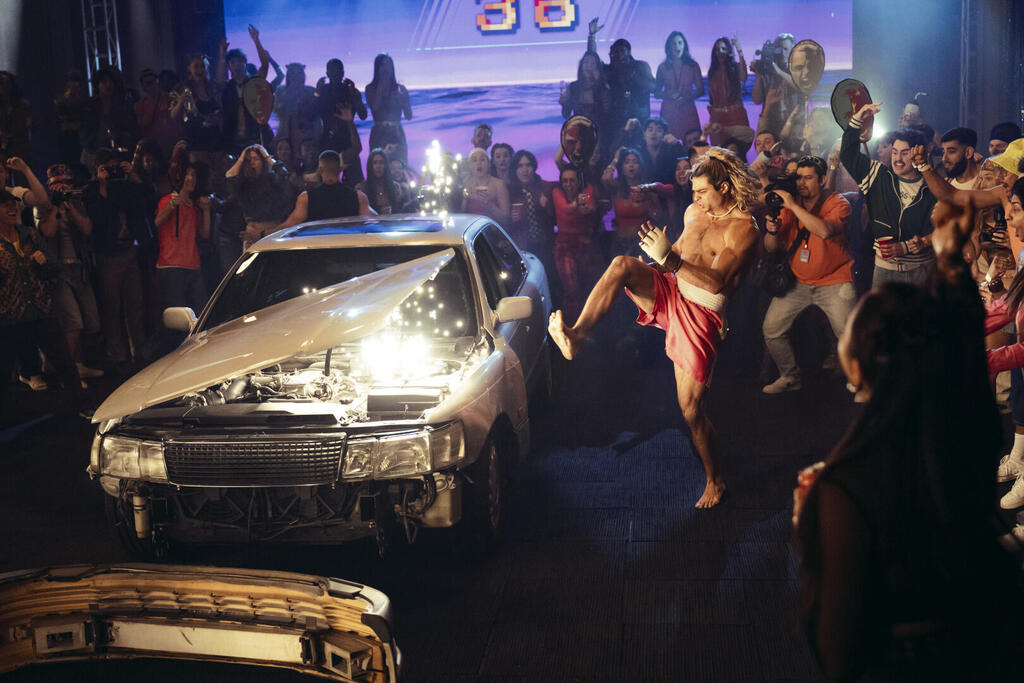
Ken, meanwhile, is the opposite of the perpetually serious Ryu. Once a formidable martial artist, he has become something resembling a brainless, muscle-bound celebrity, reduced to exhibition appearances and lucrative advertising deals. There is genuine comic potential in the story of a champion who has turned himself into a commercial product, perhaps even a variation on the treatment of Ken in Barbie. But Sakurai never decides whether the character is supposed to be mocked, pitied or restored to heroic status.
The relationship between Ken and Ryu contains the remnants of shared trauma, a broken friendship and mutual feelings of abandonment. At times, their interactions resemble those of men who cannot communicate their emotions and therefore resort to punching one another until reconciliation becomes unavoidable. There is also a homoerotic undertone, although the film channels it into crude jokes and childish insinuations about masculinity and sexuality. With characters this thinly developed, any attempt to take their emotional suffering seriously becomes almost impossible.
(Photo: courtesy of Tulip Entertainment)
Chun-Li (Callina Liang), who should complete the central dramatic triangle, fares little better. An Interpol agent secretly seeking revenge against M. Bison (David Dastmalchian), the dictator responsible for murdering her father, she repeatedly finds herself pushed into the role of third wheel. The two male protagonists remain so preoccupied with their complicated relationship that neither seems particularly interested in her.
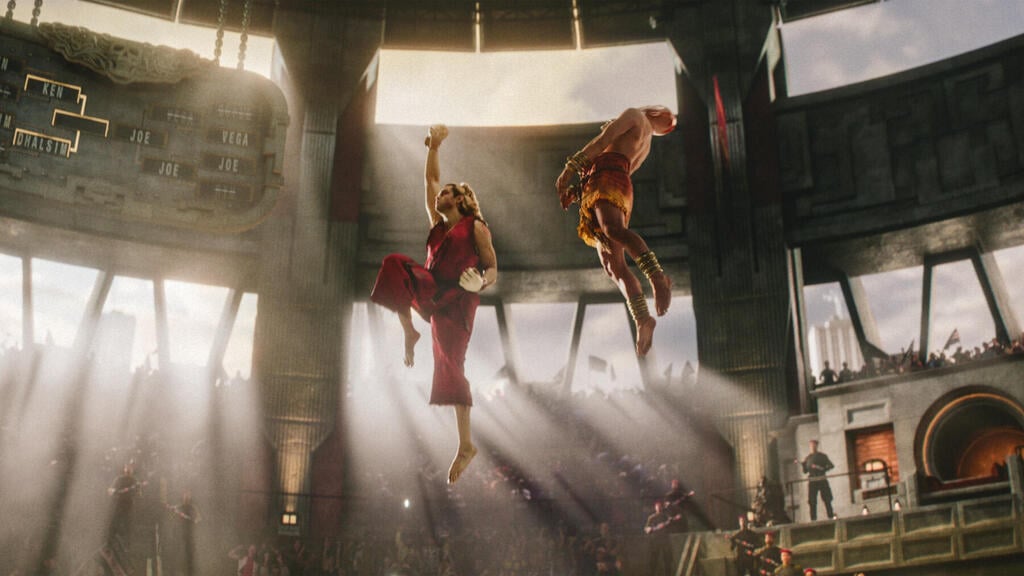
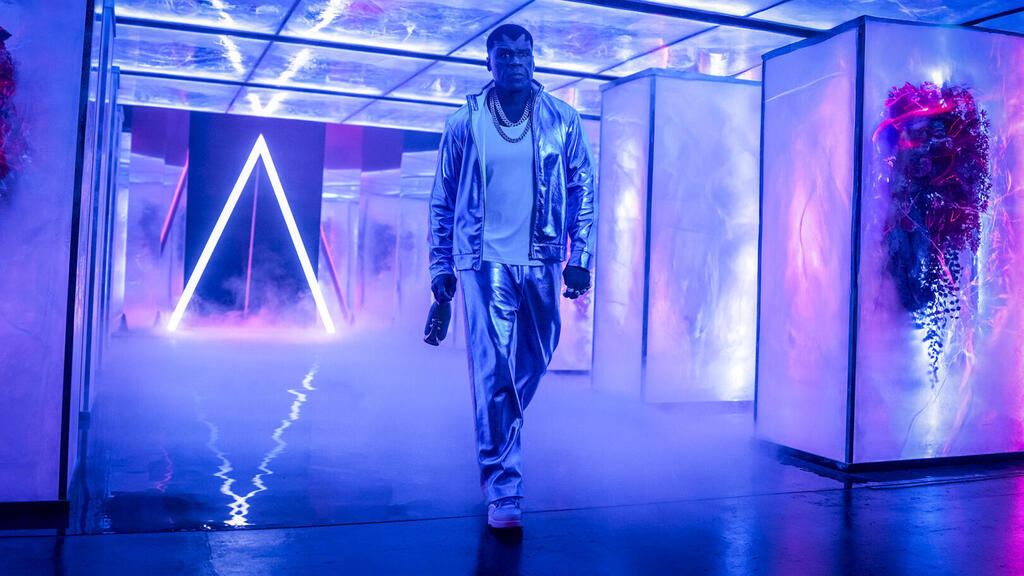
Most of the live-action story revolves around the World Warrior Tournament, organized by M. Bison as part of his scheme to seize Ryu's powers. Chun-Li wants revenge, while Akuma looms as a threat to whoever emerges victorious. Surrounding them is a procession of familiar game characters dressed in costumes that make them look like caricatures: the Russian wrestler Zangief (Olivier Richters), sumo fighter E. Honda (Hirooki Goto), Guile (Cody Rhodes), Blanka (Jason Momoa), Balrog (rapper 50 Cent) and Vega (Orville Peck). Even when the casting provokes a smile, these figures rarely become anything more than accessories in an elaborate costume parade. The film introduces them, checks them off its fan-service list and moves on, without turning their encounters into the cinematic attractions that longtime fans might reasonably expect.
Sakurai clearly wants to recreate the spirit of low-budget action movies that filled video store shelves during the 1990s. The soundtrack features recognizable songs from the decade, including 4 Non Blondes' "What's Up?", while supporting appearances by comedian Eric André and stand-up comedian and podcaster Andrew Schulz are designed to amuse the target audience. Familiar characters, exaggerated hairstyles and references to the arcade era are scattered throughout, all calculated to appeal to millennials now in their 30s and 40s. It is an invitation to retreat into a childhood when a ridiculous wig and a digital explosion were often enough to generate excitement.
(Photo: courtesy of Tulip Entertainment)
But the problem with revisiting childhood trash cinema as an adult is discovering that much of its supposed charm was simply poor filmmaking. The frantic editing prevents jokes from landing, while the dramatic scenes are too shallow to carry any emotional weight. Most damaging of all are the fight sequences, which should be the film's main attraction. Instead, they combine generic punches and kicks, computer-generated effects and movements mechanically imitating the video game. The spectacle feels synthetic rather than exhilarating, and the action rarely captures the precision, energy or excitement that made Street Fighter such a phenomenon in the first place.
For a franchise built entirely around the thrill of combat, that is a fundamental failure. Sakurai's film has recognizable characters, expensive visual effects and enough 1990s references to fill an arcade, but almost none of the excitement that made the original games memorable. When most of the fighting in a movie called Street Fighter is boring, the movie has lost the one battle it absolutely needed to win.