


“My father did beautiful things, and he did awful things,” says Neshama Carlebach, the eldest daughter of Rabbi Shlomo Carlebach, in the documentary “The Darkest Light” – capturing in one sentence a complexity that society struggles to accept.
It is evident that the beloved rabbi possessed gentleness, wisdom and generosity, which were expressed in many situations and contexts. That does not contradict the testimonies of women who say he betrayed their trust and exploited them when they were young.
From The Darkest Light
(Video: Courtesy of the San Francisco Jewish Film Festival)


When allegations of sexual misconduct against Rabbi Carlebach were first published in Lilith magazine in 1998, about four years after his death, his eldest daughter did not believe them. Director Simon Mendes’ powerful documentary, which premiered at the San Francisco Jewish Film Festival, among other things, portrays her painful process of coming to terms with the accusations.
It is tempting to debate whether people should stop singing Carlebach’s many melodies, which are familiar and widespread in Jewish communities around the world, but that is not necessarily the most important question.
From a material perspective, Carlebach did not earn money from his melodies being sung during prayers in synagogues, and he certainly does not benefit from them after his death. Can music be “impure”? That is an abstract question with no clear answer, and I tend to believe it cannot.
Either way, it is clear that a boycott of Carlebach’s songs is a decree the public cannot uphold. These are melodies known in every religious home, a soundtrack that has accompanied Jews in Israel and the Diaspora through countless moments in life.
The more important question, in my view, concerns Carlebach’s image – Carlebach the man, not his work.
Above all, it is time to stop treating Carlebach as a holy man or an angel in human form – a perception that still exists among large parts of the religious community. It is unacceptable to look away and ignore the allegations raised against him.
The testimonies against Carlebach
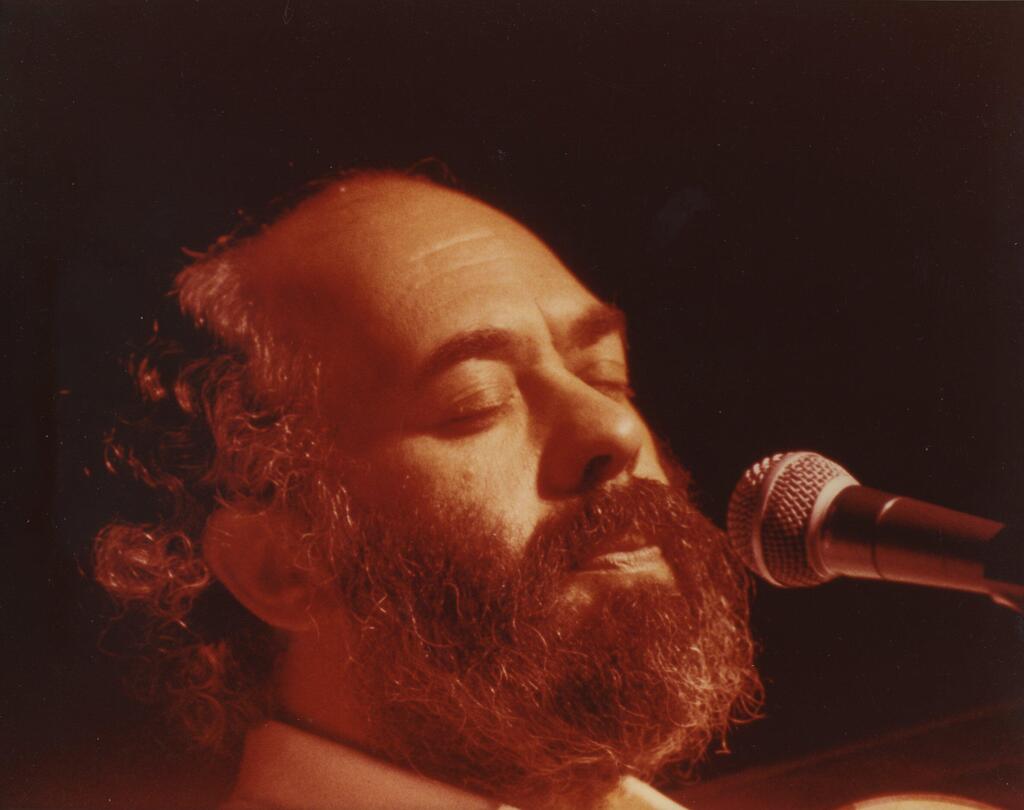
The documentary “The Darkest Light” features, among others, testimonies from three women who describe, with their faces revealed, how they were allegedly victims of sexual abuse by Carlebach. The following paragraphs include difficult-to-read accounts.
Sheva Kuvet Hart said:
“He grabbed my thigh with a grip that I cannot describe... I got up, but he pushed me, and he pressed himself into me like I could not leave, and he was saying, ‘holy sister Sheva, please, please, just please.’ He was almost whispering it. His kids were sleeping in the next room. He unzipped his pants, that is when I shoved him, and I ran out of there.”
Another woman, Donna Zerner, said:
“He told me I was beautiful, and he reached out to hug me, and the next thing I knew, his tongue was down my throat, deep, groping. It was really intense. I couldn’t breathe. It was disgusting, and I didn’t know what to do because this was The Shlomo Carlebach. he was a legend. What am I supposed to do? I froze. It went on for a while, and then finally he stopped, and I didn’t say anything, I just acted as if nothing had happened.”
She added that in the days that followed, he repeatedly called her late at night in what she described as disturbing conversations until she disconnected her home phone line.
Another woman, S.J. Schwaidelson, described a serious incident that she said took place when she was only 14 years old:
“He came up behind me, and he hugged me, and then his hands moved, and his hands groped my breasts. As he's clutching me, he was also grinding into my butt. He held me very tightly and he said to me: ‘Ooh, such a sheyne meydl’ (‘beautiful girl’ or ‘beautiful young woman’ in Yiddish).”
These are only a few examples among dozens of women who have described inappropriate behavior by Carlebach. A number of women who did not know one another came forward and testified about his actions.
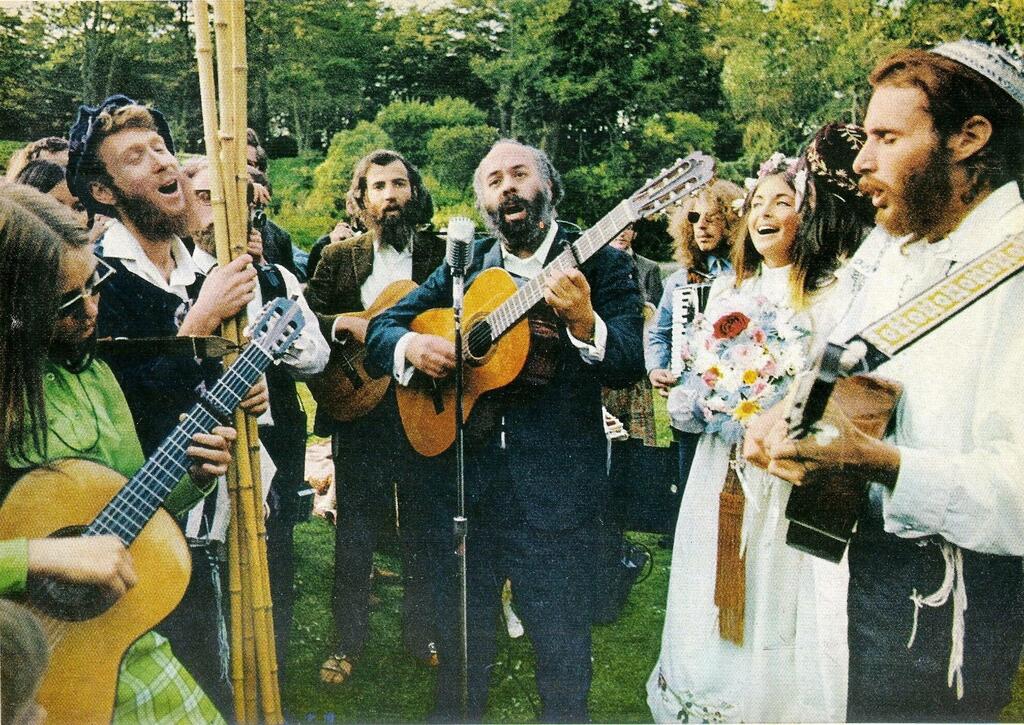
Carlebach (in the center). The accusations should not be ignored
(Photo: Moshe Yitzchak Kussoy)
Carlebach’s story is another test, among many, of society’s ability to accept complexity.
During his lifetime, Carlebach was known as someone who worked to advance women’s status in the religious world. He encouraged his daughter to sing, even when he paid a price for it, and played a major role in Neshama becoming a singer. He also believed women should be ordained as rabbis.
Is it possible that at the same time he harmed women in private? Yes. Human beings are complex, and sometimes there is a gap between what is visible publicly and what takes place behind closed doors.
Over the years, Carlebach faced criticism from within the conservative religious community for hugging and kissing women warmly and affectionately, in contrast to the halachic prohibition on physical contact between men and women.
That criticism came from a religious legal perspective, even before the allegations of sexual abuse were made public. In retrospect, one could argue that Carlebach’s behavior also reinforced the view that any friendly physical contact between men and women could easily lead to more serious violations and that separation between the sexes should therefore be maintained as much as possible.
Nearly a decade ago, following the #MeToo movement, the allegations against Carlebach returned to public awareness and debate. His daughter Neshama Carlebach said she believed the women who testified that her father had harmed them.
The new documentary provides another opportunity to discuss Carlebach’s place in the public sphere. For decades, these women faced silence and disbelief. The least that can be done for them is to think twice before portraying Carlebach as a flawless, righteous figure.