

Every time a celebrated musician becomes engulfed in scandal, the same question returns: Can the art be separated from the artist, and can audiences continue to embrace work created by someone accused of causing profound harm?
The debate has long surrounded German composer Richard Wagner, a revolutionary figure in classical music who also published antisemitic writings and whose work was later embraced by the Nazi regime. More recently, listeners have confronted similar questions involving pop stars including Michael Jackson, R. Kelly and Sean “Diddy” Combs.
The Darkest Light
(Video: Courtesy of the San Francisco Jewish Film Festival)


Few might have expected the same dilemma to arise around Rabbi Shlomo Carlebach, the enormously influential Jewish composer and spiritual leader known as the “Singing Rabbi.”
A new documentary, The Darkest Light, revisits Carlebach’s legacy through allegations that he sexually abused and harassed women and girls. The film had its world premiere in July at the San Francisco Jewish Film Festival, where it won the festival’s inaugural Best First Feature Award.
Directed by Simon Mendes, the 77-minute documentary examines the enormous gap between Carlebach’s public image as a source of spiritual inspiration and the testimonies of women who say he exploited the reverence, vulnerability and trust surrounding him.
At the center of the film is Carlebach’s eldest daughter, singer Neshama Carlebach. She initially struggled to accept allegations that emerged after her father’s death, but eventually began a painful reassessment of the larger-than-life figure she had loved, admired and accompanied onstage.
The documentary presents her attempt to reconcile two seemingly irreconcilable truths: Her father’s music brought spiritual meaning to millions and reshaped Jewish worship across denominations, while women have accused him of abusing the trust his religious authority created.
Allegations that failed to silence the music
The allegations became widely known in 1998, four years after Carlebach’s death, when the American Jewish feminist magazine Lilith published an investigation containing accounts from women who said he had sexually harassed or abused them.
The testimonies were disturbing, but did not significantly dislodge Carlebach from his place in Jewish cultural life.
His melodies continued to be sung in synagogues and communities across Israel and the United States, from New York, where his family settled after fleeing Germany before World War II, to Moshav Mevo Modi’im, the Israeli community closely identified with him and his followers.
For many devotees, Carlebach remained a holy figure whose music transcended denominational boundaries.
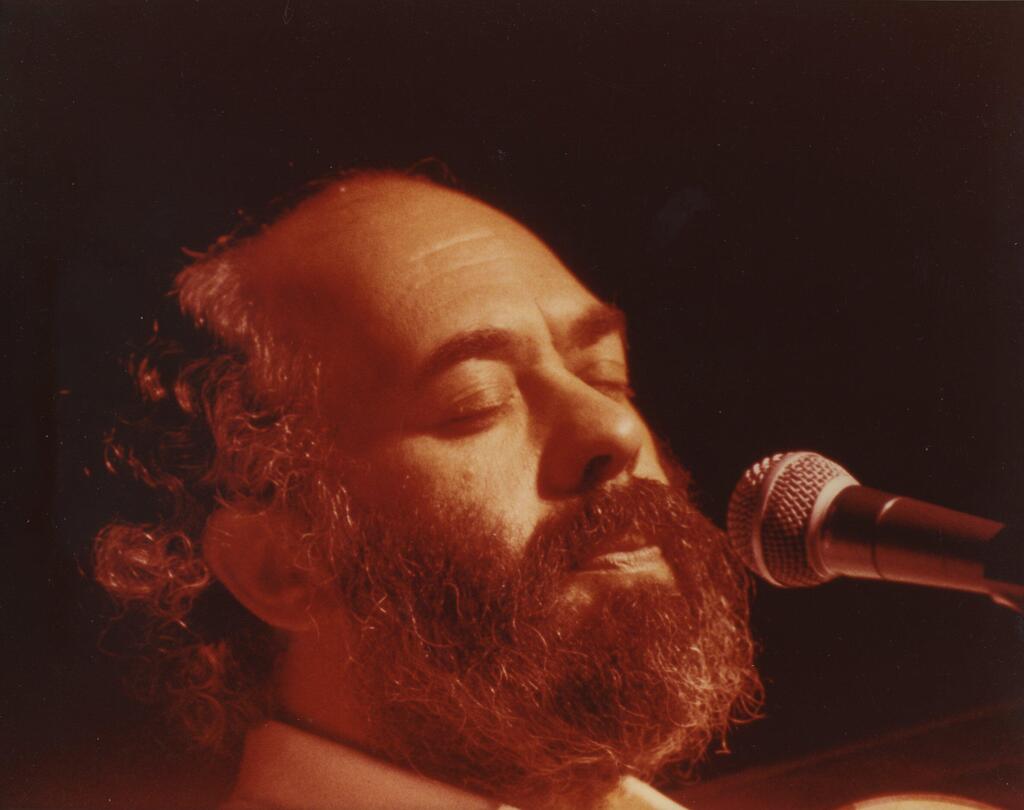
The spread of social media, however, allowed additional women to share accounts of alleged misconduct, including claims involving girls who were minors at the time. The accumulation of testimony, particularly during the #MeToo era, ultimately led Neshama to distance herself publicly from parts of her father’s legacy.
The Darkest Light places several of those women before the camera, allowing them to describe how encounters that began with spiritual admiration and emotional intimacy allegedly crossed into sexual exploitation.
Their accounts challenge the image of a warm and gentle religious teacher whose affectionate embraces were regarded by followers as expressions of unconditional Jewish love.
The film asks what happens when precisely those qualities, intimacy, charisma and emotional openness, also create opportunities for misconduct.
From Chabad emissary to global spiritual icon
The documentary traces Carlebach’s transformation from a young Orthodox rabbi associated with the Lubavitcher Rebbe to an independent spiritual figure with a mission of reaching Jews alienated from traditional religious life.
His rejection of strict separation between men and women at performances placed him at odds with Chabad and parts of the Orthodox establishment.
Some religious leaders viewed his community as unconventional and cult-like. Yet his music and teachings crossed denominations, nationalities and levels of observance, drawing Jews who often felt unwelcome within formal religious institutions.
Neshama recalls that when her father invited her to sing with him onstage, he faced threats that his rabbinic title would be revoked because the performance violated the Orthodox prohibition against men hearing a woman sing.

Simon Mendes
By then, however, Carlebach’s position in Jewish life was strong enough for him to challenge the rabbinical establishment.
The film argues that the same exceptional status that allowed him to defy restrictive conventions may also have insulated him from accountability when women accused him of crossing intimate boundaries.
When Lilith published its investigation, critics accused its journalists of defaming a holy man. Unlike disgraced Hollywood producer Harvey Weinstein, whose aggressive pursuit of power was consistent with his public reputation, Carlebach was widely remembered as sensitive, loving and almost angelic.
That contrast made the allegations harder for many followers to accept.
‘It was Shlomo Carlebach. He was a legend’
Mendes gives the women who accused Carlebach the space to describe their experiences in detail.
Now older, they recall the moments when a revered rabbi who had inspired them spiritually allegedly touched, kissed or propositioned them without their consent.
They describe not only the encounters themselves but the confusion that followed: How could a man whose melodies gave religious meaning to their lives betray the values he appeared to represent?
Donna Zerner says she met Carlebach at a spiritual festival in Los Angeles and was impressed by what she perceived as his respect for women.
What she expected to be an innocent embrace, she says, became sexual assault.
“He shoved his tongue deep down my throat,” she recalls in the film. “It was intense. I couldn’t breathe. It was disgusting. I didn’t know what to do. It was Shlomo Carlebach. He was a legend. I froze, and at some point he stopped, and I ignored it.”
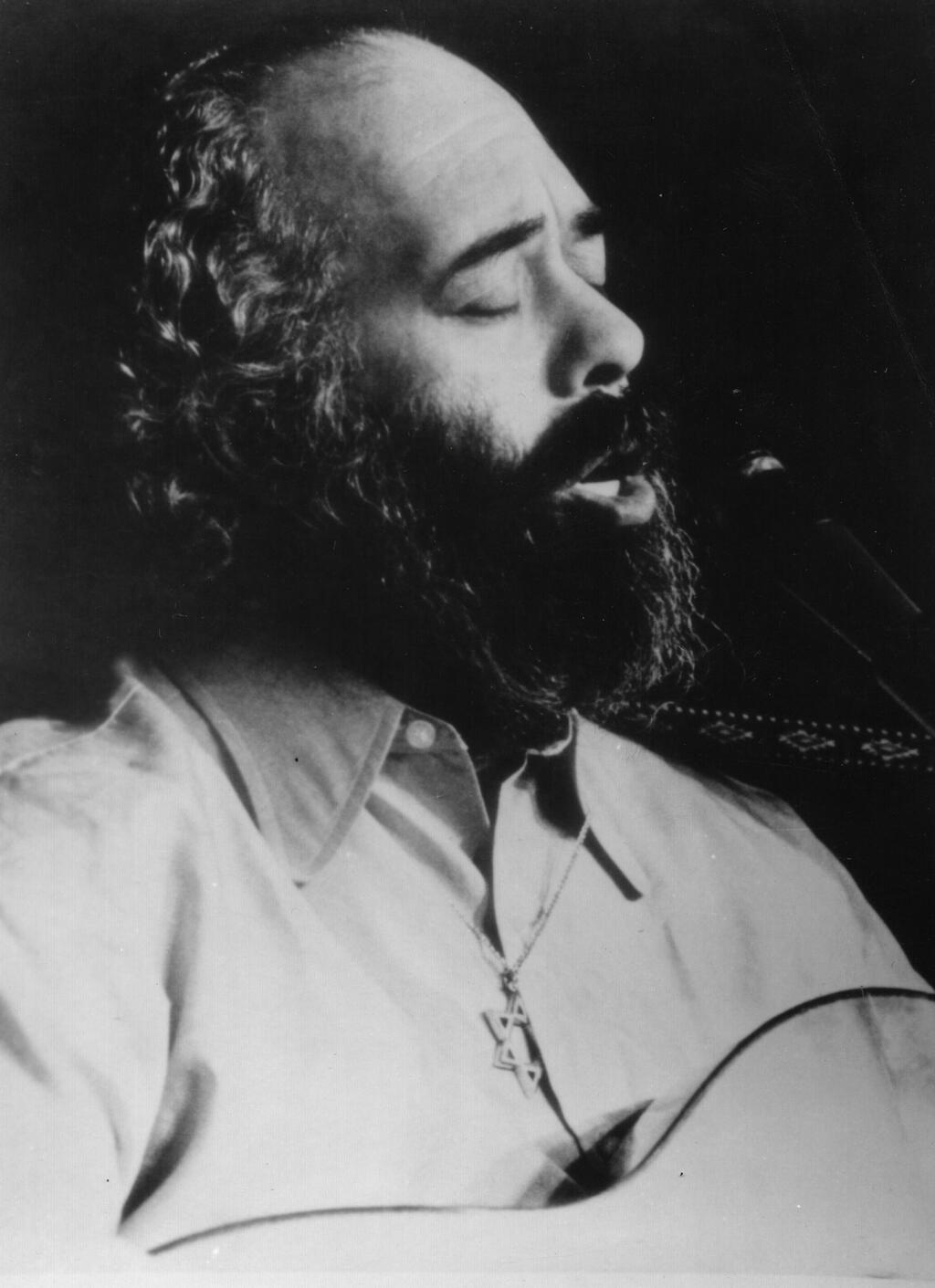
He used to call the woman at night and ask her sexual questions. She eventually had to disconnect her phone line.
According to Zerner, Carlebach later began telephoning her at night and asking sexual questions. She eventually disconnected her telephone line.
Sheva Kuvet Hart describes growing up as a secular Jew in California and becoming captivated by Carlebach’s humane interpretation of the Torah.
At his invitation, she traveled to Israel and joined his community in Mevo Modi’im, intending to study Talmud, observe Shabbat and deepen her connection to Judaism.
She describes it as a life-changing experience until one Friday night, when she was invited to what she believed would be a Torah lesson.
According to her testimony, the private lesson included reading from a sacred text before Carlebach attempted sexual contact. She says that after he unzipped his pants, she pushed him away and fled.
“I was flooded with grief,” she says. “The blatant violation of trust.”
Hart, who lost both parents at a young age, says Carlebach knew she was searching for family and belonging.
“He knew that all I was looking for was family, to belong, to be part of a community,” she says. “Not to feel alone in the world.”
A daughter loses her father twice
For Neshama, confronting the allegations meant reassessing not only a public icon but the father she loved and the mentor who helped establish her as a singer.
She leads the film’s journey of disillusionment, with Mendes documenting her struggle to understand how the man who encouraged her musical career could also have caused women profound harm.
She says that after her father’s death, she discovered that he had left her without financial security or control over the music they had performed together. Rights to his extensive catalog had not been preserved for her, nor had the proceeds of their close creative partnership.
The allegations also prompted Neshama to revisit concealed memories from her own childhood.
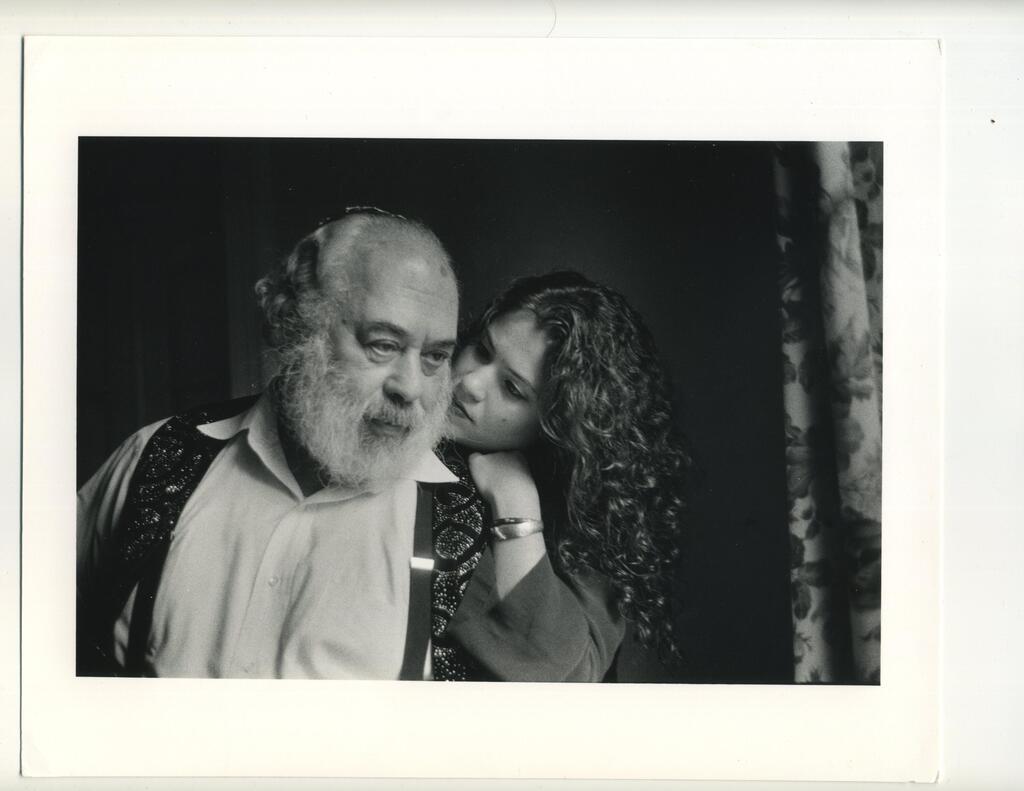
Carlebach and his daughter Neshama
(Photo: Joan Roth)
She does not say her father sexually abused her. She does, however, recall an incident in which one of his friends entered her bed during the night. What appears to trouble her most is her father’s response: He dismissed her account and told her she had imagined it.
The film also presents a division within the Carlebach family.
Neshama’s younger sister, Dari, remains loyal to their father and his legacy and says she does not believe the accusations against him.
That disagreement reflects the broader conflict still unfolding within the communities shaped by Carlebach’s music: Some see acknowledging the allegations as a moral necessity, while others regard the claims as an assault on a dead man unable to defend himself.
Music woven into Jewish life
The difficult question is not limited to Carlebach’s personality or family. His melodies have become so deeply embedded in Jewish prayer that many worshippers sing them without necessarily knowing who composed them.
“There is nowhere in the Jewish world where you don’t hear Rabbi Carlebach’s music, and it crosses denominations,” says Rabbi Angela Buchdahl of Central Synagogue in New York.
“Every Reform synagogue, and equally Orthodox synagogues. This is the music of our people. It also crosses generations, which is very rare for a composer in our time.”
Buchdahl stopped using Carlebach’s music for a year following renewed discussion of the allegations, but later returned to it.
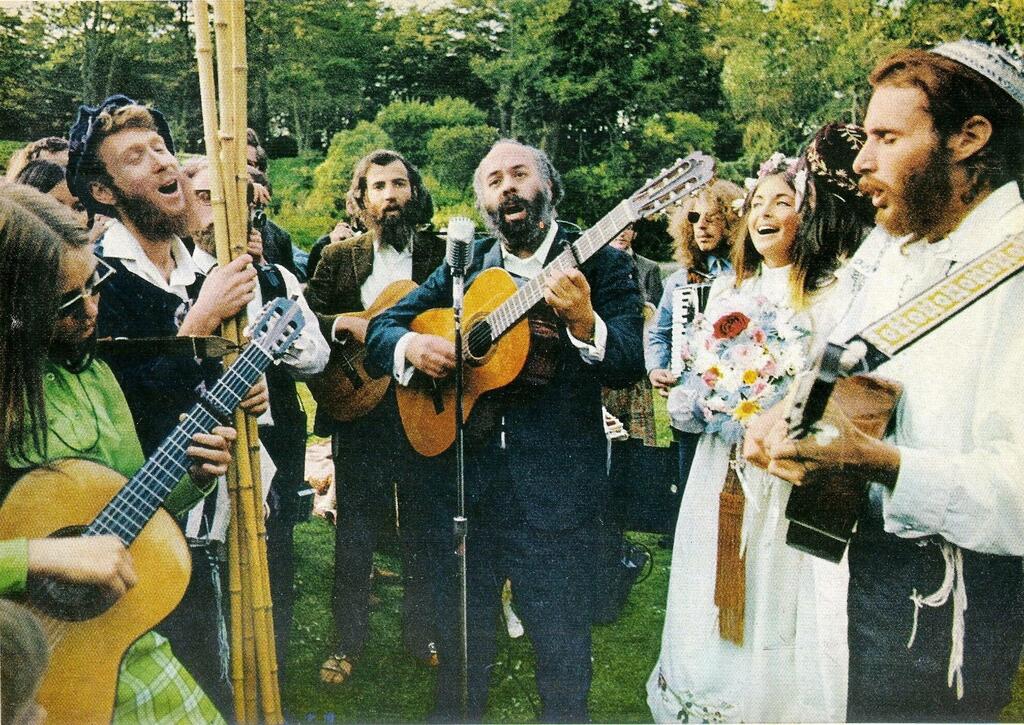
(Photo: Moshe Yitzchak Kussoy)
Unlike the work of entertainers whose recordings can more easily be removed from playlists, Carlebach’s compositions have become part of global Jewish religious experience. They function not merely as popular songs but as prayer, communal memory and modern folklore.
That ubiquity makes a clean cultural boycott far more complicated.
The documentary suggests that Carlebach’s admirers remain deeply attached to his work. Even some women who describe themselves as having been harmed by him continue to draw inspiration from his melodies, distinguishing between the man accused of violating their trust and the music that still carries spiritual meaning for them.
The Darkest Light does not offer a simple ruling on whether those songs should continue to be sung.
Instead, it asks Jewish communities to acknowledge the women who spoke, confront the structures that protected a revered leader and consider whether enjoying his music requires silence about the harm attributed to him.
The result is a dilemma that returns every time a Carlebach melody fills a synagogue: Can a community preserve the light it found in the music without looking away from the darkness surrounding the man who created it?