

In recent years, South Korea, and especially its capital Seoul, has become a sought-after destination for many women. They pack a suitcase and take at least two flights to undergo as many beauty and aesthetic treatments as possible during one focused visit. Unlike many trends that reach us late, this time it seems we are largely in sync with the rest of the world.
"Women come here from all over the world, not only Israel", says Dorin Miya Ginzburg, 31, who has lived in Seoul for the past decade and works in social media. "The large clinics are mainly located in Seoul, but many big chains have opened branches in other major cities such as Busan and Jeju. There are also branches in cities within the Seoul metropolitan area, but they are less accessible for tourists."
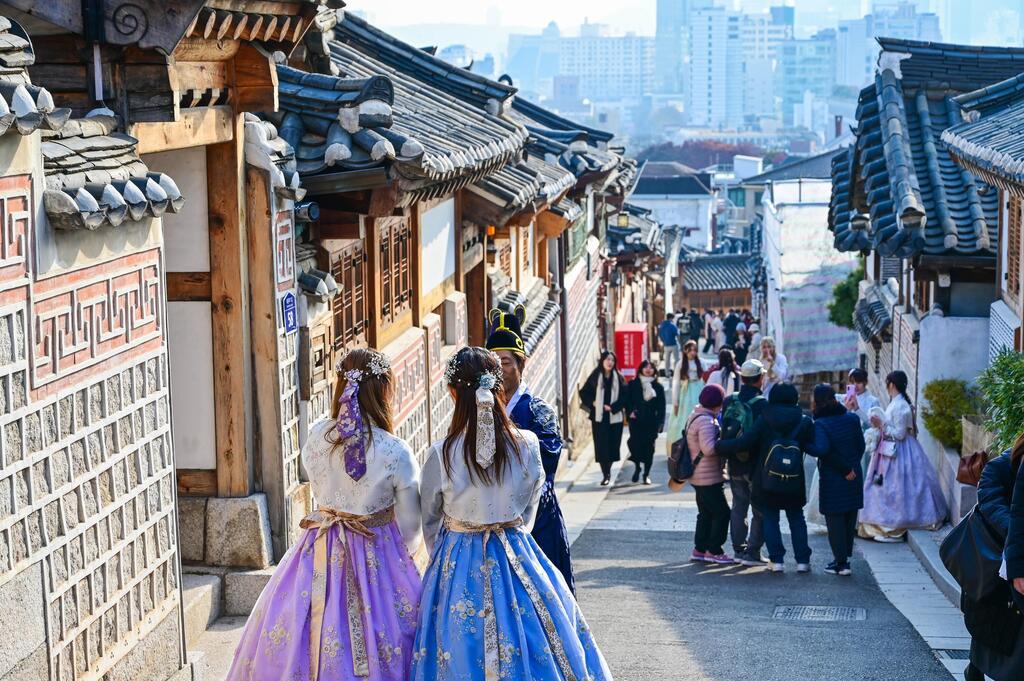
Who are the women traveling all the way to Seoul for beauty treatments?
"I notice a wide age range, not just young women influenced by social media. Most of the women who come here are more conservative, those who do not want injections or aggressive treatments. Usually they are looking for pleasant and nice treatments, wishing to experience Korean clinics. Some really want to take advantage of low prices for certain treatments, like injections, which are much lower than in Israel. They are interested in Koreans laser treatments for pigmentation and collagen production. Another treatment that is very popular right now is PDRN, made from salmon sperm."
As a local, do you understand why all eyes are on South Korea when it comes to beauty?
"Yes, because it is very present in our daily lives. I’m talking to you now at night here, and I’m in the final stages of my skincare routine before bedtime. I’ve still got skincare products on my face and eyes, so I can’t go to bed just yet. When you go out with friends to a cafe, after eating we exchange vitamins and supplements.
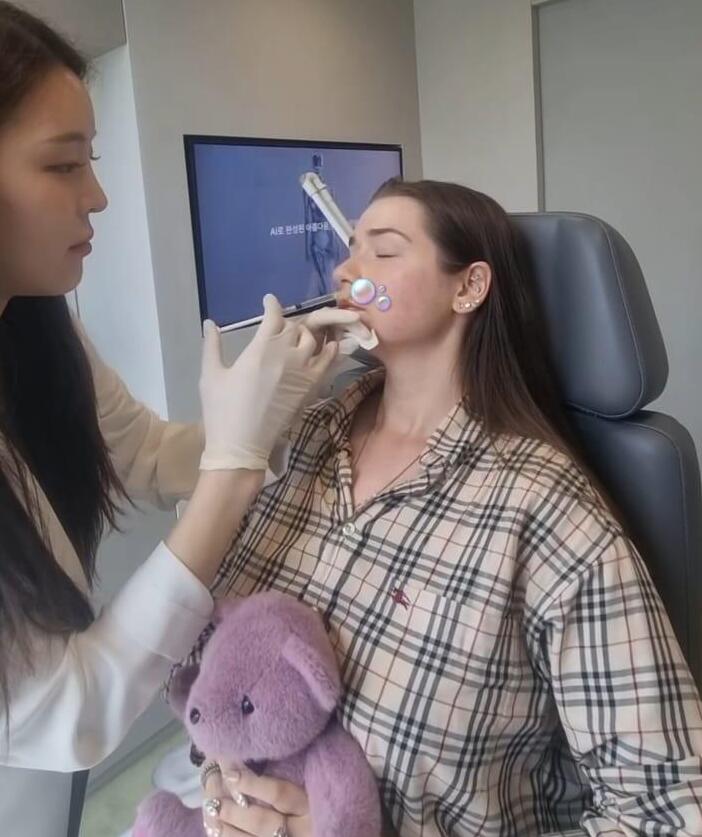
Living in Seoul for a decade. Dorin Miya Ginzburg
(Photo: Dorin Miya)
"I’m not sure people know how warm Koreans are. When women really become friends, they share advice. If it’s a friend who is a bit older and sees herself as a big sister, she will refresh your makeup after coffee if something smudged."
The final stamp on the trend was given by Kim Kardashian, who flew to Seoul for a beauty-focused trip with her sister Khloe and several friends. The visit was largely dedicated to the world of aesthetics, and Kardashian, being Kardashian, did not spare close-up documentation from treatment beds during her clinic visits and procedures.
"She went to a lot of clinics. One of them is a place I also go to and really like, but another one was not great,’ Ginzburg reveals. "I’m sure she got different treatment, but it’s not somewhere I would go. A friend of mine had a very bad experience there. They did not match the right treatment for her and recommended too many things. When I hear about a place where, during the consultation, they try to sell you treatments you don't need, I'd rather not go there and I don't recommend it."
So how do you recommend finding beauty clinics for someone planning such a trip soon?
"You can’t always rely on online recommendations or Google reviews, because you don’t really know what is happening there in practice. I think it’s best to look for clinics only after you have spoken with people who were actually there.
"It’s important to check whether the clinic offers good service in English. There are places where you feel they are trying to squeeze you in between other appointments or that they don’t really have time for you. I also think it’s better to look for clinics that are not too big. In Korea, it is very common to go to clinics that are almost like factories, huge operations. That’s not necessarily bad. I go to both those and to smaller, more intimate places that cost a bit more. But if you arrive unprepared, it can be a very overwhelming experience, which feels like an assembly line."
Beauty standards are different
(Photo: Shutterstock)
Sounds stressful.
"It can be a shock at first, but they work very efficiently, and they are not bad. In general, I don't think there are many bad clinics here. Most employees undergo very serious training, and there is such a wide selection that I don't think poor clinics can survive.
"In Seoul, commonly, the consultation is made with one doctor, another doctor actually treats you, and in between, nurses write down your name and notes. It is not always the same person throughout the entire treatment."
So what do you recommend?
"I recommend speaking with several clinics, looking at their social media, searching for reviews and seeing where the vibe feels best for you."
How is the perception of beauty in Korea different from what we know in the Western world?
"The beauty standard here is different, so sometimes during a consultation they may recommend things you didn't necessarily ask for. You should not take it personally. They are simply working according to the local standard, which favors very fair, light skin. Now they are very focused on jawlines, making them sharper, so they talk about that a lot."
"They are very honest. For example, during a consultation they told me, 'Usually at your age we recommend two treatments, but you are a Western woman and your skin is thinner, especially under the eyes, and you also have a greater tendency toward hollowing, which I see in your case. So for you, I would recommend an additional treatment to balance it out'.
"His assessment was correct. Professionally, they just say things as they are, while in personal life they are very gentle and careful about what they say. When you come for a consultation, from their perspective, they are not doing their job if they don't tell the truth.
"What's important is that if you go for a treatment, you shouldn't be embarrassed to tell them if something is uncomfortable or if you want to change something. And there is no reason to be embarrassed afterward if there is redness or marks on your face. Everyone walks around like that here, locals and tourists alike. No one bats an eye.
"Yesterday I had a laser treatment with lots of tiny needle pricks on my face and took the train home. Of course, that was exactly when I sat next to a handsome guy. It's fine. I remind myself that from their perspective, they see me as someone who takes care of herself and invests in herself. That is a good thing."
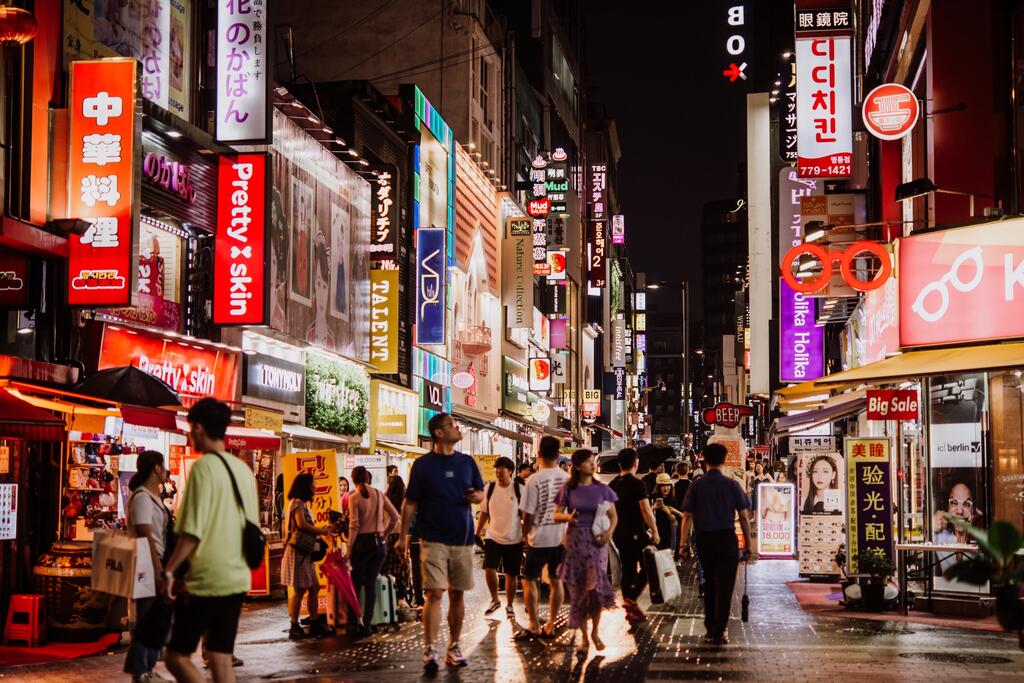
No haggling, no touching with Korean
(Photo: Shutterstock)
What is the most talked-about treatment in your area right now?
"PDRN, which is the salmon-based treatment, or a laser called Ultherapy. Both are designed to boost collagen production."
Are prices really that much lower compared with Israel?
"Personally, I don't do treatments in Israel when I visit, but from what I've heard there is a real difference in prices for treatments like Botox or a laser treatment called PicoSure, which I do for pigmentation and which is widely used around the world for tattoo removal. In the U.S., for example, such a treatment costs $2,000, and here it costs less than 200,000 won, which is under 600 shekels."
Give us some tips. How should tourists conduct themselves in Korea?
"Don't haggle. They are offended by it. It is common in other countries, but not here. You can politely ask for a discount. It's also recommended to avoid physical contact. Unlike in Israel, where it's common to shake hands or to touch someone’s arm, here it's not customary to touch people you do not know. Here, you don't place money on the counter, but rather hand money over with two hands, or in a very specific way with one hand."
Beauty goes beyond the epidermis
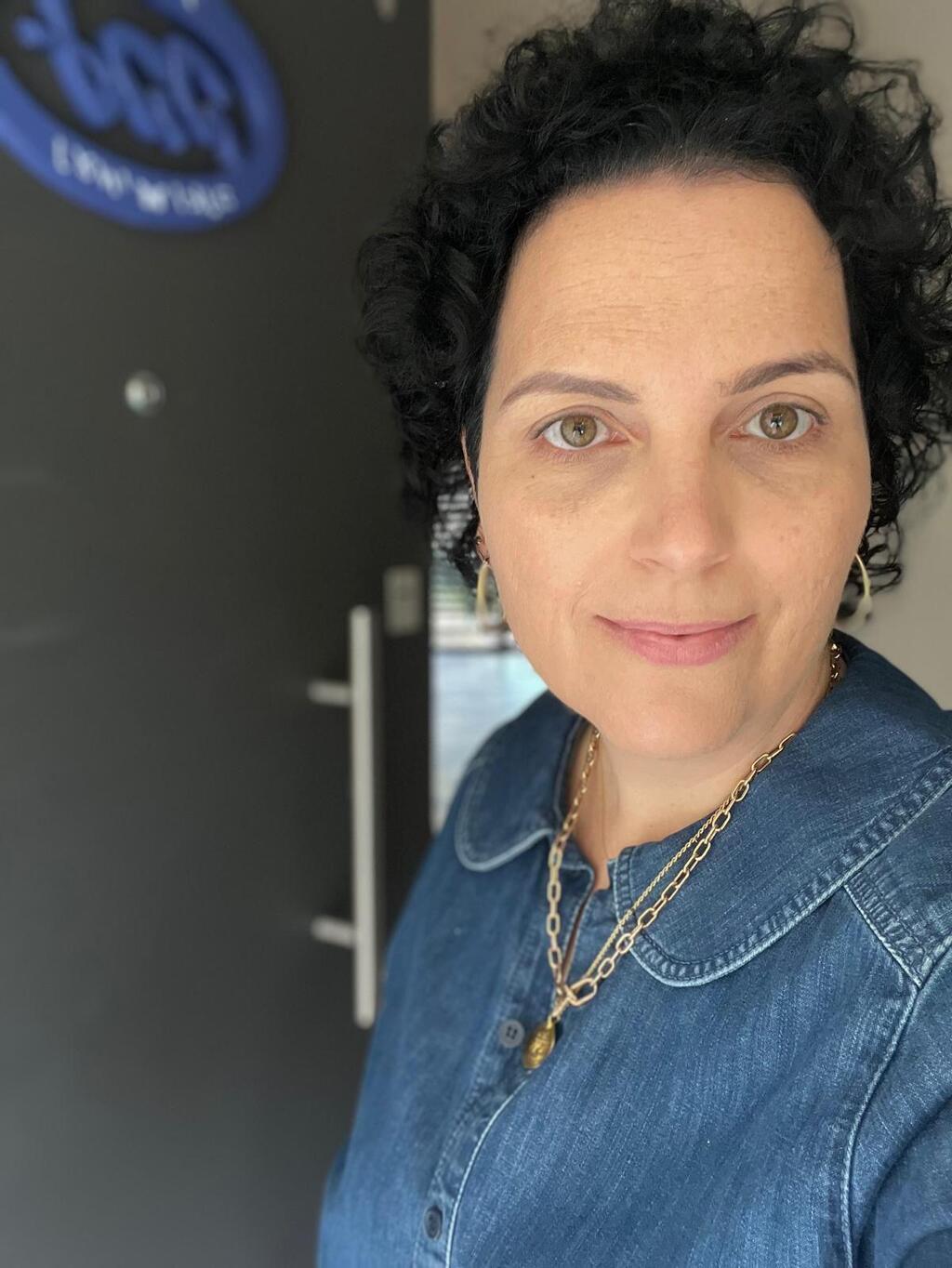
Tamar Eyal-Lahav, 49, identified the Korean beauty trend many years ago. As a strategic consultant for beauty brands and companies, a lecturer and trend researcher, a lifestyle journalist and a content creator, she marked Korea as a fascinating destination and this year traveled on her own to see up close whether the buzz was justified.
"I traveled to Korea on my own initiative. It was the fulfillment of an old dream. I spotted the early signs of Korean beauty about a decade ago in New York. Until then, we had France, Italy and the U.S., and I realized that Korea was a new beacon that needed attention and understanding.
"To truly understand something, with all due respect to social media and iHerb orders, it is important to examine it from up close, to see the real people who live there and learn what they do, to understand what goes on behind the scenes of the factories."
Tamar Eyal-Lahav
(Photo: Courtesy)
What did you learn on this trip?
"Wow, so many things. I learned that beauty is rooted in the Korean DNA. Unlike us, who experience it more as a treatment, say around acne or skin problems, for them, skincare is something else. It is something you do from a young age, not only when you have a problem. You grow up seeing your mother invest in herself, knowing it says something positive about who she is.
"In Israel, on the other hand, we are often shown how superficial beauty is. There, it is much deeper, with long roots. Someone who invests in herself is seen as serious, as striving for excellence, because she will repeat the same action again and again until the result is perfect. Take the whole aspiration for glass skin. What is that glass skin? It is a reflection of yourself. It is an understanding that skin comes first, because it says that you come first."
Did you end up trying any of the treatments yourself?
"Absolutely not. Traveling abroad for treatments, driven largely by lower prices, has nearly become the main attraction. But I always say that if we look at our faces only in terms of cheap or expensive, we will not get very far. When I travel abroad and consider a treatment, I want to check its full background, the same way I would before undergoing a treatment in Israel.
"You have to remember that these are invasive procedures that can cause damage. The damage does not necessarily appear immediately. It can happen days later, and then the question is, which hospital do I go to if needed? How do I deal with it? What does my insurance cover? What approvals does this device have? Is anyone checking that? I am not saying there are no approvals. I am just saying you have to check.
"I flew primarily to research a trend and to understand it in depth. Personally, I did not want to deal with searching for permits and information about every clinic, because that is a job in itself. As for the price, there are materials that are produced locally, so naturally, those treatments are cheaper. Still, I would not rush to get injections from a doctor whose hands and previous work I do not know."
Even though most of these clinics are reviewed on social media?
"That is another point people need to consider. Many of the people who review these places receive treatments for free, and not everyone discloses that properly. I believe that as someone who comes to cover the phenomenon and speaks to the target audience, if I had approached clinics there, I might have received discounts or free treatments. I do make sure to disclose that, but not everyone does."
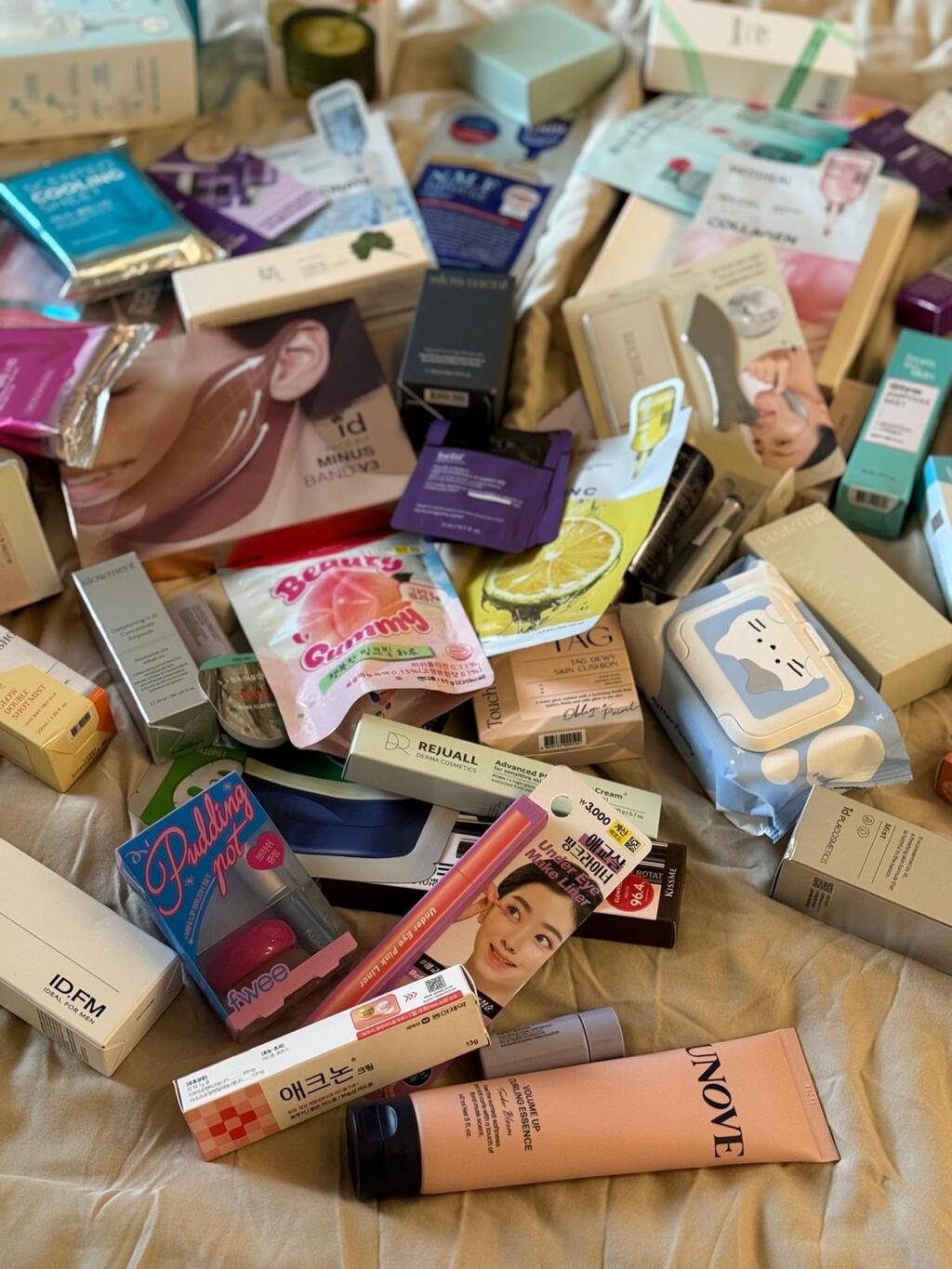
Eyal-Lahav's haul. 'The variety is overwhelming, so bring an empty suitcase'
(Photo: Tamar Eyal-Lahav)
What do you recommend for someone who is traveling there?
"First of all, take two days just to sit and observe. Do not rush. Enjoy being there, watching the women, what they do and how they move through the world. For someone who loves beauty, it is a new world and there are things we don't understand at first.
"For example, why are you walking around a train station with hair rollers in your hair? For us, the most we do is step outside the salon with foils on our heads while getting highlights. They are not embarrassed by it. It is completely part of their routine, like brushing their teeth.
"There is something very natural about their relationship with beauty. I think the first step is to connect to that when you arrive, because you land straight into culture shock. It is a completely different culture. After those two days, it is worth walking around and collecting samples. They happily give them to you. You do not even need to ask. This is not Sephora where you have to beg. I recommend experimenting."
Do you have tips for anyone planning a skincare shopping spree?
"First of all, there are things you should not try directly on your face. Mascara, for example, I would not test because it can transfer allergies. Creams can be tested on the back of your hand. Remember there is an insane variety, so bring an empty suitcase. I came back with 15 kilos of beauty products. It is completely uncontrollable."
How did you manage to choose from all that abundance? What should people focus on?
"I recommend making a shopping list. I personally knew I was interested in products with scientific innovation and looked specifically for those. I came prepared. So even if you don't know exactly which product you want, it is important to arrive with an agenda.
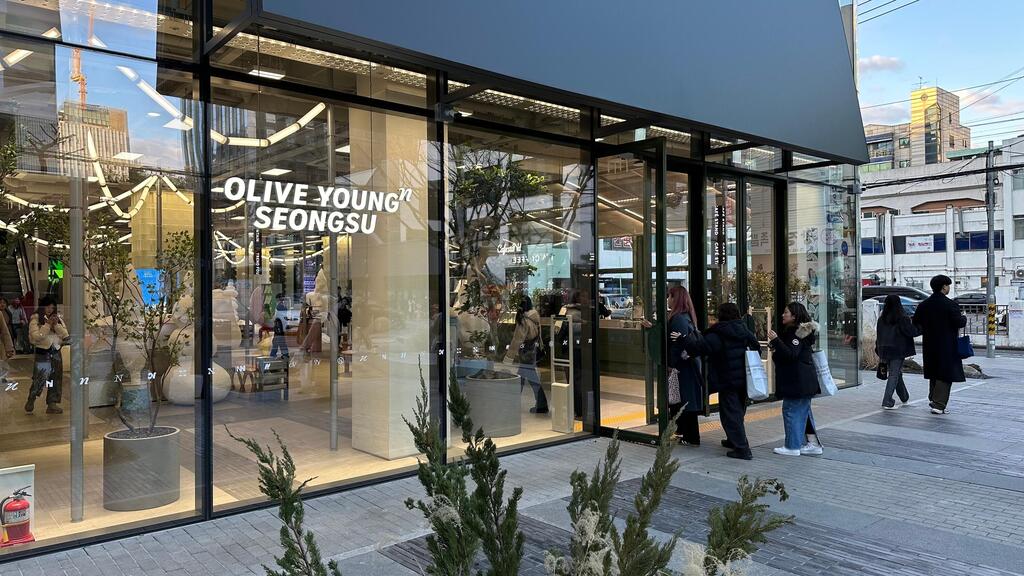
"Second, remember that not everything is only at Olive Young. People tend to go only there, and it's definitely not the only option. There are pharmacies, the Daiso chain and perfumeries. There are many places to buy skincare products. Olive Young is indeed the most convenient, with close to 1,400 branches across Korea, but it's not the only place. It is worth visiting pop-up stores. There are constantly new ones, especially in a neighborhood called Seongsu, where you can really try things and have an experience.
"If you plan to test products, it is important to go out in the morning without makeup. I did not wear makeup there at all. It was completely unnecessary. I carried a small bag in my purse with makeup remover and pads, so I could remove makeup using a product I know, rather than using what is in the stores and not knowing whether it dries out my skin."
What did you learn about skincare from the Koreans?
"I learned something that surprised me. When you look closely at their skin, you realize they also deal with pimples, texture and pigmentation. Their skin is not as perfect as it looks on social media.
"Second, we buy Korean products and think we are adopting their beauty secrets, but it's a whole philosophy that is part of an entire culture. It is in their DNA. It is not just the skincare routine and not just the product you buy. There is a lot around it. And above all, I learned that at any given moment, there are about 30,000 beauty brands in Korea. It is an almost unimaginable number.
"The last thing I learned is that beauty is not something light that stays only in the epidermis. Beauty has layers that remain on the physical and emotional levels. It's much more than it seems, so do not take it lightly."