

Imagine traveling the world with your partner, with no need to search for a place to sleep and no return flight to Israel on the calendar. Turquoise beaches, lush nature reserves and ever-changing landscapes, with the freedom to cross into a new country whenever the mood strikes. Now imagine your home moving with you wherever you go.
That fantasy became reality for Almog Galitzky and Omri Vaknin. The couple purchased a van in Australia and redesigned it to include everything they needed for life on the road, combining functionality with aesthetics and full energy independence.
Gallery

Living and traveling in a van they renovated themselves
(Photo: Almog Galitzky and Omri Vaknin)
Galitzky and Vaknin, both 26 and together for two and a half years, decided about a year ago to make a dramatic change. Galitzky, a fitness trainer and yoga instructor, left behind the business she had built. Vaknin, a former combat engineering soldier who worked in civilian life clearing land mines, chose to step away from a stable routine.
Instead, they embarked on a journey across Southeast Asia and Australia and built themselves a mobile home on wheels to enhance the experience.
The couple’s van in Australia
(Almog Galitzky and Omri Vaknin)


“We met during our post-army trip to South America, at Carnival in Brazil,” Galitzky recalled. “Each of us was traveling with friends until we met, fell in love and decided to continue together. After six months I returned to Israel, as planned, to a pre-academic program for physiotherapy studies, while Omri continued traveling for another three months.”
Vaknin returned to Israel about a month before the outbreak of the Iron Swrods war and was called up for reserve duty immediately after October 7. “It was a difficult period,” he said. “I was drafted for two long reserve rounds in Gaza, and we missed each other deeply. But the distance and the hardship strengthened our relationship and taught us to truly appreciate one another.”
Learned to build from online tutorials
In February 2025, they made what they describe as a bold decision: to set out together on an open-ended trip around the world, with no defined plan and no return date.
“The desire to fly again, and for an unlimited period, was mainly because of the war and the situation in Israel,” they said. “We hadn’t seen each other for so long and wanted to stop everything and take time just for ourselves. We also had many dreams we wanted to fulfill in different countries, and we knew this was the perfect opportunity to do it together.”
Their route included Sri Lanka, Thailand, the Philippines, Indonesia, Australia and French Polynesia. In recent months they returned to Australia. They financed the trip through savings and temporary jobs, including work on cotton farms and occasional yoga classes taught by Galitzky.
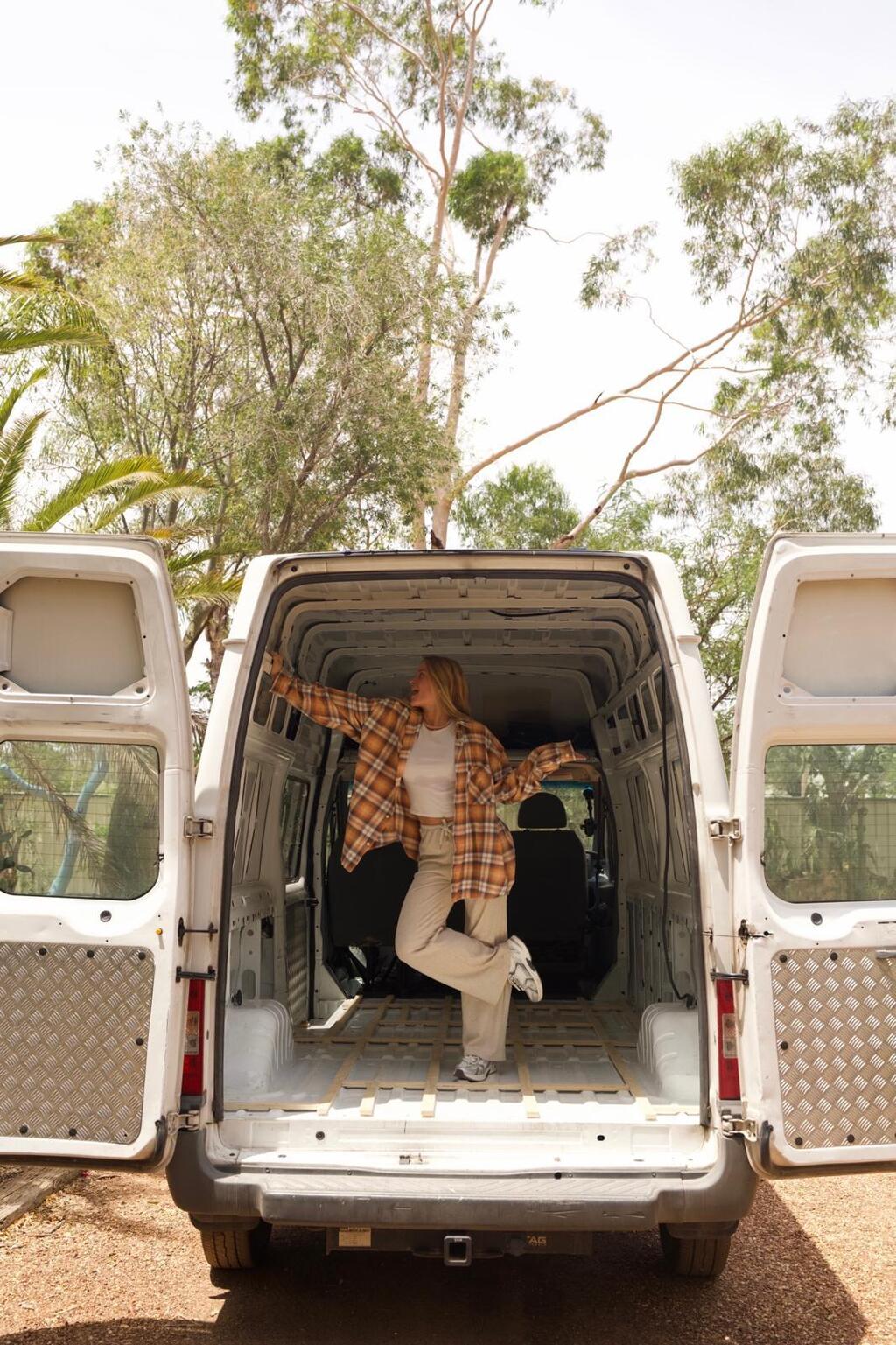
A work vehicle that was not suitable for living
(Photo: Almog Galitzky and Omri Vaknin)
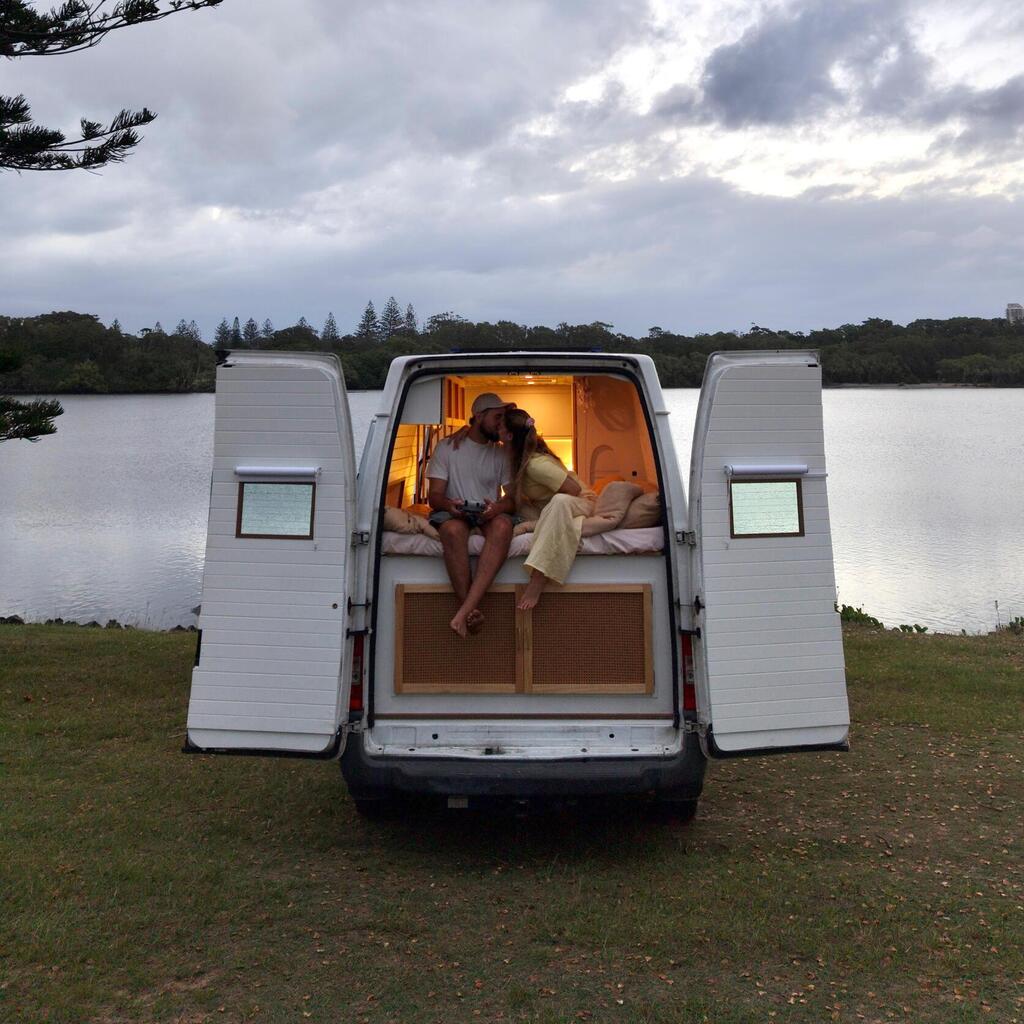
They carried out a thorough renovation and designed it like a home
(Photo: Almog Galitzky and Omri Vaknin)
To avoid spending a fortune on hotels in Australia, the couple decided to live in a van. About six months ago, they purchased a used work vehicle for 9,000 Australian dollars, roughly $6,000. “At first it was a simple work van, not suitable for living,” they said. “We knew we would have to renovate it, but first we needed to save money.”
For half a year they lived in the van after only minimal adjustments. A month ago, they completed a comprehensive renovation that included a full interior redesign to make it feel like a real home. They began the project with no prior construction or design experience. Vaknin, Galitzky said, “learned everything from YouTube. He basically did a thorough research there, figuring out how to build, connect and install everything, and I drew inspiration from design apps and Instagram.
The renovation, estimated at 8,000 Australian dollars, roughly $10,000, began with removing the old wooden panels and thoroughly cleaning the vehicle. During the renovation on the Sunshine Coast, they were hosted by a local Jewish Australian family who provided tools, meals and a place to sleep in a trailer on their property until the project was complete.
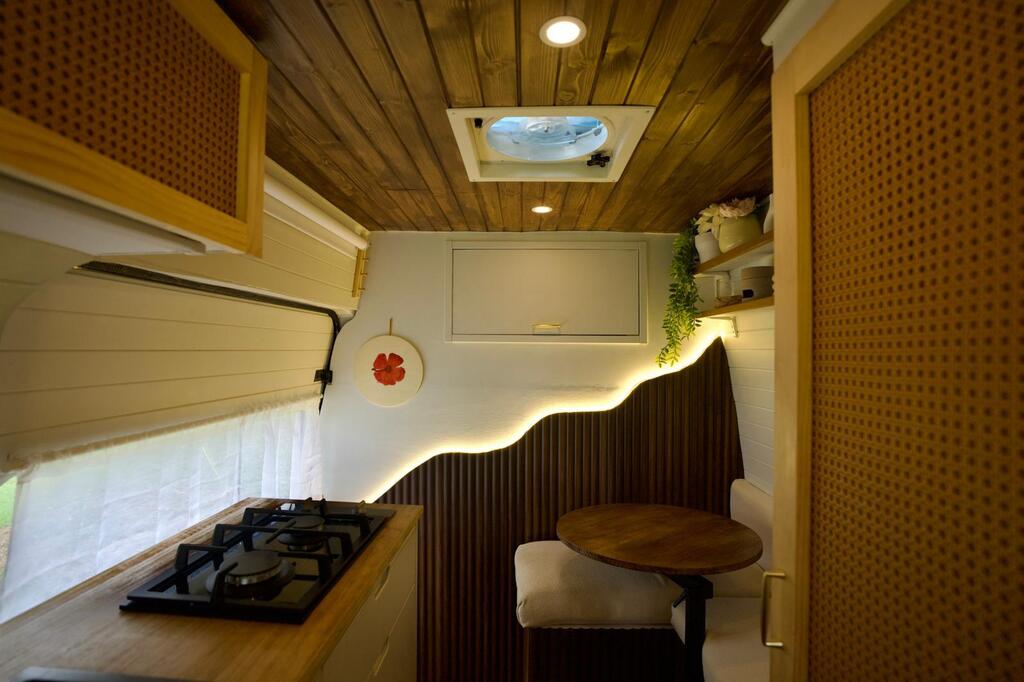
Kitchenette and seating area
(Photo: Almog Galitzky and Omri Vaknin)
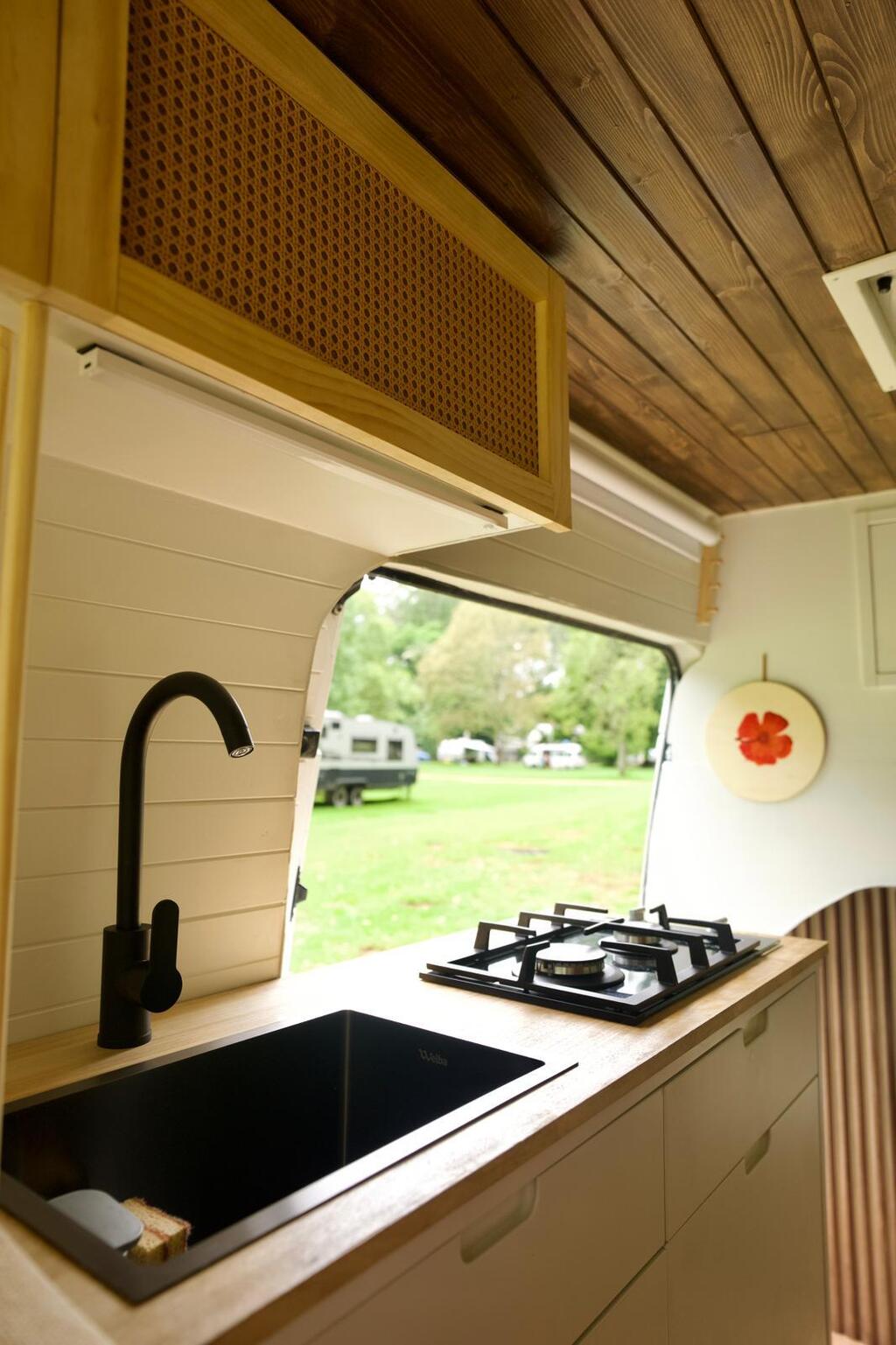
Use of wood and rattan to create a warm feel
(Photo: Almog Galitzky and Omri Vaknin)
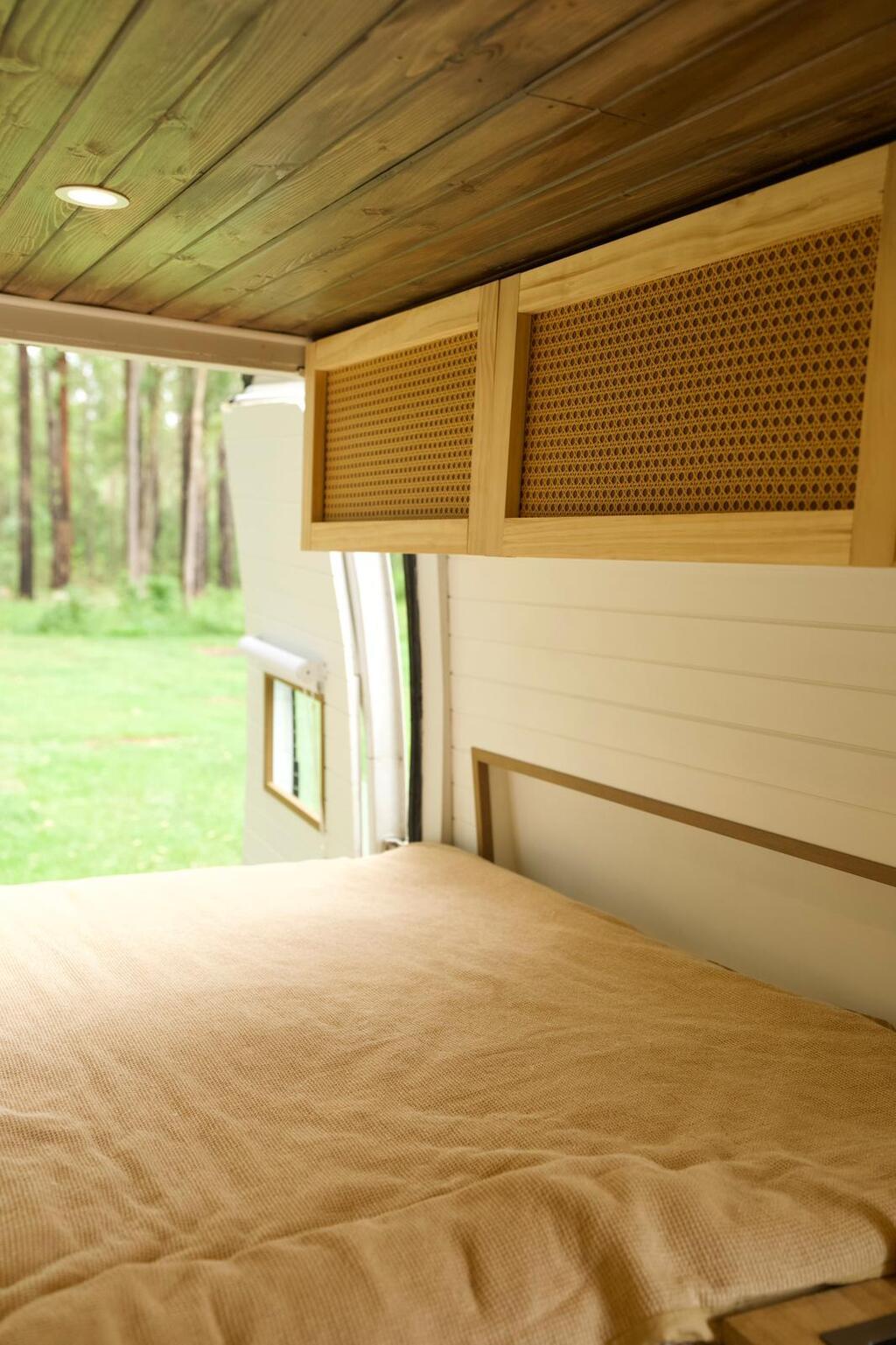
The bed with storage above it
(Photo: Almog Galitzky and Omri Vaknin)
The 6-meter-long van, with an interior height of 1.82 meters, required creative space planning. “Because of the van’s limited size, we had to think carefully about where to place the bed, the kitchen, the cabinets and everything else,” Galitzky said.
The couple chose a boho-chic design with natural wood and rattan elements to create warmth. At the entrance sits an L-shaped beige sofa with a movable round table. There is ample storage space beneath the sofa. Behind it, a wall clad in textured wood paneling and on the adjacent wall two wooden shelves hold accessories such as flowers and candles, creating a warm atmosphere.
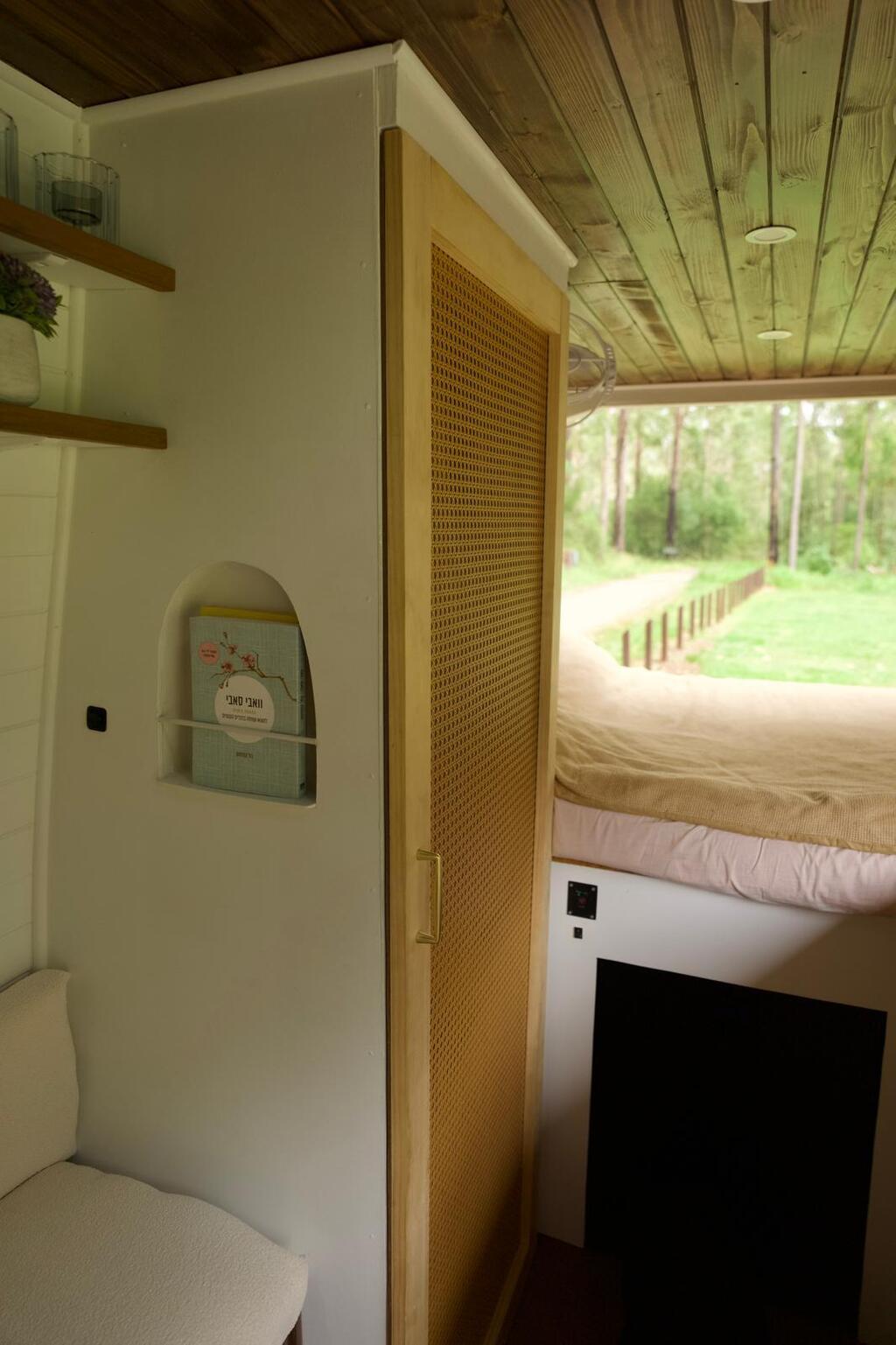
Inside the cabinet is a pull-out chemical toilet. A small refrigerator is stored under the bed
(Photo: Almog Galitzky and Omri Vaknin)

There is also electricity and a water system
(Photo: Almog Galitzky and Omri Vaknin)
A small cabinet near the sofa conceals a pull-out chemical toilet. The sleeping area includes a double bed with overhead cabinets for storage. The compact kitchen features a stove, sink, drawers and open shelves for groceries and spices. Instead of a television, the couple installed a projector, allowing them to watch series from bed. Under the bed, they store the van’s essential systems, including electricity and gas, along with folding chairs and a yoga mat.
On the roof, a solar panel powers the van. While driving, the vehicle charges both the battery and the electrical system, supplying regular power throughout the entire van. Inside the van are standard electrical outlets and a water system operated by a pump connected to a lithium battery. The combination allows for mobile living with near-home comfort while maintaining full energy independence.
“It’s an incredible experience,” Galitzky said. “We’re a couple that loves nature, and waking up every day in a new place with the person you love most is a dream come true.”
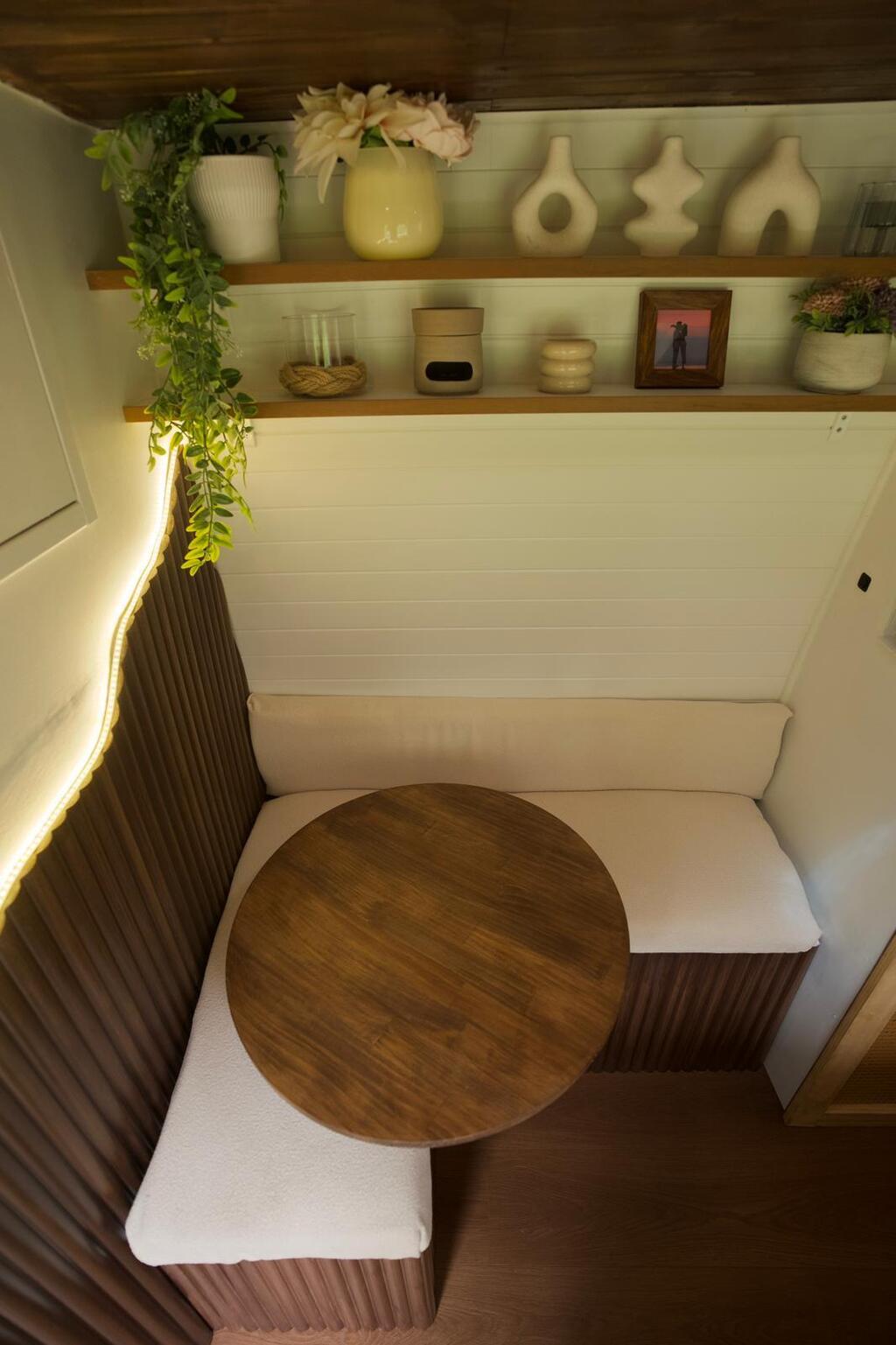
Here they sit and dine
(Photo: Almog Galitzky and Omri Vaknin)
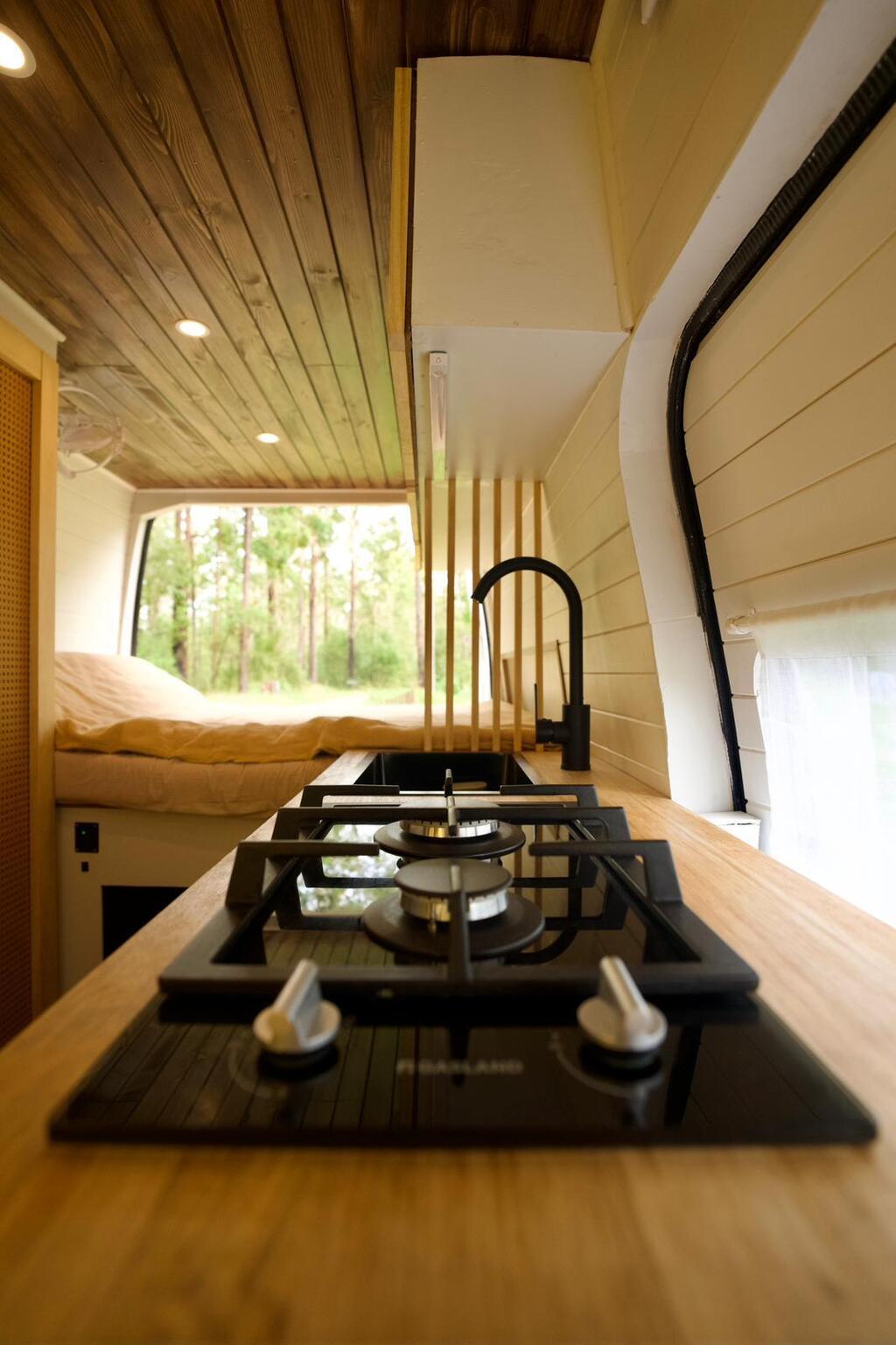
View from the kitchenette toward the sleeping area
(Photo: Almog Galitzky and Omri Vaknin)
How do you manage to maintain your relationship in such a small space?
“Sometimes it’s very challenging,” Galitzky admitted. “There are difficult moments, and we don’t have air conditioning. But we learn to deal with everything. We do argue, mainly about order and cleanliness, but even those arguments strengthen us because they’re part of living together.”
Vaknin agreed. “Life inside the van gives us a unique connection. Most couples don’t live together 24 hours a day. They have work, friends and separate interests. Here we’re truly together all the time. It improves communication and helps us understand ourselves better, both in extreme situations and in routine.”
Galitzky added, “This is basically our first apartment together. After this experience, we feel ready for anything, even marriage. Beyond creating an amazing van, we learned a lot about ourselves, our patience and our ability to manage in any situation. The result is worth every moment.”