

A match. A message. Another message. A few jokes, a little flirting. He writes something that genuinely makes you laugh, you reply, and he keeps the conversation going. It feels good. Something is beginning to happen. Then comes a message you read twice. You're not entirely sure what he meant. So you take a screenshot and open ChatGPT: "Look what he wrote. What does that mean? What should I reply?"
You want to show interest, but not too much. Be warm, but not seem as though you've already made up your mind. Keep things casual without looking like you're trying too hard. The conversation continues. Then some time passes, and he doesn't reply. An hour goes by. You're back in the chat. "He hasn't answered for an hour. Maybe he's lost interest? Did I say something wrong?" The chatbot reassures you. Maybe he's busy. Maybe he's at work. An hour doesn't mean anything.

Then your screen lights up. He's replied. You immediately return to the chatbot. "HE REPLIED!!!!!!" you type excitedly. "Wait, I'm sending it to you."
Before long, the chatbot knows practically everything about you. You no longer need to explain who he is every time. It knows how you met, what he wrote yesterday, how you responded, what you liked and what made you anxious. Sometimes it helps you find the words for something you already wanted to say. Sometimes you're not sure what he meant. Sometimes you have no idea how to respond, and sometimes you're debating whether to answer immediately or wait a little so you don't seem too eager.
And just like that, a third participant joins two people trying to get to know each other. Quiet, always available and present during almost every moment of uncertainty. It turns out this is already happening quite often. According to an American survey attributed to The Harris Poll and conducted over the past year, roughly one in five singles reported having used AI for various dating-related tasks, such as replying to someone they liked, trying to figure out whether the other person was interested or getting ideas for how to start a conversation.
Texting, after all, gives us something that face-to-face conversation doesn't: the ability to stop. Think. Delete. Rewrite. Ask for advice. Choose exactly how we want to come across. And now there's AI, making all those possibilities far more sophisticated. "Make it sound more casual." "Does this make me seem too interested?" "How can I reply without sounding anxious?"
But at some point, the texting ends, and you meet in person. Suddenly, it's just you. No screenshot. No "What should I say?" No "Make it sound wittier." No selection of carefully crafted replies. No chance to try again. He asks a question, and you have to answer right then. You might want to seem relaxed, but you're nervous. You want to be witty, but nothing clever comes to mind. He says something you don't quite understand, and you can't stop the conversation to ask, "What did he mean by that?" There's an awkward silence, and nobody is there to suggest how to fill it. Suddenly, you have much less control over the version of yourself that the person sitting across from you gets to meet.
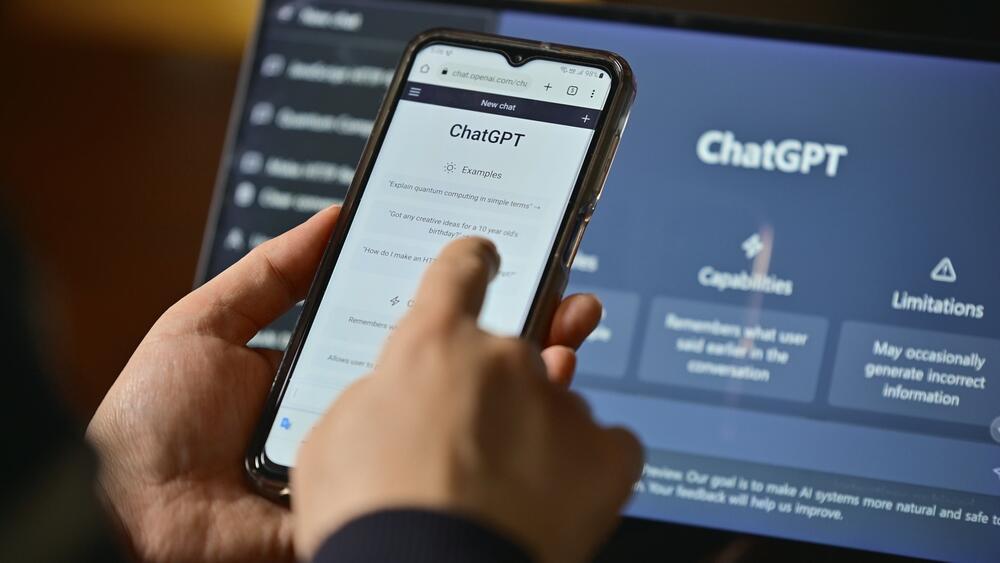
Don't let it tell you what to feel
(Photo: Shutterstock)
And don't think this all began with ChatGPT. Online dating has always involved a tension between wanting someone to know us for who we really are and wanting to be liked, to manage the impression we create. Texting simply makes that easier. We have time to think, edit and polish. AI didn't invent that gap, but it has given us a personal editor who's always on call.
The question is whether the result is simply a more polished version of myself, much like asking a friend for advice before sending a message, or whether, at some point, all that polishing creates the impression that I possess a quality I don't really have, or at least not to the degree suggested by my messages.
Researchers have even given this phenomenon a name: the "Cyrano effect," after the protagonist of the play Cyrano de Bergerac, who writes declarations of love for another man to use in courting the woman they both love. In the 2026 version, there's no need for a Cyrano secretly writing romantic letters. We have a personal assistant right there on our phones. And what makes the situation more complicated is that AI isn't necessarily bad at the job.
A study published last year found that when people read and rated messages asking someone out on a date, AI-generated messages were judged to be more effective, more engaging and more direct than messages written without AI assistance. In other words, the issue becomes more complicated precisely because AI can be very good at this.
In research examining the Cyrano effect, some users actually described AI as a tool that helped them better express something that was already inside them. Because sometimes, getting help finding the right words allows us to communicate something more authentic. Perhaps that's why the most interesting boundary isn't between "I used AI" and "I didn't use AI," but between "This is how I feel, help me put it into words" and "What should I say to make him want me?"
In the first situation, the feeling and the intention are still mine. AI simply helps me find the words. In the second, however, I'm handing over something more: not just the wording, but part of the thinking process itself. How should I respond? What would be the smartest thing to say? Which version of myself should I present?
That's why I think it's important to remember that a date isn't just an opportunity to discover who the person sitting across from us really is. It's also an opportunity to discover how we feel around that person. Did I enjoy myself? Was I curious? Was I attracted to him? Did I feel tense or uncomfortable? Did I want to get closer? Did I want the evening to continue?

Relationship therapist Shirli Grayfner
Sometimes I don't have an answer, and that's okay. Sometimes it's worth allowing those feelings to exist for a moment before rushing to analyze them. But AI makes the temptation to analyze everything especially strong.
People have always sought advice about love. We've called a friend, sent a screenshot to a sister and spent an hour analyzing a six-word text message. But friends have limits. They're not always available. Sometimes they're tired. Sometimes they have no idea what to say. Sometimes they're simply sick of hearing, for the hundredth time, why he put a period at the end of his message. Eventually, the conversation ends, and you're left alone with your thoughts.
AI, on the other hand, will never leave you alone. It's there at two in the morning and seven in the morning. It's willing to read the same message again, listen for the tenth time to what happened during the kiss, offer yet another interpretation, reassure you, suggest a response, encourage you, and then do it all over again.
We didn't invent the need to seek advice. We invented an adviser that almost never says, "That's enough for today." And that isn't necessarily an advantage. New research examining people who turn to AI for advice about sex, dating and relationships also points to the risks of overreliance and AI's tendency to sometimes agree with the perspective we present to it.
There's something else worth remembering: when AI analyzes a date with me, it wasn't actually there. Of course, a friend also hears only my version of events, and I interpret what happened through my own perspective. But an AI response can sound remarkably organized, confident and objective, even when it's based on incomplete information. It didn't hear his tone of voice. It didn't see his body language. And it doesn't know what I chose not to tell it. An interpretation that sounds convincing is still just an interpretation.
Perhaps that brings us to the most interesting question of all. There used to be a moment between receiving his message and writing my reply when I had to confront my own thoughts. What do I think he meant? How did it make me feel? What am I experiencing? What do I want to do now? Today, it's possible to skip that moment almost entirely.
So what should we do about all this?
Maybe the question isn't whether to consult AI, but when. Before taking a screenshot and asking, "What did he mean?" perhaps it's worth stopping for a moment and asking myself: What do I think he meant? How did meeting him make me feel?
Before asking, "What should I reply?" I can try putting into words, even clumsily, what I actually want to say. And after a date, before asking, "What do you think of him?" I can give myself a moment to sit with a different question: "How did I feel about the whole experience?" And then what? Then I can open the chat. It'll be there to reassure me about everything.