


Jacob Fein never considered himself a fitness person. Growing up in an observant Jewish family in the United States, gyms and running tracks were far from central to his life. Like many around him, physical fitness was not a priority. That began to change after he moved to Israel in his early 20s.
What started as a personal effort to feel better in his body gradually turned into a broader mission: bringing fitness into a space where it has often been absent, and showing that even within the ultra-Orthodox community, there is room for the body, not just the spirit.
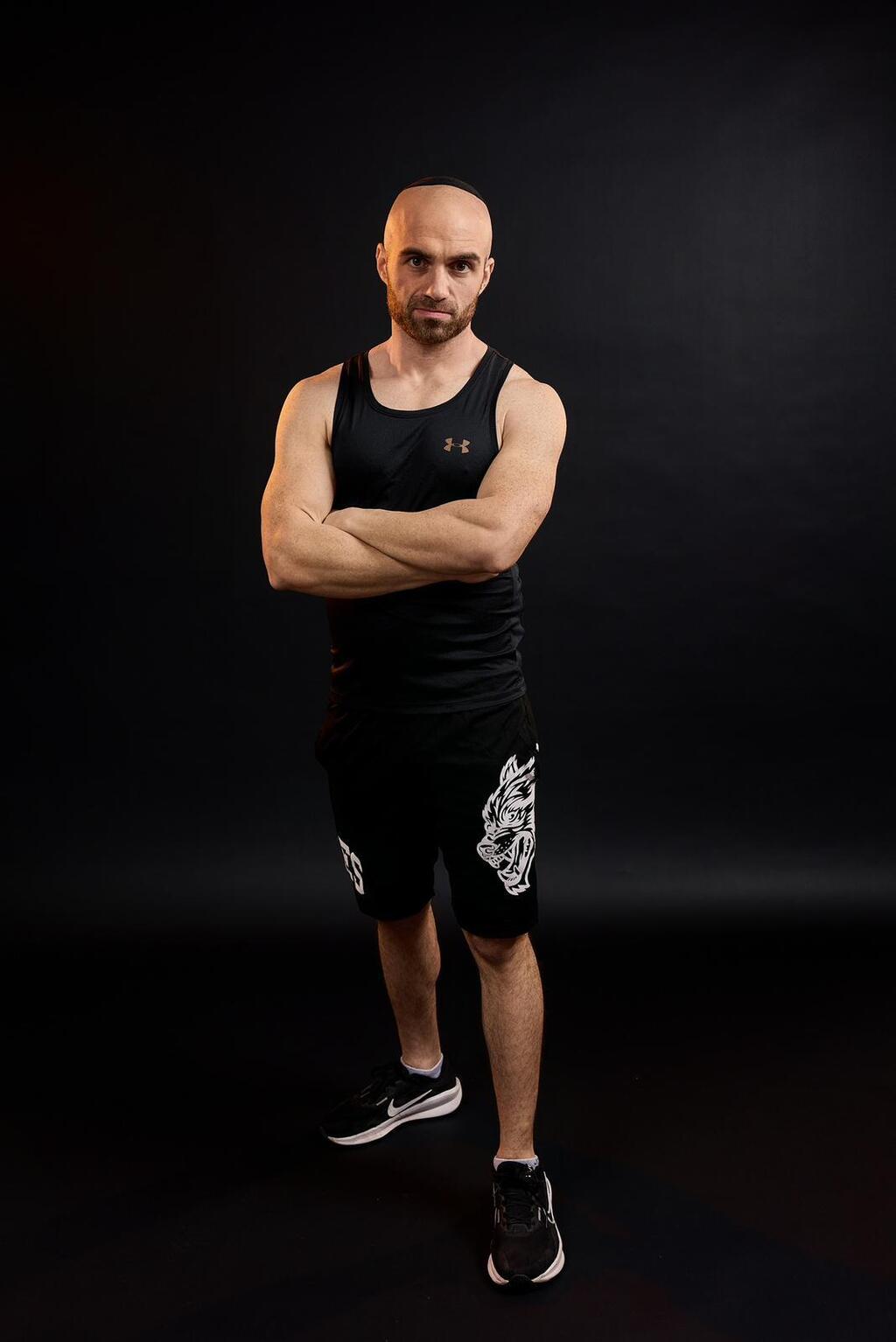
“About 10 years ago I came here to study at a yeshiva after high school and kind of fell in love with Israel,” said Fein, now 33 and living in Jerusalem. “I knew I wanted to move here and live here. I went back to the U.S. for college, finished my studies, and made aliyah a few months later in 2016.”
“At the time, I wasn’t into fitness at all — I was pretty overweight,” he added with a laugh. “Getting into shape was something I always wanted to do, but I didn’t know how.”
Like many personal transformations, Fein’s began in an unexpected place: living on his own, away from familiar routines. In that new reality, without external structure, he found space to rethink his habits — including his relationship with his body.
“In 2018 I was living alone and thought it was a great time to start,” he said. “I tried doing it myself and realized I didn’t know what I was doing, so I hired a trainer — and that made all the difference.”
“I expected to look better, but I was surprised to feel better too. My energy improved, my mental health improved. Basically every aspect of my life got better. I realized I had a real passion for it. I wanted to help other men, especially in my community, become more aware of it.”
Today, Fein works with a wide range of clients in Israel, from secular to religious and ultra-Orthodox men. The latter, he said, can be the most challenging group, as fitness is still not always part of the conversation in those communities.
For many, physical training is seen as secondary — sometimes even unnecessary — in a daily life centered on study, community and religious practice. But that perception, Fein said, is slowly changing.
More men are being exposed to fitness, approaching it cautiously and discovering not only physical strength but also improved energy, balance and quality of life.
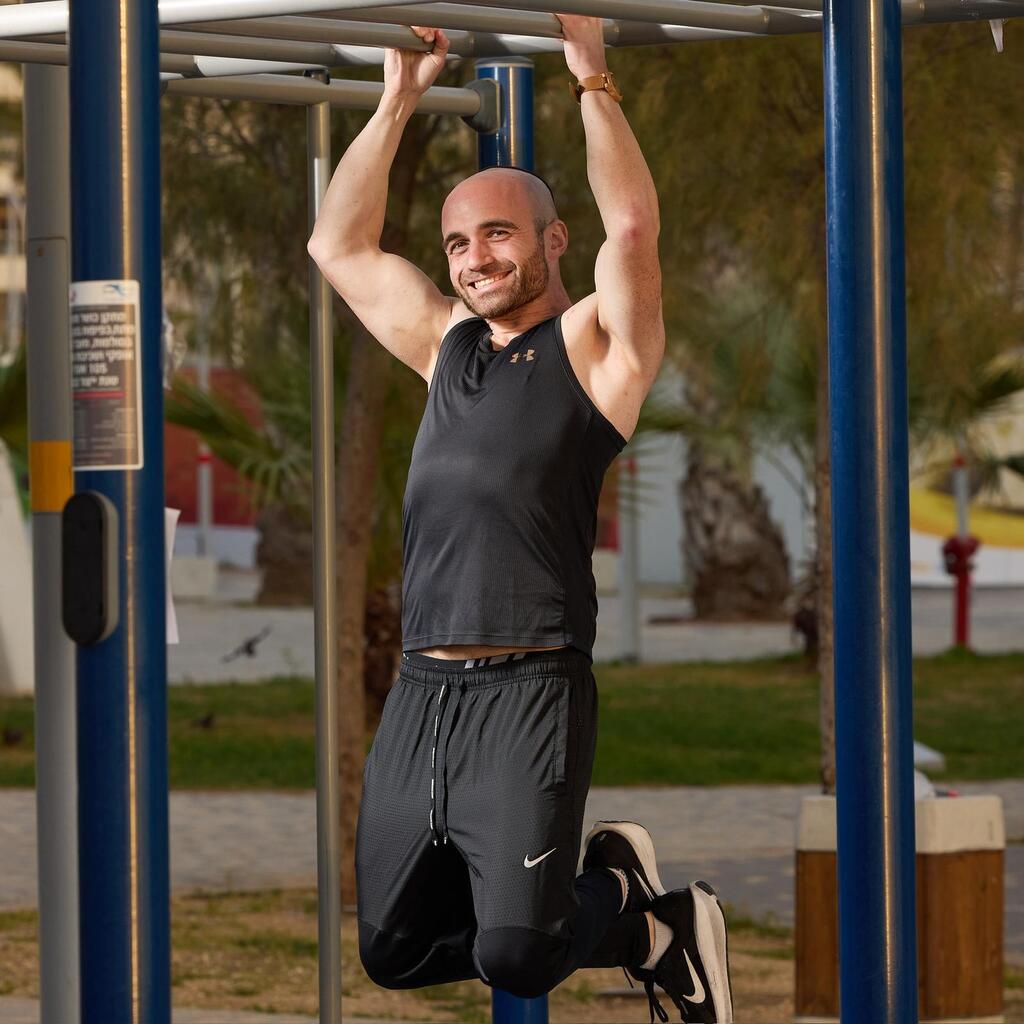
Fein has become part of that shift. He runs two Instagram accounts — one humorous, focused on religious life, and another dedicated to fitness, where he shares practical advice on workouts, nutrition and healthy living.
For him, the connection between the two is the point.
(Photo: Andrew Mayatnik)
“I think in our world, spiritual self-care is seen as the most important thing, while physical self-care is secondary,” he said. “I understand why people think that. And when you combine that with the idea that fitness is only about appearance, it makes sense why you don’t see many ultra-Orthodox men working out.”
“But in reality, I believe the physical and the spiritual should work together, and that fitness can actually improve a person’s service of God and their religious life.”
His approach meets people where they are. Many of his clients come with little experience, long-standing habits and sometimes hesitation about entering the fitness world. Through training plans and conversations about routine, nutrition and lifestyle, he tries to convey a simple idea: there is no need to choose between worlds.
“I help men build programs that let them stay fit while still enjoying Shabbat and holidays,” he said. “I want fitness to be part of their lives without taking anything away.”
“I don’t think there’s enough awareness in our community, and there are misconceptions. People think getting in shape is only about looking good. But it’s also about feeling better, having more energy, and a better mindset. I want to change that perception.”
For now, Fein trains only men, though he said that could change in the future.

(Photo: Andrew Mayatnik)
He acknowledges unique challenges, including the rhythm of Shabbat and holidays, as well as the demands of religious life. “We’re very busy — work, family, synagogue every day — it’s a challenge,” he said.
Fein has also faced some criticism.
“People have commented on photos of my muscles and said I like to show off,” he said. “That’s the main criticism — that it’s about appearance. But overall, the response has been very positive.”
He said he often receives messages from men who follow his content online, even if they are not clients.
“They tell me it motivated them to go to the gym, reminded them why it matters,” he said. “I feel lucky to have the chance to influence others.”
One message, he said, stood out.
“A friend I hadn’t spoken to in a long time reached out and told me he lost seven kilograms just by following my tips online,” Fein said. “He wasn’t even a client. That showed me the impact you can have. Sometimes you wonder if people are listening — and then you get something like that, and it means a lot.”