

If you are new parents, or even veteran ones, you have probably already encountered this annoying phenomenon: advice. Endless advice and opinions on how you are supposed to raise your child. You may be the ones who brought the child into the world, but somehow, everyone else seems to know better than you what is right for them.
The advice, unsurprisingly, often differs dramatically and usually contradicts itself. Alongside those who tell you to avoid giving a pacifier, others will warmly recommend offering one every time the baby cries or shows signs of discomfort. Against those who say, “The baby needs touch, hold him,” others will swear that the worst thing you can do is “get the baby used to being held.” Against “Do not let a child watch screens before age 2,” some parents will say “nothing will happen” if the child watches 10 minutes of age-appropriate content while you tidy the house or take a moment for yourself.
One of the most heated issues, and one that fuels an exhausting and endless debate among parents, experts and doctors, is sleep. Is it recommended to sleep with a child in the same bed? And if so, until what age?
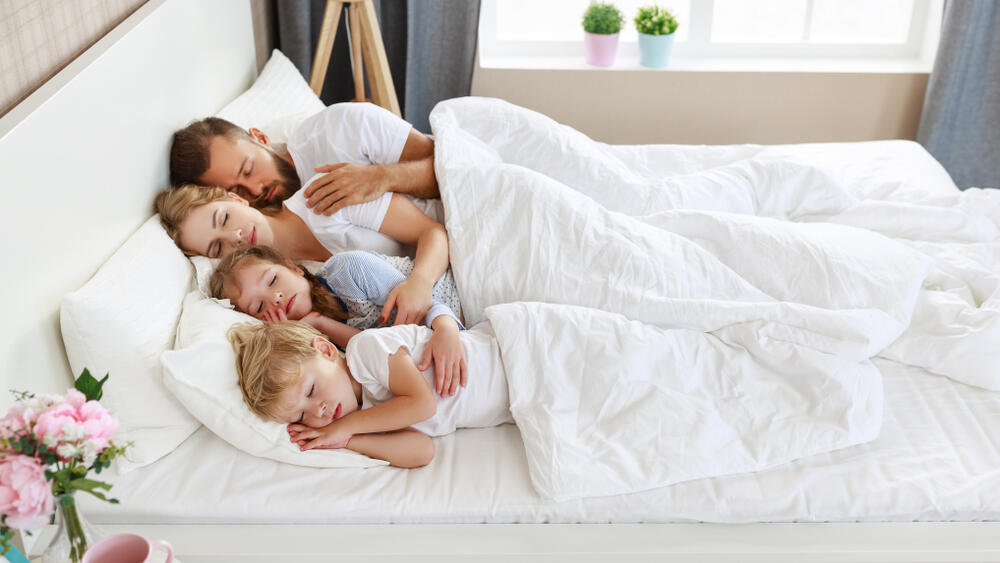
I remember wrestling with that question for a long time after my daughter was born. The initial instructions we received when we left the hospital were that the newborn should sleep in a bassinet in the parents’ room, but not in the parents’ bed. Around me, there were all kinds of warnings from doctors, nurses and various grandmothers, all cautioning us not to be tempted to bring the baby into our bed, because it was dangerous.
At some point, after about three months, social pressure began to build to move her into her own room. And so we found ourselves, new parents, running back and forth at night to the baby’s room. On the one hand, it was exhausting and frustrating, and it felt illogical. On the other hand, all the experts and doctors told us this was the best way to raise an independent child, one who would gradually learn to fall asleep on her own. In the end, I simply put a mattress next to her bed in her room and, from sheer exhaustion, occasionally collapsed and slept there.
Not everyone is like me. Some parents believe wholeheartedly in co-sleeping. They sleep together with their children in their bed and feel it is the natural way to give a child a sense of belonging and security. Until what age? Good question.
‘The preschool teacher said it was forbidden’
Roni Mali and her partner, who live in Moshav Habonim in northern Israel, have shared their bed with their two daughters, ages 8 and 5, since they were born.
“For me, it did not require effort or some major decision,” she says. “From the moment my older daughter was born, it was clear to me that she would sleep with me so she could feel my warmth and my body beside her. When the younger one was born, we moved to a new house, and I tried to encourage the older one to move into her own room. We built her a beautiful bed and tried to ease her into the move. But she saw us sleeping with the little one and wanted to as well. The truth is, I really enjoy sleeping with them and cuddling them at night. It makes me happy.”
I try to understand how a room, or a bed, can be arranged to fit four people. Mali explains that their bedroom has two futons, effectively turning the whole room into one large bed. “It’s a bit like living in a cave,” she says with a laugh. “There’s one room where we sleep and another where we live.”
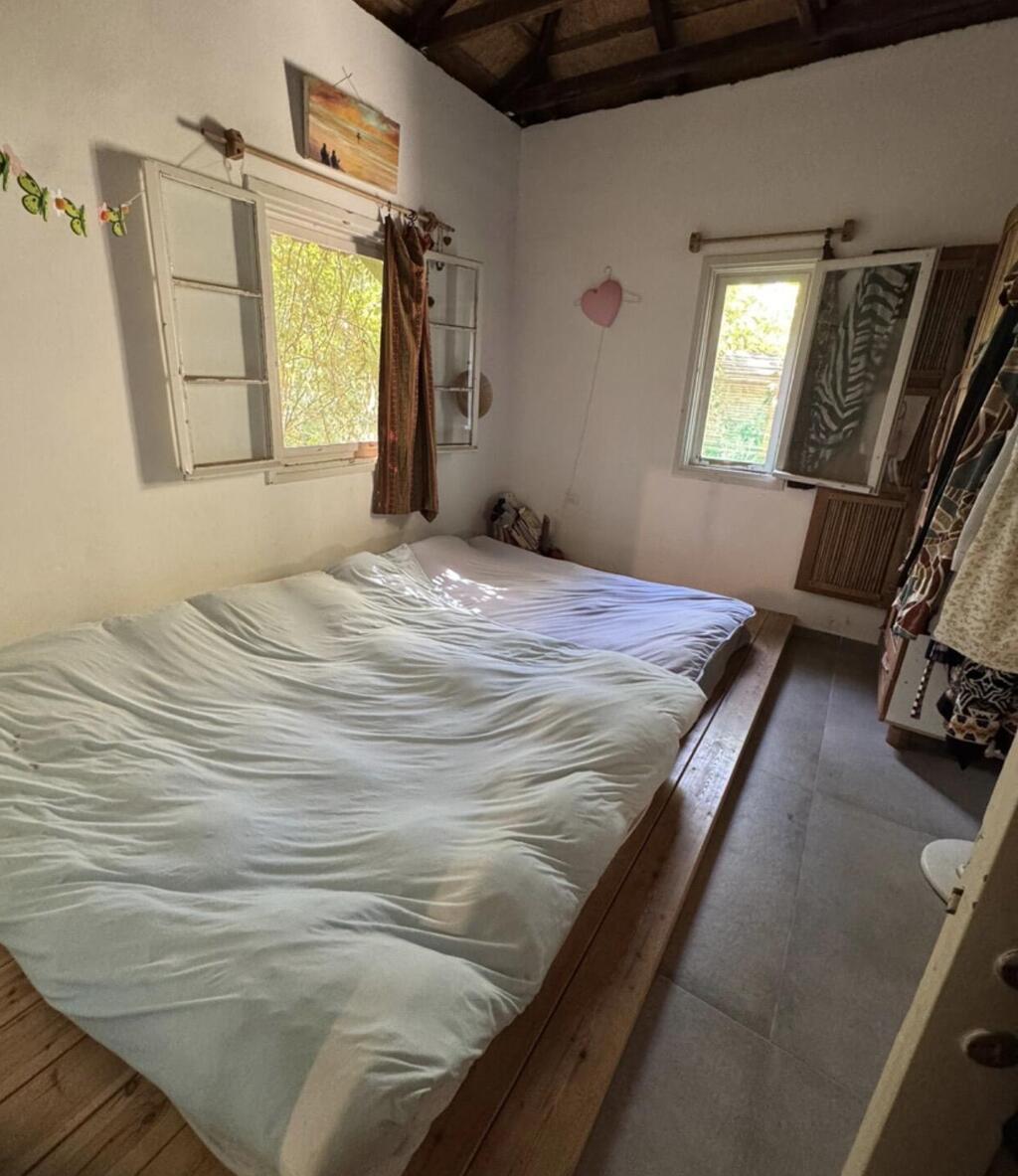
Roni Mali’s bedroom
(Photo: Family album)
Weren’t you afraid to sleep with them when they were babies?
“When my older daughter was just born, people around me were saying it was not good to touch her during the night because she would get used to being touched. To me, that actually sounded appealing. Some people said it was dangerous because you could crush her at night, and I asked whether anyone had heard of a mother who crushed her baby. They said no, because when you sleep with a baby, you may be asleep, but something in you remains awake.
“It also felt convenient for breastfeeding. Because she slept next to me, I nursed lying down and did not have to get out of bed at all. If we had slept separately, it probably would have ruined both her sleep and mine. In general, it made sense to me that she would sleep with us. You can frame it as an issue of sensory regulation, or maybe that is just who I am.”
That kind of sleep, she says, has many advantages. “I remember that when I was little, I knew I was not allowed to go to my parents’ bed. I really remember the preschool teacher telling us that. They slept in a double bed, of course, and the approach was different then.
"But I think children feel rejected when they cannot come to their parents at night, and our daughters do not experience that. They feel they are part of things, that they are wrapped in care all the time. Their mother is accessible to them and does not disappear at night. To me, it is very natural.”
Don’t you ever feel like, “Enough, I need two minutes to myself”?
“No. It's really fun to be together. I enjoy being with them. “And Itay, my partner, feels the same way. I think fathers often end up feeling pushed aside, but in our home he is at the center of family life. He cooks and spends a lot of time with the girls. It is not a household where one parent dominates. We are both fully in it together.”
That sense of togetherness, she explains, also led them to start a business together. “I am a producer by profession, and he is a karate teacher and builder,” Mali says. “Together we run a business creating outdoor family lounges, and the girls are part of the work. They are not waiting at home while Mom and Dad earn money so they can spend time with them later. They have a role, and it becomes something we do as a family.”

Roni Mali. 'The most natural thing'
(Photo: Family album)
What reactions do you get from people around you?
“Many families in our moshav are into co-sleeping, So I never felt like the odd one out. At the same time, we are both originally from Tel Aviv, so I know how it is ‘supposed’ to be, but I don't care. For me, sleeping with my daughters came naturally.”
Still, surely there are challenges when four people sleep in one bed.
“Sometimes I need to get up early and then they wake up too, but I think the main issue is sexuality. “So we plan. I close the bedroom door once they are asleep, and we have the rest of the house. They are still young, and when they sleep, they sleep. To me, it is very simple: My daughters do not interfere with my life. They are my life.”
‘Are you serious? She still sleeps in your room?’
Maya Akkerman Omri, a nurse, doula, reflexologist and mother of two, a 3-year-old and a 3-month-old baby, from Kadima in central Israel, says it all began when her eldest daughter, Ori, was born.
“I breastfeed, and I think that helped me realize very quickly that this was the only way both of us could truly sleep well,” she says. “She slept right next to me, so I did not have to get out of my bed, go to hers, pick her up to nurse and put her back afterward. Every time she woke up, I breastfed lying down, and then we both went back to sleep easily. Over time, it became natural.”
Aren’t you afraid to sleep with a baby in the bed?
“Yes, I'm sometimes afraid of moving at night and accidentally hurting them, and the sleep is lighter and less deep. My sleep is not continuous, but that is not because they sleep with me. It is because I wake up to breastfeed the baby. Beyond the convenience of nursing, it feels right to me in terms of closeness, responding quickly to their needs and giving them a sense of security. Knowing I am there and available to them even at night is very meaningful to me as a mother.”
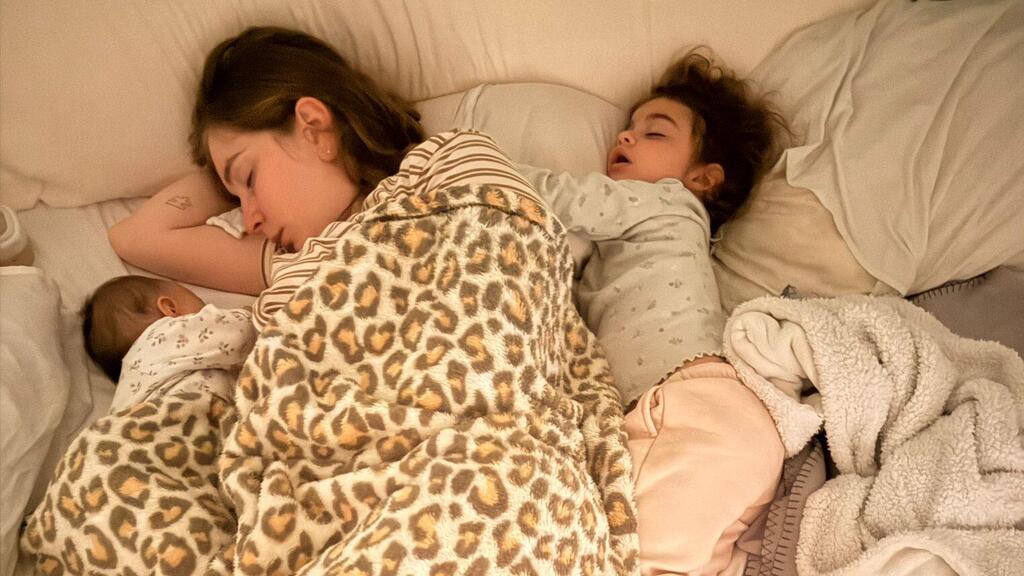
Maya Akkerman Omri and her daughters. 'Knowing I am available to them even at night is important to me'
(Photo: Family album)
How do people around you react?
“Everyone has comments and something to say. When friends come over, they are always shocked that the girls sleep with us in bed. That was when she was 6 months old: ‘Are you serious? She is still in your room?’ And now she is 3, and still in our bed.”
Until what age do you plan for them to sleep with you?
“There is no plan or decision. I am growing together with them.”
Asked whether this kind of sleep is a blanket recommendation for every parent, she says not necessarily. “I believe it should be done out of conscious choice and because it suits you, while making sure there is a safe sleeping environment.
It does not suit everyone, but for those it does, it can be a very bonding, calming and beneficial experience for both parents and children. The best feeling in the world for me is turning from side to side at night and seeing them beside me.”
The continuum concept
Anati Yuster Heller, a therapist, founder of the Atifa Nashit (Women’s Embrace) nonprofit and mother of four children, ages 27, 24, 20 and 11, from Savyon, slept with her children for years, until they themselves decided they had had enough.
It all began with a visit to her cousin, a mother of six and a major supporter of the continuum concept, a parenting and lifestyle philosophy developed by Jean Liedloff as described in her 1975 book “The Continuum Concept".
“She gave me the book to read and also explained how healthy it is,” Yuster Heller recalls. “I understood that sleeping with the parents is the most natural thing there is. In nature, children sleep with their mother. In fact, we are the only mammal that separates the child from the mother, and that separation is traumatic.”
The continuum concept by Jean Liedloff advocates raising children as in the past, in nature. Among other things, Liedloff believed in continuous contact between mother and baby during the first months of life, including co-sleeping, in order to foster calm, self-confidence and independence.
Yuster Heller adopted the continuum concept as a way of life. “I believe that when you sleep with your child, it gives them a lot of confidence and strengthens the love they feel,” she says. “It also makes much more sense, because in any case, during the first years, parents are constantly walking from their room to the children’s room. This way, you do not have to get up, and the whole nighttime parade between rooms becomes unnecessary.”
How do you actually sleep with several children in the same room?
“Tomer, my eldest, was 3 when his sister was born. We lived in a house where the parents’ suite was on one side and the children were on the other. I arranged two mattresses for them in our room, one beside the bed and the other against the wall, with a nursing pillow along the wall. So they basically slept in a kind of bed of their own in our room.”

Anati Yuster Heller
(Photo: Family album)
What are the challenges of that sleeping arrangement?
“The only challenge is that there is less privacy in the bedroom, and you need to know how not to harm the parents’ relationship. So you create another room for sexuality. There is no doubt you need to be creative.”
When did the co-sleeping arrangement come to an end? The children are grown now.
“When Tomer, my eldest, was 5, he moved with his younger sister, Roni, to another room. He really wanted a room of his own. That lasted a year and a half, then they came back to sleep with us, and later moved again to a separate room.
"The third slept with me for a few months, and then, around bedtime, began going to Tomer and Roni’s room. The youngest was born nine years later, my gift for turning 40. She slept with us until very recently, and she is already 11.”
Don’t you think sleeping in the same bed with a 10-year-old girl could hurt her independence?
“In recent years, nights in this country have been difficult. There was COVID-19, then war, then war again. Something else keeps happening here. At the same time, there was not really enough space in the house because it had been built for three children. Our solution was simply to put a bed for her in our bedroom.
"Her dream was to move into her brother’s room once he got married and left home. And the day that happened, she moved. I believe co-sleeping leads to exactly the opposite: It is a way to give children independence, love and security. The bond between me and them cannot be explained in words.”
What do people think about it?
“There are all kinds of reactions, some good and some not, but I do not talk much about what happens inside the home. This is what I believe in, and I do not need anyone’s approval.”