


“Everything began to unravel after we set the wedding date,” said Lian, 29, from Kfar Saba, whose real name has been withheld.
“We signed the contract with the venue and walked back to the car hand in hand. Before we got in, I looked at him and said, ‘You should know that once we leave this place, the devil will come between us. There will be plenty of arguments before you put the ring on my finger under the chuppah. We have to stay strong.’
Gallery
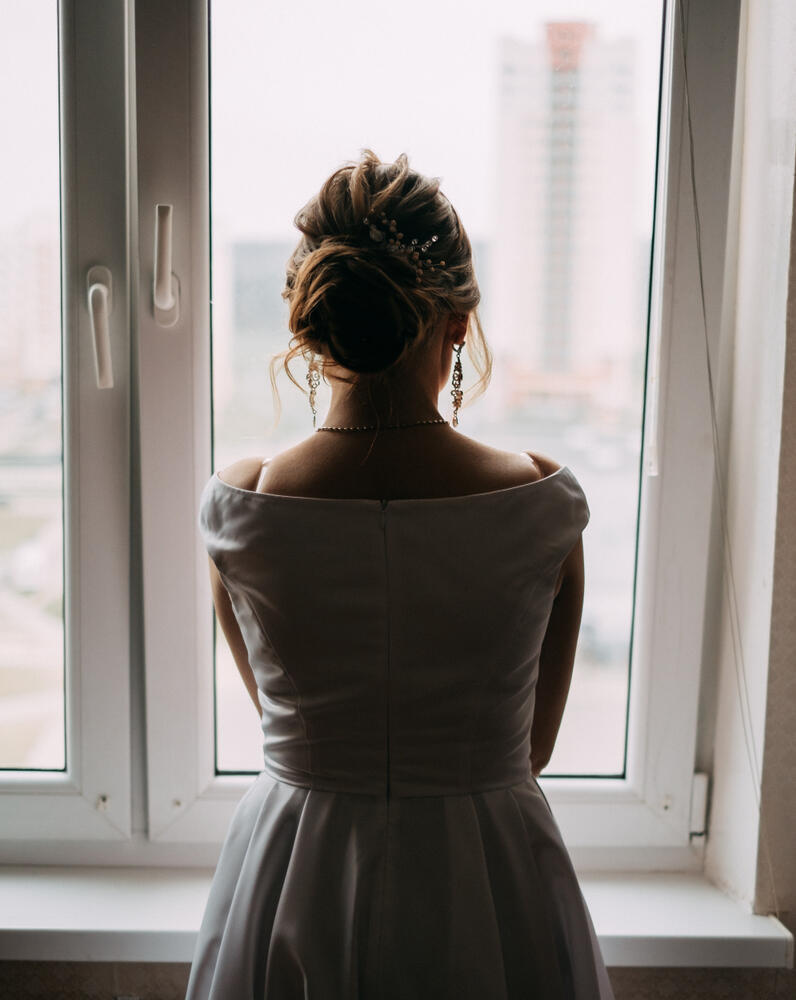
'I was caught up in a fantasy. Every girl dreams of her wedding, and all my friends were already married with children'
(Photo: Shutterstock)
“He looked at me as though I was being ridiculous and said, ‘Come on, what are you talking about? We love each other. We’ll be fine. What could possibly go wrong?’ He was very naive. In the three months before the wedding, almost everything that could go wrong did.”
Like the other women interviewed for this article, Lian decided to cancel her wedding while the countdown was already underway, the dress was ready, the venue had been booked and invitations had been sent to relatives and friends.
For women who make that decision shortly before the big day, it can be one of the most destabilizing moments of their lives. Beyond heartbreak and disappointment, they may face social pressure, shame, embarrassment and financial consequences, all while confronting the question: Did I do the right thing?
‘I tried on wedding dresses and felt nothing’
“We met a year earlier through a dating app for traditional Jews, and the connection was immediate,” Lian said. “We were both law students and felt completely in sync, with the same ambitions and the same dream of building a home together. The relationship became very intense. Three months in, we decided this was it and that we would get married.
“My older sister was also engaged at the time and was uncomfortable with us planning our weddings at the same time. We wanted to marry before he began his internship, which left us only a few months to organize everything. We even booked the venue before he formally proposed. That was when the problems began.”
What happened?
“He was an only child, and his mother became deeply involved in our relationship. I come from a large family, and he struggled to get along with them. Although we had initially seemed to agree on everything, we suddenly found ourselves arguing over nearly every major issue, from where we would live and how we would raise our children to work and family purity.
“As time went on, things deteriorated. He became increasingly controlling and tried to distance me from my family and friends.”
“At a certain point, I understood that there were two options: fight for it or break it apart. We went to a couples counselor, but for an hour we just attacked each other over everything. She looked at us and asked, ‘Why are you getting married? Do you understand that this will not last?’”
How did you respond?
“We were silent. We knew she was right, but we were already a month away from the wedding, and the shame was stronger than reason. We asked her to help us bridge the gaps and find compromises, but nothing worked.”
Despite all the fighting, why did you still want to marry him?
“I was caught up in a fantasy. Every girl dreams of her wedding, and all my friends were already married with children. I was waiting for that moment even though something inside me felt wrong.
“I tried on wedding dresses but felt no excitement, and I took no pleasure in planning the wedding. At times, I would look at my engagement ring and wonder what I was supposed to feel, and whether this was really the life I wanted.”
“I was confused, but one thing was clear: I did not want to end up divorced. Every day, I prayed to God and lit a candle in memory of my grandmother. I repeatedly watched a video of her placing a hand on my head and blessing me to find a worthy match, a patient, principled husband from a good family. Deep down, I did not feel he was the man she had wished for me.”
When did you realize he was not the one?
“A month before the wedding, I was taking the train to his graduation ceremony after a long day at work. The entire journey, I kept thinking about how much I did not want to be there, and I asked for a sign. Then I suddenly saw a store bearing my late grandmother’s name, with a picture of a woman who looked just like her. I got chills and took it as a sign from her that I needed to call off the wedding.”
“I arrived just as his name was called and he went up onstage. When he came down and saw me, he immediately understood what was on my mind. He looked at me and asked, ‘Is that it?’ I said yes. “He started shouting, ‘How can you do this to me? Why are you ruining this day for me? Why couldn’t you wait?’ I told him I was sorry, but I could not drag it out any longer."
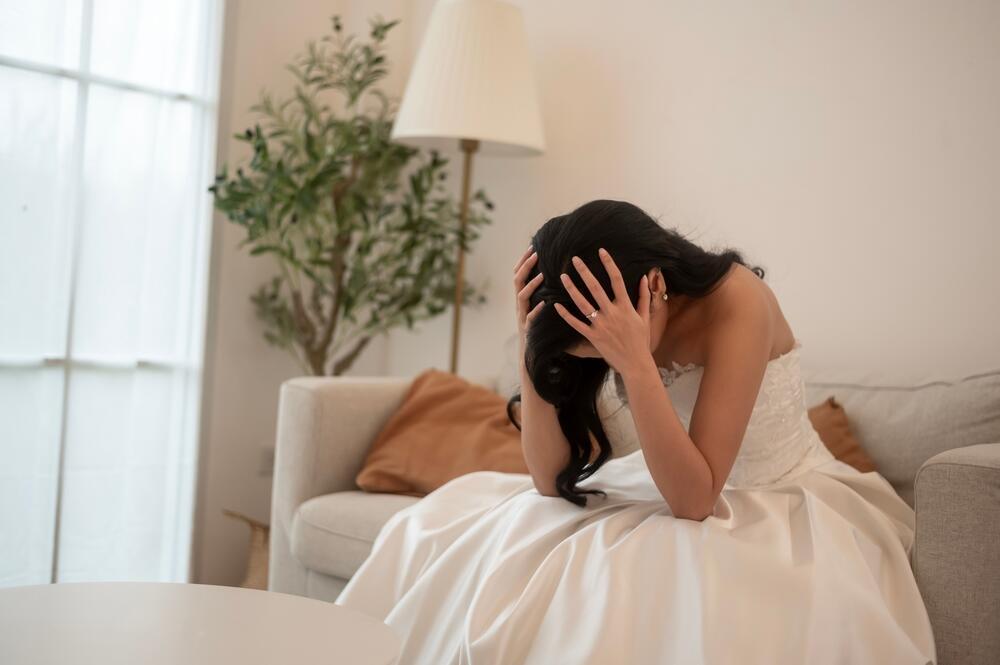
'I told him I was sorry, but I could not drag it out any longer'
(Photo: Shutterstock)
“He shouted, targeting every insecurity he knew I had, then turned and walked away. I took the train home alone. On the way back, he sent me the venue’s cancellation form with the message, ‘Sign here and here.’ It felt like a divorce. We split the 60% cancellation fee, while the other vendors waived their charges and returned our deposits. The next day, he came to collect his belongings from the apartment. He even took the sheets.”
So sad. How did people around you react?
“Everyone seemed to celebrate our breakup. My sister and her husband were thrilled that we would no longer marry before them, while members of the extended family were relieved because another relative’s henna ceremony had been scheduled for the same day as my wedding.
“In the end, everyone else got their celebration except me. Part of me felt a deep sense of relief, but another part was completely numb. I did not even cry. When my sister got married, I could not bring myself to help with the preparations or go with her to the mikveh. I wanted to disappear. I felt that everyone was celebrating her happiness while looking at me with pity.
“I was ashamed. I tried to pretend I was fine, but I was not fine at all. I was angry at the world.”
Did you regret it?
“Sometimes I wondered whether I had made a mistake. A while ago, I saw a profile picture of him with a new partner, and I caught myself thinking, ‘This would have been your anniversary,’ or, ‘By now, you might already have been married with a child.’
“There were also moments when I thought that perhaps everything would somehow have worked itself out after the wedding. But I still believe I made the right decision. I was not imagining the problems. The warning signs were there, and I saw them. I simply hoped things would change and wanted to give the relationship a chance. I suppose I needed time before I was ready to walk away.
“In the end, you have to trust your instincts. They do not lie. Today, I know my red lines, what I want and what I deserve. It is still painful, though, and the feeling returns whenever someone else celebrates a wedding or engagement.
“In the end, faith is what holds me. I know God is with me and that the right match will come.”
‘My father also once called off his wedding three weeks before the ceremony’
“Looking back, I think I knew, deep down, that he simply wasn't the right person for me,” said Amalia Singer, 36, from Moshav Megadim, who called off her wedding just three weeks before the ceremony.
“We met when I was 27. I had moved to a kibbutz after a breakup, and we lived in neighboring apartments. We dated for about two years before he proposed, and five months later we were supposed to marry. We planned a small wedding in the desert with 50 guests and booked a guesthouse complex for the weekend.
“But the truth is, most people around me did not even know I was getting married because the entire situation made me anxious. I had never imagined myself in a white dress, and I did not want that kind of attention. I was also uneasy about how my divorced parents would handle the occasion and wanted to avoid dealing with the family tension.”
Did you share those feelings with your fiancé?
“No, and that was one of the reasons our relationship fell apart. We simply didn't know how to communicate. We had never had honest conversations about many deeper, important issues.”
What made you realize it was not right?
“Three weeks before the wedding, a family friend came to visit and asked me about our relationship. He brought up questions about raising children, finances, our future together and our shared goals, and I realized I had no answers.
“I admitted that my partner and I had never discussed any of those things. He looked at me and said, ‘If I were you, I would wait a little before getting married.’”

Amalia Singer
(Photo: Yael Rotem)
“It shook me. I never expected to hear something like that just three weeks before the wedding. Wait? What did that even mean? Everything had already been arranged. That Friday, I went home and brought it up with my fiancé. He became very angry and took it badly. I was overwhelmed and confused, so I drove to my parents’ home to clear my head.
“My father told me that he, too, had once called off a wedding three weeks before the ceremony. He reassured me that it was not the end of the world and that I would be all right.”
“I was so ashamed at the thought of canceling that I even wondered whether it would be easier to go through with the wedding and divorce later. Then my sister said, ‘Listen, if you are not excited and cannot even bring yourself to talk about the wedding, cancel it.’ In that moment, everything became clear. I decided not to wait any longer. That night, I went home and told him, ‘I think we should call off the wedding.’”
How did he react?
“He did not make a scene or try to fight for me or the relationship. He simply said, ‘If that’s what you want, fine.’ I had not even thought of it as a breakup. I assumed we would cancel the wedding, take some time and see what happened. But for him, it was final. He said the relationship was over and that we needed to separate.
“I was deeply embarrassed about canceling and it was hard, but fortunately there were not many guests to notify. Everyone was very sorry, but they also supported me.
“The caterer did not charge us when he heard the wedding had been canceled, and some of my relatives used the guesthouse reservation, so there was no financial loss.
“He stayed in the house and I left. We calculated the cost of the furniture and divided it equally. Afterward, we cut off contact completely. At first, I lived with my parents, then moved to Tel Aviv and started everything over.
“It was emotionally very difficult for me. He, on the other hand, began a new relationship just a few months after we separated and later got married.”
Did you have moments of regret?
“There was heartbreak, shock and the sudden collapse of the future I had imagined. I left the relationship, my business and the home I knew, and moved somewhere new where everything felt unfamiliar. At first, I was swept up in the excitement of starting over. But once that faded, I fell into a very difficult period, and it took me more than a year to recover.”
“Over the years, I often thought about what might have been. I did not regret leaving him, but I did regret losing the possibility of a very comfortable life. Seven years have passed. I could have been married with three children by now, but I probably would not have been happy.
“Two years ago, I ran into him with his child. It made me feel good to see that he had a family and was doing well.
“I am still single and looking for a relationship, but I have fulfilled everything else I wanted in my life. I can enter the next chapter feeling more complete, with a clear understanding of who I am and what I need.
“I gained something invaluable from the experience: I became someone I never imagined I could be. I am more connected to myself, more independent and ambitious, and much better at expressing myself and communicating openly. Today, I do what I love, leading retreats and women’s circles.”
“I learned that I want a man who can communicate openly, even when the conversation is difficult. Someone open-minded and ambitious, who dreams big and, above all, truly knows himself. I want a partner I can embrace life with, travel and explore alongside, and ultimately build a family with.”
‘I hoped I would get into an accident, anything to avoid marrying him’
Adi (alias), 34, from Rehovot, also believes that despite the pain, calling off the wedding was the right decision for her. She is still waiting for the right person, someone who will truly feel right.
“We met a month before the war. I traveled south to take part in a young adults’ program and lived there for a month. He worked there. We sat together almost every evening in a caravan, played music and talked late into the night.
“At first, I saw our relationship as purely platonic. I am a religious Zionist, while he had left religious life and was also younger than me. But after the program ended and he began reserve duty, we grew closer and eventually became a couple.
“The problem was that, as the relationship developed, I kept discovering more differences between us, and they became increasingly difficult to bridge.”
What kind of differences?
“I am naturally optimistic, open-minded and full of life, while he was constantly wrestling with existential questions like, ‘Why get married?’ and ‘Why bring children into the world?’ That unsettled me.
“A few months into the relationship, he went through a traumatic experience in Gaza, which profoundly affected us.”
In what way?
“He began showing symptoms of PTSD and was eventually sent home from reserve duty. He suffered from anxiety, nighttime episodes and intense anger, much of which was directed at me. He stopped working and refused to seek treatment. After a year together, painful as it was, I ended the relationship.
“A month later, he texted me and said we had invested too much in the relationship to give up without trying again. So we got back together.”
“We had an honest conversation about our expectations, and for a while it seemed to help. But too much resentment had already built up between us, and his symptoms only intensified.
“I began to feel guilty for being happy, optimistic and spending time with friends while he was struggling. From the moment we got back together, everything revolved around him. I became his ‘therapist,’ constantly tending to his emotional wounds, and gradually felt myself disappearing inside the relationship.”

'I gradually felt myself disappearing inside the relationship'
(Photo: Shutterstock)
“We went through one difficulty after another, but he was unwilling to let go. For two years, I felt confused and emotionally numb. I kept reassuring myself that at least I had a partner, that he was a good man with a heart of gold, and that every relationship comes with problems.”
When did you understand something was seriously wrong?
“When jealousy began. I decided to spend a month in India to clear my head, and something shifted while I was there. We began having video-call dates, and for a while, the relationship felt easy and pleasant again.
“When I returned to Israel, he met me at the airport and proposed. I said yes in the excitement of the moment, but later realized I had been swept up in the experience and had not been fully present. Everyone was surprised but thrilled for us, except my father, who did not even get up to greet us.”
“My mother said, ‘I just want to know that you are happy.’ I answered that everything would be fine and that we were working on it. A few days later, we sent a message telling everyone we were engaged. At that very moment, I began crying uncontrollably. I had a severe anxiety attack and felt terrified.
“I was terrified of the wedding, but not because I was afraid of marriage itself. Deep down, something simply felt wrong.”
“Meanwhile, I went through the motions, planning a large wedding at a farm. We disagreed over nearly every detail and even argued on the way to sign the venue contract. Eventually, everything was in place: the dress, the vendors and the venue. But I felt as though I could not breathe. My closest friends kept telling me, ‘Listen to yourself.’”
What finally made you listen to your inner voice?
“We drove to the rabbinate to open a marriage file, and I cried the entire way. I prayed, ‘God, please do something. Tell me everything is all right, or release me from this relationship. Something feels wrong.’ At one point, I even found myself wishing I would get into an accident, anything to stop the wedding from happening.
“Afterward, we went to a hotel with his family to celebrate the engagement. I felt completely detached. He became frustrated with me, said, ‘You know what? I have no energy left for you. I’m tired of this,’ and walked away. I stood there in shock and realized I had to find the courage to act.
“I went after him and said I could not go on, but he did not take me seriously. We argued on the drive home. I cried the entire way while he kept shouting at me. Three weeks before the wedding, we went to couples therapy. During the session, he looked at me and said, ‘Just tell me what I need to do, because I know you are my wife.’ “I looked at him and said, ‘I don’t think I'm your wife.’”
Still, the relationship did not end immediately. “People kept telling me, ‘You are confused’ and ‘Everything will work itself out after the wedding.’ But in the end, God intervened and it ended for good.”
What happened?
“A few days before the henna ceremony, the war with Iran began, and I took it as a sign from above. His mother asked whether we wanted to postpone the event, and I told her I was not sure there would be anything to postpone. She understood exactly what I meant.
“My fiancé asked to meet and talk, so we met outdoors. I came prepared to end the relationship and knew no one would change my mind this time. He was pale and seemed to understand it was over. I told him we had tried everything, that it was not working, and that this was not the life I wanted for myself.”
“As he tried to persuade me, a siren sounded. Because of his trauma, he curled up against me and I hugged him. We sat there with nowhere to go, and I understood that I also wanted someone who would hug and protect me.
“He made one final attempt and said, ‘At worst, we will get married and then separate.’ At that moment, I understood how different our views of life truly were. I put the ring in his pocket, got into the car, repeatedly recited Psalm 100, danced and sang, because 'there is no joy like the relief of uncertainty'.”
How did people react?
“After the meeting, we sent everyone a cancellation message citing ‘the security situation.’ The vendors understood that he was a combat soldier suffering from post-trauma and waived the fees. We split the venue deposit.
“My family and friends stood by me, and on what would have been my wedding day, I went to Eilat. Six months have passed, and we have not seen each other since. Only now am I beginning to process the heartbreak, and there are days when I miss him.
“I sent him a message asking for forgiveness, and that gave me a sense of peace. I still pray for him. In the end, I walked away because I realized I could not gamble with my life.”