


Walk through a Japanese park early enough in the morning and you may come across an unusual sight: a group of people raising their arms, rolling their shoulders, bending from side to side and lightly jumping in time with familiar music.
Within minutes, it is over. Everyone goes on with their day.
Gallery
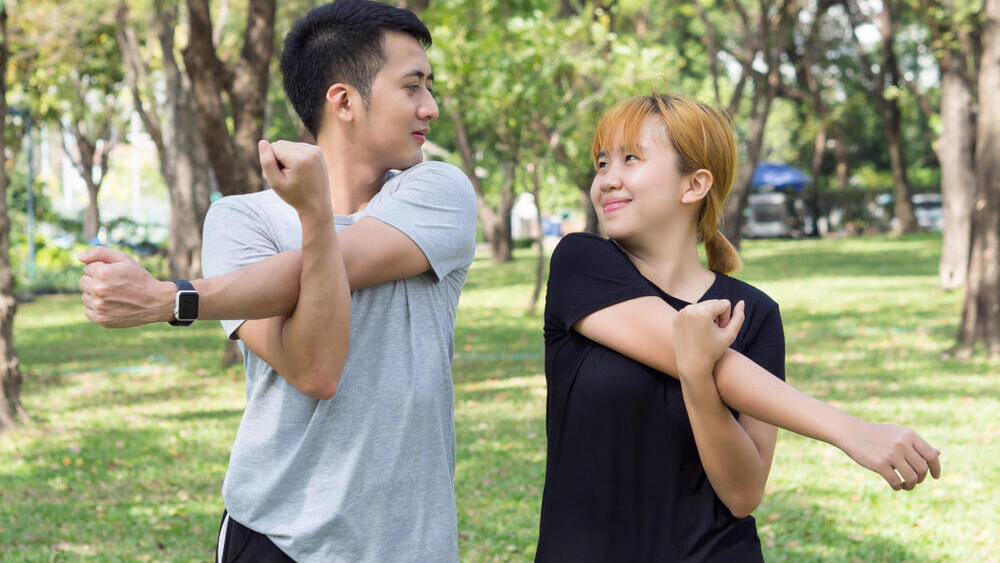
No gym, no equipment, just 3 minutes: Why Japan still starts the day with Radio Taiso
(Photo: Shutterstock/Tirachard Kumtanom)
The routine is known as Radio Taiso, a Japanese morning exercise program created nearly a century ago that became deeply embedded in daily life, from schools and workplaces to neighborhood parks.
In recent years, it has also attracted growing interest outside Japan, largely because of its simplicity. The routine is short, requires no equipment and is built around regular daily movement.
In a world constantly searching for the perfect workout, its appeal may lie in the opposite idea: that better health does not always require more time, more intensity or more complexity.
Thirteen moves in three minutes
At the heart of Radio Taiso are just 13 movements performed in about three minutes.
“Taiso is a sequence of exercises that includes rhythmic, continuous movements that activate the joints, stretch and contract different muscle groups and raise the heart rate,” said Roni Weisman, a qigong master and holistic healing practitioner.
“The workout is short, it is performed to music and the instructions are very clear. It includes raising the arms, stretching, shoulder rotations, bending and jumping. The goal is simply to get the body moving and wake it up in the morning.”
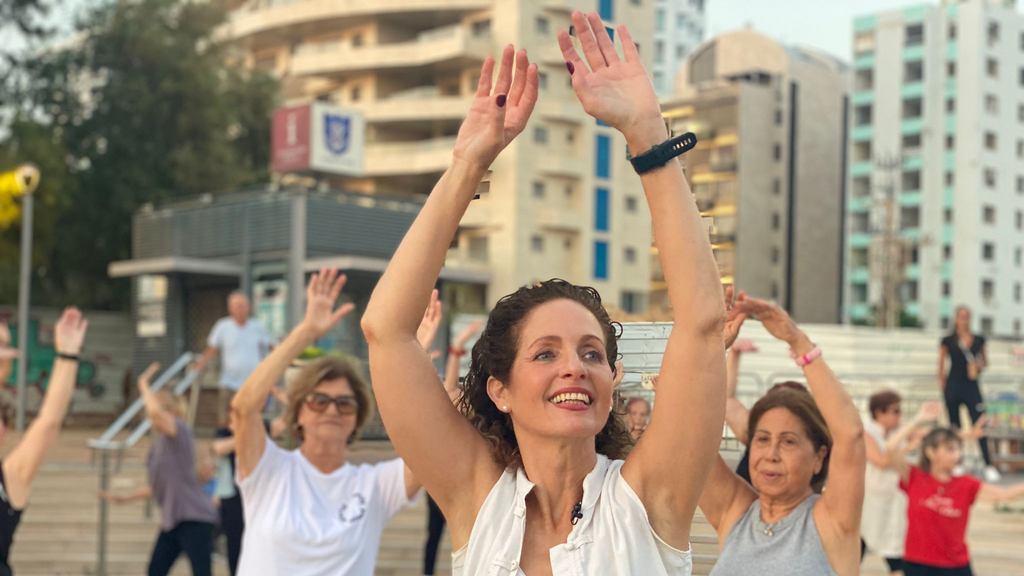
Roni Weisman
Weisman encountered the practice while preparing for a professional trip to Japan a little over a year ago.
“As someone involved in health and longevity, it immediately caught my attention,” she said. “While preparing for the trip, I learned a great deal about Japanese culture, and in one video they described the method as one of the secrets of Japanese longevity. That really interested me, and I said I had to find it in Japan. Radio Taiso is truly part of the culture there. Millions of Japanese people practice it every morning.”
When she arrived in Kyoto, Weisman learned that a group gathered every morning in Maruyama Park.
“I found out they practiced at 6:30 in the morning. I got up early and went to the park, but on the first day I couldn’t find the place,” she recalled. “The park was beautiful but empty. I saw a woman walking her dog, and she told me, ‘Yes, it’s over there.’ When I arrived, I realized they had already finished because the whole workout is so short. If you’re 10 minutes late, it’s over.”
The next morning, she arrived earlier.
“I came back, found them, joined in and fell in love with it. It felt magical,” she said.
But afterward she discovered another defining feature of the method: participants do not need to be athletes, and they do not even need a dedicated instructor.
“I approached a woman I thought was the teacher, and she told me, ‘I’m not the teacher. I just put on the music from the radio and do it with everyone else,’” Weisman said. “The whole idea is that anyone can do it anywhere. You don’t need anything except the desire to do it.”
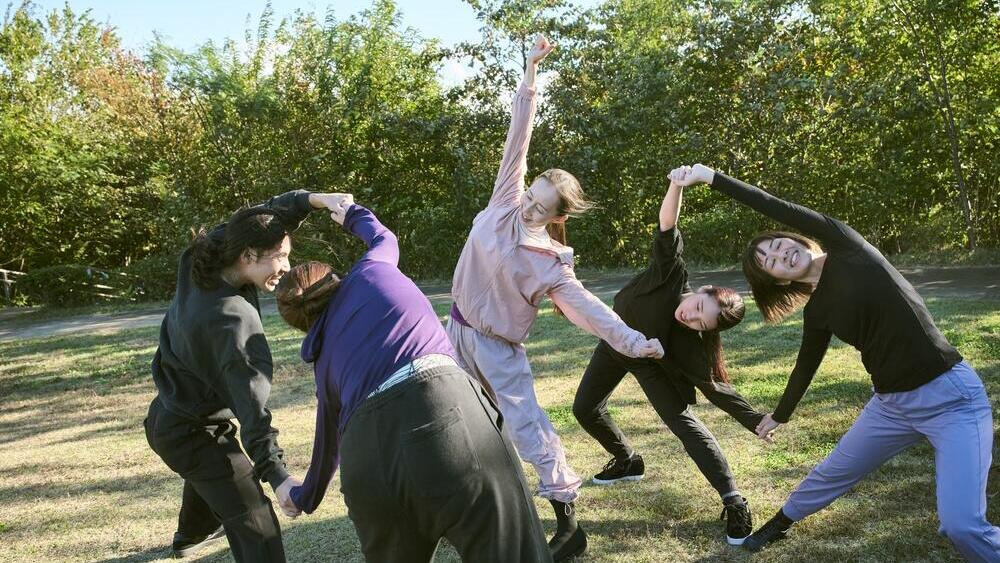
A short workout set to music with clear instructions
(Photo: Shutterstock/FOUR.STOCK)
She has continued practicing Radio Taiso in Israel and has incorporated it into some of her own classes.
Simple, fast and accessible
Weisman, whose background is in qigong, sees similarities between the two practices, but also one major difference: pace.
“They have things in common, movements that work the whole body, move the joints and muscles and improve coordination and balance,” she said. “But Radio Taiso is much more dynamic, much more rhythmic and much faster. In qigong, the movement is slower and more attentive, with an emphasis on relaxation, awareness and the flow of chi, or energy.”
The brevity of Radio Taiso, she argues, does not make it superficial.
“It is dynamic movement. Some parts activate the cardiovascular system, it works the joints, improves flexibility and helps coordination and balance,” she said. “There is something very clever about it because in a very short time you activate many parts of the body.”
Accessibility is another major advantage.
There are versions that can be performed while seated, making the exercise suitable for people with different physical abilities. Children and older adults alike can participate. No equipment is required, and the routine can be done standing or sitting, almost anywhere.
For Weisman, however, the greatest value is not necessarily what happens during those three minutes, but the habit built around them.
“The bigger message is that even three minutes of movement is still movement,” she said. “There is something very profound and very simple about that. Health is not necessarily built through dramatic steps, but also through consistency, through small things you repeat again and again.”
Radio Taiso also carries a social dimension.
“The community is part of it, whether it happens in a park, a factory or a school,” she said. “Even if everyone performs it individually while listening to the radio, they know other people are doing it at the same time. To me, that is what is remarkable about Radio Taiso: consistency, moving the body and the basic, simple things built into the practice.”
What the research found
Some of the benefits attributed to Radio Taiso have also been examined scientifically.
A randomized controlled trial published in 2024 in the Journal of Epidemiology included 226 older Japanese adults with pre-frailty or frailty.
For 12 weeks, participants in the intervention group practiced Radio Taiso every day at home alongside a nutritional program that was also given to the control group.
At the end of the study, the exercise group showed advantages in several measures of physical fitness, including agility, dynamic balance and aerobic endurance, as well as greater confidence in their ability to maintain physical activity.
Adherence was particularly high, exceeding 94% of program days.
The study did not, however, find a benefit in its main measure of mental quality of life.
Another, much larger study followed 11,219 Japanese adults aged 65 and older for an average of 5.3 years.
Among participants who reported practicing Radio Taiso alone, researchers found an approximately 18% lower risk of being diagnosed with dementia compared with people who did not practice it.
But that finding comes with an important caveat: the study was observational, meaning it cannot establish that Radio Taiso itself caused the lower risk.
People who maintain the routine may also differ in their general activity levels, social lives or other health habits.
From national ritual to workplace routine
The name Radio Taiso gives away part of its history.
Long before workout videos were available on smartphones, Japanese listeners exercised by following spoken instructions broadcast over the radio.
“Radio means radio, or ‘rajio’ in Japanese pronunciation, and taiso means exercise, so the name simply means ‘radio exercise,’” said Dr. Helena Grinshpun, a lecturer and researcher specializing in contemporary Japan.
“The practice began in Japan in the late 1920s, in 1928 to be precise, and apparently came from American inspiration. The Japanese were exposed to exercise programs broadcast on radio in the United States and adopted the idea.”
From the beginning, however, the practice also carried a national dimension.
The first Radio Taiso broadcast was held to mark the accession of Emperor Hirohito, at a time when Japan was moving into an increasingly militarized period.
“All of this took place against the background of what we call the militarization of Japan,” Grinshpun said. “In the late 1920s and early 1930s, Japan entered a militaristic phase marked by rising nationalism, a stronger military, conquest and war.”
Exercise and sport consequently took on a wider meaning.
“There was growing awareness of exercise and sport as part of the military agenda, based on the idea that people needed to be strong and raise strong children who would later become strong soldiers and fight for the homeland,” she said.
“So the broadcasts in schools and neighborhoods were not only about physical activity. People gathered and exercised together as part of a broader idea of national cohesion and a strong, healthy population.”
After Japan’s defeat in World War II and the American occupation, the meaning attached to Radio Taiso changed.
“The Americans viewed it as connected to the military world and violence, so it was modified,” Grinshpun said. “The language of strength and warfare disappeared, and the emphasis shifted toward discipline and health.”
The practice later found another home in Japanese workplaces.
“Companies and corporations adopted the exercises for workers as preparation for a long and demanding workday,” she said. “Employees would gather in the morning and do them together, both for health and for motivation, morale and cohesion.”
Still alive, but no longer universal
Despite Radio Taiso’s historic place in Japanese culture, Grinshpun cautions against imagining that the entire country still begins every morning this way.
“There are companies that still do it at work, but it is no longer really universal,” she said. “Some companies use it as part of team-building and corporate culture, but once it was much more widespread.”
The practice remains particularly visible among older adults.
“You can still see older people gathering in neighborhoods and parks and doing it together,” she said. “It has become part of community life, meeting, being together. It is not intensive, it is not demanding, and it is also not something you constantly see in everyday life. It is more hidden within daily Japanese life.”
Is it a secret to longevity?
Eventually, nearly every discussion of Radio Taiso arrives at the same question: Could it help explain Japan’s famously long life expectancy?
Japan is indeed among the countries with the world’s highest life expectancy. According to OECD data cited in the article, life expectancy there stands at 84.1 years, around three years above the organization’s average.
Grinshpun is cautious about giving Radio Taiso itself the credit.
“I do see a connection, but it is not a direct one. It is more indirect,” she said. “I think life expectancy in Japan is connected, among other things, to people’s general attitude toward movement.”
She points to the role of everyday physical activity, including walking and cycling, particularly among older adults.
“I think Taiso is part of that agenda, one piece of a much bigger picture,” she said. “If we try to present it as a direct cause-and-effect relationship with longevity, that sounds a little far-fetched to me. But as part of a lifestyle in which movement is integrated into everyday life, there is certainly a connection.”
That may ultimately explain Radio Taiso’s staying power.
It is not simply an exercise method, but a public habit woven so deeply into everyday life that it can barely feel like exercise at all.
In a world where fitness can demand significant amounts of time, money and discipline, the Japanese model is far less dramatic: stand up and move for a few minutes.
“That is something I would gladly introduce into our workplace routine here,” Grinshpun said.