

Let me share a secret: Everything here is expensive. Well, it's not really a secret. Everyone feels it, from grocery shopping to rent. Expenses keep climbing, and a systemic solution does not appear to be on the horizon.
Quietly, however, away from supermarkets, malls and delivery apps, consumer initiatives have emerged in recent years seeking to bypass the traditional retail model. They aim to leverage the purchasing power of large communities to lower prices.
“Bottles at interesting prices” is one prominent example. What began as a small community of alcohol enthusiasts has evolved into a group-buying platform. The goal is simple: Continue buying quality, distinctive alcohol while paying less for it.
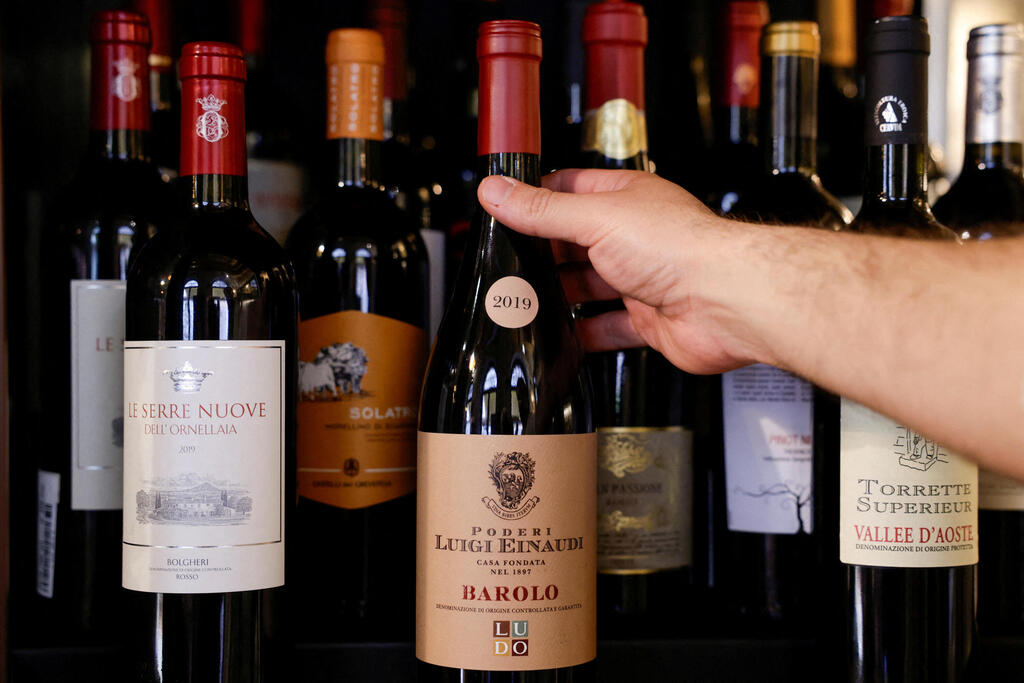
Each month, about 10 limited-time “projects,” as they are called on the site, open to members. These are time-sensitive deals offering a range of alcoholic beverages at discounts starting at 25% and, in some cases, reaching 75% or more, depending on the offer.
Delivery is not immediate, and waits can stretch beyond two months. That is the trade-off: Less convenience in exchange for lower prices.
The selection varies by project and includes wine, whiskey, rum, beer, Champagne and more. In January, for example, wines from a southern Italian winery were offered at discounts of 38% to 48%, alongside deeply discounted whiskeys at various price points. Earlier in the month, a “wholesale warehouse clearance” featured beer, wine, cocktails and other items.
Each project remains open until stock runs out, typically just a few days, and is published on the website and in the community’s WhatsApp groups. A Facebook group with more than 6,500 members serves as an active forum where participants share reviews, requests and, at times, complaints, mainly about long wait times that can frustrate some buyers.
“July 7 was wonderful. Any chance more is coming? I’m willing to wait all that time again. It’s worth it,” one member wrote, referring to a project named by month and number. Another asked whether a cognac or mezcal project was planned soon.
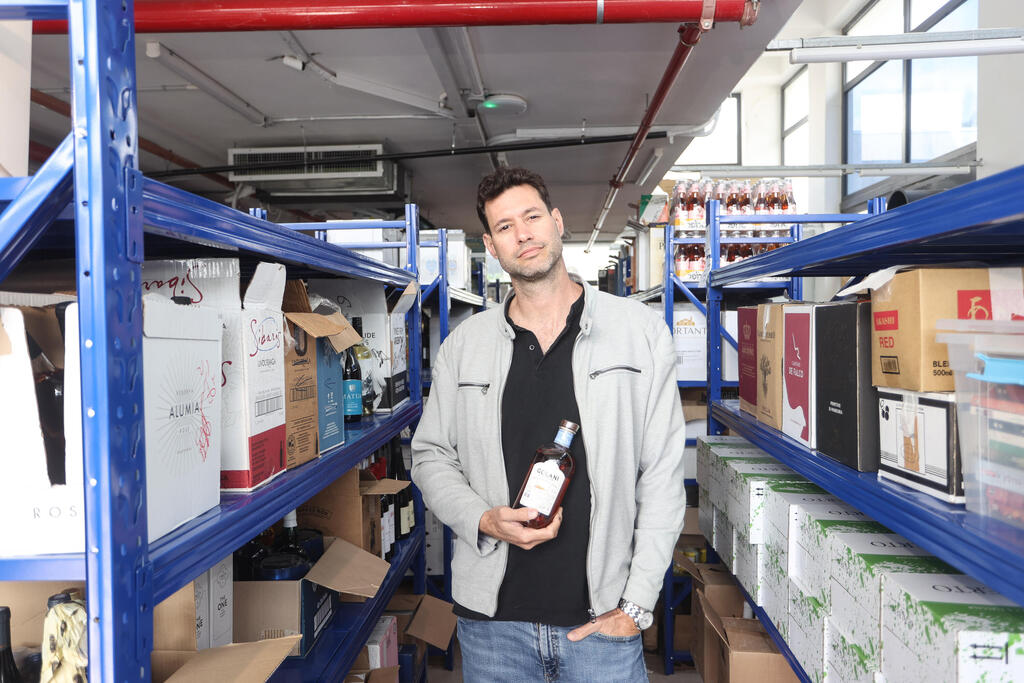
Omri Imber at a pickup point in Yavne
(Photo: Gil Nehushtan)
Everyone needs to make a profit, importers and consumers alike
Omri Imber, who founded the initiative just over two years ago, said he does not chase importers. “I don’t approach importers,” he said. “Sometimes I get a number, but I prefer not to call. I don’t want to sound like someone trying to arrange discounts for his friends. I prefer that the importers reach us. It’s in their interest to work with me. Our schedule is always full.”
How did it all begin?
“In 2014, I noticed there were no serious alcohol communities in Israel, so I decided to start one. I thought there should be a place for people who love alcohol to meet and talk about it, online and face to face,” he said. “I thought it would suit both sides, importers and consumers alike, industry professionals as well as enthusiasts. The consumer aspect was central from the start. The goal was always to ease the financial burden on community members.”
In August 2023, an importer approached him with a pallet of whiskey and asked him to sell it to the community. “At first I refused. I have a day job,” he said. “She kept calling me. She started with a 10% discount. I refused. Eventually she offered 40%. I felt it would be irresponsible not to present it to the community. I opened a WhatsApp group and offered the bottles. That same day we sold 20,000 shekels worth of bottles,” he said. “Soon after, three more importers contacted me and we had to open more groups.”
What began as a side project quickly expanded. "It was a kind of nice service I provided to the community. From time to time, I connected members with importers. The inventory clearance, which, in hindsight, was not particularly large, sold out immediately. We distributed the bottles at three pickup points, Yavne, Binyamina and Tel Aviv. We saw how people organized themselves to make the collection easier. It was very cool.”
“Two months later, October 7 happened. My regular job, my day job, was shut down. Naturally, we paused the initiative as well because of the situation. But very quickly, members urged me to resume activity. It took me some time until I felt comfortable. At a certain point, I asked the community, and the answer was clear, so we returned to activity.
“Within a few months, it became clear the platform needed to operate as a full-fledged business, capable of paying employees. I decided to pursue it full-time. I set aside a percentage for salaries. Today we have six full-time employees and two part-time staff. It’s important to me that the business operates transparently. We work in a way that ensures everyone involved, producers, importers and community members, all need to benefit.”
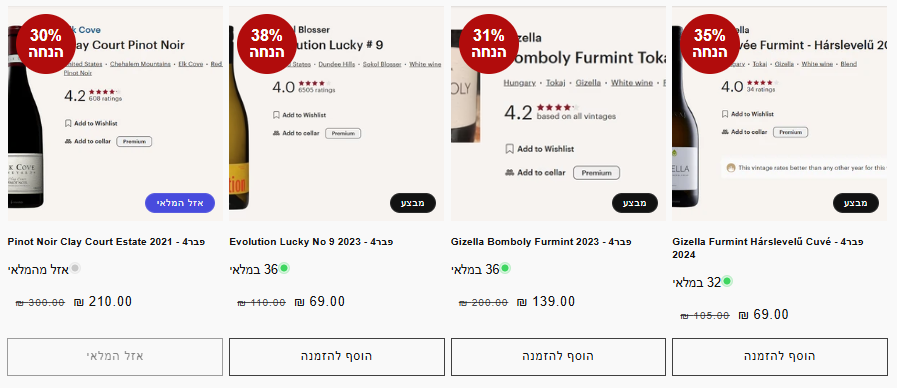
(Screenshot from the “Bottles at Interesting Prices” website)
Pickup from private homes, shops and factories
One of the clearest demonstrations of the community’s strength in the case of “Bottles at Interesting Prices,” beyond the steep discounts and rapid stock clearances, is its network of pickup points. What began with three locations has grown to more than 50 in less than three years.
“We distribute in pubs, at a door factory, in private homes, which is perhaps the most remarkable part,” Imber said. “We compensate the hosts, but it’s also very community-driven. We offer them vouchers to be used on the site. In the end, they’re part of the community. They want to take part.
“Sometimes we see small communities forming around the pickup points. The people living near one of the locations in Herzliya recently organized a meat and wine evening.”
How do you secure such deep discounts?
“That's the power of a community. We’re not undercutting the people we work with. Community members pay less because they’re willing to wait a long time for the product and because they collect it from factories and private homes. This isn’t the convenience we’re used to.
“We try not to bring in subpar products. The goal is to offer high-quality items, and if a product isn’t top tier, then the price reflects that.”
Israelis are known for their impatience. There must be quite a few complaints about waiting for orders.
“There are many new members who don’t fully understand what they’re signing up for, and not everyone likes reading the fine print. We try to make it clear everywhere on the site that things take time. We state plainly that the service isn’t great, that there isn’t always a response and that deliveries are slow.
“There are plenty of complaints, but that’s part of it. We’re used to getting things the same day or within a short time. But fast delivery requires an operation that is quick and accessible, and that costs a lot of money. I see it differently. If you want lower prices, you have to give up immediacy.”
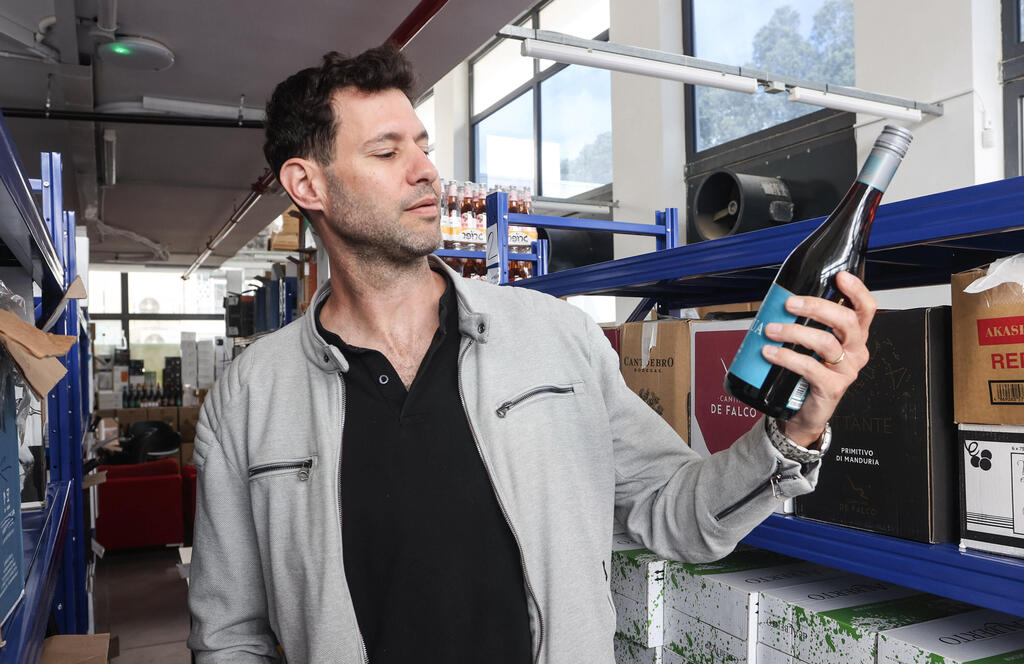
Omri Imber. "If you want lower prices, you have to give up immediacy”
(Photo: Gil Nehushtan)
Not the first, and hopefully not the last
“Bottles at Interesting Prices” model is not unique. Other initiatives, such as “HaHishuk” have applied similar principles by offering dry goods with long shelf lives at discounted prices. The project emphasizes transparency and low profit margins, with the primary goal of benefiting consumers.
Here, too, the model is straightforward: Relying on the purchasing power of a large group and the ability to store products for extended periods without spoilage. Convenience is also sacrificed here. Waiting two weeks for food products and picking up a box weighing several kilograms from a distribution point is not the most convenient option, especially when it involves groceries.
But compromise has financial value, and it appears Israeli consumers are beginning to understand that. In recent months, HaHishuk’s share of total online grocery sales from retail chains has grown, and the initiative now ranks 13th among all chains in online sales.
In addition, a crowdfunding campaign was recently launched for another initiative called Fair. The chain is intended to be especially low-cost and is likewise designed to ease the burden on consumers as the cost of living continues to soar. According to Gal Shulman, one of the entrepreneurs behind the project, it will be “the first low-cost retail chain in Israel.”
In an interview with Ynet, Shulman said the chain would buy solely from large suppliers to cut out intermediaries and reduce pricing gaps. “Large monopolistic suppliers charge outrageous brokerage fees. At Fair, we are part of a large international purchasing group, and we can connect directly with factories in Israel and Europe, lower prices and pass the full benefit directly to the customer.”
In that context, Imber noted that “Bottles at Interesting Prices” will also assist Fair. “We will be their first distribution arm, offering non-alcoholic products to our community members in the coming weeks. People will begin to get familiar with them. In about a week, we’ll launch their first sale,” he said.
These models are unlikely to replace supermarkets or fast delivery services anytime soon. But they may at least reduce the volume of purchases made at increasingly expensive retail chains. More broadly, they reflect a growing recognition among Israeli consumers that uncompromising convenience and individual purchasing come at a price, and it is rarely cheap.