

Anna Wintour is unlikely to forget the humiliation she suffered at the hands of a group of activists from the animal rights organization PETA in March 2005. Minutes after leaving Chanel’s fall-winter 2005-2006 show in Paris, she was hit squarely in the face — and not for the first time — by a tofu pie thrown by anti-fur protesters.
As usual, she did not lose her British sense of humor. “I think it was organic,” she said, before adding, when asked whether the incident would affect her clothing choices: “I’ll wear more fur.”
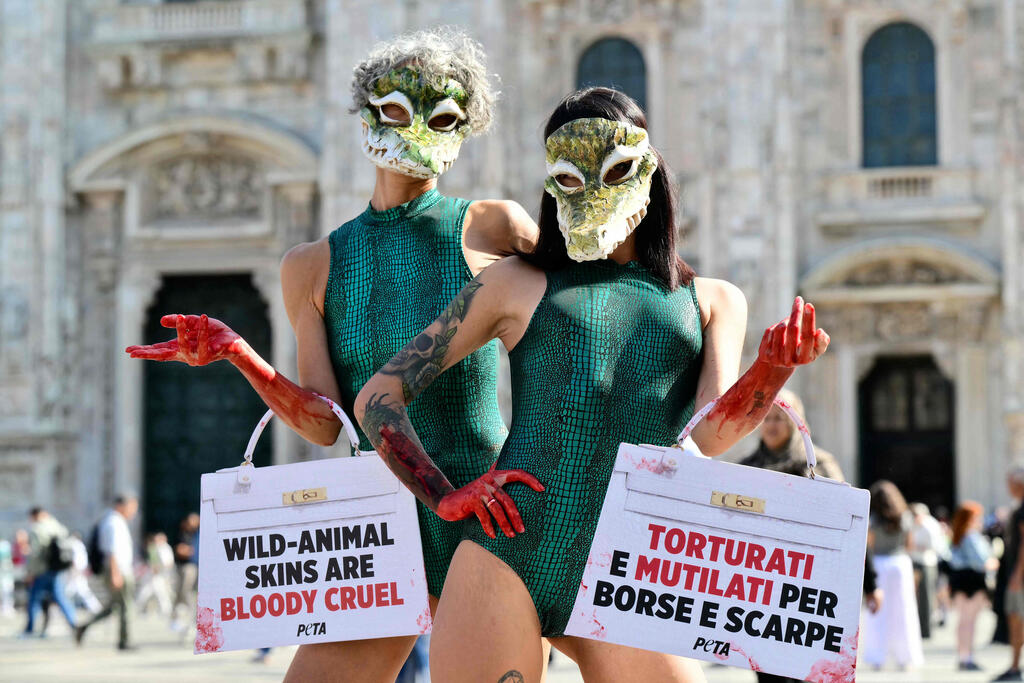
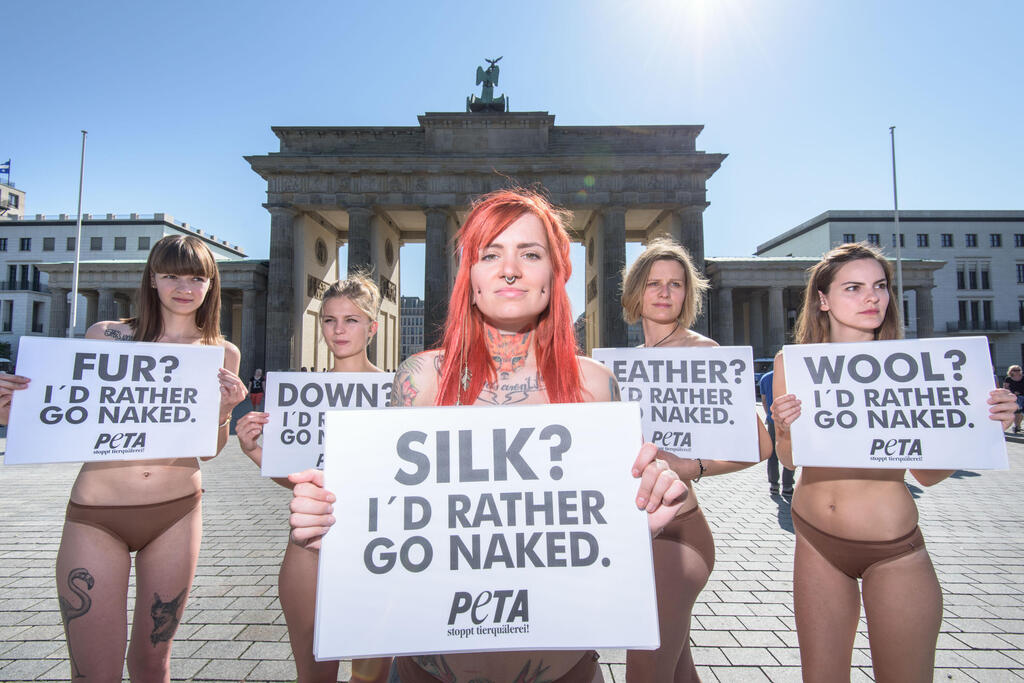
PETA demonstration at Berlin Fashion Week, 2015
(Photo: Thomas Lohnes/Getty Images)
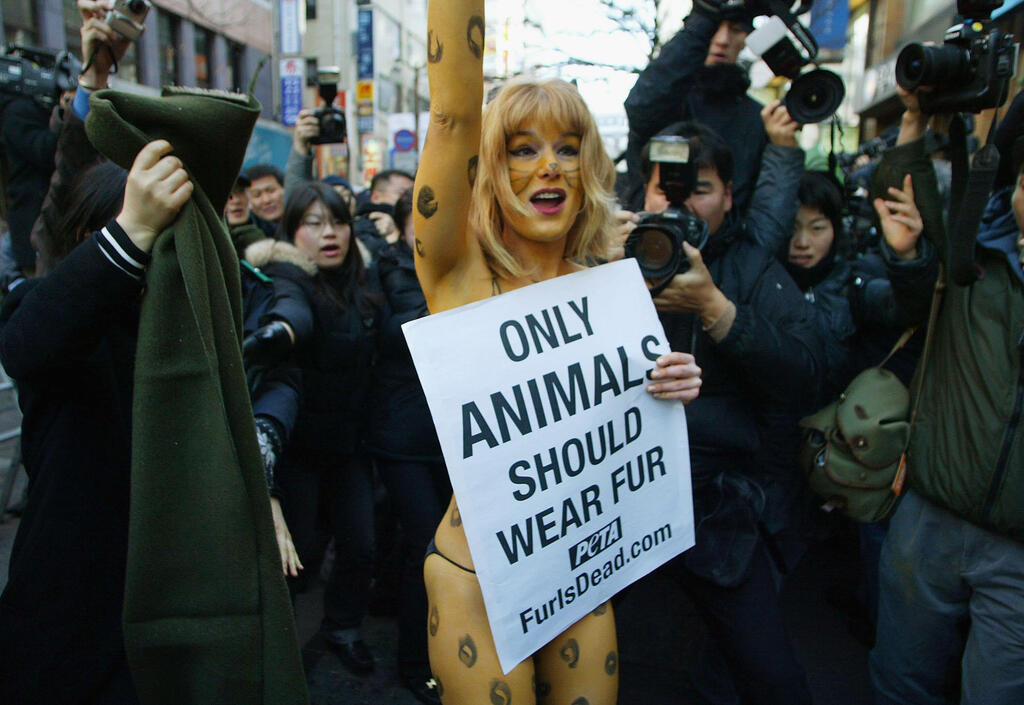
PETA demonstration in South Korea, 2005
(Photo: Chung Sung-Jun/Getty Images)
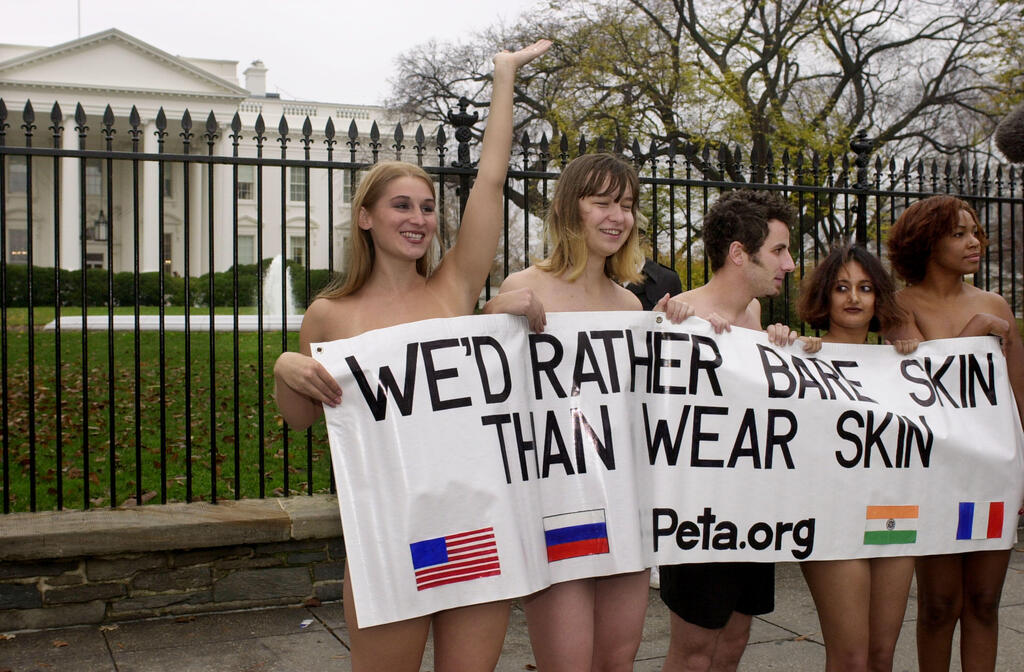
PETA protest outside the White House, 2001
(Photo: Mike Theiler/Getty Images)
For years, animal rights groups around the world singled out Wintour as someone who encouraged the use of fur in fashion, and she, in turn, fought back. Fashion houses that used fur, including Gucci, Versace and Fendi, appeared in editorial fashion spreads in Vogue under her leadership, and Wintour herself wore fur at public events.
But even power, as she recently discovered again in the controversy over an exhibition planned for John Galliano, has its limits.
The campaign PETA led from the late 1980s onward against the use of fur succeeded. Over the past decade, more and more fashion houses stopped using fur, to the point that in 2020 PETA announced the end of its fur campaign and a shift in focus toward the leather and wool industries.
Condé Nast, Wintour’s employer, also announced that it would no longer feature new fur products in its editorial content and advertising worldwide, including in Vogue.
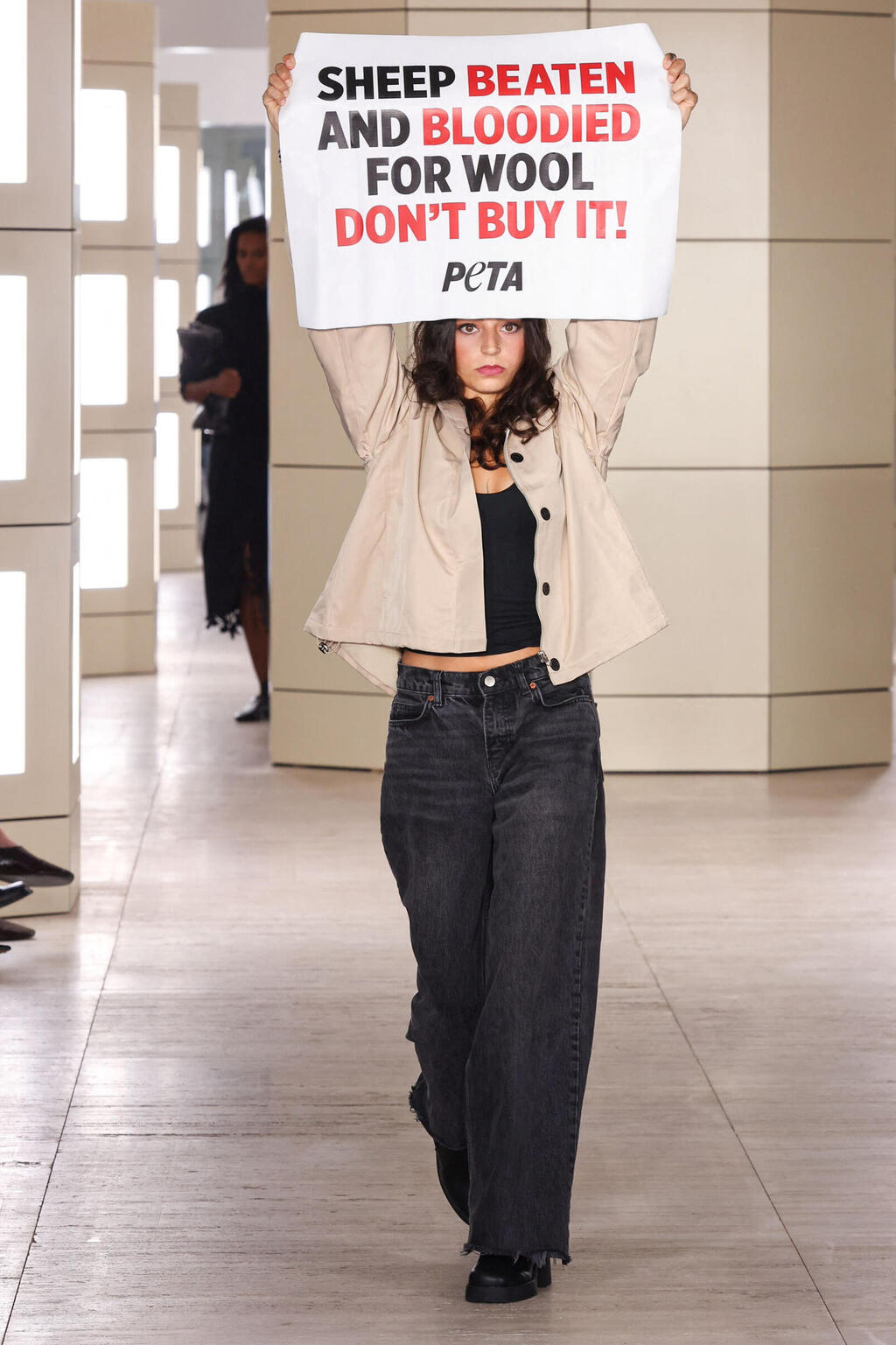
COS Spring-Summer 2027 Show at New York Fashion Week: Wool has been part of PETA's agenda for many years
(Photo: Caitlin Ochs\Reuters)
Wool, in fact, had been part of PETA’s agenda for years, but for a long time it never received the same media attention as fur. Images of raccoons being electrocuted to death through the anus to avoid damaging their fur create a more shocking effect than shearing wool.
The person who reignited the debate was Steven Kolb, who was serving as president and CEO of the Council of Fashion Designers of America, or CFDA, when he lost his composure at a COS show held in September during New York Fashion Week.
During the September 13 show, five PETA activists stormed the runway carrying signs calling on COS and its parent company, Swedish fashion giant H&M, to stop using wool.
For reasons that are unclear, Kolb chose to rise from his seat, violently grabbed two of the protesters and covered their mouths with his hands despite their attempts to break free. In one case, he knocked a female protester to the floor, covered her mouth with his hand and “locked” her in place with his legs.

Steven Kolb resigned as president and CEO of the Council of Fashion Designers of America
(Photo: Dimitrios Kambouris/Getty Images)
Footage of the incident, which immediately spread across social media, also showed COS CEO Daniel Herrmann, who was sitting next to Kolb. In a video posted by the Instagram account Diet Prada, Herrmann appears to physically intervene in one of the incidents rather than try to calm the situation.
The celebrity guests in the audience — including Sharon Stone and Naomi Watts — continued watching the clothes on the runway as though nothing had happened.
It did not stop there. At H&M’s show, which opened London Fashion Week, PETA activists continued their campaign. Alongside a bloody display with signs reading “This is what’s left of your wool sweater,” activists from the organization again took to the runway, this time without interference from security guards, company representatives or industry figures eager to flex their muscles.
Back in New York, Kolb apologized that same day and acknowledged that he had “acted inappropriately” and should have allowed security personnel to handle the situation.
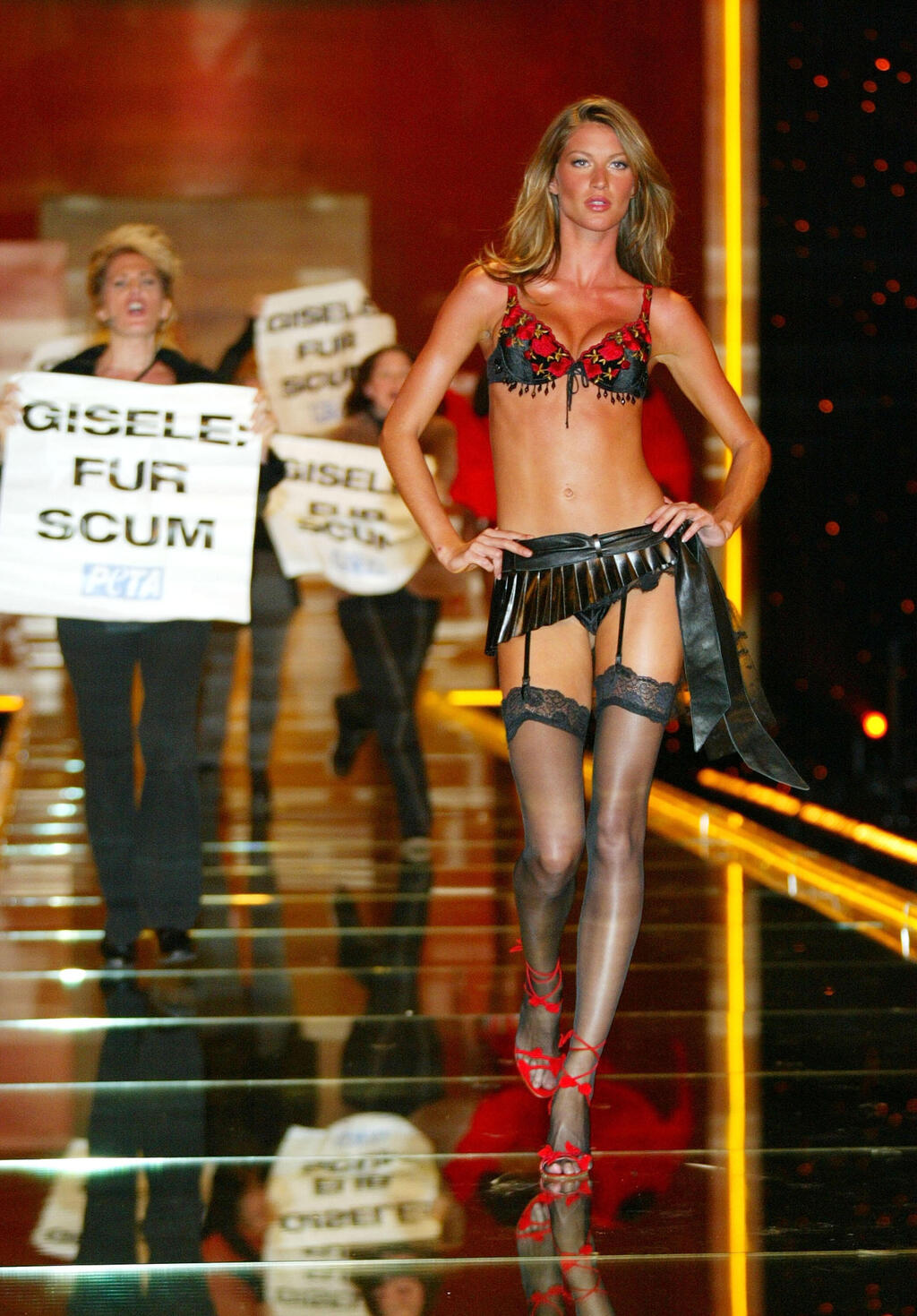
PETA protest while Gisele Bündchen models at the Victoria's Secret show, 2002
(Photo: Matthew Peyton/Getty Images)
At the same time, he received support from colleagues along Manhattan’s Seventh Avenue, New York’s fashion district.
Several days later, the CFDA announced that Kolb was taking voluntary leave pending a review of the incident. Four days after that, on September 18, Kolb announced his resignation after 20 years with the organization. In his departure statement, he wrote that it was time for “a new chapter” for both himself and the organization.
Kolb’s departure is not only a warning about the limits of personal power, and certainly about the limits of physical force.
In fashion history, it will also be remembered as an especially ironic moment in his career: Kolb himself had long been associated with promoting anti-fur policy in the American fashion industry, and in his role at the CFDA he led the decision under which, beginning in September 2026, fur will no longer be permitted in collections shown on the official New York Fashion Week schedule.
Turning fur from a status symbol into a symbol of cruelty
PETA — People for the Ethical Treatment of Animals — was founded in 1980 by Ingrid Newkirk and Alex Pacheco. It began as a small group of activists operating in the Washington area out of Newkirk’s apartment. Today its headquarters are in Norfolk, Virginia, and the organization has operations and branches around the world.
Its major breakthrough came just a year after its founding. Pacheco volunteered at a research institute in Silver Spring, Maryland, and documented the conditions in which 17 monkeys were kept and the experiments conducted on them.
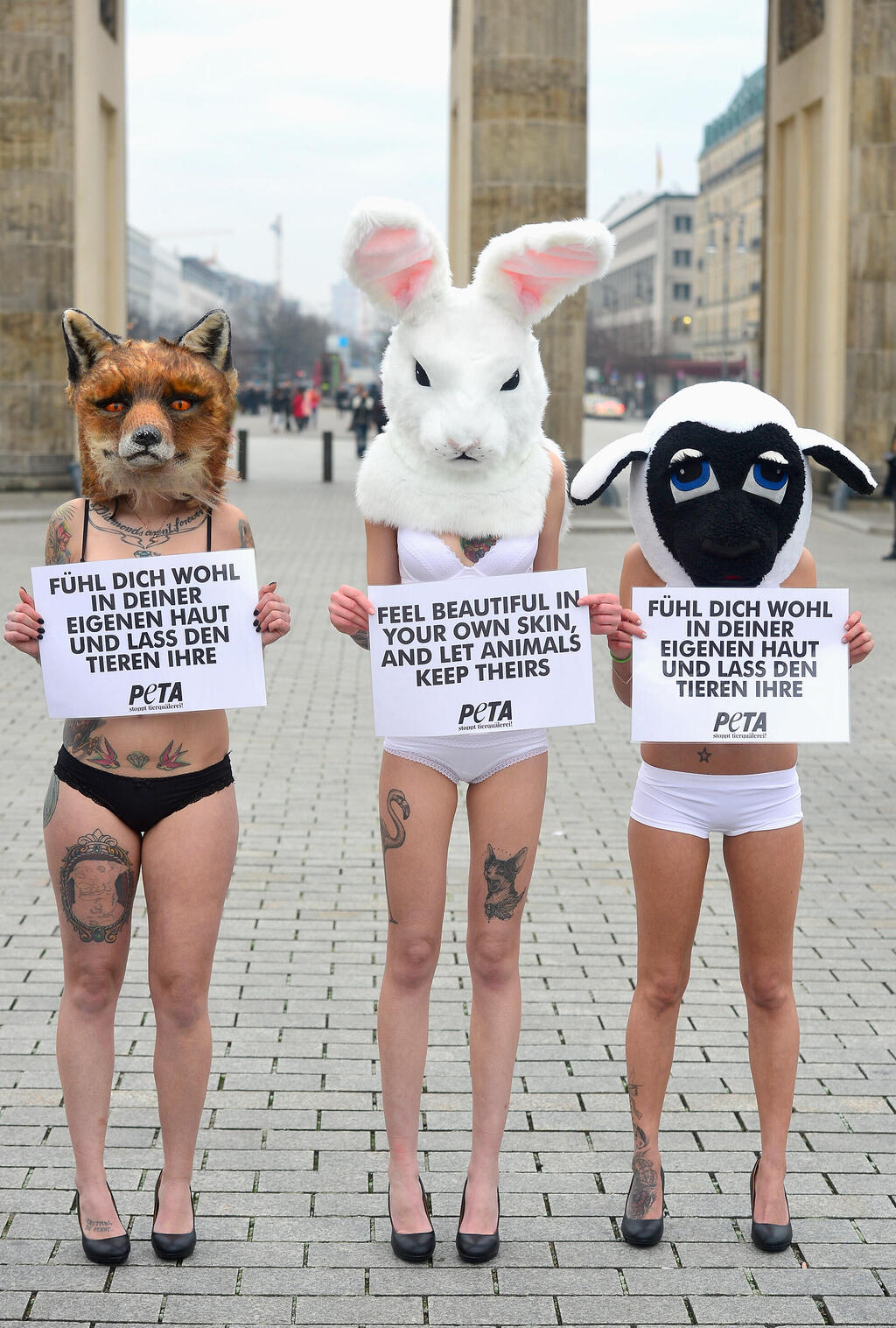
PETA demonstration at Berlin Fashion Week, 2015
(Photo: Thomas Lohnes/Getty Images)
The material led to a police raid on the laboratory and the termination of federal funding for the research. The “Silver Spring monkeys” case turned PETA into an organization with a national presence.
The case gave the organization its activist reputation, but it was the fashion world that gave it a stage.
Highly publicized runway shows, famous models and extravagant fur garments allowed the organization to produce powerful images linking disgust and the killing of animals with an industry devoted to beauty, lifestyle and spectacle.
It was relatively easy to turn fur from a status symbol into a symbol of cruelty.
The organization’s golden age came in the 1990s with the unforgettable “I’d Rather Go Naked Than Wear Fur” campaign.
The campaign began with members of The Go-Go’s and later recruited some of the most famous women of the era: actress Pamela Anderson, singer Natalie Imbruglia and models Christy Turlington, Tyra Banks, Naomi Campbell, Elle Macpherson and others.
All posed nude and declared that they would never wear or promote fur.
The message was simple: If fur could be sold through a beautiful body, then rejecting fur could be sold through the same means.
But the campaign did not hold. Some of the models who participated, including Campbell and Crawford, later chose to continue posing in fur.
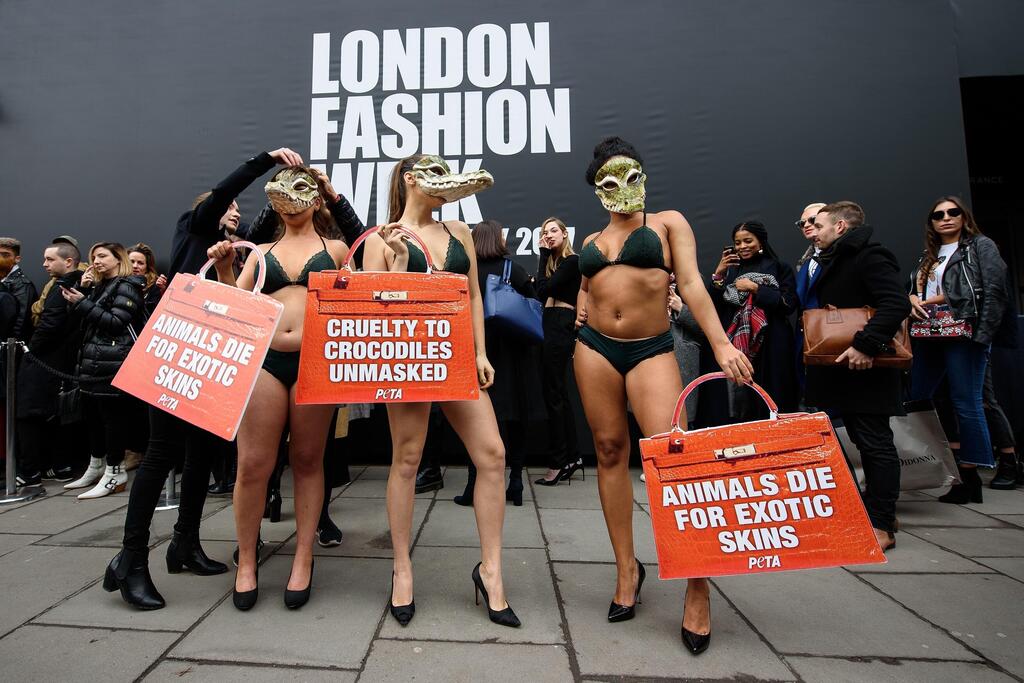
PETA protest at London Fashion Week, 2017
(Photo: Leon Neal/Getty Images)
Crawford’s case was especially embarrassing for PETA. In 2002, she appeared in a Roberto Cavalli show wearing fur, prompting the organization to attack her publicly.
Crawford, for her part, argued that she had never been an official PETA spokesperson and that her participation in the original campaign had been more of a personal gesture than an ideological commitment.
The next stage in PETA’s relationship with fashion
Following the success of its anti-fur campaign, which ran for three decades, PETA has now identified two new fronts: exotic skins, including Hermès Birkin bags made from snake and crocodile skins, and wool.
Unlike fur, which is stripped from an animal’s body, wool is generally not perceived as a product that requires the animal’s death.
For centuries, it has been seen as a natural, renewable, warm and durable material. In the fashion world, where polyester and other synthetic fibers face criticism, wool has gained a reputation as a “natural” and “sustainable” material. Something grandma knits.
On the other hand, if the fashion industry has already accepted the argument that animals should not pay with their lives for luxury products, why stop at fur?
PETA argues that the wool industry also involves harm to animals, ranging from violent shearing, castration and injuries to practices such as mulesing, in which strips of skin are cut from the hindquarters of young sheep to prevent flystrike, a fatal fly infestation.
From the organization’s perspective, therefore, the problem is the very use of animals as raw material for the fashion industry.
But this is where the debate becomes more complicated.
An article published in late September in Vogue Business raised an important question about how effective the campaign can be.
Unlike fur, wool does not require killing the sheep, and domesticated sheep that have been bred for generations for wool production actually need to be shorn.
The wool industry also points to animal welfare standards such as the Responsible Wool Standard, which are designed to ensure better conditions.
The new campaign therefore raises a more complex question than fur did: Is the problem the abuse involved in production, or the very fact that animals are used as raw materials?
And why not work to ban harmful practices instead of imposing a sweeping ban on wool?
And could the alternative — using fibers such as polyester — end up harming more living creatures because of the environmental damage caused by petroleum-based products?
Either way, the confrontation between PETA activists and Steven Kolb marks the transition to the next stage in the relationship between PETA and the fashion industry.
Fur was a relatively easy target because few people consumed it or needed it — especially in an era of global warming.
Wool is a very different story.
It is used as insulation in homes, in textiles and decorative household items and, of course, as a major material in fashion for knitwear and warm clothing.
That is also why PETA faces a much greater challenge this time: The consumer change it is seeking no longer targets only “luxury customers,” but could affect the way we consume fashion in everyday life.