


The autumn bird migration in Israel has entered its final stretch. Most of the migrating birds have already passed through and departed southward, while simultaneously the number of birds staying here for the winter is growing.
“Israel is in a unique geographic position with regard to bird migration along the Europe‑Africa flyway. Every year, some half a billion birds pass through our country out of about 11 billion migratory birds worldwide, twice each year, in autumn and spring. That makes us a true migration super‑power,” says Dr. Dotan Rotem, an open‑lands ecologist at the Israel Nature and Parks Authority.
Migrating birds take a rest in Israel
(Photo: Inbar Shlomit Rubin, KKL-JNF)


According to the authority’s figures, about 43,000 pelicans have entered the country so far and about 39,000 have departed, with the remainder expected to fly out in the coming weeks. Meanwhile, around 30,000 cranes have entered Israel and are still migrating south – a migration still in full swing.
“You can still see eastern imperial buzzards, especially along the Syrian‑African rift; cranes that migrate sometimes even at night and are documented by alert birdwatchers; white pelicans—who need food to accumulate energy and fat before continuing the journey over the deserts of Israel and North Africa—searching for fish in the various water bodies scattered across Israel, and more,” Senior birder Nadav Israeli of the Society for the Protection of Nature in Israel notes.
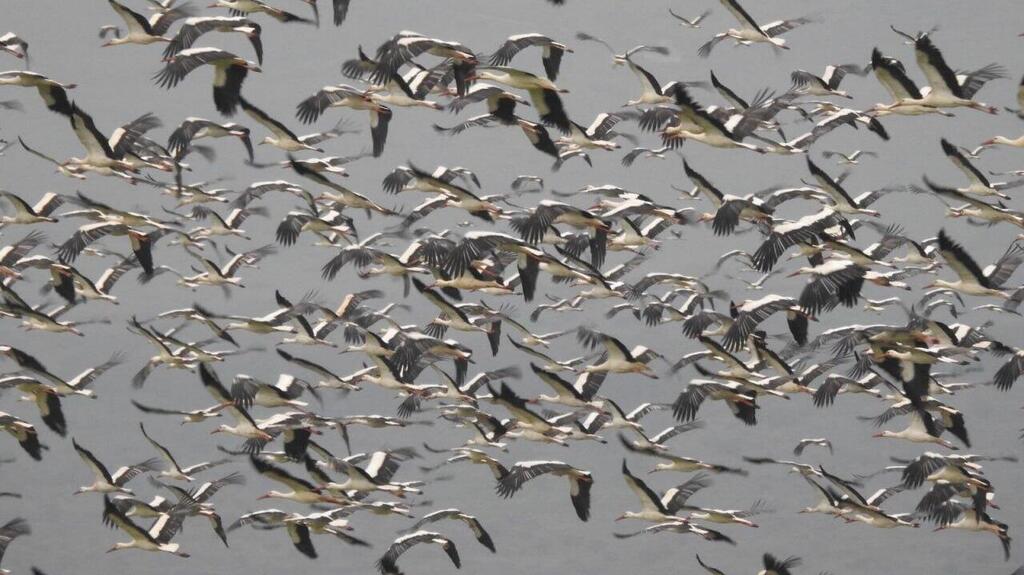
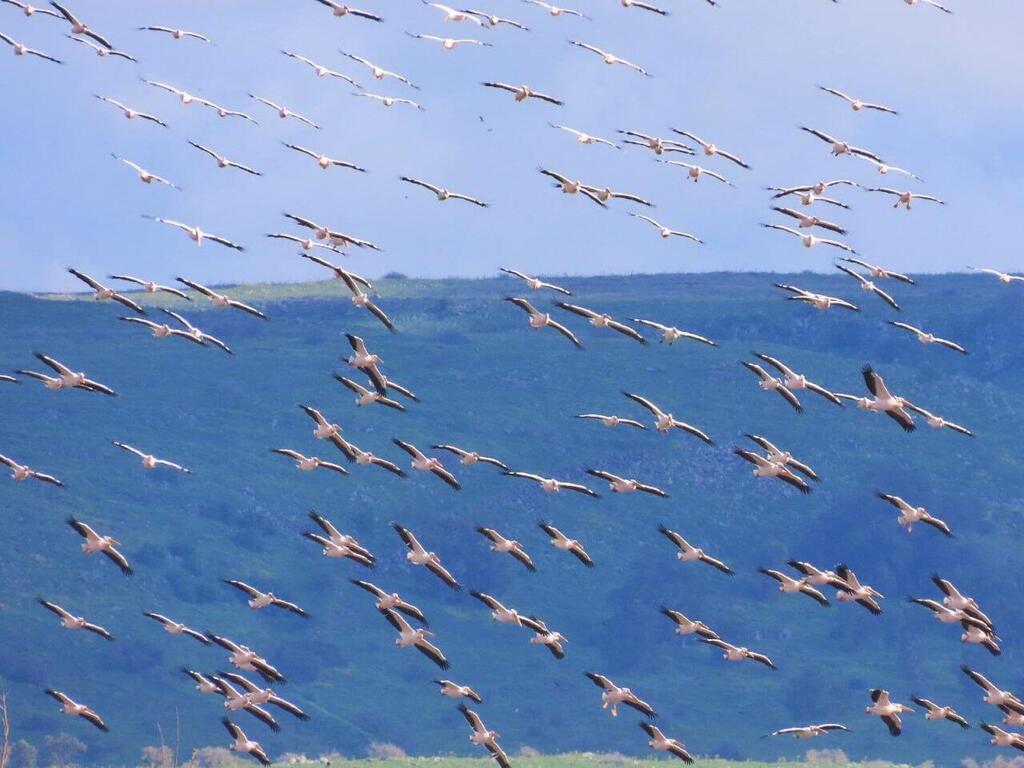
(Photo: Inbar Shlomit Rubin, KKL-JNF)
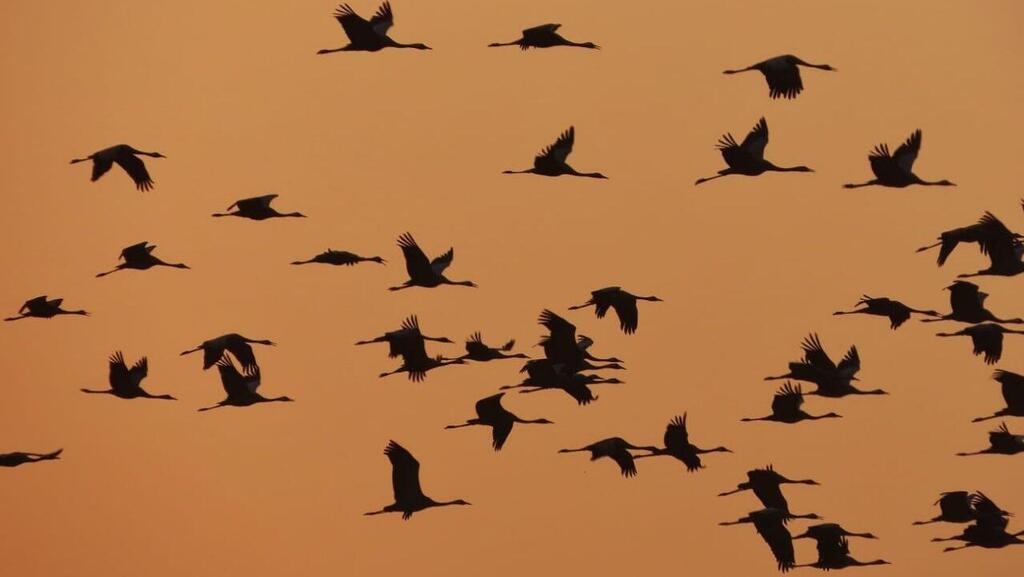
(Photo: Inbar Shlomit Rubin, KKL-JNF)
One of the best places to observe pelicans and other birds is the bird‑watching park at Ma'agan Michael near the kibbutz of the same name. As part of the park’s creation, fish‑ponds were restored for nature and people, and this renewed habitat has become a safe haven for wild birds as well as an enjoyable and educational site for visitors.
Over the past weekend, the stormy weather brought new visitors to Ariel Sharon Park. Flooded areas in the heart of the park overnight turned into a habitat for ducks, including a red‑footed bittern seen for the first time there, as well as 10 marsh divers which are globally endangered.
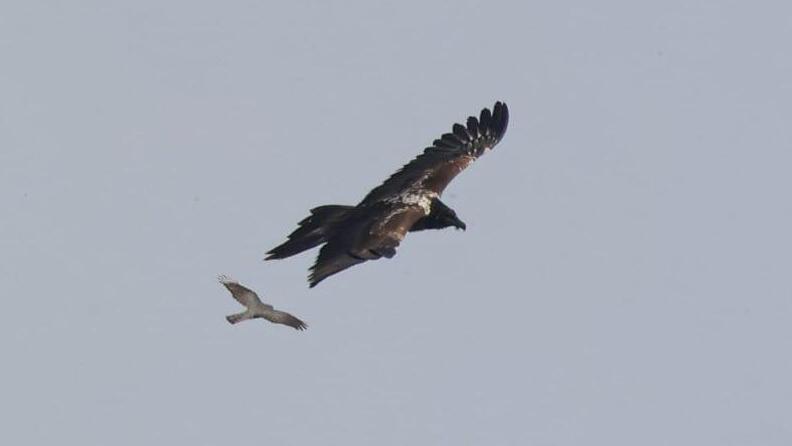
A vulture flying over the Golan Heights
(Photo: Yotam Bashan, Society for the Protection of Nature)
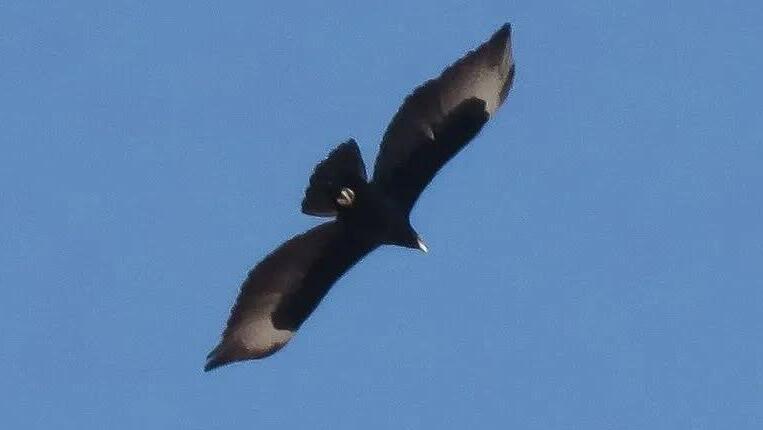
A black eagle recorded in the Eilat mountains, October 2025
(Photo: Nathaniel Bernstein, Society for the Protection of Nature)
“This autumn has been a crazy one," according to Yuval Dax, a nature‑protection officer and park birder. "The earlier rains flooded the place, and it looked like Hula Lake 2. A massive shallow water pool filled with grass – every duck’s dream. It is the perfect habitat for water‑birds, and they voted with their wings and arrived earlier than usual in larger numbers than ever. It’s pure delight to see such concentration of water‑birds in the heart of the Dan Region, like the bittern, grebes, herons, gulls and more.”
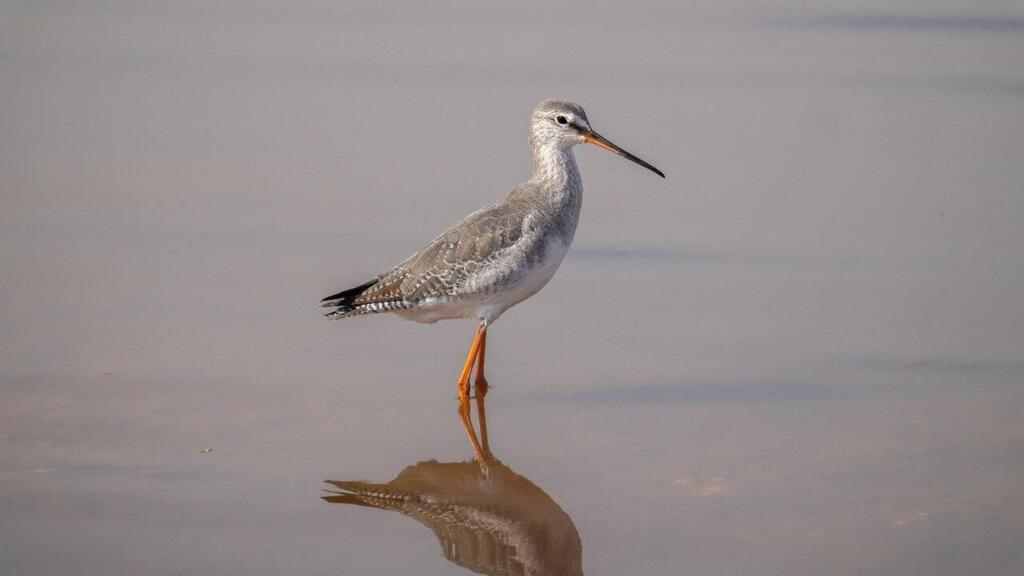
Red-legged Kite first observed in Ariel Sharon Park
(Photo: Yuval Dax)
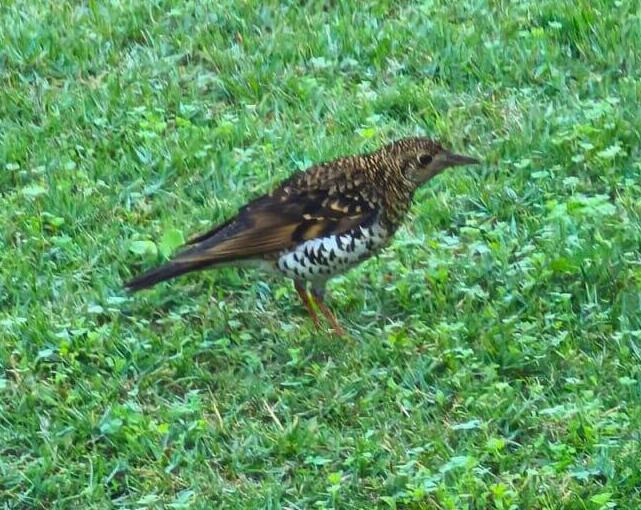
Golden thrush spotted in Kibbutz Kfar Hanasi
(Photo: Ilan Gino)
“The eastern winds characterized this migration season and brought us many surprises,” says Yaron Cherka, chief birder of Keren Kayemeth LeIsrael (KKL). “We’re seeing many olive‑colored pipits, far more than a typical autumn, and also many dark‑winged larks. There was even a Caucasian lark seen just over a week ago – the fifth time in Israeli history. Not to mention a bonkers yellow wagtail that arrived at Kibbutz Kfar HaNasi on October 30. He was spotted and recorded by a kibbutz member who sent it to her husband, a birder, and then all Israel’s bird‑watchers chased that wagtail – which vanished as though earth swallowed it.”
In the annual raptor survey of Hurshiyot Forest more than 220,000 migrating raptors were counted, including honey‑buzzards, long‑legged buzzards, black kites and short‑toed eagles. “Every autumn in Israel is a great celebration,” says Cherka, “but this year has been even more amazing than ever.”