


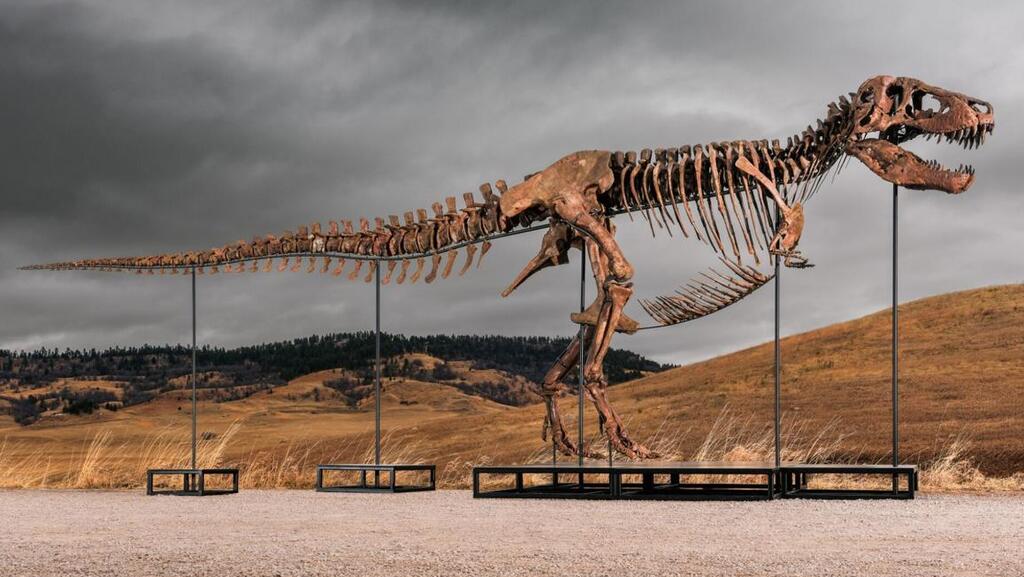
Far from the arid excavation sites of South Dakota, deep in the heart of Manhattan, one of the most dramatic moments in the worlds of paleontology and finance unfolded Tuesday: Sotheby’s sold a massive Tyrannosaurus rex skeleton for $50.13 million, after receiving the highest-ever presale estimate for a fossil at $30 million. The sale of the bones of the prehistoric predator, which ruled Earth 67 million years ago, made it the most expensive dinosaur ever sold.
The skeleton, nicknamed “Gus,” is considered one of the most complete and impressive specimens of its kind. It was discovered in what is considered a legendary dinosaur “graveyard” in South Dakota. Its auction has reignited a fierce debate between public museums, which struggle to compete with soaring fossil prices, and wealthy private collectors and investors.
Gus was discovered in 2021 on a family cattle ranch spanning more than 26,000 acres in Harding County, South Dakota. The area, known as the Hell Creek Formation, is considered the world’s most important site for T. rex discoveries since the first skeleton was found there in 1902 by paleontologist Barnum Brown. More than 95% of known T. rex discoveries have come from the region.
Despite the predator’s iconic status, complete T. rex skeletons remain extraordinarily rare. Since the first discovery, only about 32 identifiable specimens have been found, and only two — “Sue” and “Stan” — have been confirmed to be more than 60% complete by bone count.
A casual conversation that led to a major discovery
The late cattle rancher Gary “Gus” Licking spent years exploring his land, collecting teeth and fossil fragments, and always suspected that something historic and enormous was hidden beneath his feet.
One day, paleontologist Thomas Heitkamp was passing by on his way to a nearby excavation site. He noticed Licking standing near the road checking the water trough used to supply his cattle and spontaneously decided to pull over, approach the rancher and say hello. That chance conversation led to the partnership that resulted in a three-season excavation.
The team searched across the ranch until they found the bones in a small valley where exposed rock was scarce, causing the site to be overlooked previously. Licking himself pointed out the area where he suspected the fossil was hidden, and his lifelong intuition about the family land proved accurate.
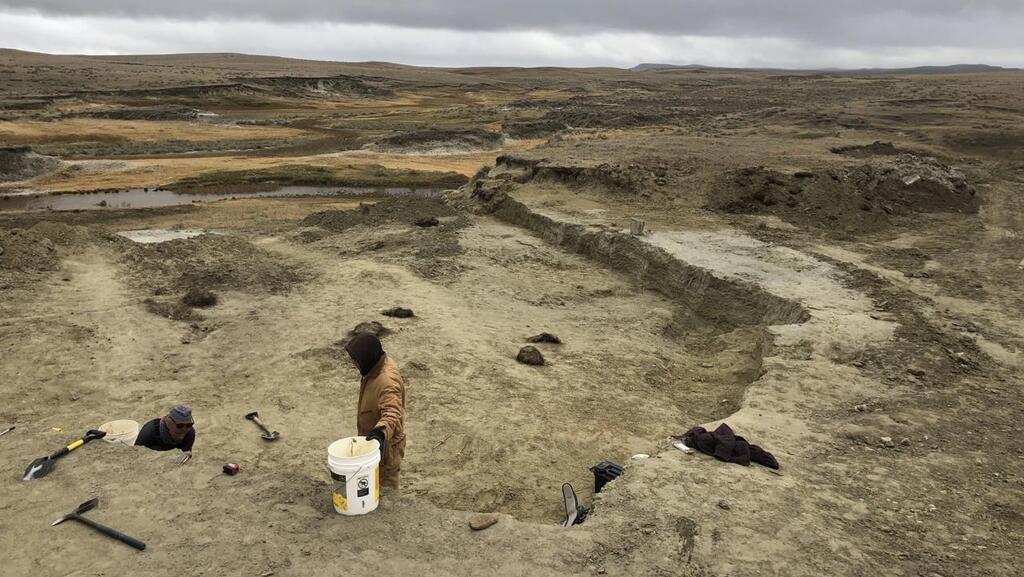
The excavation site in South Dakota
(Photo: Sotheby’s)
The researchers could work only during the short warm months when the ground thawed. They manually excavated an area of about 650 square meters until the ground froze again in September, halting the work. Unfortunately, Licking died during the excavation years and never saw the giant skeleton fully assembled. Heitkamp and his team decided to honor him by naming the discovery after him.
The team spent three years extracting nearly 1,000 pieces, followed by another three years of laboratory work cleaning, documenting, restoring and connecting the bones with epoxy resin parts. The skeleton was then assembled in a predatory pose on a steel frame.
Gus belonged to an especially large and robust adult specimen. It stands 3.8 meters tall and measures about 11.6 meters in length. It consists of 183 fossilized bones, making it 61% complete by bone count and roughly 80% complete by mass.
Its skull, measuring about 137 centimeters long, contains 31 enormous teeth — 16 exposed and 15 still embedded deep in the jaw — providing evidence of the predator’s constant tooth replacement system. The skeleton also includes rare elements such as a furcula, a complete pelvis and two fully preserved feet.
Beyond its physical dimensions, Gus’ bones also tell a story of survival. A massive bite scar on the upper part of the skull indicates a brutal encounter, while ribs show large growths where they had broken and healed while the animal was still alive.
Public research institutions pushed aside
These discoveries increase Gus’ scientific value, but they have also intensified anger and frustration among researchers. Scientists argue that public institutions are being pushed aside by astronomical price tags.
The first T. rex ever sold, “Sue,” was purchased in 1997 for Chicago’s Field Museum for only $8.4 million. Since 2020, however, the five most expensive dinosaur fossils have sold for record-breaking prices, including the T. rex “Stan,” which sold for $31.8 million in 2020 despite an estimated value of $6 million to $8 million.
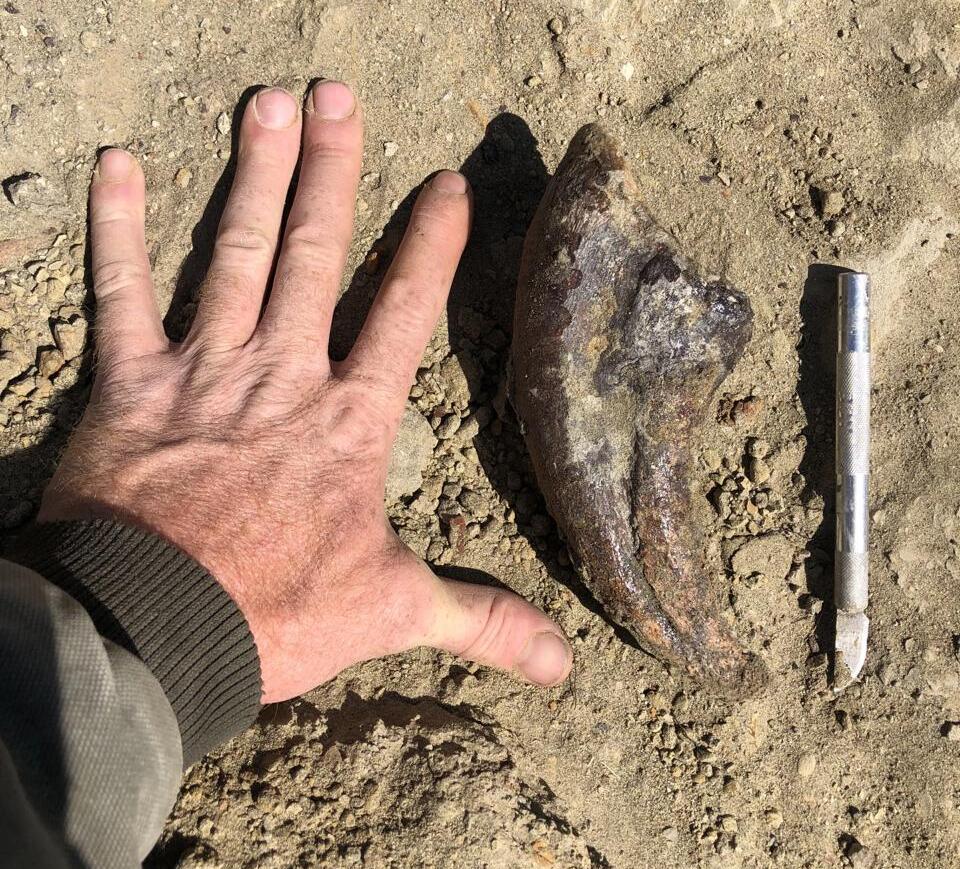
One of the skeleton's teeth
(Photo: Sotheby’s)
In 2024, the all-time record was broken when Sotheby’s sold a Stegosaurus skeleton named “Apex” for $44.6 million to billionaire hedge fund founder and Citadel CEO Ken Griffin.
Even that record may represent only the visible part of the market. Experts say they have heard of private T. rex skeleton deals exceeding $50 million, far from the public eye and auction houses. Most dinosaur skeletons are believed to now be in private hands.
In Gus’ case, another factor significantly increased its value: commercial licensing rights. Unlike previous skeletons offered for sale that incorporated casts from existing T. rex specimens, Gus comes with “full rights.” The excavation team used unique scans and molds for missing parts, leaving the skeleton free of third-party rights.
The new owner will, in effect, be able to commercially compete with other skeletons and sell licenses or casts of Gus to museums and private institutions around the world.
Veteran dinosaur researchers criticize the trend, warning that once a fossil enters private ownership, it could be discarded because of arbitrary events such as death, divorce or simple loss of interest. Leading scientific journals often refuse to publish research based on private collections because science requires long-term access to specimens.
In Gus’ case as well, no official scientific study has yet been published.
The fact that the skeleton was assembled in a dramatic pose, with restored and painted sections attached to a steel frame, also makes it difficult to examine individual bones and their original positions in the ground.
Even if the buyer lends it to a museum and allows the public to see the fossil — as happened with Griffin’s Apex — professional societies may still refuse to treat it as a research specimen because “you can look at it, but you cannot study it.”
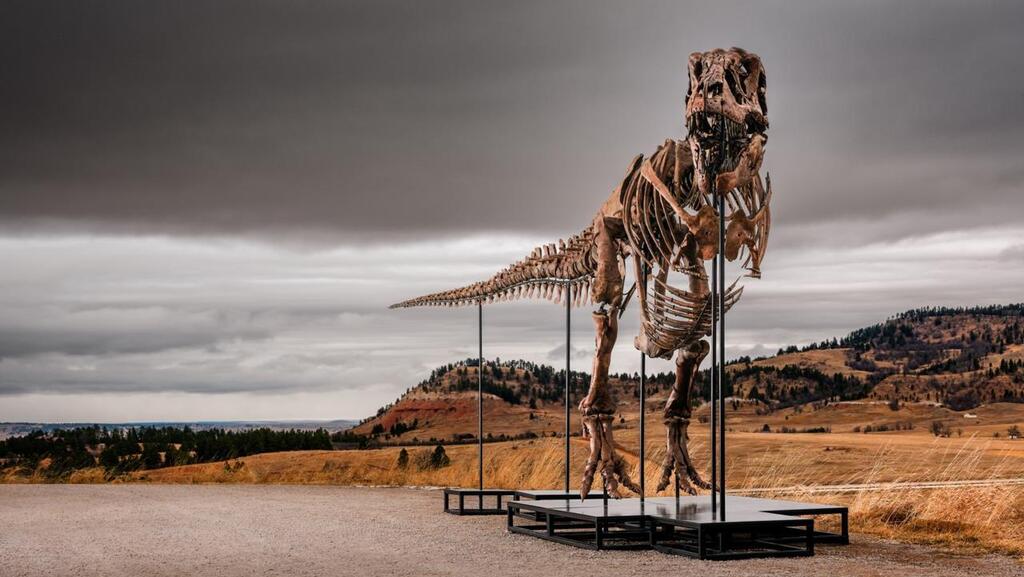
The skeleton was assembled in a predatory pose on a steel frame
(Photo: Sotheby’s)
According to Christie Curry Rogers, vice president of the Society of Vertebrate Paleontology, the real debate is about public responsibility, not only ownership. She said such an enormous purchase price could have funded an entire museum research program, supported an entire career of field research and helped discover entirely new species.
'Without the financial incentive, fossils would be lost'
At Sotheby’s, as expected, officials defended the sale. Cassandra Hatton, head of the auction house’s natural history department, said the proceeds are essential for funding the dangerous work of fossil hunters who locate remains.
“Buyers are saving dinosaurs from a second extinction,” she said.
“The people searching for these fossils spend months in the field with tents and their food in backpacks,” Hatton said. “They camp in the middle of nowhere with venomous snakes, insects and mountain lions. They often survive with very little and live hand to mouth, which is why they have to invest their own money. Without the financial incentive in the end, these fossils would simply be lost.”
Critics respond that the choice is not necessarily between selling to a billionaire and leaving the bones in the ground. Private landowners can, for example, approach museums and universities and allow scientific teams to conduct excavations at a cost far lower than the tens of millions of dollars eventually paid at auction.
But under current conditions, the sums offered by private collectors have transformed rare fossils from research assets into luxury goods, traded almost like masterpieces by famous artists, collectible cars or diamonds.
“Dinosaur fossils are no longer viewed primarily for their scientific value, but are purchased by extremely wealthy people in the same way we might see art being purchased,” said paleontologist Prof. David Hone. “But don’t pretend you are doing science a favor when you pay $50 million to put a T. rex in your home. Just as if you found a rare Ferrari and put it in your house, that would not be a great thing for car enthusiasts.”