


Farmers across Israel’s Negev warned Tuesday that disruptions to the country’s water supply are threatening to devastate crops and push agricultural businesses toward collapse at the height of the growing season.
The crisis stems from the shutdown of most of Israel’s Mediterranean desalination plants because of severe seawater turbidity. Farmers in the Nitzana region, a major tomato-growing area, said even 24 hours without irrigation could cause irreversible damage.
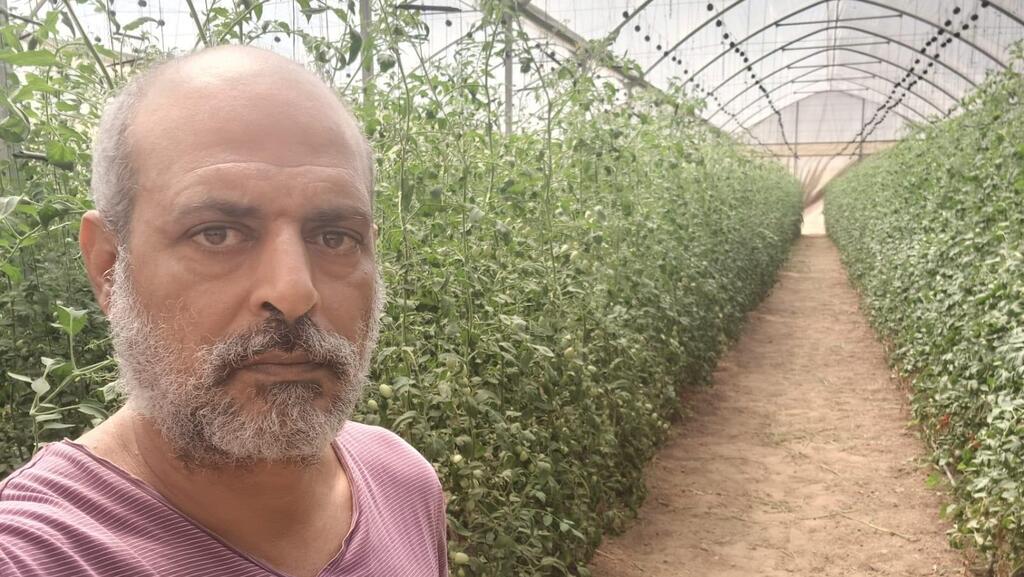
Tomato farming in Be’er Milka
(Video: Roi Yosef)


“There’s simply no water coming out of the tap,” farmers said.
As of Tuesday morning, the large desalination plant in Hadera was operating, while facilities in Ashkelon, Ashdod, Palmachim, Sorek A and Sorek B remained offline. The two Sorek plants briefly returned to partial operation for several hours before being shut down again because of seawater conditions.
The desalination facility in Eilat was operating normally.
The Water Authority said the shutdowns, some of which began Saturday, had forced municipalities to reduce public gardening and agricultural water use, while also cutting other public consumption.
“Supply to homes will continue,” the authority said, adding that activity would be reduced in places experiencing localized problems while its operations center addressed specific disruptions.
For farmers, however, the stakes are immediate.
Roi Yosef, a resident of Be’er Milka who has worked in agriculture for 15 years and grows tomatoes and cherry tomatoes, warned that the crisis could destroy farms across the Nitzana region.
“Yesterday we learned about the crisis at the desalination plants and received a notice that the water for agriculture was being shut off,” he said. “They have never shut off water to agriculture before.”
Yosef said farmers in the area are among Israel’s main suppliers of tomatoes during the holiday season.
“Twenty-four hours without water can be enough for the damage to become irreversible,” he said. “More than that? The entire crop dies.”
He accused the Water Authority of failing to grasp the severity of the situation.
“Every farmer here invested several million shekels to start the season,” Yosef said. “We feel that nobody fully understands what this event means.”
The Nitzana region includes five communities, three of them agricultural, and all depend heavily on the same water supply.
“Our life’s work depends on water,” Yosef said. “This is existential. Farms could close and never reopen.”
He said farmers spent the night waiting for updates instead of accompanying their children to the first day of school.
“We will do whatever is necessary to save the farms,” he said.
Doron Hevel, also from Be’er Milka, grows about 65 dunams of tomatoes and cherry tomatoes.
“We got a notice yesterday morning that Mekorot was shutting off the water in the Nitzana area,” he said. “This is a survival event.”
Hevel said the damage accumulates rapidly.
“Ten percent, 20%, 30%, and then it’s over,” he said. “We’re all at the peak of the season. We’ve finished putting the money into the ground, and now this is the point when we’re supposed to start earning it back and marketing the produce.”
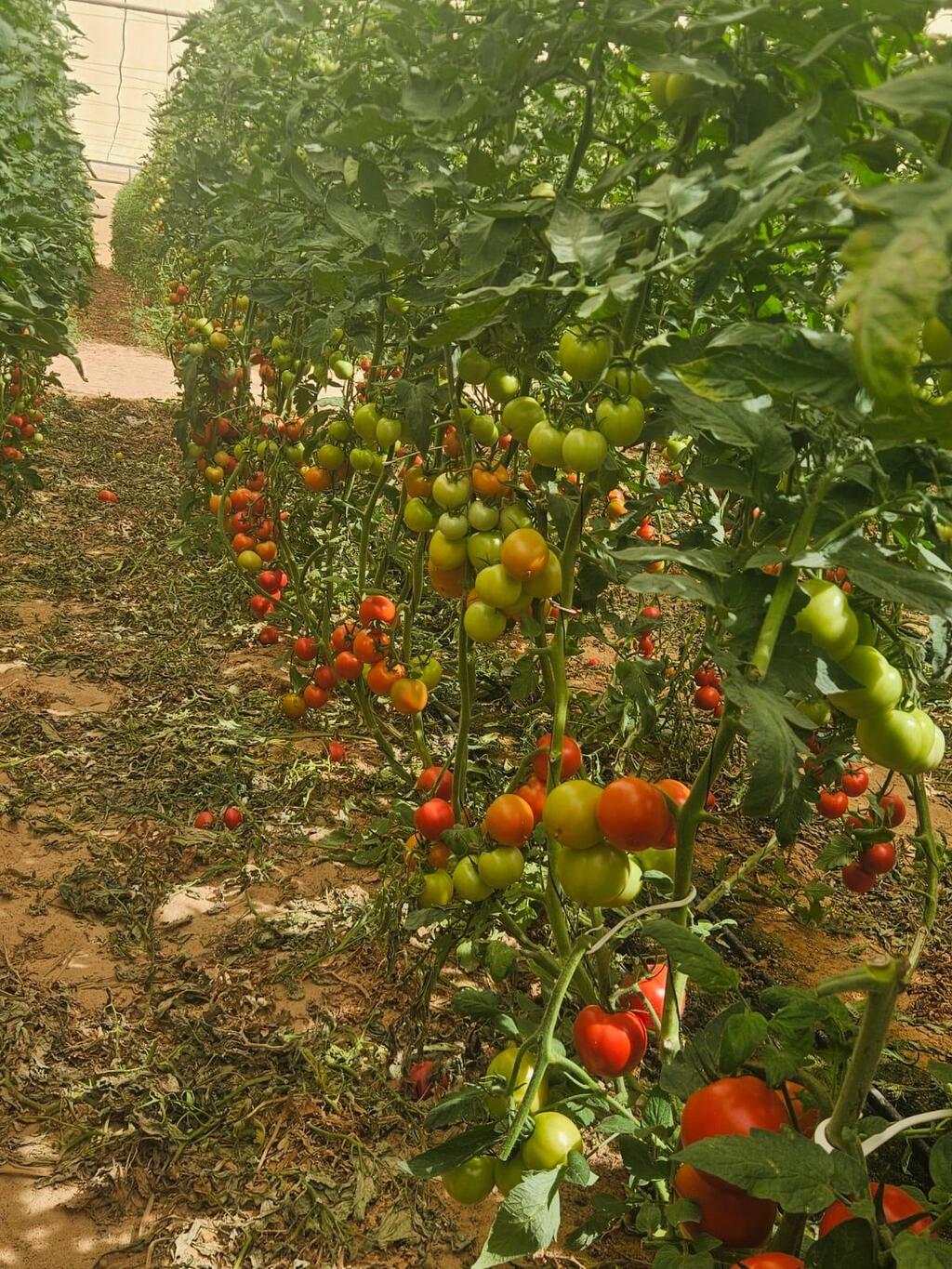
Fears of millions in damages
(Photo: Doron Hevel)
A medium-sized farm, he said, may have already invested around NIS 2 million in the season.
“And there will be no way to get that money back.”
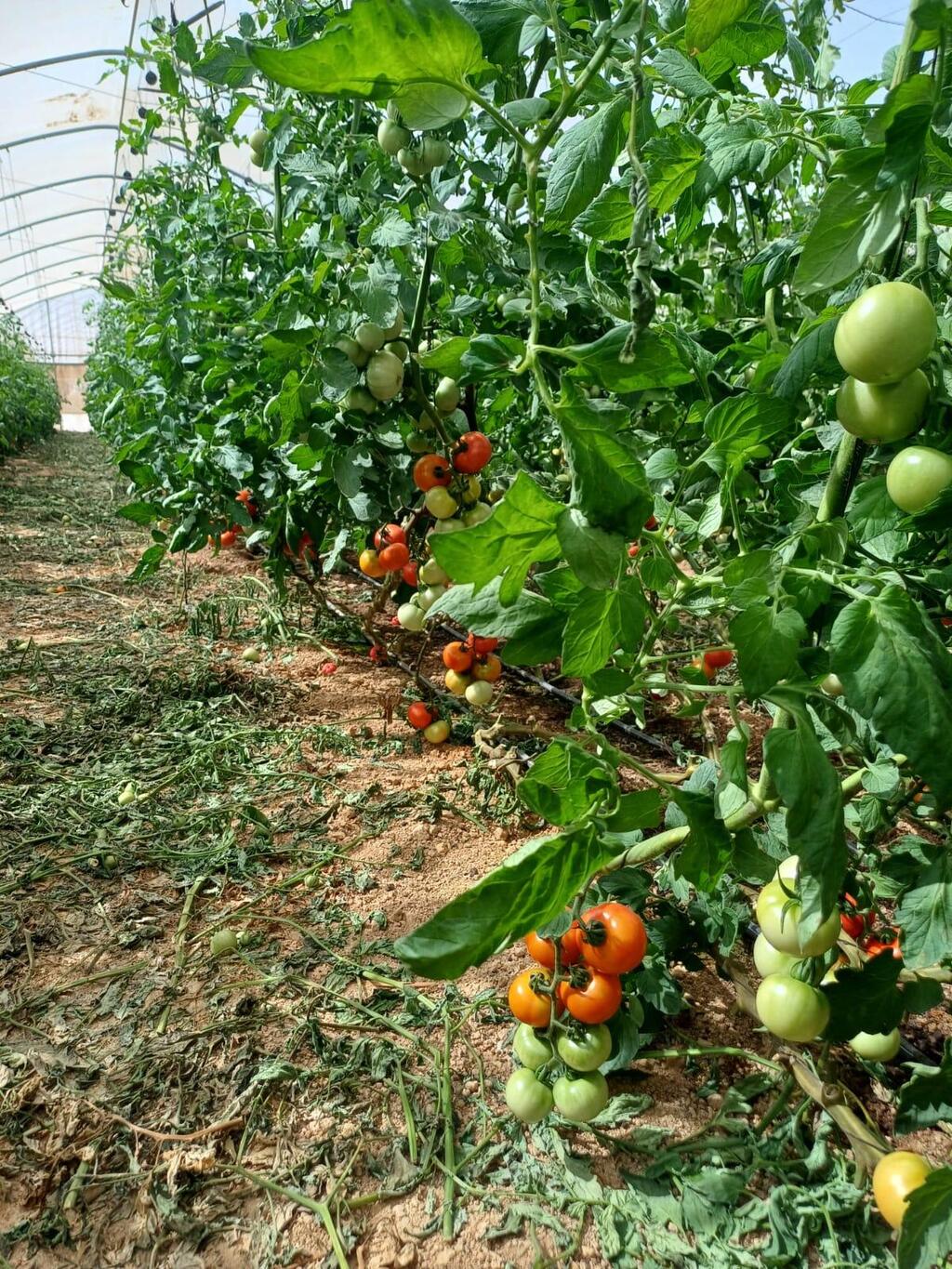
Hevel said irrigation is especially critical now because the plants are already carrying fruit.
“This is my money time,” he said. “The plants are loaded with fruit, but the fruit still needs water to ripen.”
Some of the produce is intended to be marketed over the coming three months and into the winter.
“If this doesn’t end, and quickly, it’s a death blow,” Hevel said. “If every family loses NIS 2 million to NIS 3 million, I don’t want to imagine what that will do to the region.”
“It’s make or break.”
He warned that farmers could block roads if a solution is not found.
“Everyone, without exception, will be harmed in ways that are hard to even imagine,” he said.
Eran Doron, head of the Ramat Negev Regional Council, said farms were “on the verge of collapse.”
“Unfortunately, the system has not returned to normal,” he said.
According to Doron, Mekorot was attempting to supply roughly 300 to 500 cubic meters of water per hour.
“We’re trying to reduce the use of fresh water at solar facilities so that it can be diverted to agriculture,” he said.
(Photo: Doron Hevel)
Israel’s agricultural leadership has now appealed directly to senior government ministers.
Amit Yifrah, secretary-general of the Moshavim Movement and chairman of the Israel Farmers Association, and Or Dorman, secretary-general of the association, called on Finance Minister Bezalel Smotrich, Agriculture and Food Security Minister Avi Dichter and Energy and Infrastructure Minister Eli Cohen to intervene immediately.
They said the continuing disruption to fresh-water supplies is affecting agriculture in the coastal plain, Judean Hills, south and Negev in the middle of the growing season.
“The disruption to the water supply endangers hundreds of agricultural farms, most of them family farms, and could cause severe and irreversible damage to crops, especially vegetables and orchards,” they said.
“For farming families, this is a direct blow to their life’s work and source of livelihood.”
The association said it understood the need to prioritize drinking water but argued that farmers could not be left without certainty or assistance.
“Every day without regular water supply can deepen the damage and lead to crop loss,” it said.
The group is demanding immediate government action to reduce the disruption, document and assess the damage and establish a dedicated compensation framework for affected farmers, with particular emphasis on family-run farms.