


Five of Israel’s six desalination plants along the Mediterranean coast remained out of operation Tuesday morning because of unusually high seawater turbidity, which researchers believe may have been caused by a microalgae bloom originating near Egypt’s Nile Delta.
The shutdowns, some of which began as early as Saturday, have prompted authorities to halt agricultural irrigation in southern Israel and suspend watering of public gardens in communities across the country.
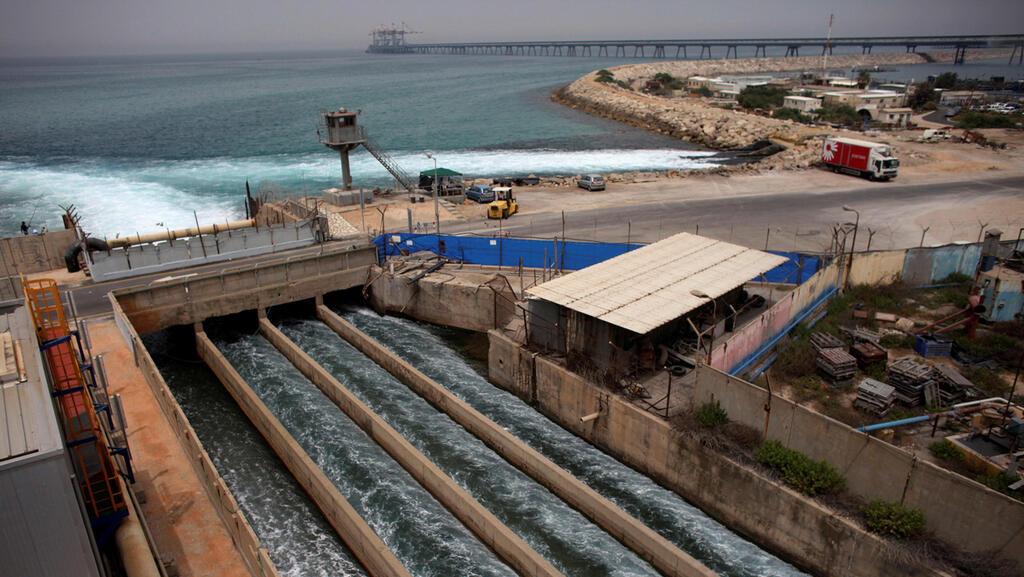
IDE Technologies’ seawater desalination plant in Hadera
(Photo: Reuters)
As of Tuesday morning, the large desalination plant in Hadera was operating, while facilities in Ashkelon, Ashdod, Palmachim, Sorek A and Sorek B were shut down. Israel’s desalination facility in Eilat was also operating normally.
The Sorek A and Sorek B plants briefly resumed partial operations for several hours, providing what officials described as some breathing room, but were later shut down again because of the condition of the seawater.
A preliminary investigation by researchers at Israel Oceanographic and Limnological Research indicates that the turbidity that spread through the eastern Mediterranean was likely caused by a bloom of microscopic algae, apparently originating in the Nile Delta.
Part of the problem is the algae’s extremely small size, which can allow them to pass through filters at the intake points of desalination facilities.
Algal blooms are a natural phenomenon influenced by factors including weather, ocean currents and the amount of organic material in the water. They typically develop over a period of time before collapsing, after which the resulting organic matter decomposes in the water.
No running water at Tel Aviv beaches
(Video: Yariv Katz)


Scientists, however, cannot always determine what triggers a specific bloom or why it develops at a particular time and place.
Researchers at Israel Oceanographic and Limnological Research said satellite images showed large algal blooms near the Nile Delta.
Currents in the eastern Mediterranean routinely carry material from the Nile northward, including sand and other substances.
“It would not be surprising if what bloomed in the Nile Delta area also reached southern Israel,” said Alon Zask, CEO of Israel Oceanographic and Limnological Research.
He noted that the first desalination facility to shut down was Ashkelon, the southernmost plant on Israel’s Mediterranean coast.
“That is the pattern,” Zask said. “But there are other parameters that can determine how it spreads, such as water depth.”