


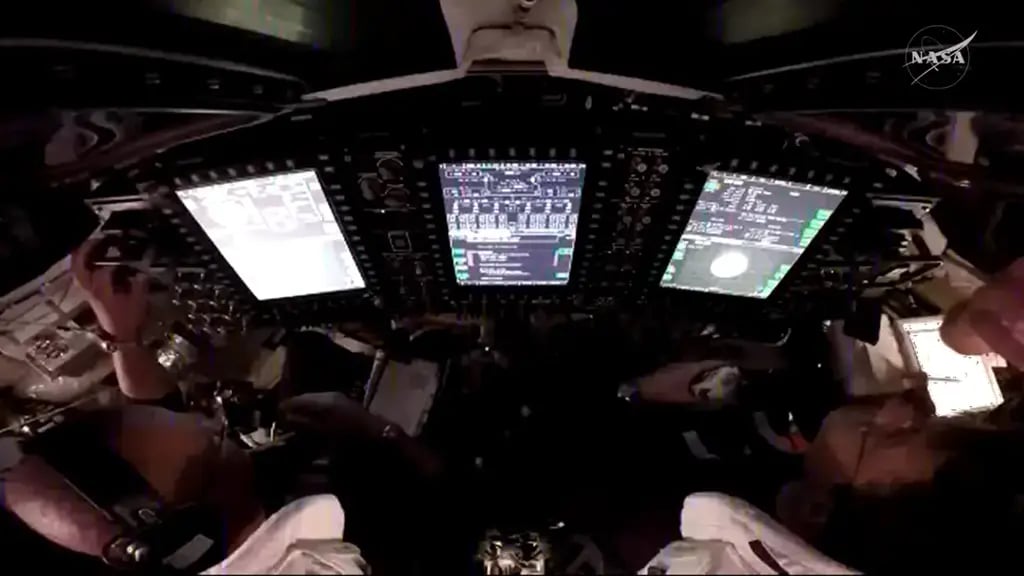
The four astronauts on the Artemis II mission, which launched overnight Thursday from Cape Canaveral Space Force Station in Florida, noticed a flashing yellow light shortly after liftoff warning of a malfunction in the spacecraft’s toilet system. With assistance from NASA’s mission control in Houston, the issue was resolved.
The mission lifted off at 1:35 a.m. local time on a trajectory toward the moon. It is a crewed spaceflight that will pass near the moon, more than 53 years after humans last visited it. The mission is expected to last 10 days, with the spacecraft set to pass about 6,500 kilometers (4,000 miles) from the lunar surface on the sixth day.
Launch of the Artemis II mission to the moon
(Video: NASA)


The mission is commanded by Reid Wiseman, 50. The crew also includes pilot Victor Glover, 49, mission specialist Christina Koch, 47, and Canadian mission specialist Jeremy Hansen, 50. For the three Americans, this is their second spaceflight, following extended missions aboard the International Space Station. For Hansen, it is his first spaceflight.
NASA announced the crew selection in April 2023, with the mission initially planned for 2024. It was repeatedly delayed, later scheduled for February 2026, then postponed to March due to a hydrogen leak in the launch rocket, and delayed again to April due to a helium flow issue in the spacecraft.
NASA said that ahead of a maneuver to raise Orion’s orbit around Earth, the astronauts reported the malfunction. Ground control teams analyzed the data and worked with the crew to identify and resolve the issue.
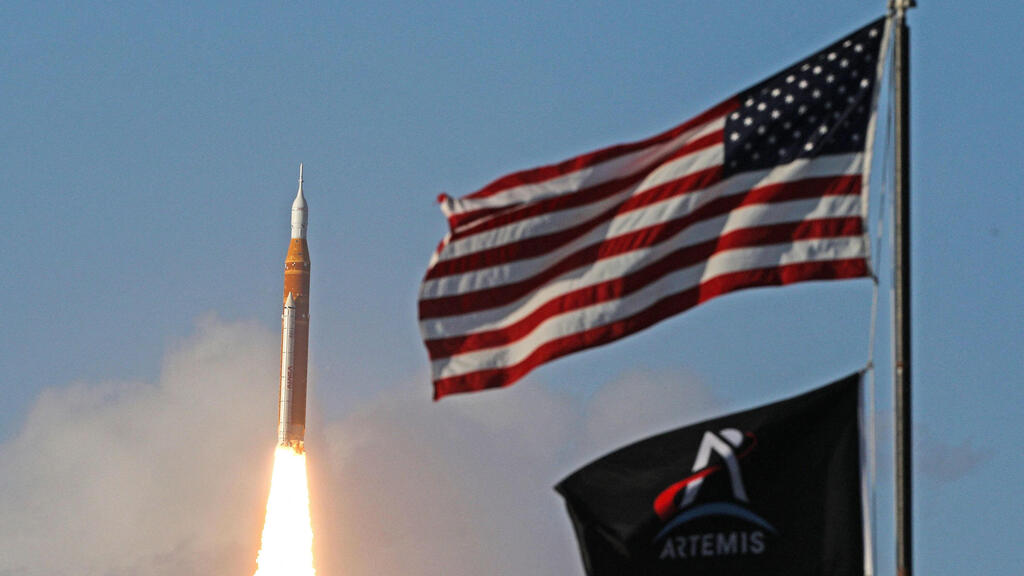
The spacecraft seconds after launch
(Photo: Gregg Newton / AFP)
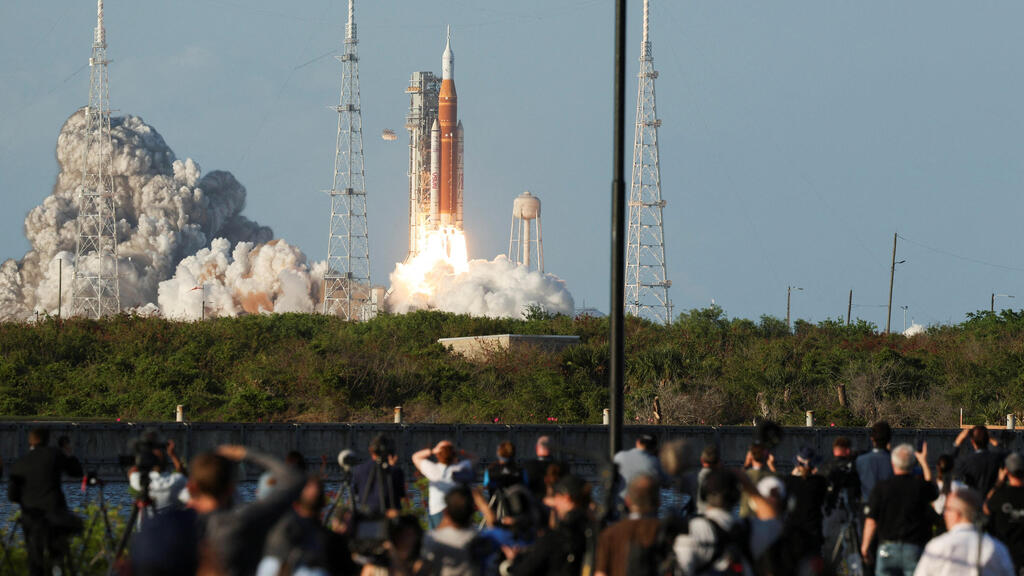
(Photo: REUTERS/Brendan McDermid )
After the repair, the astronauts were given four hours of rest, ending at 2 p.m. Israel time. Upon waking, they are expected to adjust their trajectory again. NASA said these maneuvers shape the spacecraft’s initial orbit and prepare it for its journey toward the moon. After the maneuver, the crew will return to sleep at around 4:40 p.m. Israel time.
Shortly before going to sleep, Koch — who is set to become the first woman to see the moon up close — contacted mission control to confirm the toilet was operational. Mission control replied: “You can use the toilet all night.” Koch also asked to have a song played at 2 p.m. to wake the crew ahead of a scheduled trajectory correction maneuver. She added: “Thank you for an amazing first day, we’re heading into our sleeping bags.”
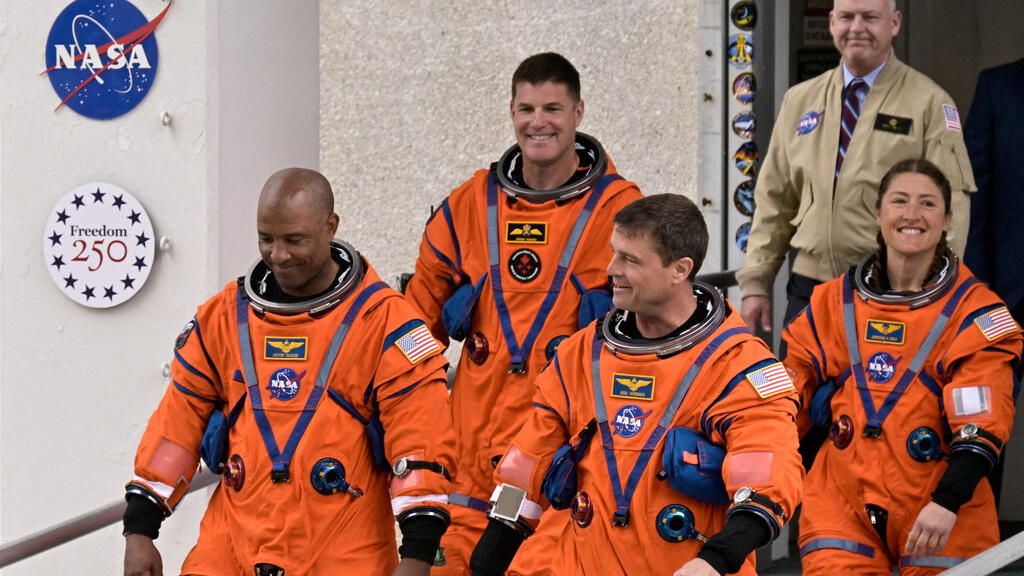
The four astronauts a few hours before launch
(Photo: REUTERS/Steve Nesius)
Artemis II marks a series of historic milestones. It is the first time in more than 53 years that humans will leave low Earth orbit and enter the gravitational field of another celestial body. It is also the first such mission with a crew of four — Apollo spacecraft carried three — and the first time a woman, a Black astronaut and a non-U.S. citizen are traveling to the moon.
It is the first crewed launch of NASA’s Space Launch System rocket and the first crewed flight of the Orion spacecraft. If all goes as planned, the mission is also expected to set additional records, including the farthest distance traveled from Earth by humans and the highest reentry speed for a crewed spacecraft. It is also the first deep space mission in which astronauts have brought personal smartphones with them.