

It was a grim day for marine life along Israel’s coast Tuesday, as the carcasses of a critically endangered leatherback sea turtle and a sperm whale were found washed ashore hours apart.
A leatherback sea turtle was discovered in advanced decomposition at Cliff Beach in Herzliya and removed by municipal workers. The turtle had several pieces of plastic on its body.
Dead leatherback sea turtle washes ashore in Herzliya
(Video: Herzliya municipality)


Dr. Yaniv Levy, director of the Sea Turtle Rescue Center at the Israel Nature and Parks Authority, said the animal was a leatherback, a massive marine reptile classified globally as critically endangered.
“Leatherback sea turtles do not reproduce in the Mediterranean and reach our region from the Atlantic Ocean,” Levy said. “Based on the documentation, the cause of death appears to be entanglement in ropes that are an integral part of fishing gear, most likely a longline system.”
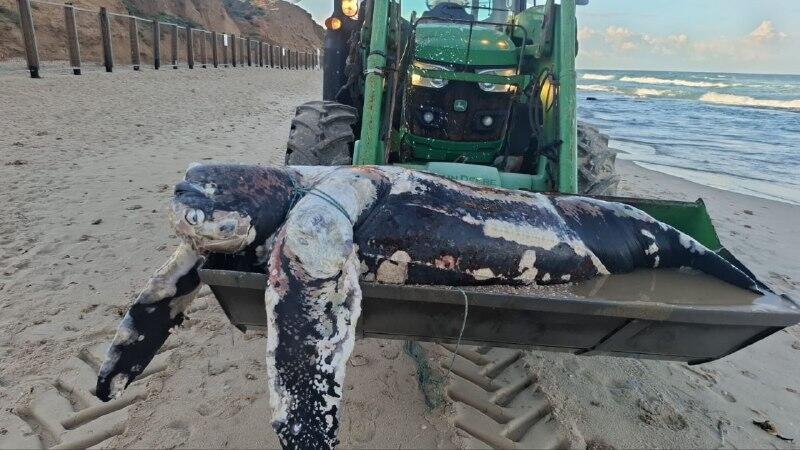
Levy added that the most common cause of death among leatherbacks is blockage of the digestive system due to ingestion of plastic bags and other debris, followed by entanglement in fishing equipment.
In October 2024, a leatherback washed ashore at Dor beach entangled in fishing gear and missing its left front flipper. It was taken to the rescue center in Michmoret, where staff removed fishing equipment from its remaining front flipper and provided medical treatment before returning it to the sea aboard the research vessel Mediterranean Explorer, operated by the nonprofit EcoOcean.
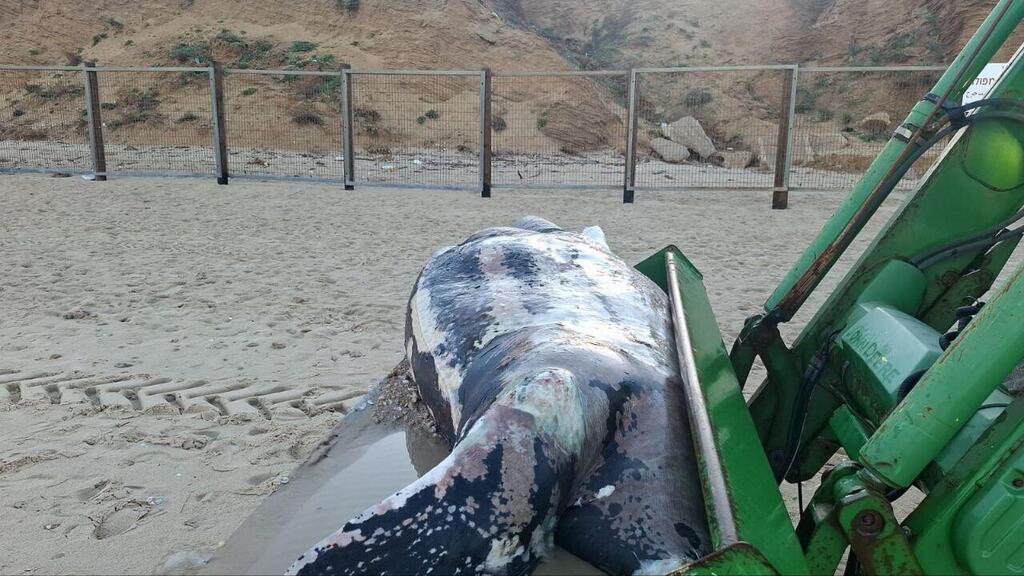
Entangled in fishing equipment
(Photo: Herzliya municipality)
The last dead leatherback to wash up on Israel’s coast was in 2022, also after becoming entangled in fishing gear. Over 70 years of documentation, leatherbacks have been observed only about 36 times in the region, most often after washing ashore dead.
Hours later, a large sperm whale was reported washed up at Zikim beach within the Shikma Marine Nature Reserve.
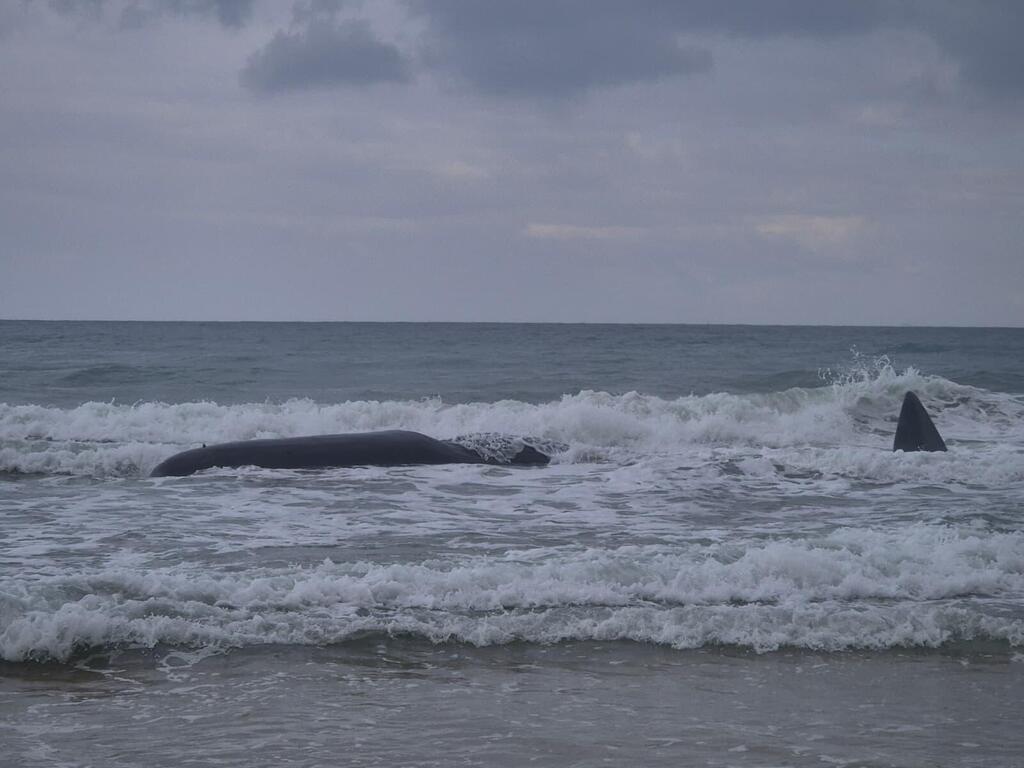
Dead sperm whale washes ashore in Zikim
(Evyatar Ben-Avi/Israel Nature and Parks Authority)
Evyatar Ben-Avi, a marine inspector with the Israel Nature and Parks Authority, said he received a report Tuesday morning about a whale stranded on the beach. “It is a large individual of the sperm whale species,” he said. “I saw a huge fin and it appeared not to be moving.”
Dr. Danny Morick and Yaly Mevorach of the Morris Kahn Marine Research Station at the Leon Charney School of Marine Sciences at the University of Haifa, along with Matan Benedict of the nonprofit Delphis, were en route to conduct a necropsy to determine the cause of death.
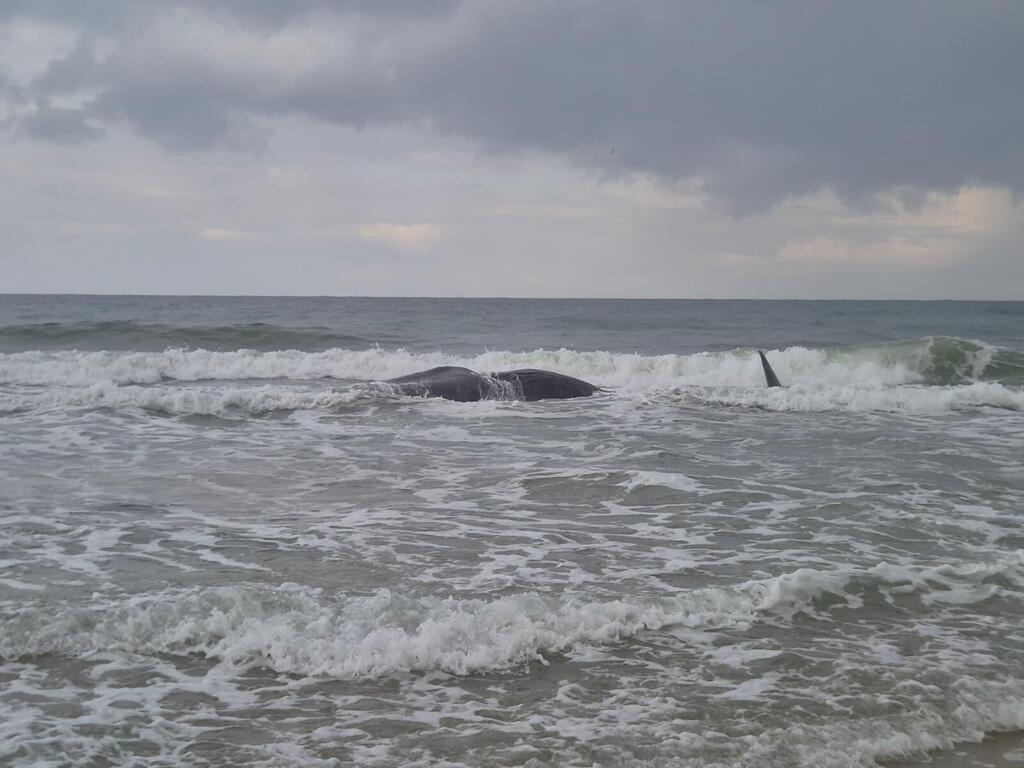
(Evyatar Ben-Avi/Israel Nature and Parks Authority)
Dr. Mia Elser of Delphis said that since research began in Israel, eight sperm whale carcasses — including the one found Tuesday — have been documented along the country’s shores. “Since 2020, there have been more sightings of live sperm whales at sea, which corresponds with an increase in the number of dead individuals washing ashore,” she said.
Delphis noted that in 2021 the International Union for Conservation of Nature classified the Mediterranean sperm whale population as endangered, even though the species globally is listed as vulnerable. The Mediterranean population is estimated at between 200 and 250 individuals and is considered to be in decline.
Dr. Aviad Scheinin, director of the Dolphin and Sea Center at Delphis and head of apex predator research at the Morris Kahn Marine Research Station, said the Mediterranean sperm whale population is genetically distinct and isolated from Atlantic populations. “It even has its own unique codas — sequences of clicks that characterize only them,” he said.
Scheinin said the main threats facing sperm whales include drifting nets set in deep waters to catch swordfish and tuna, in which whales and sharks are caught as bycatch. Additional harm can result from seismic surveys for gas and oil exploration, which may damage whales’ hearing or drive them away from food sources. Plastic pollution also poses a danger to deep-diving species such as sperm whales, he said.