

A powerful snowstorm that grounded more than 5,000 flights in the eastern United States has once again fueled debate over climate change. But scientists say the larger story is not a single blizzard in New York. It is the transformation of winter itself.
Despite dramatic cold snaps, long-term data show that winters are becoming milder on average. Global observations and climate models indicate a sharp decline in the frequency of extreme cold events in recent decades, alongside a significant increase in heat waves.
New York
(Video: Reuters, ABC AFFILIATE WABC)


“Globally, there has been about a 50 percent decrease in the frequency of record-breaking cold waves,” said Prof. Haim Garfinkel, an atmospheric scientist at the Hebrew University of Jerusalem and a member of the Israeli Climate Scientists Forum.
Climate change does not eliminate winter, researchers emphasize. Instead, it reshapes it.
One of the emerging patterns in a warming climate is greater volatility. Recent research has examined what scientists call “rapid temperature flips,” abrupt shifts between heat and cold that can occur within days. As average global temperatures rise, the likelihood of sharp swings between extremes also increases.
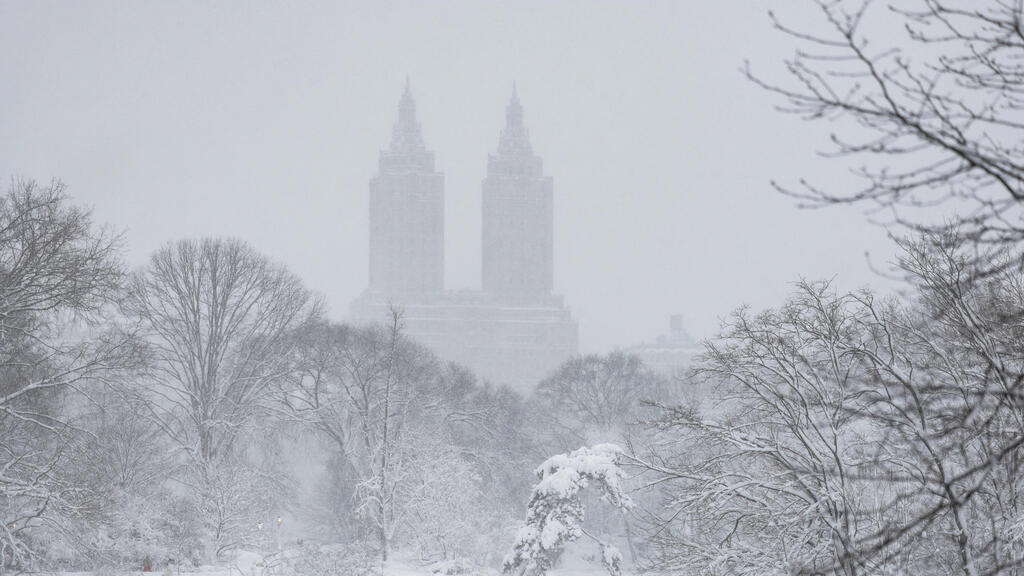
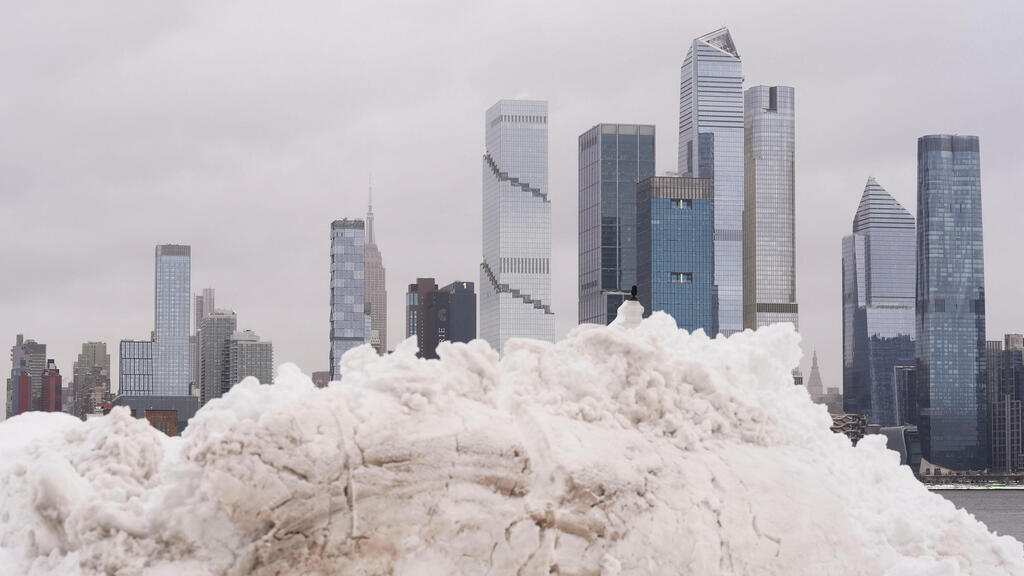
Snow in New York
(Photo: Seth Wenig/ AP)
Rather than relatively stable seasonal transitions, winters are increasingly marked by oscillations that strain natural ecosystems and human systems alike. Health services, agriculture and energy infrastructure have less time to adjust to sudden temperature reversals.
“People tend to take a local event and project it onto the whole world,” Garfinkel said. While individuals experience weather in a specific place and moment, climate change is measured across regions and decades.
When one area faces a cold outbreak, other regions may be experiencing unusual warmth. Natural atmospheric processes still generate winter storms and Arctic air incursions. However, rising global temperatures generally moderate the overall frequency and intensity of extreme cold.
“It does not mean we will stop seeing cold waves,” Garfinkel said. “But statistically, their frequency and strength may decline.”
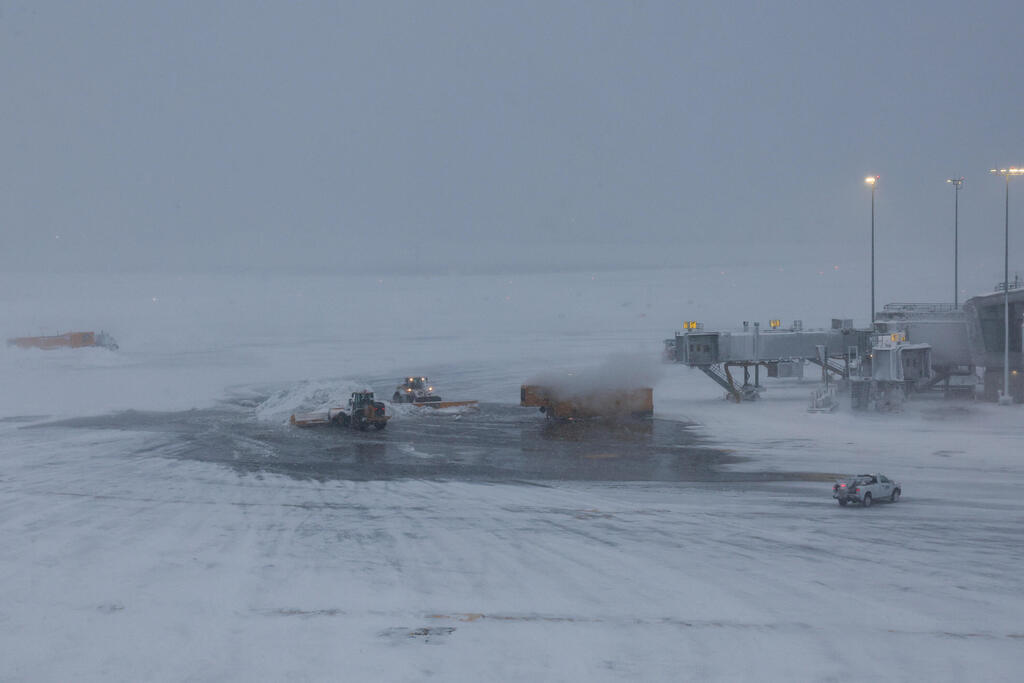
New York airport
(Photo: Shannon Stapleton/ Reuters)

(Photo: Charly Triballeau/ AFP)
Israel is warming faster than the global average
In Israel, the shift is particularly pronounced. The region is warming faster than the global average. While global temperatures have risen by roughly 1 to 1.5 degrees Celsius since the preindustrial era, warming in Israel is approaching 2 degrees.
“The expected trend is that it will be less cold. We are already experiencing this in both summer and winter,” Garfinkel said.
Even as winter storms continue to make headlines abroad, scientists warn that the more consequential long-term threat lies at the opposite end of the spectrum: extreme heat.
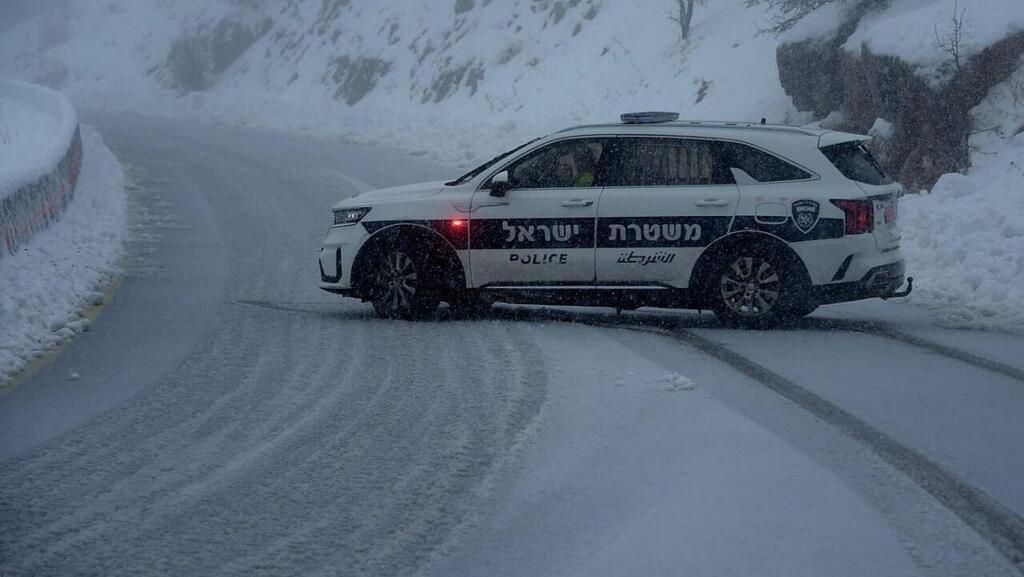
Snow in northern Israel
(Photo: Israel Police)
Israel is already experiencing a marked increase in heat waves, and projections indicate further intensification in the coming decades. What is considered an extreme heat event today could become routine, with significant implications for public health and electricity demand, which peaks in summer.
Researchers stress that reducing greenhouse gas emissions remains essential to slowing the pace of change. Expanding renewable energy production, particularly solar power in sun-rich regions such as Israel, is seen as a key step.
Cold waves, scientists say, are not evidence against global warming. They are part of a broader pattern: a winter season that is not disappearing, but shifting.
First published: 07:59, 02.24.26